
Alberta
Alberta Is Where Canadians Go When They Want To Build A Better Life


From the Frontier Centre for Public Policy
One in three Canadians chooses Alberta to start over. But to stay Canada’s top destination, it must fight Ottawa’s barriers and complacency
No province has captured the Canadian imagination quite like Alberta—and not because of oil.
One in three Canadians leaving their provinces in the past five years headed to Alberta. They were escaping stagnant wages, high housing costs and suffocating bureaucracy. They came for freedom and opportunity, and Alberta delivered. Its edge is cultural: it rewards enterprise instead of strangling it.
The question now is whether Albertans can keep that edge before Ottawa and complacency close in.
Prosperity, like liberty, vanishes the moment people stop fighting for it. If Alberta wants to remain Canada’s economic engine, it must continue to move forward, tearing down old barriers while fending off the new ones that Ottawa and other provinces are always erecting.
The cost of standing still is staggering.
Economists say provincial trade barriers (rules that prevent goods, services, and workers from moving freely) cost the Canadian economy up to $130 billion a year. For Alberta, even a 10 per cent reduction would be worth $7.3 billion a year.
When Quebec killed the Energy East pipeline that would have carried Alberta crude to eastern refineries, Alberta lost the chance to export oil worth as much as $15 billion annually.
That’s not theory. That’s lost paycheques, lost tax revenue and public services that never materialized.
Alberta has always been more willing than others to break free from the barriers that hold back growth. Liquor sales were privatized decades ago, as were property registries. The New West Partnership with Saskatchewan, Manitoba and B.C. opened labour mobility and procurement, though it has since stalled. Alberta doesn’t impose cultural tests and it doesn’t levy a provincial sales tax. Families arrive because life here is easier. They can work, start a business, raise kids or simply breathe without bureaucrats looking over their shoulder.
But cracks remain. Liquor shelves may be free, but the Alberta Gaming, Liquor and Cannabis Commission monopoly clogs the warehouse. Professional associations in law, teaching and health care are slow to recognize credentials and drown their members in red tape.
Procurement often tilts local, because, apparently, free markets stop at the city line. And like every other province, Alberta still bows to Ottawa’s anticompetition telecom rules, the dairy and poultry cartel and the banking oligopoly, systems that consistently benefit Quebec farmers and Bay Street lenders at Alberta’s expense.

And as if the old cracks weren’t enough, new barriers are appearing. One of the worst is protectionism. Canadians love mocking Donald Trump’s tariffs, yet happily embrace the same thing at home. “Buy local” sounds warm and fuzzy but props up cartels in groceries, banking, telecom and construction. The truth? We’ve imposed more barriers on ourselves than Trump ever dreamed of.
Prime Minister Mark Carney exemplified the problem when he promoted subsidies for canola farmers. It was a double insult. First, it showed Ottawa would rather hand out cash than negotiate hard. Second, it reminded farmers that the “help” isn’t free. They pay for it through their own taxes, scooped from Saskatchewan and Alberta, laundered through federal bureaucracy, then mailed back with a ribbon.
Carney also vowed that interprovincial barriers would vanish by July 1, 2025. That deadline came and went. His shiny new “process” for expediting infrastructure looks like more of the same: more Ottawa mediation that risks slowing everything down.
But it isn’t only economics standing in the way. Ideology is becoming a barrier of its own. Diversity, equity and inclusion has morphed into a system for entrenching gatekeepers. It compels people to think and act in ways they didn’t choose. It drains productivity, creates make-work compliance jobs and sorts people into categories. Worst of all, it punishes anyone who doesn’t conform. Alberta resists this infection better than most, but its universities and federally dependent agencies are already hooked.
Then comes debanking. In 2022, Ottawa showed how quickly it could freeze accounts, and banks complied without hesitation. Since then, regulators have only expanded their reach under the banner of anti–money laundering and climate policy. The message is blunt: if Ottawa decides your sector is undesirable, access to financial services can vanish. For Alberta, with its energy industry branded a planetary threat, this is no hypothetical.
A free economy is meaningless if citizens can be financially exiled from it by decree. Alberta must shield its people by turning ATB, its provincially owned bank, into a fortress institution and enshrining access to financial services as a civil right.
So what does moving forward mean? It means doubling down on being the most desirable province to live and work. That requires bold reforms. Cut regulators down to size. Protect banking access in law. Decentralize big-city governments to make them more accountable and give residents real choices. Reform health care to expand choice and slash wait times. Deregulate housing and trucking to lower costs. Confront public-sector unions that act as ideological monopolies.
Canada loves to brag about free trade, but governs like a feudal kingdom. Alberta has already shown that a freer path is possible. The task now is to resist cartels, fight the banks, tear down old walls and stop new ones from rising.
Alberta has always been a frontier of builders, risk-takers and prosperity seekers, and to thrive it must keep moving. If Alberta leads, it will stay prosperous and desirable. If it falters, doors will close.
The choice is clear: Alberta can either be strangled by regulations or break free and keep its frontier spirit alive.
Marco Navarro-Genie is vice-president of research at the Frontier Centre for Public Policy and co-author, with Barry Cooper, of Canada’s COVID: The Story of a Pandemic Moral Panic (2023).

Alberta
Emissions Reduction Alberta offering financial boost for the next transformative drilling idea
From the Canadian Energy Centre
$35-million Alberta challenge targets next-gen drilling opportunities
‘All transformative ideas are really eligible’
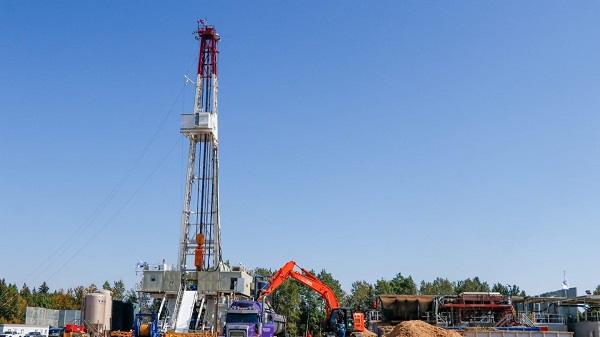
Forget the old image of a straight vertical oil and gas well.
In Western Canada, engineers now steer wells for kilometres underground with remarkable precision, tapping vast energy resources from a single spot on the surface.
The sector is continually evolving as operators pursue next-generation drilling technologies that lower costs while opening new opportunities and reducing environmental impacts.
But many promising innovations never reach the market because of high development costs and limited opportunities for real-world testing, according to Emissions Reduction Alberta (ERA).
That’s why ERA is launching the Drilling Technology Challenge, which will invest up to $35 million to advance new drilling and subsurface technologies.
“The focus isn’t just on drilling, it’s about building our future economy, helping reduce emissions, creating new industries and making sure we remain a responsible leader in energy development for decades to come,” said ERA CEO Justin Riemer.
And it’s not just about oil and gas. ERA says emerging technologies can unlock new resource opportunities such as geothermal energy, deep geological CO₂ storage and critical minerals extraction.
“Alberta’s wealth comes from our natural resources, most of which are extracted through drilling and other subsurface technologies,” said Gurpreet Lail, CEO of Enserva, which represents energy service companies.
ERA funding for the challenge will range from $250,000 to $8 million per project.
Eligible technologies include advanced drilling systems, downhole tools and sensors; AI-enabled automation and optimization; low-impact rigs and fluids; geothermal and critical mineral drilling applications; and supporting infrastructure like mobile labs and simulation platforms.
“All transformative ideas are really eligible for this call,” Riemer said, noting that AI-based technologies are likely to play a growing role.
“I think what we’re seeing is that the wells of the future are going to be guided by smart sensors and real-time data. You’re going to have a lot of AI-driven controls that help operators make instant decisions and avoid problems.”
Applications for the Drilling Technology Challenge close January 29, 2026.


The Police Review Commission (PRC) is now fully operational, giving Albertans a single, independent process to file policing complaints and ensure accountability.
Alberta’s government is putting the province at the forefront of police oversight in Canada with the creation of the PRC. This new commission replaces the current patchwork of police investigating police with one independent body responsible for receiving complaints, conducting investigations and overseeing disciplinary hearings. By centralizing these functions within a single, independent agency, Alberta is ensuring complaints are handled fairly and consistently.
“The Police Review Commission represents a new era in how Alberta addresses policing complaints. These changes are part of a broader paradigm shift where police are no longer seen as an arm of the state, but rather an extension and a reflection of the community they serve. As an independent agency, it is committed to fairness, accountability and public trust, ensuring every complaint is investigated impartially and resolved openly.”
The Police Amendment Act, 2022 laid the groundwork for this new model, establishing a modern approach to oversight built on accountability, consistency and public confidence. The PRC will manage the full complaints process from receiving and assessing, to investigating and resolving complaints related to police conduct, including serious incidents and statutory offences.
“The Alberta Association of Chiefs of Police welcomes the launch of the Police Review Commission as a meaningful step toward enhanced oversight and greater transparency in policing. By ensuring complaints are reviewed fairly and impartially, the Commission will help strengthen accountability and reinforce public trust in Alberta’s police agencies. Police leaders across the province are committed to working with the Commission and our communities to ensure every Albertan has confidence in the integrity of our police services.”
A timely and transparent complaint resolution process is essential for both the public and police. That is why the PRC must complete investigations within 180 days, and if more time is needed, the chief executive officer must publicly report on delays and provide justification. This ensures clarity, predictability and accountability throughout the process. The commission will be arm’s length from government and police services, meaning people can have greater confidence that their complaints will be investigated and resolved impartially.
“Our goal is to build trust in policing by delivering timely resolutions and fair, consistent outcomes that put people first. Every complaint will be reviewed thoroughly and handled with the transparency and respect Albertans expect and deserve.”
The PRC can also initiate systemic reviews related to police conduct or emerging trends without the need for a public complaint, and these reviews must be made public. Together, these measures create a clear, accountable process that strengthens transparency, supports continuous improvement and enhances trust in how police oversight is carried out across Alberta.
“Public safety and the confidence the public has in our police services and service members are incumbent for effective and responsible service delivery. The PRC has been developed so that Albertans may have a responsible and impartial mechanism to voice concerns regarding delivery of policing services in Alberta. I am confident that the PRC will be an inclusive and diverse representation of the communities, so we may better understand the most appropriate and effective way to respond to concerns regarding police services. I look forward to the positive outcomes for the community.”
The commission’s design was informed by engagement with Indigenous communities, law enforcement partners, municipal officials and community organizations, ensuring its structure and training reflect Alberta’s diversity and values.
Quick facts
- The PRC will handle complaints in three categories:
- Level 1: Death, serious injury and serious or sensitive allegations involving all police services in Alberta, as well as peace officer agencies.
- Level 2: Allegations of criminal and other statutory offences involving all police services in Alberta.
- Level 3: Complaints about non-criminal misconduct involving officers employed by municipal and First Nations police services.
- Complaints that fall outside the three categories will be referred to the appropriate bodies or agencies for review.
- The Alberta Serious Incident Response Team (ASIRT) will now operate under the PRC.


From Underdog to Top Broodmare

Landmark 2025 Study Says Near-Death Experiences Can’t Be Explained Away

STUDY: TikTok, Instagram, and YouTube Shorts Induce Measurable “Brain Rot”
Red Deer’s Jason Stephan calls for citizen-led referendum on late-term abortion ban in Alberta
-
 COVID-192 days ago
FDA says COVID shots ‘killed’ at least 10 children, promises new vaccine safeguards
-
 Alberta2 days ago
Net Zero goal is a fundamental flaw in the Ottawa-Alberta MOU
-
 Addictions2 days ago
Manitoba Is Doubling Down On A Failed Drug Policy
-
 Food2 days ago
Canada Still Serves Up Food Dyes The FDA Has Banned
-
 COVID-192 days ago
The dangers of mRNA vaccines explained by Dr. John Campbell
-
 Artificial Intelligence1 day ago
‘Trouble in Toyland’ report sounds alarm on AI toys
-
 Energy1 day ago
Canadians will soon be versed in massive West Coast LPG mega-project
-
 Alberta2 days ago
Keynote address of Premier Danielle Smith at 2025 UCP AGM