Connect with us

Freedom Convoy

A Miscarriage of Justice

Published

14 minute read

From Police On Guard For Thee

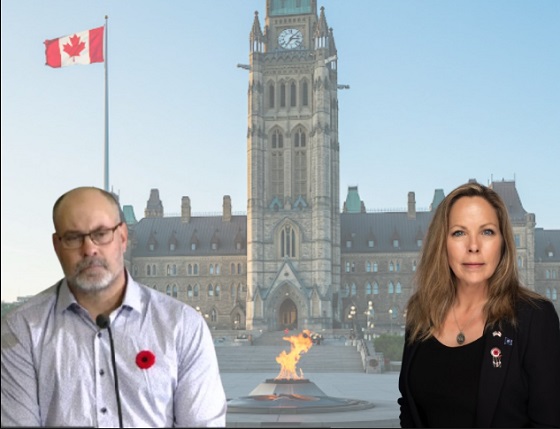
Tamara Lich and Chris Barber have finally reached the end of what became the longest mischief trial in Canadian history, with a total of 45 days in court spanning 31 months.
Both Tamara and Chris had received several charges resulting from their participation and leadership with the Freedom Convoy in Ottawa early in
2022. Their charges included counseling to commit mischief, intimidation, obstructing police, and disobeying a court order (this last charge was applied to Chris only).
Both were released on bail with conditions. One bail condition stated that Tamara was not to be in the company of specific individuals without her lawyer present. At an award ceremony honouring Tamara, she was photographed with one of these individuals – Tom Marazzo – while members of her legal team remained nearby. Justice of the Peace Paul Harris determined this to be a breach of her bail conditions and issued a warrant for her arrest.
Tamara Lich, a grandmother with no prior criminal record, was arrested in Alberta and held for 6 days before being returned to Ontario where she was again held while awaiting trial; she spent a total of 48 days incarcerated while violent criminals were being released with nothing more than a slap on the wrist.
Justice Goodman later released Tamara on a $37k bond stating that Harris had made “erroneous” conclusions and “misapprehended” the evidence against Lich when deciding she broke her bail conditions.
During the trial the Crown insisted that, as organizers of the Freedom Convoy, Tamara and Chris used unlawful means to pursue their goals. The Crown claimed that their actions caused significant interference with the lawful use and enjoyment of property, that they intentionally intimidated residents and obstructed police efforts (even though organizers were in direct contact and in regular meetings with police).
Their defence team countered, stating both were engaged in a lawful and constitutionally protected peaceful protest (as determined in the first injunction with respect to the horn honking). Defence argued that it is unreasonable to believe that Tamara and Chris could have controlled the actions of all who arrived in Ottawa (not just those who followed them there directly).
The defence further asserted that the message from both defendants had been consistent in its promotion of the peaceful nature of the protest; their goal had been expressed clearly throughout the duration of the Convoy.
Justice Heather Perkins-McVey, of the Ontario Court of Justice, presided over their case. In her view, the key issues included whether either Tamara or Chris (a) blocked or obstructed a highway; (b) interfered with the lawful use, operation or enjoyment of property; (c) obstructed police; or (d) counseled anyone to commit mischief, intimidation, or obstruction of justice. One final key issue for Chris alone – whether he counselled anyone to honk their horns in contravention of an interlocutory injunction.
In considering these key issues, Justice Perkins-McVey determined that the Freedom Convoy did in fact cause significant disruptions and interfere with the lawful use of property. (It should be noted here that most businesses were already shut down due to the mandates and those that remained open were inundated with fear mongering over the coming Freedom Convoy, with ‘suggestions’ that they too should close their doors).
The court further determined that both Tamara and Chris were aware of the impact their actions were having on residents and businesses in the area. She pointed to evidence showing that Chris was aware that police wanted the trucks gone, and that he had responded by stating they were staying until the mandates came down. She noted that both Tamara and Chris continued to encourage more people to join them, and finally, that Chris (through a TikTok video) had encouraged participants to “grab that horn switch and don’t let go” if police approached their trucks.
With these facts in mind, Justice Perkins-McVey found both Tamara and Chris not guilty of intimidation, counselling to commit intimidation, obstructing police, and counselling to commit the offence of obstructing justice. The charges for counselling to commit mischief were stayed on the recommendations of the Crown.
On the count of mischief, both Tamara and Chris were found guilty. Justice Perkins-McVey believed their actions contributed to the obstruction of the lawful use and enjoyment of property in the areas affected by the Convoy.
On the final charge against Chris, for disobeying a court order, she found his TikTok video to be sufficient evidence showing Chris deliberately encouraged others to disobey the court order prohibiting the use of air horns.
In summary, Tamara Lich was acquitted of four out of six charges with a fifth stayed, leaving only a single conviction of mischief. Chris Barber was acquitted of four out of seven charges with a fifth charge stayed, leaving Chris with a guilty verdict for the charges of mischief and of disobeying a Court Order.
In policing circles, mischief is not considered a serious offence. It is virtually unheard of to receive jail time, except in the most egregious of cases, yet the Crown is seeking up to 10 years for both Tamara and Chris – an utterly ridiculous and excessive request.
Sentencing for both is expected later this month, with a tentative date of April 16th.
While this incredibly long and involved mischief case was taking up valuable court resources, at an estimated cost to taxpayers of $5 to $10 Million dollars, Crown prosecutors in Ontario had tossed out many cases involving sexual assault and other violent crimes, citing the continued issue of insufficient court resources.
“There seems to be a glaring double standard in prosecutions in Canada.”
This quote is from the Justice Centre for Constitutional Freedoms (JCCF) where President John Carpay confirms what many of us have long suspected.
Mr. Carpay explains, referencing the fact that 86 sexual assault cases have been tossed out in Ontario since 2016 due to court delays and insufficient court resources stating, “Crown prosecutors in Ontario claim that they do not have enough resources to prosecute people accused of sexual assault and other serious crimes….Yet the Crown has devoted massive amounts of its limited time and energy to prosecuting peaceful protesters who exercised their fundamental Charter freedoms.”
Mr. Carpay highlights the obvious double standard, stating that had Chris and Tamara been leading a protest against racism, transphobia or climate change, they would not have been subjected to a 45-day trial spanning 31 months.
He also made a point we can all agree with; “it appears that the charges against Chris Barber and Tamara Lich were laid for political reasons.”
The Freedom Convoy began as a simple protest against Covid-19 vaccine mandates for cross-border truck drivers. Soon, thousands of Canadians found their voices alongside the truckers, tired of being treated as second-class citizens for a decision that they felt was personal and not one for the government to dictate. Denied the right to visit ailing loved ones, to work, travel, play or attend sports or just eat out; everyone affected was justifiably fed up and eager to join the truckers in voicing their frustration with these overreaching mandates.
Thousands of Canadians descended on the parliament buildings in Ottawa in hopes that the Prime Minister would listen to their concerns and negotiate. Instead, Trudeau turned his back and hid in his cottage, refusing to even speak to Convoy organizers.
That was a significant turning point for the Freedom Convoy. Until then people had hope, believing that the largest protest in Canadian history could sway our political leaders. Once Trudeau walked away, that hope turned to sheer determination, to hold the line until he relented and listened to the people. Instead, he insulted every one of us and spewed lies about both the cause and the atmosphere of the Convoy, trying desperately to turn Canadians against us.
Trudeau then decided to illegally invoke the Emergencies Act on February 14, 2022, to allow the use of violence to suppress convey participants.
A media release from The Democracy Fund (TDF) states, “The ruling ignites fierce debate over the boundaries of peaceful protest and the growing criminalization of political dissent in Canada. The verdict, delivered after 45 days of trial proceedings concluding on September 13, 2024, marks a significant moment in the legal treatment of protest-related cases, potentially deterring Canadians from exercising their rights to free expression and assembly out of fear of severe legal repercussions.”
Mark Joseph, Director of Litigation for TDF described the trial as a critical test of Canadians’ right to peaceful assembly. “This ruling is a bittersweet moment – while Tamara Lich’s acquittal on several charges affirms the centrality of free expression, the mischief conviction could be interpreted as punishing some participants for the actions of others,” “We remain committed to challenging any erosion of Canadians’ rights to protest.”
A post from Kiernan Green of The Hub, quoting directly from Statistics Canada, shows the incredible increase in violent crime in Canada to be over 130% from 2013, yet our government has chosen to go soft on these violent crimes while targeting peaceful citizens who dared speak out against the decisions of our political leaders.
In a social media post from Right Blend (@rightblend ) he states, “The authorities have spent an unbelievable amount of resources prosecuting Chris and Tamara to the end of the Earth because they had the audacity to stand up against the most oppressive restrictions on Canadian rights and liberties in generations. How many violent criminals were let off the hook because the court was spending precious resources on this and other Freedom Convoy cases?”
“Thank God for the Freedom Convoy. No matter what happens today, they already won.”
We couldn’t agree more.
The Freedom Convoy represented the combined voices of tens of thousands of Canadians who were beaten down by those trusted to protect us all. While it has become tragically clear that our government wishes to pick favourites, reducing the rest of us to destitution, both in freedoms and in spirit, we will always have the strength that the convoy instilled in us all. The knowledge that we are many and we are strong; that there are still Canadians who value what we used to stand for as a society – family values, freedoms and opportunity. We showed the world that our peaceful nature has a deeply imbedded determination.
We applaud both Tamara and Chris for their strength and determination. We respect their commitment to everything the Freedom Convoy stood for and for remaining true under the incredible pressures piled on them in the past few years and are proud to call them friends.
Regardless of the outcome, we offer our respect and gratitude to them both.
The Freedom Convoy will be remembered and celebrated for generations. To all who participated and supported this incredible event – Thank you.
To read the court decision, click the link; https://www.jccf.ca/…/2025-04-03-R.-v-Lich-and-Barber…

Todayville is a digital media and technology company. We profile unique stories and events in our community. Register and promote your community event for free.

Follow Author

COVID-19

Judge denies Canadian gov’t request to take away Freedom Convoy leader’s truck

Published on

From LifeSiteNews

By Anthony Murdoch

A judge ruled that the Ontario Court of Justice is already ‘satisfied’ with Chris Barber’s sentence and taking away his very livelihood would be ‘disproportionate.’

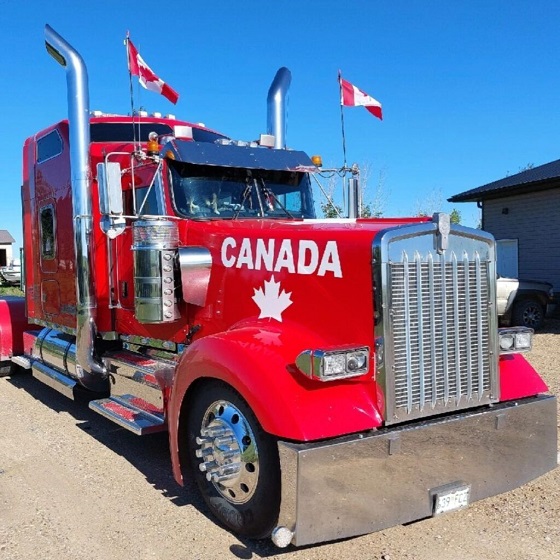
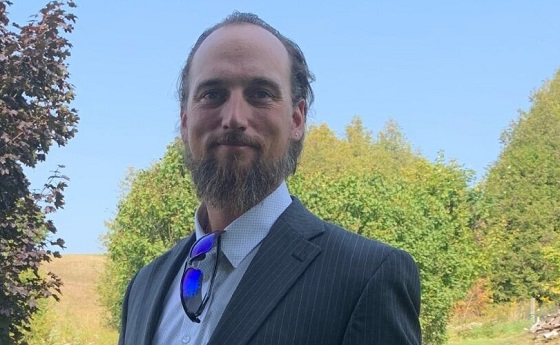
A Canadian judge has dismissed a demand from Canadian government lawyers to seize Freedom Convoy leader Chris Barber’s “Big Red” semi-truck.

On Friday, Ontario Court of Justice Judge Heather Perkins-McVey denied the Crown’s application seeking to forfeit Barber’s truck.

She ruled that the court is already “satisfied” with Barber’s sentence and taking away his very livelihood would be “disproportionate.”

“This truck is my livelihood,” said Barber in a press release sent to LifeSiteNews.

“Trying to permanently seize it for peacefully protesting was wrong, and I’m relieved the court refused to allow that to happen,” he added.

Criminal defense lawyer Marwa Racha Younes was welcoming of the ruling as well, stating, “We find it was the right decision in the circumstances and are happy with the outcome.”

John Carpay, president of the Justice Centre for Constitutional Freedoms (JCCF), said the decision is “good news for all Canadians who cherish their Charter freedom to assemble peacefully.”

READ: Freedom Convoy protester appeals after judge dismissed challenge to frozen bank accounts

“Asset forfeiture is an extraordinary power, and it must not be used to punish Canadians for participating in peaceful protest,” he added in the press release.

At this time, the court ruling ends any forfeiture proceedings for the time being, however Barber will continue to try and appeal his criminal conviction and house arrest sentence.

Barber’s truck, a 2004 Kenworth long-haul he uses for business, was a focal point in the 2022 protests. He drove it to Ottawa, where it was parked for an extended period of time, but he complied when officials asked him to move it.

On October 7, 2025, after a long trial, Ontario Court Justice Perkins-McVey sentenced Barber and Tamara Lich, the other Freedom Convoy leader, to 18 months’ house arrest. They had been declared guilty of mischief for their roles as leaders of the 2022 protest against COVID mandates, and as social media influencers.

Lich and Barber have filed appeals of their own against their house arrest sentences, arguing that the trial judge did not correctly apply the law on their mischief charges.

Government lawyers for the Crown have filed an appeal of the acquittals of Lich and Barber on intimidation charges.

The pair’s convictions came after a nearly two-year trial despite the nonviolent nature of the popular movement.
Continue Reading

COVID-19

Freedom Convoy protester appeals after judge dismissed challenge to frozen bank accounts

Published on

From LifeSiteNews

By Anthony Murdoch

Protestor Evan Blackman’s legal team argues Trudeau’s Emergencies Act-based bank account freezes were punitive state action tied directly to protest participation.

A Freedom Convoy protester whose bank accounts were frozen by the Canadian government says a judge erred after his ruling did not consider the fact that the funds were frozen under the Emergencies Act, as grounds for a stay of proceedings.

In a press release sent out earlier this week, the Justice Centre for Constitutional Freedoms (JCCF) said that Freedom Convoy protestor Evan Blackman will challenge a court ruling in his criminal case via an appeal with the Ontario Superior Court of Justice.

“This case raises serious questions about how peaceful protest is treated in Canada and about the lasting consequences of the federal government’s unlawful use of the Emergencies Act,” noted constitutional lawyer Chris Fleury. “The freezing of protestors’ bank accounts was part of a coordinated effort to suppress dissent, and courts ought to be willing to scrutinize that conduct.”

Blackman was arrested on February 18, 2022, during the police crackdown on Freedom Convoy protests against COVID restrictions, which was authorized by the Emergencies Act (EA). The EA was put in place by former Prime Minister Justin Trudeau’s Liberal government, which claimed the protests were violent, despite no evidence that this was the case.

Blackman’s three bank accounts with TD Bank were frozen due to his participation in the Freedom Convoy, following a directive ordered by Trudeau.

As reported by LifeSiteNews, in November of this year, Blackman was convicted at his retrial even though he had been acquitted at his original trial. In 2023, Blackman’s “mischief” and “obstructing police” charges were dismissed by a judge due to lack of evidence and the “poor memory of a cop regarding key details of the alleged criminal offences.”

His retrial resulted in Blackman getting a conditional discharge along with 12 months’ probation and 122 hours of community service, along with a $200 victim fine surcharge.

After this, Blackman’s application for a stay of proceedings was dismissed by the court. He had hoped to have his stay of proceedings, under section 24(1) of the Charter of Rights and Freedoms, allowed. However, the judge ruled that the freezing of his bank accounts was legally not related to his arrest, and because of this, the stay of proceedings lacked standing.

The JCCF disagreed with this ruling, noting, it “stands in contrast to a Federal Court decision finding that the government’s invocation of the Emergencies Act was unreasonable and violated Canadians’ Charter rights, including those targeted by the financial measures used against Freedom Convoy protestors.”

In 2024, Federal Court Justice Richard Mosley ruled that Trudeau was “not justified” in invoking the Emergencies Act.

In early 2022, the Freedom Convoy saw thousands of Canadians from coast to coast come to Ottawa to demand an end to COVID mandates in all forms. Despite the peaceful nature of the protest, Trudeau’s federal government enacted the EA in mid-February.

After the protesters were cleared out, which was achieved through the freezing of bank accounts of those involved without a court order as well as the physical removal and arrest of demonstrators, Trudeau revoked the EA on February 23, 2022.

Continue Reading

Trending

X