
Opinion
Journalism: Back to Basics


How cool is it that in the 21st century it isn’t just news anchors, professional investigative journalists or beat reporters that bring us news and current events? Today, average JoAnne Public contributes to a globally collective knowledge. What is less cool, however, is the vast amount of not-really journalistic style writing that permeates media with biased opinions or fake news. Sometimes it’s hard to decipher good journalistic pieces from stories rife with personal beliefs or judgements. Whether you are a reader or writer of today’s news, keeping an eye out for just a few ‘tells’ means you’ll perhaps consume or create more real news and fewer opinion pieces.
Accuracy
It’s pretty exciting to be the first to report a story, or to read the earliest account of a story. You know what is less exciting? Finding out you read misinformation after you shared it with friends, or learning you released a story before all your facts were confirmed. It is far better to be right than to be first; both as a reader and a writer. I think we can all agree that anything premature is, well…not great.
Sources
Remember back in school when you had to write a bibliography to prove where you found your information? The same basic rules apply to good news reporting too. Although citations don’t always have to be formal, there should be some mention of the source of the information. This doesn’t mean confidential contributors should be named, though. Sometimes protection of privacy is important to a story!

Naming sources not only lends credibility to a story, but doing so supports the validity of any quoted numbers or stats too. For example, I could tell you eleventy nine percent of drivers pick their noses at a stop light. If I don’t also tell you which studies prove this, shouldn’t you question the legitimacy of that statistic?
Free from Bias
Good reporting demands sharing all sides of a story. We’ve all read stories about kids constantly on their devices today and never looking up to experience the people right in front of them. Presumably, they’re on social media, playing games, and generally wasting their lives. But what about the kid texting a parent living away from the family home, or communicating with a teacher about an assignment, or talking a friend through a trying time? Do we also get to read about how those kids are experiencing real relationships, trauma, joy, or easing the loneliness of a loved one through their device? Do we get to learn about how that kid is making a difference in the life of another not sitting in that group?
It’s important for good journalism to tell all sides of the story without injecting personal views, emotional attachment to one side or the other, and to keep stereotypes out of the story. According to the Reuters Handbook of Journalism, although it’s acceptable to include other people’s opinions in a story, the writer should steer clear of expressing their own opinions. So as long as both the kid with her face in her device AND, for example, the disapproving onlooker both have a voice in a story, it all balances out!
We all know if it’s on the Internet it must be true, but keeping an eye out for legitimate journalism fosters the smartitude in all of us.



Welcome to the world of REEF
Most Canadians, know who Connor McDavid is.
Most Canadians, know who Connor Bedard is.
And, well … most Canadians know who Howie Mandel is, right?
Household words.
But do any Canadians, know what REEF is? Probably not.
The Ridley Island Energy Export Facility project, a large-scale terminal near Prince Rupert, B.C., being built by AltaGas to export liquefied petroleum gas (LPG) and other bulk liquids to global markets.
Did you know it is providing valuable propane to Japan? No, not for barbecues, but for crucial energy demands in the Asian nation.
Japan uses propane (LP gas) for a wide range of purposes, including household use for cooking, water heating, and room heating, as well as for a majority of taxis, industrial applications, and as a raw material for town gas production.
Construction is progressing, with a target startup around the end of 2026. The project involves building significant infrastructure, including large storage tanks.
And it just so happens that Resource Works CEO Stewart Muir, paid a visit this past week to get a close-up look at a part of Canada’s export story that almost nobody talks about: a brand-new accumulator tank built to hold chilled propane and butane.
“It’s the largest of its kind anywhere. Two more are on the way, and together they’ll form a critical piece of the AltaGas Ltd. REEF project,” Muir said in a report.
”What stood out to me is the larger pattern: projects like this only happen because of the crown jewel of the B.C. economy — the Montney Formation.”
“It’s the triple-word-score of Canadian resource development: LNG, valuable natural gas liquids like propane, and the diluent streams that help unlock Canada’s single biggest export category, crude oil.”
 |
Like the oilsands, the industry has long known about the Montney formation, which stretches 130,000 square kilometres in a football-shaped diagonal from northeast British Columbia into northwest Alberta.
According to CBC News, underneath this huge tract of land, the National Energy Board (NEB) estimates there’s 90 billion barrels of oil equivalent (boe), most of it natural gas. That’s more than half the size of the oilsands, yet the Montney has received only a fraction of the attention, at least from the public at large.
For oil and gas types, the gold rush is on.
Without question, and despite the ire of green groups who seem to be against any kind of resource development in Canada, the Montney is the quiet force multiplier behind local jobs, municipal tax bases, and the national balance of trade.
And it’s all being done at the highest environmental standard, with producers like Tourmaline Oil Corp already posting a 41% reduction in CO2 emission intensity and a target of 55% less methane emission intensity.
”Congrats to AltaGas for pushing this project forward, and a nod as well to other major employers on the North Coast — Trigon, CN and Pembina, writes Muir.
“Quietly and steadily, they’re building the future prosperity of Canadians. And thanks to Mayor Herb Pond, who took the time to walk us through the regional dynamics that make this corridor such a strategic asset.”
Muir was gobsmacked by the size of the project.
Sources say Alberta’s midstream bottleneck and rapid growth of Shale oil and gas exploration and production, has created an absolute glut in ethane, propane and butane. Ridley Island takes this glut and transports it to the Prince Rupert region by railcar and exports to Asian markets.
 |
Ridley Island’s current export capacity of 92,000 bpd is undergoing aggressive expansion to growth by another 115,000 bpd over the next few years in two more phases of construction.
Recent images detail active construction efforts of the storage, jetty and rail infrastructure.
Alas, every issue that threatens to derail the ambitions of Canada’s oil and gas industry — access to market, First Nations land rights, public acceptance of infrastructure projects and, especially, the climate consequences of burning fossil fuels — is writ large in the Montney.
There are now seven separate lawsuits, and threats of further escalation, centred on claims by the Lax Kw’alaams and Metlakatla First Nations (collectively the Coast Tsimshian) that they were misled and lied to by the Crown when they agreed to developments on their traditional lands at Prince Rupert, John Ivison at the National Post reported.
The dispute over a future propane export facility at the port has spread to other resource projects, and the two First Nations have launched lawsuits against the Ksi Lisims LNG project that was one of the Liberal government’s major projects announced by the prime minister last week.
Further, the conflict threatens to negatively impact any plans Ottawa and the province of Alberta have to build an oil pipeline to the port.
Prime Minister Mark Carney’s recent announcements giving the green light to Alberta’s oil & gas industry has stirred the energy pot to new levels.
B.C. Premier David Eby — who prides himself on Indigenous virtue signalling — is pissed off. It appears he was largely left out of the loop and he is digging in.
Eby said the B.C. government needs to make sure this pipeline project doesn’t become an “energy vampire.”
“With all of the variables that have yet to be fulfilled — no proponent, no route, no money, no First Nations support — that it cannot draw limited federal resources, limited Indigenous governance resources, limited provincial resources away from the real projects that will employ people,” Eby added.
B.C.’s Coastal First Nations also say they will use “every tool in their toolbox” to keep oil tankers out of the northern coastal waters.
It is now apparent that all roads, or, shall we say, pipelines, lead to Prince Rupert.
The feds now face an imposing uphill battle, to leverage their standing as a regulator and resolve a dispute that threatens Canada’s crucial growth agenda.
— with files from CBC News, National Post
THE MAKICHUK REPORT is free today.
But if you enjoyed this post, you can tell THE MAKICHUK REPORT that their writing is valuable by pledging a future subscription.
You won’t be charged unless they enable payments.
Daily Caller
Tom Homan Predicts Deportation Of Most Third World Migrants Over Risks From Screening Docs


From the Daily Caller News Foundation
White House border czar Tom Homan predicted Sunday the Trump administration will deport the majority of Third World migrants due to vetting challenges.
Two National Guardsmen were shot Wednesday, allegedly by an Afghan national brought into the U.S. under the Biden administration. The attack prompted President Donald Trump to announce in a Thursday post on Truth Social that his administration would “permanently pause migration from all Third World Countries.” Homan said on Fox News’s “Sunday Morning Futures” that Third World nations could not be relied upon to provide accurate information for vetting migrants.
Dear Readers:
As a nonprofit, we are dependent on the generosity of our readers.
Please consider making a small donation of any amount here.
Thank you!
“[T]hese Third World nations, they don’t have systems like we do. So, a lot of these Afghanistans, when they did get here and get vetted, they had no identification at all. Not a single travel document, not one piece of identification,” Homan said. “And we’re going to count on the people that run Afghanistan, the Taliban, to provide us any information [on] who the bad guys were or who the good guys are? Certainly not. And many people need to understand that most terrorists in this world, most of ’em, aren’t in any database.”
“And the same thing with illegal aliens, the over 10 million that came across the border under Joe Biden. There’s no way to vet these people. You think El Salvador or Turkey or Sudan or any of these countries have the databases or system checks that we have?” he added. “Do you think the government[s] of China, Russia, Turkey, do you think they’re going to share that data with us even if they did have it? There’s no way to clearly vet these people 100% that they’re safe to come to this country from these Third World nations.”
The president also wrote in his Thursday post he would “terminate all of the millions of Biden illegal admissions,” along with deporting those who do not offer value to the United States. Homan said Trump is correct to evaluate all migrants who entered under Biden.
“I really, truly think that most of ’em are [going to] end up being deported ’cause we’re not going to be able to properly vet them,” he said.
Similarly, Homeland Security Secretary Kristi Noem asserted Sunday on NBC News’s “Meet the Press” the Trump administration would deport individuals with pending asylum claims.
West Virginia Army National Guard Specialist Sarah Beckstrom, 20, perished Thursday from wounds sustained in Wednesday’s shooting. The other victim, Air Force Staff Sgt. Andrew Wolfe, remains in critical condition at the time of publication.
The shooting was allegedly carried out by Rahmanullah Lakanwal, who entered the country in September 2021 after the U.S. military’s withdrawal from Afghanistan. Lakanwal previously worked with the U.S. government, including the CIA, and was admitted into the U.S. under the Biden administration’s Operation Allies Welcome, which resettled Afghans who had helped American forces.
Lakanwal applied for asylum in 2024, which the Trump administration granted in April 2025, according to Reuters. The alleged gunman shouted, “Allahu akbar!” before opening fire with a revolver, independent journalist Julio Rojas reported.
As of December 2024, over 180,000 Afghans were resettled in the U.S. following its August 2021 withdrawal, according to the State Department. After the shooting, the U.S. Citizenship and Immigration Services (USCIS) announced that the “processing of all immigration requests relating to Afghan nationals” would be paused “indefinitely.”
USCIS also asserted Thursday it would conduct a full-scale reexamination of all green cards granted to individuals from 19 countries “of concern” at Trump’s direction. The agency added in a later statement that, when vetting migrants from those nations, it would weigh “negative, country specific factors,” such as whether the country was able to “issue secure identity documents.”


From Underdog to Top Broodmare

Landmark 2025 Study Says Near-Death Experiences Can’t Be Explained Away

STUDY: TikTok, Instagram, and YouTube Shorts Induce Measurable “Brain Rot”
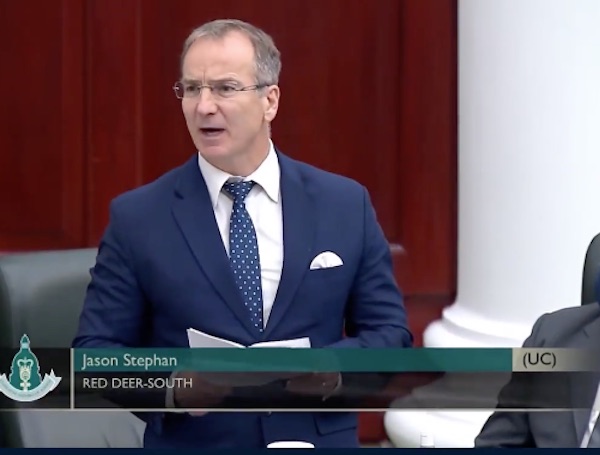
Red Deer’s Jason Stephan calls for citizen-led referendum on late-term abortion ban in Alberta
-
Opinion2 days ago
Landmark 2025 Study Says Near-Death Experiences Can’t Be Explained Away
-
Focal Points2 days ago
STUDY: TikTok, Instagram, and YouTube Shorts Induce Measurable “Brain Rot”
-
Alberta2 days ago
Red Deer’s Jason Stephan calls for citizen-led referendum on late-term abortion ban in Alberta
-
 Business1 day ago
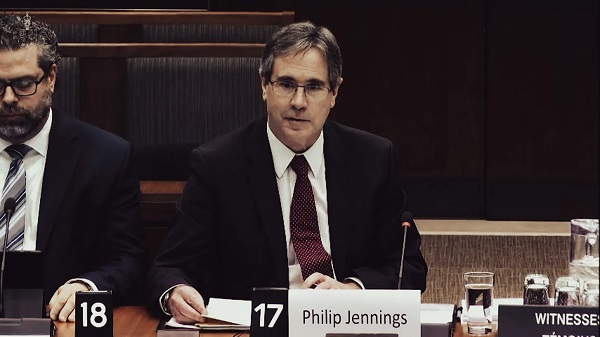
Blacked-Out Democracy: The Stellantis Deal Ottawa Won’t Show Its Own MPs
-
 Health2 days ago
Tens of thousands are dying on waiting lists following decades of media reluctance to debate healthcare
-
 Artificial Intelligence18 hours ago
Google denies scanning users’ email and attachments with its AI software
-
 Agriculture1 day ago
Health Canada pauses plan to sell unlabeled cloned meat
-
 Indigenous2 days ago
Indigenous activist wins landmark court ruling for financial transparency