
International
Trump Says U.S. Strike Captured Nicolás Maduro and Wife Cilia Flores; Bondi Says Couple Possessed Machine Guns




Military strike part of a wider confrontation with cartel-state alliances and Iran-linked networks.
President Donald Trump said early Saturday that the United States carried out a “large scale strike” in Venezuela and that President Nicolás Maduro and his wife, Cilia Flores, were “captured and flown out of the Country,” in an operation conducted jointly with U.S. counter-narcotics agencies.
Attorney General Pam Bondi said Maduro and Flores “have been indicted in the Southern District of New York,” and that Maduro has been charged with narco-terrorism conspiracy, cocaine importation conspiracy, possession of machine guns and destructive devices, and conspiracy to possess destructive devices against the United States.
Bondi said they will “soon face the full wrath of American justice on American soil in American courts,” and credited “our brave military” for what she called a successful mission to capture “two alleged international narco traffickers.”
Bondi’s statement builds on the Justice Department case first unveiled on March 26, 2020, when federal prosecutors in Manhattan unsealed an indictment accusing Maduro and other current and former Venezuelan officials of leading a long-running narcotics conspiracy tied to multi-ton cocaine shipments, with linkages to terrorist actors.
Bondi has also linked Maduro’s regime to fentanyl-tainted trafficking networks, while senior lawmakers — including Senator Tom Cotton — have cast Maduro’s alleged operations as intertwined with Iranian regime activity and broader hostile-state plots against the United States.
The dramatic U.S. announcement followed a night of explosions and rolling power outages in Caracas and other parts of Venezuela, with witnesses reporting flare-like streaks crossing the sky before blasts hit near major military installations in the capital, including the Fuerte Tiuna complex and the La Carlota area.
The Associated Press reported the strike “lasted less than 30 minutes,” with at least seven blasts that sent residents into the streets as videos and photos showed smoke plumes and a fireball over the city. The early fallout remained murky—questions persisted about casualties, and how fully Congress and senior military leadership were consulted—while Venezuelan authorities demanded proof of life for Maduro and declared an emergency, as uncertainty spread over who controls the country’s government apparatus following the strike and extraction operation.
After sunrise, Reuters reported Caracas appeared relatively calm, with soldiers patrolling some areas; separately, Reuters said Venezuela’s oil facilities appeared to be operating normally, though the port of La Guaira sustained severe damage.
Previously, Bondi has described the 2020 indictment as the backbone of the administration’s claim that Maduro ran a state-protected trafficking enterprise aligned with cartel partners to push cocaine toward the United States, including cocaine allegedly mixed with fentanyl-laced additives. The Bureau has also reported Bondi’s earlier assertion that authorities seized more than $700 million in assets linked to Maduro, including private jets, and nearly seven tons of cocaine allegedly tied directly to him.
The evidentiary foundation for those allegations, U.S. officials have repeatedly said, is the Southern District of New York indictment itself — along with related prosecutions and investigative records that, in the government’s telling, map a long-running alliance among Venezuelan officials, Colombian armed actors, and international facilitators.
One of the most consequential bridges between narcotics trafficking and terrorism claims in the Maduro case emerged in May 2020, when the U.S. Drug Enforcement Administration announced charges against former Venezuelan legislator Adel El Zabayar. In that statement, officials alleged that El Zabayar supported the Cártel de los Soles and worked “in coordination with designated Foreign Terrorist Organizations … Hizballah and Hamas,” including allegations that the cartel sought to recruit operatives from those groups to assist in plotting attacks against U.S. interests.
The Southern District of New York superseding indictment against Maduro also underscores the government’s contention that the alleged conspiracy’s footprint extended beyond Latin America — listing the offense as “begun and committed” in multiple jurisdictions, including Venezuela, Colombia, Mexico, Iran, and Syria.
Senator Tom Cotton amplified the administration’s message Saturday, saying he had spoken with Secretary of State Marco Rubio, who “confirmed that Maduro is in U.S. custody and will face justice for his crimes against our citizens.”
Cotton added that “the interim government in Venezuela must now decide whether to continue the drug trafficking and colluding with adversaries like Iran and Cuba or whether to act like a normal nation and return to the civilized world,” urging Venezuelan authorities to “choose wisely.”
The escalation also comes as Iran faces intensifying internal unrest, with protests and crackdowns that U.S. officials and allied analysts have framed as additional pressure on Tehran at the same time Washington signals willingness to use direct force against governments it portrays as cartel-state partners.
Early Friday morning, in a social media post, Trump commented on the growing movement against Iran’s clerical leadership, warning that if security forces opened fire on demonstrators, the United States was “locked and loaded and ready to go.”
As of early Saturday, the U.S. government had not publicly released new court filings detailing the capture operation itself or clarifying whether prosecutors filed additional charges beyond the New York case first unsealed in 2020, and it remained unclear when Maduro and Flores would make their first appearance in a U.S. federal court.
President Trump said he will speak on the operation against Maduro later this morning in Florida.
The Bureau is a reader-supported publication.
To receive new posts and support my work, consider becoming a free or paid subscriber.

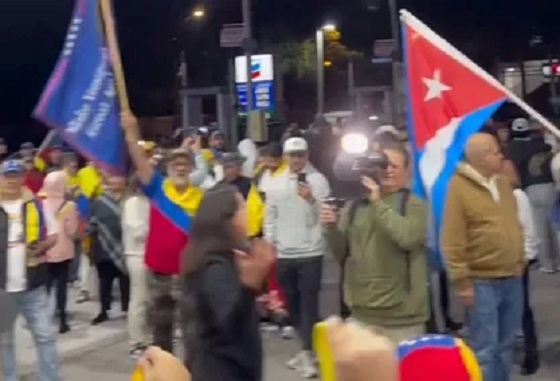

Celebrations broke out across South Florida Saturday as news spread that Venezuela’s longtime socialist strongman Nicolás Maduro had been captured and removed from power, a moment many Venezuelan exiles said they had waited their entire lives to see. In Doral, hundreds gathered outside the El Arepazo restaurant before sunrise, waving flags, embracing strangers, and reacting emotionally to what they described as a turning point for their homeland. Local television footage captured chants, tears, and spontaneous celebrations as word filtered through the community that Maduro and his wife had been “captured and flown out of the country” following U.S. military action announced by Donald Trump earlier that morning.
Venezuelans gathered early this morning in Doral to celebrate after news broke that the U.S. had captured Nicolás Maduro🇻🇪| #ONLYinDADE pic.twitter.com/mSNaF3IhR3
— ONLY in DADE (@ONLYinDADE) January 3, 2026
One young man, Edgar, spoke directly to reporters as the crowd surged behind him, calling the moment “history in the making.” He said his family had spent decades telling him stories about a Venezuela that once had real elections and basic freedoms. “My chest feels like it’s going to explode with joy,” he said, explaining that the struggle against the regime began long before he was born. Edgar thanked President Trump for allowing Venezuelans to work and rebuild their lives in the United States, adding that now, for the first time, he believed they could take those skills back home.
Similar scenes played out beyond Florida. Video circulating online showed Venezuelans celebrating in Chile and other parts of Latin America, reflecting the regional impact of Maduro’s fall. The dictator had clung to power through what U.S. officials and international observers have long described as sham elections, while presiding over economic collapse, mass emigration, and deepening ties to transnational criminal networks. U.S. authorities have pursued him for years, placing a $50 million bounty on information leading to his arrest or conviction. Federal prosecutors accused Maduro in 2020 of being a central figure in the so-called Cartel of the Suns, an international cocaine trafficking operation allegedly run by senior members of the Venezuelan regime and aimed, in prosecutors’ words, at flooding the United States with drugs.
After the overnight strikes, Venezuela’s remaining regime figures declared a state of emergency, even as images of celebration dominated social media abroad. In Washington, reaction from Florida lawmakers was swift. Rep. Carlos Gimenez, who represents a district with large Venezuelan, Cuban, and Nicaraguan exile communities, compared Maduro’s capture to one of the defining moments of the 20th century. “President Trump has changed the course of history in our hemisphere,” Gimenez wrote, calling the operation “this hemisphere’s equivalent to the Fall of the Berlin Wall.” He added that South Florida’s exile communities were “overwhelmed with emotion and hope,” and thanked U.S. service members for what he described as a decisive and successful mission.
For many gathered in Doral, the reaction was deeply personal. A CBS Miami reporter relayed comments from attendees who said they now felt safer about the possibility of returning to Venezuela to see family members they had not hugged in years. One man described it as the end of “26 years of waiting” for a free country, saying the moment felt less like politics and more like the closing of a long, painful chapter.
U.S. Attorney General Pam Bondi confirmed Saturday that Maduro and his wife have been formally indicted in the Southern District of New York. Bondi said the charges include narco-terrorism conspiracy, cocaine importation conspiracy, and weapons offenses involving machine guns and destructive devices. For Venezuelan Americans packed into South Florida streets, those legal details mattered less than the symbolism. After years of watching their country unravel from afar, many said they finally felt something unfamiliar when they looked south — relief, and the cautious hope that Venezuela’s future might no longer be written by a dictator.
Daily Caller
Scathing Indictment Claims Nicolás Maduro Orchestrated Drug-Fueled ‘Culture Of Corruption’ Which Plagued Entire Region

From the Daily Caller News Foundation
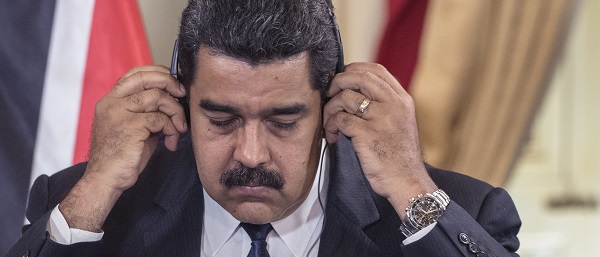
Ousted socialist Venezuelan dictator Nicolás Maduro was the mastermind of a pervasive drug-fueled “culture of corruption” which extended all the way to the U.S.’s backyard, according to the scathing indictment against him, his wife, his son, and others, released Saturday.
Hours after President Donald Trump announced Maduro’s capture and removal from power, Attorney General Pam Bondi confirmed the deposed despot and his wife, Cilia Flores, were indicted in the Southern District of New York on four charges, including narco-terrorism conspiracy, and “will soon face the full wrath of American justice” on U.S. soil. A grand jury found Maduro “and corrupt members of his regime enabled corruption fueled by drug trafficking throughout” the Latin American region, including in Mexico and Central America, and empowered notorious crime syndicates such as Tren de Aragua (TdA), according to the unsealed indictment.
Signed by Trump-appointed U.S. Attorney Jay Clayton, the 25-page indictment names six defendants, including the deposed Maduro, Flores, and Maduro’s 35-year-old son from his first marriage, Nicolás “Nicolasito” Maduro Guerra. It also names as defendants TdA leader Niño Guerrero and two high-profile members of Maduro’s United Socialist Party, Diosdado Cabello Rondón and Ramón Rodríguez Chacín.
Dear Readers:
As a nonprofit, we are dependent on the generosity of our readers.
Please consider making a small donation of any amount here.
Thank you!
Maduro, “like former President [Hugo] Chávez before him[,] participates in, perpetuates, and protects a culture of corruption in which powerful Venezuelan elites enrich themselves through drug trafficking and the protection of their partner drug traffickers,” the indictment alleges. “The profits of that illegal activity flow to corrupt rank-and-file civilian, military, and intelligence officials, who operate in a patronage system run by those at the top-referred to as the Cartel de Los Soles or Cartel of the Suns, a reference to the sun insignia affixed to the uniforms of high-ranking Venezuelan military officials.”
The Trump administration’s State Department announced it was designating the Cartel de Los Soles as a Foreign Terrorist Organization (FTO) in November 2025. Secretary of State Marco Rubio wrote in a statement at the time the cartel “is headed by Nicolás Maduro and other high-ranking individuals of the illegitimate Maduro regime who have corrupted Venezuela’s military, intelligence, legislature, and judiciary.”
The indictment also notes the South American nation “sits in a geographically valuable location for drug traffickers” and that, around the time Chávez came to power in 1999, “Venezuela became a safe haven” for them.
“In that environment, cocaine trafficking flourished,” the indictment continues, citing State Department estimates from arund 2020, with between 200 and 250 tons of the drug being trafficked through the country each year.
The charging document goes on to allege Maduro, his wife, son, and political allies had “partnered with narcotics traffickers and narco-terrorist groups, who dispatched processed cocaine from Venezuela to the United States via transshipment points in the Caribbean and Central America, such as Honduras, Guatemala, and Mexico.”
“Through this drug trafficking, [Maduro] and corrupt members of his regime enabled corruption fueled by drug trafficking throughout the region,” the indictment continues. “The transshipment points in Honduras, Guatemala, and Mexico similarly relied on a culture of corruption, in which cocaine traffickers operating in those countries paid a portion of their own profits to politicians who protected and aided them. In turn, these politicians used the cocaine-fueled payments to maintain and augment their political power.”
Maduro and his regime also “facilitated the empowerment and growth of violent narco-terrorist groups fueling their organizations with cocaine profits,” according to the indictment.
The charging document notably identifies organizations which collaborated with the Maduro regime: Colombian communist militant groups Revolutionary Armed Forces of Colombia (FARC) and National Liberation Army (ELN); Mexican syndicates the Sinaloa Cartel and Los Zetas; and Guerrero’s TdA.
The indictment also alleges Maduro Guerra, the captured dictator’s son, personally “worked to ship hundreds of kilograms of cocaine from Venezuela to Miami, Florida” around the year 2017. Maduro Guerra is a member of his father’s political party and served as a Deputy to the Venezuelan National Assembly since 2021.
“During this time, MADURO GUERRA spoke with his drug trafficking partners about, among other things, shipping low-quality cocaine to New York because it could not be sold in Miami, arranging a 500-kilogram shipment of cocaine to be unloaded from a cargo container near Miami, and using scrap metal containers to smuggle cocaine into the ports of New York,” the document reads.
Georgia county admits illegally certifying 315k ballots in 2020 presidential election
Alberta project would be “the biggest carbon capture and storage project in the world”
Canada’s debate on energy levelled up in 2025

Why Japan wants Western Canadian LNG
-
 International1 day ago
“Captured and flown out”: Trump announces dramatic capture of Maduro
-
Energy1 day ago
The U.S. Just Removed a Dictator and Canada is Collateral Damage
-
 International1 day ago
US Justice Department Accusing Maduro’s Inner Circle of a Narco-State Conspiracy
-
 Haultain Research24 hours ago
Trying to Defend Maduro’s Legitimacy
-
 Business1 day ago
Vacant Somali Daycares In Viral Videos Are Also Linked To $300 Million ‘Feeding Our Future’ Fraud
-
 Daily Caller14 hours ago
Trump Says US Going To Run Venezuela After Nabbing Maduro
-
International1 day ago
U.S. Claims Western Hemispheric Domination, Denies Russia Security Interests On Its Own Border
-
International23 hours ago
“It’s Not Freedom — It’s the First Step Toward Freedom”