
International
China Stages Massive Live-Fire Encirclement Drill Around Taiwan as Washington and Japan Fortify




Taiwan says 89 Chinese military aircraft and 28 PLA Navy and coast guard vessels surged into the island’s air and maritime approaches.
Following massive military sales from Washington to Taiwan and rapidly scaled defensive preparations from Japan, Beijing on Monday launched a sweeping show-of-force including live-fire activity around Taiwan.
The encirclement-style operation brought 89 Chinese military aircraft and 28 PLA Navy and coast guard vessels into the waters and skies around the island, one of the heaviest single-day tallies reported in more than a year.
Taiwan’s Presidential Office condemned the operation as a “unilateral provocation” that destabilizes regional peace, while stressing that Taiwan’s security agencies had “complete situational awareness” and had made preparations. Taiwan’s Ministry of National Defense said it activated an emergency response posture and conducted immediate readiness drills.
Beijing, for its part, framed the action as a warning—an operation the PLA’s Eastern Theater Command dubbed “Justice Mission 2025,” involving the army, navy, air force, and rocket force, with designated zones for live-fire activity and sea-and-airspace restrictions.
Global coverage described the drills as rehearsing the mechanics of isolation: blockade-style pressure against key approaches and ports, integrated sea-air patrols, and “deterrence” aimed at what the PLA calls “external interference.”
In a statement circulated by former Taiwanese foreign minister Joseph Wu, now head of the nation’s national security council, the message from Taipei was readiness to deploy force.
“As China ramps up military threats against Taiwan, our armed forces are conducting Rapid Response Exercises in response,” Wu stated Monday morning. “We remain resolute and unafraid. We’ll defend our sovereignty and democracy at all times.”
Across international coverage, analysts assessed Beijing’s actions as escalation through rehearsal, designed to demonstrate a capacity to encircle Taiwan, with live-fire elements and disruption to regional routes. Coverage also emphasized the “stern warning” language aimed at “Taiwan independence” forces and foreign actors, and Taiwan’s elevated alert posture.
The choreography of this operation matters as much as the raw numbers.
The PLA appears to be practicing the operational geometry of denying outside forces access—the kind of posture meant to complicate U.S. and allied intervention in a blockade or assault scenario. That emphasis has been widely noted in contemporaneous coverage, including reporting that the Eastern Theater Command’s messaging explicitly framed the drill as “deterrence” against “external interference.”
This helps explain why the drill lands amid a knot of accelerating pressures.
A number of analysts speculated that Washington’s major arms package and Japan’s “re-militarization”—Tokyo’s rapid defense buildup in response to Beijing’s expanding military footprint—now feed into an escalating drill cycle in which China aims to demonstrate that outside support can be deterred, delayed, or priced prohibitively high.
One clear trigger is the Trump administration’s newly announced $11.1 billion arms package for Taiwan, which Beijing cast as proof of U.S. “interference.”

Another is Japan.
Regional reporting and analysis have framed the drill as a warning shot aimed not only at Taipei but at the alliance architecture around it—especially as Japanese leaders and planners speak more openly about a “Taiwan contingency” and expand defense spending and capabilities that Beijing portrays as destabilizing.
A third is the longer arc Beijing itself has helped set.
U.S. officials have repeatedly stated their assessment that Xi Jinping has directed the PLA to be capable of taking Taiwan by force by 2027—a milestone that continues to shape planning assumptions across the region.
In reporting The Bureau gathered during a September 2023 visit to Taiwan, Taiwanese military experts and officials warned that Beijing’s pressure campaign had reached a new plateau: Chinese aircraft and vessels were crossing into—and remaining in—Taiwan’s territory longer, in actions they described as cognitive warfare designed to erode the public’s will to resist.
“China makes many excuses to conduct military exercises around Taiwan, and I don’t think this is only political,” said Dr. Tzu-Chieh Hung of the Institute for National Defense Security Research, a think tank funded by Taiwan’s government. “I think they are expanding the area of their military operations.”
“We think they are trying to create a new normal, when we will become numb to their actions, and make it a fait accompli,” another senior Taiwanese official told The Bureau.
Those warnings sit directly beneath Monday’s encirclement-style operation. Beyond the raw tallies—89 aircraft and 28 PLA Navy and coast guard vessels—Taiwan’s defense community sees a pattern of repeated rehearsals that stretch time, distance, and ambiguity, steadily conditioning the region to accept blockade-style actions as irreversible.
Yet the fatalism that Taiwan cannot be defended has not been the conclusion in major U.S. war-game work—and Washington’s $11-billion Taiwan arms package signals an intent to strengthen deterrence.
Back in 2023, a widely cited wargaming study by the Center for Strategic and International Studies found Taiwan could repel a Chinese invasion—if Taiwan is prepared to fight immediately, and the United States and Japan move fast to deliver overwhelming air and missile firepower against the fleets that would attempt a blockade and landing.
“There is no question, two years ago most people would have said China has the ability to conquer Taiwan in a fait accompli,” Mark Cancian, one of the study’s authors, told The Bureau in 2023. “But we showed that is not true.”
“The Chinese defensive bubble at the start of the war is so strong, that Taiwan needs what it has to fight with for the first month or two,” Cancian said. “And the United States has to participate en masse and quickly. Japan must at least provide base capacity for U.S. forces, and Taiwan must defend itself.”

 MxM News
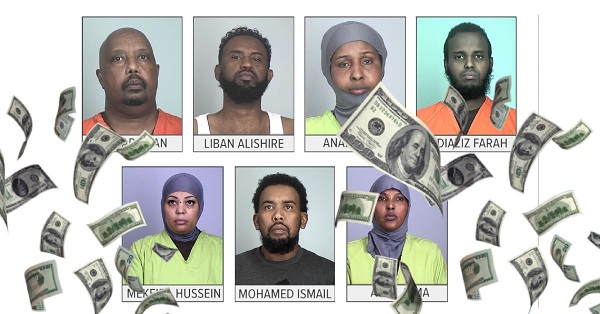
The Small Business Administration is moving to freeze grant money flowing into Minnesota after explosive allegations of large-scale fraud tied to state oversight failures, with SBA Administrator Kelly Loeffler signaling an immediate crackdown following recent independent reporting.
In a series of comments shared publicly by conservative commentator Benny Johnson, Loeffler said the agency is “cutting off and clawing back” SBA grants to the state while investigators dig deeper into what she described as a rapidly expanding fraud network.
Johnson wrote that Loeffler told him she was “disgusted and sickened” after reviewing footage from YouTuber Nick Shirley, whose on-the-ground reporting in Minnesota highlighted what he said were sham daycare and learning centers collecting millions in public funds despite showing little or no sign of legitimate operations.
According to Johnson, Loeffler blamed the situation on Democrat Gov. Tim Walz, accusing his administration of refusing to enforce basic rules governing small businesses and allowing fraud to flourish unchecked.
Johnson said Loeffler told him SBA investigators were able to identify roughly half a billion dollars in suspected fraud within days of focusing on Minnesota, calling the operation an “industrial-scale crime ring” that ripped off American taxpayers.
“Pending further review, SBA is freezing all grant funding to the state in order to stop the rampant waste of taxpayer dollars and uncover the full depth of fraud,” Loeffler said, according to Johnson’s account, adding that the total scope of the scheme remains unknown and could reach into the billions.
The controversy gained national traction after Shirley posted video of himself visiting multiple facilities, including a South Minneapolis site known as the Quality Learning Center, which he reported was approved for federal aid for up to 99 children but appeared inactive during normal business hours.
The center’s sign, Shirley noted, even misspelled the word “learning” as “learing.”
In the footage, a woman inside the building is heard shouting “Don’t open up,” falsely claiming Shirley and his colleague were Immigration and Customs Enforcement agents.
After the video circulated, Rep. Tom Emmer, a Republican, publicly demanded answers from Walz, questioning how such facilities were approved for millions in taxpayer funding.
Shirley’s reporting followed earlier investigations, including a November report by City Journal alleging that members of Minnesota’s Somali community had sent millions of dollars in stolen taxpayer funds overseas, with some of that money reportedly ending up in the hands of Al-Shabaab, a U.S.-designated terrorist organization.
While Walz’s administration has insisted it takes fraud seriously, the SBA’s decision to halt grant funding marks one of the most aggressive federal responses yet, underscoring how rapidly a local scandal has escalated into a national reckoning over oversight, enforcement, and accountability in Minnesota.

From StosselTV
Countries all over the world are imposing digital IDs. They tie your identity to everything you do. Spain’s Prime Minister wants “An end to anonymity online!”
Tech privacy expert Naomi Brockwell @NaomiBrockwellTV warns that’s dangerous. “Privacy is not about hiding,” she tells Stossel TV producer Kristin Tokarev. “It’s about an individual’s right to decide for themselves who gets access to their data. A Digital ID… will strip individuals of that choice.”
The new government mandated digital IDs aren’t just a digital version of your driver’s license or passport. “It connects everything,” Brockwell explains. “Your financial decisions, to your social media posts, your likes, the things that you’re watching, places that you’re going… Everything you say will be tied back to who you are.”
And once everything runs through a single government ID, access to services becomes something you need permission for. That’s already a reality in China where citizens are tracked, scored, and punished for “bad” behavior.
Brockwell warns the western world is “skyrocketing in that direction.” She says Americans need to push back now.
———
To make sure you receive the weekly video from Stossel TV, sign up here: https://www.johnstossel.com/#subscrib...
———

Ottawa’s Newly Released Defence Plan Crosses a Dangerous Line

Carney Floor Crossing Raises Counterintelligence Questions aimed at China, Former Senior Mountie Argues

All 12 Vaccinated vs. Unvaccinated Studies Found the Same Thing: Unvaccinated Children Are Far Healthier
Ottawa is still dodging the China interference threat
-
 Digital ID1 day ago
Canadian government launches trial version of digital ID for certain licenses, permits
-
 Alberta1 day ago
Alberta Next Panel calls to reform how Canada works
-
 Agriculture1 day ago
End Supply Management—For the Sake of Canadian Consumers
-
 International1 day ago
Georgia county admits illegally certifying 315k ballots in 2020 presidential election
-
 Business1 day ago
The “Disruptor-in-Chief” places Canada in the crosshairs
-
 Artificial Intelligence1 day ago
UK Police Pilot AI System to Track “Suspicious” Driver Journeys
-
 Energy24 hours ago
‘The electric story is over’
-
 International1 day ago
World-leading biochemist debunks evolutionary theory