Connect with us

Energy

Rulings could affect energy prices everywhere: Climate activists v. the energy industry in 2026

Published

9 minute read

From The Center Square

By 

Anti-oil and gas advocates across the country have pursued litigation in recent years attempting to force the fossil fuel industry to pay for decades of financial damages the advocates claim were caused by climate change.

Several cases have been dismissed while others advanced through court systems, with some being considered before the U.S. Supreme Court in 2026. Critics of the litigation call it “woke lawfare” and an attempt to force progressive political policies via the judicial system.

Critics also argue the lawsuits threaten U.S. energy independence and, depending on outcomes, will have sweeping impacts on every American.

Here are some of those cases.

Chevron USA Inc. v. Plaquemines Parish, Louisiana

On Jan. 12, 2026, the U.S. Supreme Court will hear oral arguments in Plaquemines Parish, Louisiana, vs. Chevron USA Inc. The case questions to what extent a state court can litigate against an oil company for its production of oil even if it obtained federal permits to produce the oil.

The litigation challenges activities of the oil companies dating back to World War II in some cases. Chevron argued the lawsuit was flawed, claiming that the activities in question were permitted, legal, and often conducted under federal direction – particularly those tied to national security during World War II.

A Plaquemines Parish jury in April ordered Chevron to pay $744 million in damages for its role in the degradation of the state’s coastal wetlands. Environmental activists celebrated the verdict. It was the first of 42 lawsuits filed since 2013 by parishes across coastal Louisiana to go to trial.

The Trump administration’s Justice Department stepped in on Chevron’s side, urging the Supreme Court to move the case from state court to federal court.

Business groups and energy advocates warned the verdict will drive jobs and investment out of Louisiana. The Louisiana Association of Business and Industry called the decision “shortsighted,” saying it would “brand Louisiana as a state that will extort the most recognizable companies on earth for billions of dollars, decades later.”

O.H. Skinner, executive director of Alliance for Consumers, told the Center Square the case seeks to score large settlements from the energy industry and stop oil production.

“The case arises from a broader campaign of woke lawfare in which activists and municipal governments seek to use courtrooms to determine what companies are allowed to produce and what consumers can buy,” Skinner said.

Suncor Energy Inc. v. Boulder

The nation’s highest court is still deciding whether it will hear arguments in Suncor Energy Inc. v. Boulder; a case to decide whether state and local governments can use nuisance laws to sue energy companies for activities that may cause climate change.

The case, originating in Colorado, centers around a City of Boulder and Boulder County lawsuit in state court against Suncor Energy claiming it misled the public in its activities that the local governments claim led to climate change effects.

Lawyers for Suncor Energy argue that allowing a case like this one to play out goes against protections in the Clean Air Act that prevent lawsuits from occurring against emitters from across state lines.

“Public nuisance can’t be used for global problems. It can be used for local problems,” Skinner told The Center Square. “That’s what it’s supposed to be used for.”

However, Skinner said many organizations that are pursuing climate change litigation are seeking to bankrupt energy companies with large monetary settlements. He said litigants will likely attempt to drain energy companies of their resources and use the funds to advocate certain ideological causes.

“These are highly ideological dark-money-funded, multi-faceted legal campaigns to bankrupt an entire industry and confiscate it for ideological reasons,” Skinner said.

City and County of Honolulu v. Sunoco

Similarly, in 2020, City and County of Honolulu v. Sunoco was one of the first examples of public nuisance lawsuits pursued in a state court. The city and county of Honolulu filed a lawsuit in 2020 accusing oil and gas companies, including Sunoco, Exxon Mobil, BP, Chevron and Shell, of misleading the public for decades about the dangers of climate change induced by burning fossil fuels.

The companies asked the U.S. Supreme Court to intervene in the case, but the court, without ruling on the merits, declined to do so in January.

While the case is based in Hawaii, Skinner said litigants there hope it will have far-reaching effects across the country.

“They’re not trying to stop behavior just in those states,” Skinner said. ”The thing that really freaks me out is how people in regular, everyday, real America are going to potentially be affected.”

The People of the State of California v. Exxon Mobil Corporation

Going a step further than Boulder and Honolulu, California Democrat Attorney General Rob Bonta filed a complaint against ExxonMobil in 2024 for what he says are its contributions to “the deluge of plastic pollution” affecting the state.

Exxon countersued, alleging “Bonta and the US Proxies – the former for political gain and the latter pawns for the Foreign Interests – have engaged in a deliberate smear campaign against ExxonMobil, falsely claiming that ExxonMobil’s effective and innovative advanced recycling technology is a ‘false promise’ and ‘not based on truth.,” American Tort Reform Foundation reported.

One of the foreign interests is  IEJF, an Australian nonprofit that’s connected to an Australian mining conmpany “that competes with ExxonMobil in the low carbon solutions and energy transition markets, ATRF reported.

Skinner said the litigants in this case are attempting to significantly reduce plastic use throughout the state of California and potentially beyond.

“That’ll make your average person’s life dramatically harder, and it’ll make a lot of things a lot more expensive, and it’ll make having kids, like, brutal,” Skinner said.

Leon v. Exxon Mobil Corp.

Aside from monetary settlements, petitioners in this case also are seeking wrongful death claims against energy companies for their contributions to climate change. The case stems from a woman in Washington state who said her mother died from heat-related illness due to the exacerbated effects of climate change.

She is suing energy companies for their alleged creation of conditions over a period of decades that led to increased temperatures on the day her mother died.

Skinner told The Center Square this case is one of the more blatant examples of ideology affecting the way a litigant pursues cases.

“I think they care because a death is worth a lot of money,” Skinner said. “The climate homicide cases are one of the more far-fetched legal theories I’ve ever seen, because you’re leveling this incredibly staggering charge.”

Climate cases will continue to move through the court system, with one to be heard before the U.S. Supreme Court in early 2026.

Skinner is urging the U.S. Supreme Court and lower courts to rule in favor of energy companies across the country.

“We want the energy companies to win, not because they are perfect actors, but because the alternative is that our lives are governed day in and day out by woke trial lawyers, woke [nongovernmental organizations] and local governments,” Skinner said.

Todayville is a digital media and technology company. We profile unique stories and events in our community. Register and promote your community event for free.

Follow Author

Daily Caller

US Halts Construction of Five Offshore Wind Projects Due To National Security

Published on


From the Daily Caller News Foundation

By David Blackmon

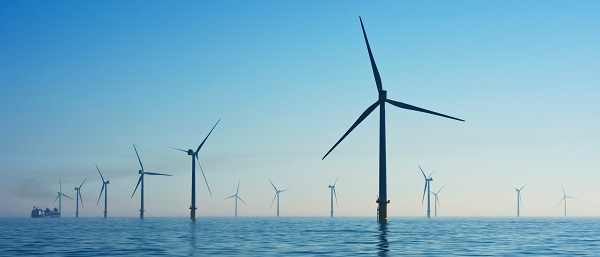
Interior Secretary Doug Burgum leveled the Trump administration’s latest broadside at the struggling U.S. offshore wind industry on Monday, ordering an immediate suspension of activities at the five big wind projects currently in development.

“Today we’re sending notifications to the five large offshore wind projects that are under construction that their leases will be suspended due to national security concerns,” Burgum told Fox Business host Maria Bartiromo. “During this time of suspension, we’ll work with the companies to try to find a mitigation. But we completed the work that President Trump has asked us to do. The Department of War has come back conclusively that the issues related to these large offshore wind programs have created radar interference that creates a genuine risk for the U.S.”

Predictably, reaction to Burgum’s order was immediate, with opponents of offshore wind praising the move, and industry supporters slamming it. In Semafor’s energy-related newsletter on Tuesday, energy and climate editor Tim McDowell quotes an unnamed ex-Energy Department official as claiming, “the Pentagon and intelligence services, which are normally sensitive to even extremely low-probability risks, never flagged this as a concern previously.” (RELATED: Trump Admin Orders Offshore Wind Farm Pauses Over ‘National Security Risks)

Yet, a simple 30-second Google search finds a wealth of articles going back to as early as October 2014 discussing ways to mitigate the long-ago identified issue of interference with air defense radars by these enormous windmills, some of which are taller than the Eiffel Tower. It is a simple fact that the issue was repeatedly raised during the Biden Administration’s mad rush to speed these giant windmill operations into the construction phase by cutting corners in the permitting process.

In May, 2024, the Bureau of Ocean Energy Management’s (BOEM) own analysis related to the Atlantic Shores South project contains a detailed discussion of the potential impacts and suggests multiple ways to mitigate for them. An Oct. 29, 2024 memo of understanding between BOEM and the Biden Department of Defense calls for increased collaboration between the two departments as a response to concerns from members of Congress and others related to these very long-known potential impacts.

The Georgia Tech Research Institute published a study dated June 6, 2022 detailing “Radar Impacts, Potential Mitigation, from Offshore Wind Turbines.” That study was in fact commissioned by the National Academies of Sciences, Engineering, and Medicine (NASEM), a private non-profit that functions as an advisory group to the federal government.

Oh.

report published in February 2024 by International Defense Security & Technology, Inc. describes the known issues thusly:

“Wind turbines can create clutter on radar screens in a number of ways. First, the metal towers and blades of wind turbines can reflect radar signals. This can create false returns on radar screens, which can make it difficult to detect and track real targets.

“Second, the rotating blades of wind turbines can create a Doppler effect on radar signals. This can cause real targets to appear to be moving at different speeds than they actually are. This can also make it difficult to track real targets.”

The simple Google search I conducted returns hundreds of articles dating all the way back to 2006 related to this long-known yet unresolved issue that could present a very real threat to national security. The fact that the Biden administration, in its religious zeal to speed these enormous offshore industrial projects into the construction phase, chose to downplay and ignore this threat in no way obligates his successor in office to commit the same dereliction of duty.

Some wind proponents are cynically raising concerns that a future Democratic administration could use this example as justification for cancelling oil and gas projects. It’s as if they’ve all forgotten about the previous four years of the Autopen presidency, which featured Joe Biden’s Day 1 order cancelling the 80% completed Keystone XL pipeline, a year-long moratorium on LNG export permitting, an attempt to set aside more than 200 million acres of the U.S. offshore from future leasing, and too many other destructive moves to detail here.

Again, a simple web search reveals that experts all over the world believe this is a real problem. If so, it needs to be addressed as a matter of national security. Burgum is intent on doing that. All half-baked talking points aside, this really isn’t complicated.

David Blackmon is an energy writer and consultant based in Texas. He spent 40 years in the oil and gas business, where he specialized in public policy and communications.

Continue Reading

Daily Caller

While Western Nations Cling to Energy Transition, Pragmatic Nations Produce Energy and Wealth

Published on


From the Daily Caller News Foundation

By Vijay Jayaraj

History will likely remember 2025 as the year energy corporatists finally stopped pretending there is a climate crisis. For a decade, a bizarre theater of the absurd played out as titans of the oil and gas industry apologized for their core business while pledging allegiance to a “green transition” that existed mostly in the imaginations of Western bureaucrats. But the curtain has seemingly fallen.

ExxonMobil, one of the world’s largest energy producers, has slashed $10 billion from its low-carbon investment commitments through 2030. Simultaneously, the company announced that it expects $25 billion in earnings growth from 2024 to 2030 to be powered primarily by increases in oil and gas production, which will push daily output to 5.5 million barrels of oil equivalent by the end of the decade.

This is not a company abandoning climate responsibility but rather at last recognizing what has long been obvious: The path prescribed by the climate industrial complex is economically destructive and operationally impossible – even with massive government subsidies.

Dear Readers:

As a nonprofit, we are dependent on the generosity of our readers.

Please consider making a small donation of any amount here.

Thank you!

For years, the global energy strategy has been surreal. Companies that built the modern world on the back of energy-dense hydrocarbons indulged those celebrating the arrival of wind turbines and solar panels to power civilization. But reality, stubborn and unforgiving, has interrupted the psychedelic revelry.

ExxonMobil’s low-carbon investments will be paced to policy support and customer demand, says the company. That is corporate speak meaning that spending on green projects is paused unless the government – using our tax dollars – subsidizes the risk or until a market exists.

Megaprojects, once heralded as the future, are now in line for deferral. Why? Because without taxpayer handouts, the economics of trying to bury underground a plant food like carbon dioxide simply do not work – and defy common sense.

The energy sector is pivoting from a strategy of “grow clean at all costs” to “returns first, transition last.” “Green” projects are being relegated to a secondary capital bucket – a token for good PR instead of a core activity.

Europe’s Shell and Aker BP and Canada’s Enbridge have withdrawn from the Science Based Targets initiative to establish “science-based emissions reductions.” This was a retreat from what is described as a “credible, science-based net-zero framework” because there was neither credibility nor science. It was a political suicide pact. The energy giants looked at the cliff’s edge and refused to jump.

British multinational BP, having abandoned its promise to go “Beyond Petroleum,” has raised its oil and gas spending and softened its renewable targets.

ENEOS Holdings, a Japanese refiner, has discarded hydrogen production targets, with CEO Tomohide Miyata explaining that “the shift toward a carbon-neutral society appears to be slowing.”

These U-turns represent a renaissance in policy realism. Energy needs do not disappear because politicians make speeches at climate summits or corporations allocate funds to ESG programs or governments attempt to control consumption and choices of appliances and automobiles.

Second thoughts about an inevitably doomed “green” transition is a victory for the single mother in the U.S. trying to budget for winter heating and for the small business owner in the U.K. whose margins are crushed by one of the highest commercial electricity rates in the world. And for the billions of people in developing nations, this pivot could be salvation from generational poverty.

The question now is whether governments will recognize what corporations have made clear: that the energy transition was a fantasy infused with scientific language and draped in moralistic gingerbread. Or will they continue to increase subsidies and regulations?

Very likely, there will be a bifurcation: on the one hand, western bureaucracies, particularly in Europe, continuing an economic decline under mandates and taxes, and on the other, pragmatic governments, many of them in Asia, pursuing prosperity with fuels and technologies that work.

Vijay Jayaraj is a Science and Research Associate at the CO2 Coalition, Fairfax, Va. He holds an M.S. in environmental sciences from the University of East Anglia and a postgraduate degree in energy management from Robert Gordon University, both in the U.K., and a bachelor’s in engineering from Anna University, India. He served as a research associate with the Changing Oceans Research Unit at University of British Columbia, Canada.

Continue Reading

Trending

X