
International
Ottawa is still dodging the China interference threat


This article supplied by Troy Media.
 By Lee Harding
Clement even called the Chinese government “the largest transnational organized crime group in the history of the world.”
Alarming claims out of P.E.I. point to deep foreign interference, and the federal government keeps stalling. Why?
Explosive new allegations of Chinese interference in Prince Edward Island show Canada’s institutions may already be compromised and Ottawa has been slow to respond.
The revelations came out in August in a book entitled “Canada Under Siege: How PEI Became a Forward Operating Base for the Chinese Communist Party.” It was co-authored by former national director of the RCMP’s proceeds of crime program Garry Clement, who conducted an investigation with CSIS intelligence officer Michel Juneau-Katsuya.
In a press conference in Ottawa on Oct. 8, Clement referred to millions of dollars in cash transactions, suspicious land transfers and a network of corporations that resembled organized crime structures. Taken together, these details point to a vulnerability in Canada’s immigration and financial systems that appears far deeper than most Canadians have been told.
P.E.I.’s Provincial Nominee Program allows provinces to recommend immigrants for permanent residence based on local economic needs. It seems the program was exploited by wealthy applicants linked to Beijing to gain permanent residence in exchange for investments that often never materialized. It was all part of “money laundering, corruption, and elite capture at the highest levels.”
Hundreds of thousands of dollars came in crisp hundred-dollar bills on given weekends, amounting to millions over time. A monastery called Blessed Wisdom had set up a network of “corporations, land transfers, land flips, and citizens being paid under the table, cash for residences and property,” as was often done by organized crime.
Clement even called the Chinese government “the largest transnational organized crime group in the history of the world.” If true, the allegation raises an obvious question: how much of this activity has gone unnoticed or unchallenged by Canadian authorities, and why?
Dean Baxendale, CEO of the China Democracy Fund and Optimum Publishing International, published the book after five years of investigations.
“We followed the money, we followed the networks, and we followed the silence,” Baxendale said. “What we found were clear signs of elite capture, failed oversight and infiltration of Canadian institutions and political parties at the municipal, provincial and federal levels by actors aligned with the Chinese Communist Party’s United Front Work Department, the Ministry of State Security. In some cases, political donations have come from members of organized crime groups in our country and have certainly influenced political decision making over the years.”
For readers unfamiliar with them, the United Front Work Department is a Chinese Communist Party organization responsible for influence operations abroad, while the Ministry of State Security is China’s main civilian intelligence agency. Their involvement underscores the gravity of the allegations.

It is a troubling picture. Perhaps the reason Canada seems less and less like a democracy is that it has been compromised by foreign actors. And that same compromise appears to be hindering concrete actions in response.
One example Baxendale highlighted involved a PEI hotel. “We explore how a PEI hotel housed over 500 Chinese nationals, all allegedly trying to reclaim their $25,000 residency deposits, but who used a single hotel as their home address. The owner was charged by the CBSA, only to have the trial shut down by the federal government itself,” he said. The case became a key test of whether Canadian authorities were willing to pursue foreign interference through the courts.
The press conference came 476 days after Bill C-70 was passed to address foreign interference. The bill included the creation of Canada’s first foreign agent registry. Former MP Kevin Vuong rightly asked why the registry had not been authorized by cabinet. The delay raises doubts about Ottawa’s willingness to confront the problem directly.
“Why? What’s the reason for the delay?” Vuong asked.
Macdonald-Laurier Institute foreign policy director Christopher Coates called the revelations “beyond concerning” and warned, “The failures to adequately address our national security challenges threaten Canada’s relations with allies, impacting economic security and national prosperity.”
Former solicitor general of Canada and Prince Edward Island MP Wayne Easter called for a national inquiry into Beijing’s interference operations.
“There’s only one real way to get to the bottom of what is happening, and that would be a federal public inquiry,” Easter said. “We need a federal public inquiry that can subpoena witnesses, can trace bank accounts, can bring in people internationally, to get to the bottom of this issue.”
Baxendale called for “transparency, national scrutiny, and most of all for Canadians to wake up to the subtle siege under way.” This includes implementing a foreign influence transparency commissioner and a federal registry of beneficial owners.
If corruption runs as deeply as alleged, who will have the political will to properly respond? It will take more whistleblowers, changes in government and an insistent public to bring accountability. Without sustained pressure, the system that allowed these failures may also prevent their correction.
Lee Harding is a research fellow for the Frontier Centre for Public Policy.
Troy Media empowers Canadian community news outlets by providing independent, insightful analysis and commentary. Our mission is to support local media in helping Canadians stay informed and engaged by delivering reliable content that strengthens community connections and deepens understanding across the country.

espionage
Carney Floor Crossing Raises Counterintelligence Questions aimed at China, Former Senior Mountie Argues
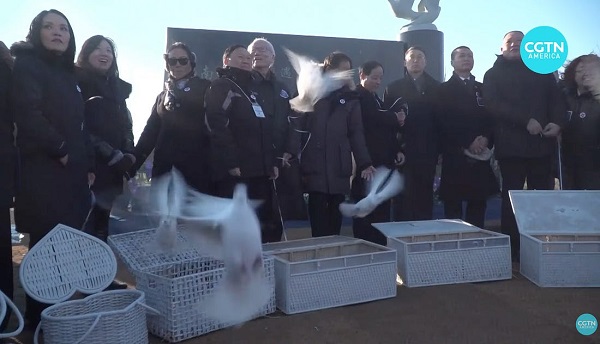
Michael Ma has recently attended events with Chinese consulate officials, leaders of a group called CTCCO, and the Toronto “Hongmen,” where diaspora community leaders and Chinese diplomats advocated Beijing’s push to subordinate Taiwan. These same entities have also appeared alongside Canadian politicians at a “Nanjing” memorial in Toronto.
By Garry Clement
Michael Ma’s meeting with consulate-linked officials proves no wrongdoing—but, Garry Clement writes, the timing and optics highlight vulnerabilities Canada still refuses to treat as a security issue.
I spent years in the Royal Canadian Mounted Police learning a simple rule. You assess risk based on capability, intent, and opportunity — not on hope or assumptions. When those three factors align, ignoring them is negligence.
That framework applies directly to Canada’s relationship with the People’s Republic of China — and to recent political events that deserve far more scrutiny than they have received.
Michael Ma’s crossover to the Liberal Party may be completely legitimate, although numerous observers have noted oddities in the timing, messaging, and execution surrounding Ma’s move, which brings Mark Carney within one seat of majority rule.
There is no evidence of wrongdoing.
But from a law enforcement and national security perspective, that is beside the point. Counterintelligence is not about proving guilt after the fact; it is about identifying vulnerabilities before damage is done — and about recognizing when a situation creates avoidable exposure in a known threat environment.
A constellation of ties and public appearances — reported by The Bureau and the National Post — has fueled questions about Ma’s China-facing judgment and vetting. Those reports describe his engagement with a Chinese-Canadian Conservative network that intervened in party leadership politics by urging Erin O’Toole to resign for his “anti-China” stance after 2021 and later calling for Pierre Poilievre’s ouster — while advancing Beijing-aligned framing on key Canada–China disputes.
The National Post has also reported that critics point to Ma’s pro-Beijing community endorsement during his campaign, and his appearance at a Toronto dinner for the Chinese Freemasons — where consular officials used the forum to promote Beijing’s “reunification” agenda for Taiwan. Ma reportedly offered greetings and praised the organization, but did not indicate support for annexation.
Open-source records also show that the same Toronto Chinese Freemasons and leaders Ma has met from a group called CTCCO sponsored and supported Ontario’s “Nanjing Massacre Commemorative Day” initiative (Bill 79) — a campaign celebrated in Chinese state and Party-aligned media, alongside public praise from PRC consular officials in Canada.
China Daily reported in 2018 that the Nanjing memorial was jointly sponsored by CTCCO and the Chinese Freemasons of Canada (Toronto), supported by more than $180,000 in community donations.
Photos show that PRC consular officials and Toronto politicians appeared at related Nanjing memorial ceremonies, including Zhao Wei, the alleged undercover Chinese intelligence agent later expelled from Canada after The Globe and Mail exposed Zhao’s alleged targeting of Conservative MP Michael Chong and his family in Hong Kong.
The fact that Michael Ma recently met with some of the controversial pro-Beijing community figures and organizations described above — including leaders from the Hongmen ecosystem and the CTCCO — does not prove any nefarious intent in either his Conservative candidacy or his decision to cross the floor to Mark Carney.
But it does demonstrate something Ottawa keeps avoiding: the PRC’s influence work is often conducted in plain sight, through community-facing institutions, elite access, and “normal” relationship networks — the very channels that create leverage, deniability, and political pressure over time.
Canada’s intelligence community has been clear.
The Canadian Security Intelligence Service has repeatedly identified the People’s Republic of China as the most active and persistent foreign interference threat facing Canada. These warnings are not abstract. They are rooted in investigations, human intelligence, and allied reporting shared across the Five Eyes intelligence alliance.
At the center of Beijing’s approach is the United Front Work Department — a Chinese Communist Party entity tasked with influencing foreign political systems, cultivating elites, and shaping narratives abroad. In policing terms, it functions as an influence and access network: operating legally where possible, covertly where necessary, and always in service of the Party’s strategic objectives.
What differentiates the People’s Republic of China from most foreign actors is legal compulsion.
Under China’s National Intelligence Law, Chinese citizens and organizations can be compelled to support state intelligence work and to keep that cooperation secret. In practical terms, that creates an inherent vulnerability for democratic societies: coercive leverage — applied through family, travel, business interests, community pressure, and fear.
This does not mean Chinese-Canadians are suspect.
Quite the opposite — many are targets of intimidation themselves. But it does mean the Chinese Communist Party has a mechanism to exert pressure in ways democratic states do not. Ignoring that fact is not tolerance; it is a failure to understand the threat environment.
In the RCMP, we were trained to recognize that foreign interference rarely announces itself. It operates through relationships, access, favors, timing, and silence. It does not require ideological agreement — only opportunity and leverage.
That is why transparency matters. When political figures engage with representatives of an authoritarian state known for interference operations, the burden is not on the public to “prove” concern is justified. The burden is on officials to explain why there is none — and to demonstrate that basic safeguards are in place.
Canada’s allies have already internalized this reality. Australia, the United States, and the United Kingdom have all publicly acknowledged and legislated against People’s Republic of China political interference. Their assessments mirror ours. Their conclusions are the same.
In the United States, the Linda Sun case — covered by The Bureau — illustrates, in the U.S. government’s telling, how United Front–style influence can be both deniable and effective: built through diaspora-facing proxies, insider access, and relationship networks that rarely look like classic espionage until the damage is done.
And this is not a niche concern.
Think tanks in both the United States and Canada — as well as allied research communities in the United Kingdom and Europe — have documented the scale and persistence of these political-influence ecosystems. Nicholas Eftimiades, an associate professor at Penn State and a former senior National Security Agency analyst, has estimated multiple hundreds of such entities are active in the United States. How many operate in Canada is the question Ottawa still refuses to treat with urgency — and, if an upcoming U.S. report is any indication, the answer may be staggering.
Canada’s hesitation to address United Front networks is not due to lack of information. It is due to lack of resolve.
From a law enforcement perspective, this is troubling. You do not wait for a successful compromise before tightening security. You act when the indicators are present — especially when your own intelligence agencies are sounding the alarm.
National security is not ideological. It is practical.
The Bureau is a reader-supported publication.
To receive new posts and support my work, consider becoming a free or paid subscriber.
Business
Deadlocked Jury Zeroes In on Alleged US$40 Million PPE Fraud in Linda Sun PRC Influence Case
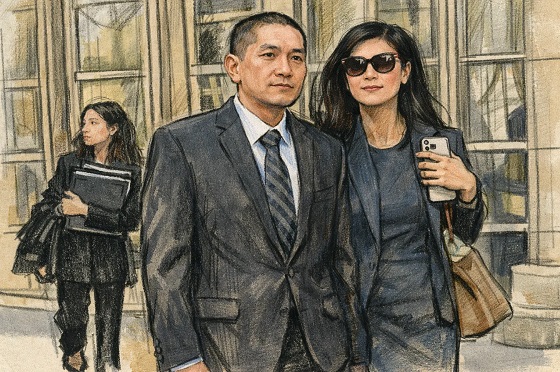


A jury of New Yorkers will return to court Monday, heading into their second week of deliberations in a landmark foreign-agent and corruption trial that reaches into two governors’ offices, struggling to decide whether former state official Linda Sun secretly served Beijing’s interests while she and her husband built a small business and luxury-property empire cashing in on pandemic-era contracts as other Americans were locked down.
On Thursday — the fourth day of deliberations — the jury sent federal Judge Brian Cogan a blunt note saying they were deadlocked on the sprawling case, in which the federal government has asked jurors to accept its account of a complex web of family and Chinese-community financial transactions through which Sun and her husband allegedly secured many millions of dollars in Chinese business deals channeled through “United Front” proxies aligned with Beijing.
The defense, by contrast, argues that Sun and her husband were simply successful through legitimate, culturally familiar transactions, not any covert scheme directed by a foreign state.
“We deeply feel that no progress can be made to change any jurors’ judgment on all counts,” the panel wrote Thursday. “There are fundamental differences on the evidence and the interpretation of the law. We cannot come to a unanimous decision.”
Cogan reportedly responded with a standard “Allen charge” — an instruction often used in deadlock situations, urging jurors to keep an open mind and continue deliberating. Because a juror had to be replaced due to travel commitments, the reconstituted panel will need to restart deliberations from square one on Monday.
According to a message the U.S. Justice Department sent to The Bureau on Wednesday, the panel had already asked for transcripts from four witnesses — Sean Carroll, Mary Beth Hefner, Karen Gallacchi and Jenny Low.
Those requests underline just how dense the case is — and how much money was at stake in the pandemic-era PPE deals at the heart of several key counts. Sun and her husband, businessman Chris Hu, face 19 counts in total, including Sun acting as an unregistered foreign agent for the People’s Republic of China; visa-fraud and alien-smuggling charges tied to a 2019 Henan provincial delegation; a multimillion-dollar pandemic PPE kickback scheme; bank-fraud and identity-misuse allegations; and multiple money-laundering and tax-evasion counts.
Carroll and Hefner’s testimony is central to the government’s key procurement-corruption allegation. Prosecutors say Sun used her influence to help steer more than US$40 million in PPE contracts to companies tied to her husband in China, with an expected profit of roughly US$8 million — money they allege was partly kicked back to Sun and Hu and funneled through accounts opened in Sun’s mother’s name and via friends and relatives.
Prosecutors say the clearest money trail in the Sun case runs through New York’s COVID PPE scramble and a pair of Jiangsu-linked emails.
“What was Linda Sun’s reward for taking official action to steer these contracts through the procurement process? Millions of dollars in kickbacks or bribes. It was money that she knew would be coming her way if she pushed these contracts through,” prosecutor Alexander Solomon told jurors in closing.
He argued that in March 2020, as the pandemic hit, a Jiangsu provincial official in Albany emailed state staff, including Sun, with information on four Chinese PPE and medical suppliers — and that the next day Sun forwarded herself a second email that copied the language about two of those vendors but added a new line claiming that “High Hope comes highly recommended by the Jiangsu Department of Commerce.”
A New York State IT specialist testified that this exact phrase appears only once in the state’s entire email system, in Sun’s self-forwarded message. Prosecutors urged jurors to see it as a fabricated email.
They suggest it is one of a number of frauds and forgeries, including claims that Sun repeatedly faked Governor Kathy Hochul’s signature on invitation letters used to bring Chinese provincial officials into the United States as part of plans to build a large education complex in New York.
On the PPE dealings, prosecutors say that during a period when Sun still had broad latitude to vet vendors, she sent procurement official Sean Carroll a proposal for High Hope to supply five million masks.
Prosecutors say she did not disclose that High Hope was tied to family associate Henry Hua or that she had a financial interest in the deal, but did repeat language that the company “came recommended” by Jiangsu authorities — phrasing Carroll testified he understood as an official validation from the Chinese side.
Prosecutors then linked the High Hope contracts that moved through Carroll’s office to alleged downstream cash flows laid out in a Chris Hu spreadsheet: PPE contract money Hu recorded as owed by Jay Chen, marked as wired into an account called “Golden” and then on to “HC Paradise,” the vehicle Hu allegedly used to pay for a Hawaii property.
In the government’s telling, that is how a doctored Jiangsu government “recommendation” for High Hope ultimately turned into New York taxpayer funds helping to buy a Hawaiian condo.
As The Bureau has reported in detail, prosecutor Alexander Solomon used his closing argument to give jurors one of the clearest open-court narratives yet of how the Chinese Communist Party’s United Front allegedly seeks to shape Western politics through diaspora networks — and to argue that Sun sat at the center of such a network in Albany.
Solomon walked the panel through a cast that ran from Sun’s family and business partners in Queens to United Front–linked association bosses in New York, provincial officials in Henan and Guangdong, and senior staff at China’s New York consulate. In his account, Sun — officially feted in Beijing as an “eminent young overseas Chinese” after a 2017 political tour — became a “trusted insider” who quietly repurposed New York State letterhead, access and messaging to serve Beijing’s priorities on Taiwan, Uyghurs and trade, while keeping that relationship hidden from her own colleagues.
Among the most striking elements of the government’s case, as The Bureau reported from Solomon’s summation, were that Sun allegedly forged Hochul’s signature on multiple invitation letters that Chinese officials then used to secure U.S. visas for provincial delegations — promising meetings in Albany that, Solomon said, no one in state government had actually approved — as part of a broader push by Henan Province to anchor a major education complex in the United States.
He then tied that influence narrative to money: millions in lobster-export deals for Chris Hu, allegedly greased by Chinese officials and New York-based United Front intermediaries; coded “apple” cash drop-offs funneled through third-party accounts; and the pandemic PPE contracts.
In Solomon’s formulation, all of that adds up to clandestine agency for Beijing.
He told jurors that while Sun was boasting to Chinese consulate officials that she could treat Hochul “like her puppet,” she was acting “like an agent,” treating PRC officials as her “real bosses,” and seeking and receiving benefits. Sun kept doing so, Solomon said, even after an FBI agent warned her about the Foreign Agents Registration Act and the risks of working too closely with the consulate.
Defense lawyers for Sun and Hu, in their own summations, urged the jury to reject that picture of a couple monetizing their access to senior American politicians in order to enrich themselves through clandestine business dealings facilitated by community leaders secretly working for Beijing’s United Front units. According to the Global Investigations Review summary and other accounts, they argued that prosecutors have overreached by criminalizing ordinary diaspora politics, networking and pandemic procurement.
On the defense view, much of what the government calls “direction and control” is better understood as routine back-and-forth involving a diaspora liaison in the governor’s office and community or trade groups with ties to China. None of the government’s evidence, they argue, amounts to an agreement to operate under the “direction or control” of a foreign principal — the core FARA requirement.
The Bureau is a reader-supported publication.
To receive new posts and support my work, consider becoming a free or paid subscriber.


Death by a thousand clicks – government censorship of Canada’s internet

Politicians should be honest about environmental pros and cons of electric vehicles

Chinese Billionaire Tried To Build US-Born Baby Empire As Overseas Elites Turn To American Surrogates

Canada releases new digital ID app for personal documents despite privacy concerns
-
Automotive13 hours ago
Politicians should be honest about environmental pros and cons of electric vehicles
-
 Agriculture2 days ago
Why is Canada paying for dairy ‘losses’ during a boom?
-
 Business2 days ago
Canada Hits the Brakes on Population
-
 Daily Caller2 days ago
‘Almost Sounds Made Up’: Jeffrey Epstein Was Bill Clinton Plus-One At Moroccan King’s Wedding, Per Report
-
 Crime2 days ago
Brown University shooter dead of apparent self-inflicted gunshot wound
-
 Business2 days ago
Trump signs order reclassifying marijuana as Schedule III drug
-
 Bruce Dowbiggin24 hours ago
Hunting Poilievre Covers For Upcoming Demographic Collapse After Boomers
-
 Alberta1 day ago
Alberta’s new diagnostic policy appears to meet standard for Canada Health Act compliance