Connect with us

Health

RFK Jr reversing Biden-era policies on gender transition care for minors

Published

3 minute read

From The Center Square

By

HHS is also working to “reverse the Biden administration’s attempt” to classify gender dysphoria as a type of disability.

The U.S. Department of Health and Human Services unveiled a multi-pronged regulatory effort Thursday to curtail gender-affirming care for minors, including gender transition procedures at hospitals.

The Centers for Medicare & Medicaid Services has drafted a rule that would prohibit pharmaceutical or surgical gender reassignment procedures from receiving federal Medicaid or Children’s Health Insurance Program funding. It’s also proposing a rule that would allow it to withdraw Medicare and Medicaid funding from hospitals that perform such surgeries on minors. HHS is also working to “reverse the Biden administration’s attempt” to classify gender dysphoria as a type of disability. If gender dysphoria were to be defined as a disability, then health care providers who don’t want to perform what the department has dubbed “sex-rejecting” procedures could be in danger of violating anti-discrimination laws.

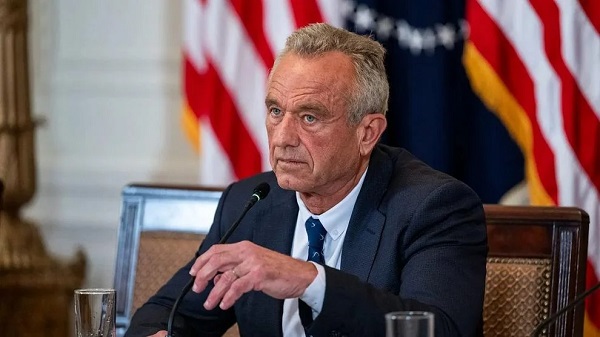
Health and Human Services Secretary Robert Kennedy, Jr., described gender affirming procedures as “unsafe” and “irreversible,” and framed the administration’s actions as “[protecting] America’s most vulnerable.”

“Our children deserve better – and we are delivering on that promise,” Kennedy told reporters Thursday.

The department is acting on directives from an executive order from President Donald Trump’s first few weeks in office. The Jan. 28 order called on government agencies to “[defund] chemical and surgical mutilation” of children, seemingly in the manner that HHS has proposed, as well as “rescind or amend all policies” relying on guidance from the World Professional Association for Transgender Health.

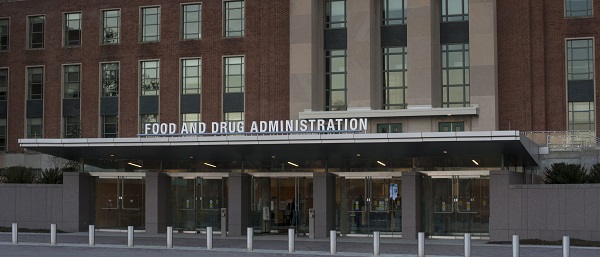
The Food and Drug Administration is also taking regulatory action against some organizations that market breast binders to minors.

“Illegal marketing of these products for children is alarming, and the FDA will take further enforcement action such as import alerts, seizures, and injunctions if it continues,” said Food and Drug Commissioner Marty Makary.

Kennedy signed a declaration Thursday that gender affirming procedures for minors “do not meet professionally recognized standards of health care” and the Assistant Secretary for Health and Head of the United States Public Health Service Commissioned Corps, Admiral Brian Christine, signed a public health message stating the same.

“Evidence shows sex-rejecting puberty blockers, cross-sex hormones, and surgeries are dangerous. Providers have an obligation to offer care grounded in evidence and to avoid interventions that expose young people to a lifetime of harm,” Christine said.

The House of Representatives passed a bill Wednesday that would criminalize the act of providing gender affirming care to minors.

Todayville is a digital media and technology company. We profile unique stories and events in our community. Register and promote your community event for free.

Follow Author

Daily Caller

Ex-FDA Commissioners Against Higher Vaccine Standards Took $6 Million From COVID Vaccine Makers

Published on


From the Daily Caller News Foundation

By Emily Kopp

Ten of the twelve former Food and Drug Administration (FDA) commissioners and acting commissioners opposed to the Trump administration’s stiffer standards for vaccines quietly disclosed ties to the pharmaceutical industry, a Daily Caller News Foundation review shows.

The FDA old guard criticized the new leadership in a Dec. 3 New England Journal of Medicine (NEJM) letter over a higher regulatory bar for vaccines, namely the expectation that most new vaccine approvals will require randomized clinical trials, arguing it could hamper the market.

“Insisting on long, expensive outcomes studies for every updated formulation would delay the arrival of better-matched vaccines when new outbreaks emerge or when additional groups of patients could benefit,” the former commissioners wrote. “Abandoning the existing methods won’t ‘elevate vaccine science’ … It will subject vaccines to a substantially higher and more subjective approval bar.”

But while the former commissioners disclosed their conflicts of interest to the medical journal — per standard practice in scientific publishing — reporters didn’t relay them to the broader public in reports in the Washington PostSTAT News and CNN.

The headlines about a bipartisan rebuke from former occupants of FDA’s highest office give the impression that the Trump administration is contravening established science, but closer inspection reveals a revolving door between pharmaceutical corporations and the agencies overseeing them.

Three of the signatories have received payments totaling $6 million from manufacturers or former manufacturers of COVID vaccines.

Scott Gottlieb has received $2.1 million in cash and stock from his position on the Pfizer board of directors, where he has advised on ethics and regulatory compliance since 2019, according to company filings to the Securities and Exchange Commission. Stephen Ostroff has received $752,310 from Pfizer in consulting fees since 2020, according to OpenPayments.

Mark McClellan has received $3.3 million from Johnson & Johnson as a member of the board of directors since 2013, SEC filings also show. McClellan also consults for the new pharmaceutical arm of the alternative investment management company Blackstone, which invested $750 million in Moderna in April 2025.

Gottlieb and McClellan did not respond to requests for comment. Ostroff could not be reached for comment.

FDA Center for Biologics Evaluation and Research Director Vinay Prasad outlined the higher standards and shared the results of an internal analysis validating 10 reports of children’s deaths following the COVID-19 vaccine in a Nov. 28 memo to staff. He called for introspection and reform at the agency.

The NEJM letter criticizes Prasad for cracking down on a practice called “immunobridging” that infers vaccine efficacy from laboratory tests rather than assessing it through real-world reductions in disease or death. The FDA under the Biden administration expanded COVID vaccines to children using this “immunobridging” technique, extrapolating vaccine efficacy from adults to children based on antibody levels.

Norman Sharpless — who in addition to previously serving as acting FDA commissioner also served as the head of the National Institutes of Health’s National Cancer Institute — consults for Tempus, a company that collaborates with COVID vaccine maker BioNTech. He has helped steer $70 million in investments in biotech through a venture capital firm he founded in November 2024. Sharpless also disclosed $26,180 in payments in 2024 from Chugai Pharmaceutical, a Japanese pharmaceutical company that markets mRNA technology among other drugs, on OpenPayments.

“I was grateful for the opportunity to serve as NCI Director and Acting FDA Commissioner in the first Trump Administration, and strongly support many of the things President Trump is trying to do in the current Administration,” Sharpless said in an email.

Margaret Hamburg, another former FDA commissioner and signatory of the NEJM letter, has since 2020 earned $2.8 million as a member of the board of Alnylam Pharmaceuticals, which markets RNA interference (RNAi) technology.

Hamburg did not respond to a message on LinkedIn.

Most signatories disclosed income from biotech companies testing experimental cancer treatments. These products could face tighter scrutiny under Prasad, a hematologist-oncologist long wary of rubberstamping pricey oncology drugs — which Prasad points out often cause some toxicity — without plausible evidence of an improvement in quality of life or survival.

The former FDA commissioners disclosed ties to Sermonix Pharmaceuticals Inc.; OncoNano Medicine; incyclix; Nucleus Radiopharma; and N-Power, a contractor that runs oncology clinical trials.

Andrew von Eschenbach, who like Sharpless formerly served both as FDA commissioner and the head of the National Cancer Institute, disclosed stock in HistoSonics, a company with investments from Bezos Expeditions and Thiel Bio seeking FDA approval for ultrasound technology targeted at tumors.

Some FDA commissioners who signed onto the letter opposing changes to vaccine approvals have ties to biotechnology investment firms, namely McClellan, who consults Arsenal Capital; Janet Woodcock, who consults RA Capital Management; and Robert Califf, who owns stock in Population Health Partners.

Califf did not respond to an email requesting comment. Woodcock did not respond to requests for comment sent to two medical research advocacy groups with Woodcock on the board. Eschenbach did not respond to a LinkedIn message.

The two signatories without pharmaceutical ties may find their judgement challenged by the FDA investigation into COVID-19 vaccine deaths, having either implemented or formally defended the Biden administration’s headlong expansion of vaccines and boosters to healthy adults and children.

David Kessler executed Biden’s vaccination policy as chief science officer at the Department of Health and Human Services, helping to secure deals for shots with Pfizer and Moderna.

Meanwhile Jane Henney chaired a National Academies of Sciences, Engineering, and Medicine report published in October 2025 that praised the performance of FDA and Centers for Disease Control and Prevention (CDC) vaccine surveillance during the pandemic — underwritten with CDC funding.

That assessment clashes with that of a Senate report, citing internal documents from FDA, finding that CDC never updated its vaccine surveillance tool “V-Safe” to include cardiac symptoms, despite naming myocarditis as a potential adverse event by October 2020, and that top officials in the Biden administration delayed warning pediatricians and other providers about the risk of myocarditis after their approval in some children in May 2021, months after Israeli health officials first detected it in February 2021. The Senate investigation named Woodcock, a signatory of the NEJM letter, as one of the FDA officials who slow-walked the warning.

Continue Reading

Alberta

Alberta’s new diagnostic policy appears to meet standard for Canada Health Act compliance

Published on

From the Fraser Institute

By Nadeem Esmail, Mackenzie Moir and Lauren Asaad

In October, Alberta’s provincial government announced forthcoming legislative changes that will allow patients to pay out-of-pocket for any diagnostic test they want, and without a physician referral. The policy, according to the Smith government, is designed to help improve the availability of preventative care and increase testing capacity by attracting additional private sector investment in diagnostic technology and facilities.

Unsurprisingly, the policy has attracted Ottawa’s attention, with discussions now taking place around the details of the proposed changes and whether this proposal is deemed to be in line with the Canada Health Act (CHA) and the federal government’s interpretations. A determination that it is not, will have both political consequences by being labeled “non-compliant” and financial consequences for the province through reductions to its Canada Health Transfer (CHT) in coming years.

This raises an interesting question: While the ultimate decision rests with Ottawa, does the Smith government’s new policy comply with the literal text of the CHA and the revised rules released in written federal interpretations?

According to the CHA, when a patient pays out of pocket for a medically necessary and insured physician or hospital (including diagnostic procedures) service, the federal health minister shall reduce the CHT on a dollar-for-dollar basis matching the amount charged to patients. In 2018, Ottawa introduced the Diagnostic Services Policy (DSP), which clarified that the insured status of a diagnostic service does not change when it’s offered inside a private clinic as opposed to a hospital. As a result, any levying of patient charges for medically necessary diagnostic tests are considered a violation of the CHA.

Ottawa has been no slouch in wielding this new policy, deducting some $76.5 million from transfers to seven provinces in 2023 and another $72.4 million in 2024. Deductions for Alberta, based on Health Canada’s estimates of patient charges, totaled some $34 million over those two years.

Alberta has been paid back some of those dollars under the new Reimbursement Program introduced in 2018, which created a pathway for provinces to be paid back some or all of the transfers previously withheld on a dollar-for-dollar basis by Ottawa for CHA infractions. The Reimbursement Program requires provinces to resolve the circumstances which led to patient charges for medically necessary services, including filing a Reimbursement Action Plan for doing so developed in concert with Health Canada. In total, Alberta was reimbursed $20.5 million after Health Canada determined the provincial government had “successfully” implemented elements of its approved plan.

Perhaps in response to the risk of further deductions, or taking a lesson from the Reimbursement Action Plan accepted by Health Canada, the province has gone out of its way to make clear that these new privately funded scans will be self-referred, that any patient paying for tests privately will be reimbursed if that test reveals a serious or life-threatening condition, and that physician referred tests will continue to be provided within the public system and be given priority in both public and private facilities.

Indeed, the provincial government has stated they do not expect to lose additional federal health care transfers under this new policy, based on their success in arguing back previous deductions.

This is where language matters: Health Canada in their latest CHA annual report specifically states the “medical necessity” of any diagnostic test is “determined when a patient receives a referral or requisition from a medical practitioner.” According to the logic of Ottawa’s own stated policy, an unreferred test should, in theory, be no longer considered one that is medically necessary or needs to be insured and thus could be paid for privately.

It would appear then that allowing private purchase of services not referred by physicians does pass the written standard for CHA compliance, including compliance with the latest federal interpretation for diagnostic services.

But of course, there is no actual certainty here. The federal government of the day maintains sole and final authority for interpretation of the CHA and is free to revise and adjust interpretations at any time it sees fit in response to provincial health policy innovations. So while the letter of the CHA appears to have been met, there is still a very real possibility that Alberta will be found to have violated the Act and its interpretations regardless.

In the end, no one really knows with any certainty if a policy change will be deemed by Ottawa to run afoul of the CHA. On the one hand, the provincial government seems to have set the rules around private purchase deliberately and narrowly to avoid a clear violation of federal requirements as they are currently written. On the other hand, Health Canada’s attention has been aroused and they are now “engaging” with officials from Alberta to “better understand” the new policy, leaving open the possibility that the rules of the game may change once again. And even then, a decision that the policy is permissible today is not permanent and can be reversed by the federal government tomorrow if its interpretive whims shift again.

The sad reality of the provincial-federal health-care relationship in Canada is that it has no fixed rules. Indeed, it may be pointless to ask whether a policy will be CHA compliant before Ottawa decides whether or not it is. But it can be said, at least for now, that the Smith government’s new privately paid diagnostic testing policy appears to have met the currently written standard for CHA compliance.

Nadeem Esmail

Director, Health Policy, Fraser Institute

Mackenzie Moir

Senior Policy Analyst, Fraser Institute
Lauren Asaad

Lauren Asaad

Policy Analyst, Fraser Institute
Continue Reading

Trending

X