
Business
Brutal economic numbers need more course corrections from Ottawa


From the Fraser Institute
By Matthew Lau
Canada’s lagging productivity growth has been widely discussed, especially after Bank of Canada senior deputy governor Carolyn Rogers last year declared it “an emergency” and said “it’s time to break the glass.” The federal Liberal government, now entering its eleventh year in office, admitted in its recent budget that “productivity remains weak, limiting wage gains for workers.”
Numerous recent reports show just how weak Canada’s productivity has been. A recent study published by the Fraser Institute shows that since 2001, labour productivity has increased only 16.5 per cent in Canada vs. 54.7 per cent in the United States, with our underperformance especially notable after 2017. Weak business investment is a primary reason for Canada’s continued poor economic outcomes.
A recent McKinsey study provides worrying details about how the productivity crisis pervades almost all sectors of the economy. Relative to the U.S., our labour productivity underperforms in: mining, quarrying, and oil and gas extraction; construction; manufacturing; transportation and warehousing; retail trade; professional, scientific, and technical services; real estate and rental leasing; wholesale trade; finance and insurance; information and cultural industries; accommodation and food services; utilities; arts, entertainment and recreation; and administrative and support, waste management and remediation services.
Canada has relatively higher labour productivity in just one area: agriculture, forestry, fishing and hunting. To make matters worse, in most areas where Canada’s labour productivity is less than American, McKinsey found we had fallen further behind from 2014 to 2023. In addition to doing poorly, Canada is trending in the wrong direction.
Broadening the comparison to include other OECD countries does not make the picture any rosier—Canada “is growing more slowly and from a lower base,” as McKinsey put it. This underperformance relative to other countries shows Canada’s economic productivity crisis is not the result of external factors but homemade.

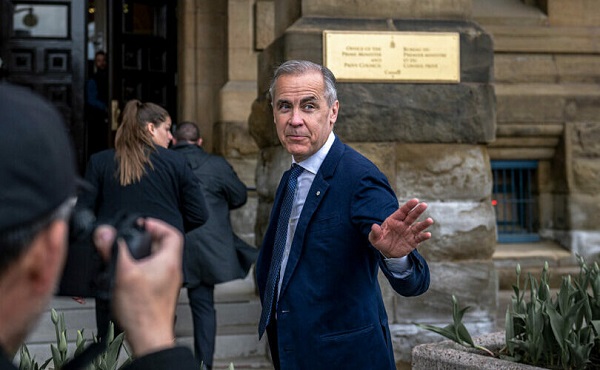
The federal Liberals have done little to reverse our relative decline. The Carney government’s proposed increased spending on artificial intelligence (AI) may or may not help. But its first budget missed a clear opportunity to implement tax reform and cuts. As analyses from the Fraser Institute, University of Calgary, C.D. Howe Institute, TD Economics and others have argued, fixing Canada’s uncompetitive tax regime would help lift productivity.
Regulatory expansion has also driven Canada’s relative economic decline but the federal budget did not reduce the red tape burden. Instead, the Carney government empowered cabinet to decide which large natural resource and infrastructure projects are in the “national interest”—meaning that instead of predictable transparent rules, businesses must answer to the whims of politicians.
The government has also left in place many of its Trudeau-era environmental regulations, which have helped push pipeline investors away for years. It is encouraging that a new “memorandum of understanding” between Ottawa and Alberta may pave the way for a new oil pipeline. A memorandum of undertaking would have been better.
Although the government paused its phased-in ban on conventionally-powered vehicle sales in the face of heavy tariff-related headwinds to Canada’s automobile sector, it still insists that all new light-duty vehicle sales by 2035 must be electric. Liberal MPs on the House of Commons Industry Committee recently voted against a Conservative motion calling for repeal of the EV mandate. Meanwhile, Canadian consumers are voting with their wallets. In September, only 10.2 per cent of new motor vehicle sales were “zero-emission,” an ominous18.2 per cent decline from last year.
If the Carney government continues down its current path, it will only make productivity and consumer welfare worse. It should change course to reverse Canada’s economic underperformance and help give living standards a much-needed boost.


From the Fraser Institute
By Tegan Hill and Jason Clemens
Recent court decision adds to growing uncertainty in B.C.
A recent decision by the B.C. Court of Appeal further clouds private property rights and undermines investment in the province. Specifically, the court determined British Columbia’s mineral claims system did not follow the province’s Declaration on the Rights of Indigenous Peoples Act (DRIPA), which incorporated the United Nations Declaration on the Rights of Indigenous Peoples (UNDRIP) into law.
DRIPA (2019) requires the B.C. provincial government to “take all measures necessary to ensure the laws of British Columbia are consistent with the Declaration,” meaning that all legislation in B.C. must conform to the principles outlined in the UNDRIP, which states that “Indigenous peoples have the right to the lands, territories and resources which they have traditionally owned, occupied or otherwise used or acquired.” The court’s ruling that the provincial government is not abiding by its own legislation (DRIPA) is the latest hit for the province in terms of ongoing uncertainty regarding property rights across the province, which will impose massive economic costs on all British Columbians until it’s resolved.
Consider the Cowichan First Nations legal case. The B.C. Supreme Court recently granted Aboriginal title to over 800 acres of land in Richmond valued at $2.5 billion, and where such aboriginal title is determined to exist, the court ruled that it is “prior and senior right” to other property interests. Put simply, the case puts private property at risk in BC.
The Eby government is appealing the case, yet it’s simultaneously negotiating bilateral agreements that similarly give First Nations priority rights over land swaths in B.C.
Consider Haida Gwaii, an archipelago on Canada’s west coast where around 5,000 people live—half of which are non-Haida. In April 2024, the Eby government granted Haida Aboriginal title over the land as part of a bilateral agreement. And while the agreement says private property must be honoured, private property rights are incompatible with communal Aboriginal title and it’s unclear how this conflict will be resolved.
Moreover, the Eby government attempted to pass legislation that effectively gives First Nations veto power over public land use in B.C. in 2024. While the legislation was rescinded after significant public backlash, the Eby’s government’s continued bilateral negotiations and proposed changes to other laws indicate it’s supportive of the general move towards Aboriginal title over significant parts of the province.
UNDRIP was adopted by the United Nations in 2007 and the B.C. Legislature adopted DRIPA in 2019. DRIPA requires that the government must secure “free, prior and informed consent” before approving projects on claimed land. Premier Eby is directly tied to DRIPA since he was the attorney general and actually drafted the interpretation memo.
The recent case centres around mineral exploration. Two First Nations groups—the Gitxaala Nation and the Ehattesaht First Nation—claimed the duty to consult was not adequately met and that granting mineral claims in their land “harms their cultural, spiritual, economic, and governance rights over their traditional territories,” which is inconsistent with DRIPA.
According to a 2024 survey of mining executives, more uncertainty is the last thing B.C. needs. Indeed, 76 per cent of respondents for B.C. said uncertainty around protected land and disputed land claims deters investment compared to only 29 per cent and 44 per cent (respectively) for Saskatchewan.
This series of developments have and will continue to fuel uncertainty in B.C. Who would move to or invest in B.C. when their private property, business, and investment is potentially at risk?
It’s no wonder British Columbians are leaving the province in droves. According to the B.C. Business Council, nearly 70,000 residents left B.C. for other parts of Canada last year. Similarly, business investment (inflation-adjusted) fell by nearly 5 per cent last year, exports and housing starts were down, and living standards in the province (as measured by per-person GDP) contracted in both 2023 and 2024.
B.C.’s recent developments will only worsen uncertainty in the province, deterring investment and leading to stagnant or even declining living standards for British Columbians. The Eby government should do its part to reaffirm private property rights, rather than continue fuelling uncertainty.

Tegan Hill
Director, Alberta Policy, Fraser Institute

Jason Clemens
Executive Vice President, Fraser Institute

From the Daily Caller News Foundation
By Greg Blackie
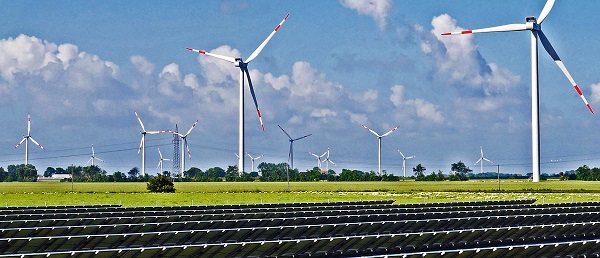
Our country is facing an energy crisis. No, not because of new demand from data centers or AI. Instead, it’s because utilities in nearly every state, due to government imposed “renewable” mandates, self-imposed mandates, and the supercharging of the Green New Scam under the so-called “Inflation Reduction Act,” have been shutting down vital coal resources and building out almost exclusively intermittent and costly resources like solar, wind, and battery storage.
President Donald Trump understands this, and that is why on day one of his administration he declared an Energy Emergency. Then, a few months later, the President signed a trio of Executive Orders designed to keep our “beautiful, clean coal” burning and providing the reliable, baseload, and affordable electricity Americans have benefitted from for generations.
Those orders have been used to keep coal generation online that was slated to shut down in Michigan and will potentially keep two units operating that were scheduled to shut down in Colorado this December. In Arizona, however, the Cholla Power Plant in Navajo County was shuttered by the utility just weeks after Trump explicitly called out the plant for saving in a press conference.
Dear Readers:
As a nonprofit, we are dependent on the generosity of our readers.
Please consider making a small donation of any amount here.
Thank you!
Unlike states with green mandates, Arizona essentially has none. Instead, our utilities, like many around the country, have self-imposed commitments to go “Net Zero” by 2050. To meet that target, they have planned to shut down all coal generation in the state by 2032 and plan to build out almost exclusively solar, wind, and battery storage to meet an expected explosive growth in demand, at a cost of tens of billions of dollars. So it is no surprise that like much of the rest of the country, Arizona is facing an energy crisis.
Taking a look at our largest regulated utilities (APS, TEP, and UNS) and the largest nonprofit utility, SRP, future plans paint an alarming picture. Combined, over the next 15 years, these utilities expect to see demand increase from 19,200 MW to 28,000 MW. For reference, 1,000 MW of electricity is enough to power roughly 250,000 homes. To meet that growth in demand, however, Arizonans will only get a net increase of 989 MW of reliable generation (coal, natural gas, and nuclear) compared to 22,543 MW (or nearly 23 times as much) of intermittent solar, wind, and battery storage.
But what about all of the new natural gas coming into the state? The vast majority of it will be eaten up just to replace existing coal resources, not to bring additional affordable energy to the grid. For example, the SRP board recently voted to approve the conversion of their Springerville coal plant to natural gas by 2030, which follows an earlier vote to convert another of their coal plants, Coronado, to natural gas by 2029. This coal conversion trap leaves ratepayers with the same amount of energy as before, eating up new natural gas capacity, without the benefit of more electricity.
So, while the Arizona utilities plan to collectively build an additional 4,538 MW of natural gas capacity over the next 15 years, at the same time they will be removing -3,549 MW (all of what is left on the grid today) of coal. And there are no plans for more nuclear capacity anytime soon. Instead, to meet their voluntary climate commitments, utilities plan to saddle ratepayers with the cost and resultant blackouts of the green new scam.
It’s no surprise then that Arizona’s largest regulated utilities, APS and TEP, are seeking double digit rate hikes next year. It’s not just Arizona. Excel customers in Colorado (with a 100% clean energy commitment) and in Minnesota (also with a 100% clean energy commitment) are facing nearly double-digit rate hikes. The day before Thanksgiving, PPL customers in Rhode Island (with a state mandate of 100% renewable by 2033) found out they may see rate hikes next year. Dominion (who has a Net Zero by 2050 commitment) wanted to raise rates for customers in Virginia by 15%. Just last month, regulators approved a 9% increase. Importantly, these rate increases are to recover costs for expenses incurred years ago, meaning they are clearly to cover the costs of the energy “transition” supercharged under the Biden administration, not from increased demand from data centers and AI.
It’s the same story around the country. Electricity rates are rising. Reliability is crumbling. We know the cause. For generations, we’ve been able to provide reliable energy at an affordable cost. The only variable that has changed has been what we are choosing to build. Then, it was reliable, dispatchable power. Now, it is intermittent sources that we know cost more, and that we know cause blackouts, all to meet absurd goals of going 100% renewable – something that no utility, state, or country has been able to achieve. And we know the result when they try.
This crisis can be avoided. Trump has laid out the plan to unleash American Energy. Now, it’s time for utilities to drop their costly green new scam commitments and go back to building reliable and affordable power that generations to come will benefit from.
Greg Blackie, Deputy Director of Policy at the Arizona Free Enterprise Club. Greg graduated summa cum laude from Arizona State University with a B.S. in Political Science in 2019. He served as a policy intern with the Republican caucus at the Arizona House of Representatives and covered Arizona political campaigns for America Rising during the 2020 election cycle.


Wayne Gretzky’s Terrible, Awful Week.. And Soccer/ Football.

Western Campuses Help Build China’s Digital Dragnet With U.S. Tax Funds, Study Warns

Common Vaccines Linked to 38-50% Increased Risk of Dementia and Alzheimer’s

US podcaster Glenn Beck extends a lifeline to a Saskatchewan woman waiting for MAiD
-
Bruce Dowbiggin2 days ago
Wayne Gretzky’s Terrible, Awful Week.. And Soccer/ Football.
-
espionage1 day ago
Western Campuses Help Build China’s Digital Dragnet With U.S. Tax Funds, Study Warns
-
Focal Points22 hours ago
Common Vaccines Linked to 38-50% Increased Risk of Dementia and Alzheimer’s
-
 Opinion2 days ago
The day the ‘King of rock ‘n’ roll saved the Arizona memorial
-
 Automotive12 hours ago
The $50 Billion Question: EVs Never Delivered What Ottawa Promised
-
 Agriculture2 days ago
Canada’s air quality among the best in the world
-
 Business1 day ago
Canada invests $34 million in Chinese drones now considered to be ‘high security risks’
-
 Health20 hours ago
The Data That Doesn’t Exist