
Agriculture
Carney’s nation-building plan forgets food


This article supplied by Troy Media.

Canada’s agri-food sector powers $90 billion in exports and one in nine jobs, yet it’s missing from the fed’s flagship infrastructure agenda
Prime Minister Mark Carney’s “nation-building” strategy may boast big wins for energy and infrastructure, but it sidelines one of Canada’s greatest economic assets: food.
His first five flagship projects—the LNG terminal in Kitimat, a small modular nuclear reactor in Darlington, the $1-billion Contrecoeur container terminal east of Montreal and mineral developments in B.C. and Saskatchewan—send a message that Ottawa is ready to build. But for all their ambition, they overlook the sector that feeds the country, powers $90 billion in exports and supports one in nine jobs.
Canada is one of the world’s great breadbaskets—reliable, safe and absurdly productive. The agrifood sector isn’t just farms and tractors; it’s one of the most advanced, innovative ecosystems we’ve got. And yet, among Carney’s first round of “nation-building” moonshots, food didn’t even get a seat at the table.
Sure, the expanded port in Montreal will help grain and processed food shipments. And yes, stable nuclear power might one day shave energy bills for processors and greenhouse growers. But these are trickle-down perks—not the kind of direct investment the sector actually needs. Food deserves its own spotlight.
This oversight isn’t just symbolic—it exposes real pressure points that threaten the entire system. Take Western Canada’s beef-packing bottleneck, for example: a few mega-facilities dominate the sector, so when one gets gummed up by a strike or shutdown, it sends shockwaves through the entire supply chain. Farmers are left holding the bag—and consumers feel the hit. Expanding and decentralizing capacity would help, but that’s just scratching the surface.
If Carney wants to prove Canada can be a food power as much as an energy one, we need projects with the same heft and urgency as those just announced. To match the ambition of Carney’s energy and infrastructure plans, here are five food-sector nation-builders that would move the dial:
1. The Prairie Gateway Grain and Pulse Terminal—a rail-linked export hub in Saskatchewan or Manitoba—would get lentils, peas, canola and wheat to global
markets fast. Think Contrecoeur, but for the Prairies.

2. Protein Supercluster 2.0 would string together state-of-the-art processing facilities to transform raw commodities into premium plant proteins, canola oil and biofuels. A second-generation government-backed innovation corridor, it would help Canada move from raw exports to value-added, export-ready, job-creating production.
3. A National Plant and Animal Science Campus, inspired by Wageningen University in the Netherlands—a world leader in agricultural research—would centralize the kind of next-gen crop science, livestock genomics and climate-resilient breeding Canada will need to compete in the decades ahead. Call it moonshot science; we’ve been staring at the ground too long.
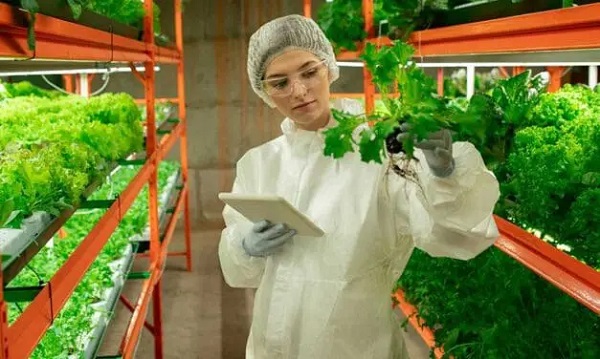
4. Northern Food Sovereignty Corridors, featuring investments in greenhouses, vertical farms and logistics, would reduce reliance on overpriced imports and bring fresh food, and economic independence, to northern and Indigenous communities. It would also move reconciliation from speech to action.
5. A Digital Food Traceability Network would use blockchain and AI to track food from seed to supper, slashing waste, boosting consumer confidence and giving our exports a transparency edge in an increasingly picky global market.
Carney’s five projects are a solid start. They prove Canada can think big. But a real strategy needs to feed people as well as power them. Agriculture can’t remain the forgotten cousin in economic planning.
The point isn’t to downplay the importance of energy or mining. Mines and reactors may fuel prosperity but it’s food—and the infrastructure, science and innovation behind it—that will secure it. Canada’s real strength lies not just under the ground but in the fields, labs and refrigerated supply chains that keep our plates full and our trading partners coming back for seconds.
Dr. Sylvain Charlebois is a Canadian professor and researcher in food distribution and policy. He is senior director of the Agri-Food Analytics Lab at Dalhousie University and co-host of The Food Professor Podcast. He is frequently cited in the media for his insights on food prices, agricultural trends, and the global food supply chain.
Troy Media empowers Canadian community news outlets by providing independent, insightful analysis and commentary. Our mission is to support local media in helping Canadians stay informed and engaged by delivering reliable content that strengthens community connections and deepens understanding across the country.


From LifeSiteNews
Health Canada has indefinitely paused its plan to allow unlabeled cloned meat in grocery stores after thousands of Canadians, prominent figures, and industry leaders condemned the move.
Health Canada is pausing its plan to put unlabeled cloned meat in Canadian grocery stores, following public outcry.
In a November 19 update on its website, Health Canada announced an indefinite suspension of the decision to remove labels from cloned meat products after thousands of Canadians condemned the plan online.
“The Government of Canada has received significant input from both consumers and industry about the implications of this potential policy update,” the publication read. “The Department has therefore indefinitely paused the policy update to provide time for further discussions and consideration,” it continued, adding, “Until the policy is updated, foods made from cloned cattle and swine will remain subject to the novel food assessment.”
In late October, Health Canada quietly approved removing labels from foods derived from somatic cell nuclear transfer (SCNT) clones and their offspring. As a result, Canadians buying meat from the grocery store would have had no way of knowing if the product was cloned meat.
Many researchers have documented high rates of cloning failure, large offspring syndrome (LOS), placental abnormalities, early death, and organ defects in cloned animals. The animals are also administered heavy doses of antibiotics due to infections and immune issues.
Typically, the offspring of cloned animals, rather than the cloned animals themselves, are processed for human consumption. As a result, researchers allege that the health defects and high drug use does not affect the final product.
However, there are no comprehensive human studies on the effects of eating cloned meat, meaning that the side-effects for humans are unknown.
News of the plan spread quickly on social media, with thousands of Canadians condemning the plan and promising to switch to local meat providers.
“By authorizing the sale of meat from cloned animals without mandatory labeling or a formal public announcement, Health Canada risks repeating a familiar and costly failure in risk communication. Deeply disappointing,” food policy expert and professor at Dalhousie University Sylvain Charlebois wrote on X.
"By authorizing the sale of meat from cloned animals without mandatory labeling or a formal public announcement, Health Canada risks repeating a familiar and costly failure in risk communication. Deeply disappointing."
More on this week's Food Professor Podcast! https://t.co/UZTIcQzUN3
— The Food Professor (@FoodProfessor) October 30, 2025
Likewise, Conservative MP Leslyn Lewis warned, “Health Canada recently decided that meat from cloned animals and their offspring no longer needs a special review or any form of disclosure.”
“That means, soon you could buy beef or pork and have no idea how it was bred,” she continued. “Other countries debate this openly: the EU has considered strict labelling, and even the U.S. has admitted that cloned-offspring meat is circulating.”
“But here in Canada, the public wasn’t even told. This is about informed choice,” Lewis declared. “If government and industry don’t have to tell us when meat comes from cloned animals, then Canadians need to ask a simple, honest question: What else are we not being told?”
Health Canada recently decided that meat from cloned animals and their offspring no longer needs a special review or any form of disclosure. That means, soon you could buy beef or pork and have no idea how it was bred.
Other countries debate this openly: the EU has considered… pic.twitter.com/zCnqJOpvf3
— Dr. Leslyn Lewis (@LeslynLewis) November 14, 2025
Likewise, duBreton, a leading North American supplier of organic pork based out of Quebec, denounced the move, saying, “Canadians expect clarity, transparency, and meaningful consultation on issues that directly touch their food supply. As producers, we consider it our responsibility and believe our governing food authorities should too.”
According to a survey conducted by duBreton, 74 percent of Canadians believe that “cloned meat and genetic editing practices have no place in farm and food systems.”
Agriculture
Federal cabinet calls for Canadian bank used primarily by white farmers to be more diverse
From LifeSiteNews
A finance department review suggested women, youth, Indigenous, LGBTQ, Black and racialized entrepreneurs are underserved by Farm Credit Canada.
The Cabinet of Prime Minister Mark Carney said in a note that a Canadian Crown bank mostly used by farmers is too “white” and not diverse enough in its lending to “traditionally underrepresented groups” such as LGBT minorities.
Farm Credit Canada Regina, in Saskatchewan, is used by thousands of farmers, yet federal cabinet overseers claim its loan portfolio needs greater diversity.
The finance department note, which aims to make amendments to the Farm Credit Canada Act, claims that agriculture is “predominantly older white men.”
Proposed changes to the Act mean the government will mandate “regular legislative reviews to ensure alignment with the needs of the agriculture and agri-food sector.”
“Farm operators are predominantly older white men and farm families tend to have higher average incomes compared to all Canadians,” the note reads.
“Traditionally underrepresented groups such as women, youth, Indigenous, LGBTQ, and Black and racialized entrepreneurs may particularly benefit from regular legislative reviews to better enable Farm Credit Canada to align its activities with their specific needs.”
The text includes no legal amendment, and the finance department did not say why it was brought forward or who asked for the changes.
Canadian census data shows that there are only 590,710 farmers and their families, a number that keeps going down. The average farmer is a 55-year-old male and predominantly Christian, either Catholic or from the United Church.
Data shows that 6.9 percent of farmers are immigrants, with about 3.7 percent being “from racialized groups.”
National census data from 2021 indicates that about four percent of Canadians say they are LGBT; however, those who are farmers is not stated.
Historically, most farmers in Canada are multi-generational descendants of Christian/Catholic Europeans who came to Canada in the mid to late 1800s, mainly from the United Kingdom, Ireland, Ukraine, Russia, Italy, Poland, the Netherlands, Germany, and France.


Media bound to pay the price for selling their freedom to (selectively) offend

Sometimes An Ingrate Nation Pt. 2: The Great One Makes His Choice

Recent price declines don’t solve Toronto’s housing affordability crisis

Health Canada report finds euthanasia now accounts for over 5% of deaths nationwide
-
National2 days ago
Media bound to pay the price for selling their freedom to (selectively) offend
-
Bruce Dowbiggin2 days ago
Sometimes An Ingrate Nation Pt. 2: The Great One Makes His Choice
-
Business1 day ago
Recent price declines don’t solve Toronto’s housing affordability crisis
-
MAiD1 day ago
Health Canada report finds euthanasia now accounts for over 5% of deaths nationwide
-
 Daily Caller1 day ago
Tech Mogul Gives $6 Billion To 25 Million Kids To Boost Trump Investment Accounts
-
 Energy1 day ago
Unceded is uncertain
-
 Automotive20 hours ago
Power Struggle: Governments start quietly backing away from EV mandates
-
 Business20 hours ago
New Chevy ad celebrates marriage, raising children