
Crime
Struggle for control of the Sinaloa Carel has ramifications for Canada



Washington Moves Against El Mayo’s Cartel Network, Accusing It of Bribery, Political Capture, and Cross-Border Fentanyl Trade
The U.S. Treasury’s Office of Foreign Assets Control has announced sweeping sanctions on the Los Mayos faction of the Sinaloa Cartel, a move that highlights the group’s violent war with El Chapo Guzmán’s heirs for control of a multibillion-dollar fentanyl empire entrenched in more than 40 nations including Canada. The sanctions also pointed to deep corruption of political and security offices on Mexico’s northwest border.
“The Sinaloa Cartel is a foreign terrorist organization that continues to traffic narcotics, launder its proceeds, and corrupt local officials,” said John K. Hurley, Treasury’s under secretary for terrorism and financial intelligence. “Today’s actions cut at the heart of the political and commercial infrastructure that Los Mayos relies upon to poison Americans with fentanyl and maintain control of territory in Baja California.”
Once a monolithic enterprise spanning cocaine, heroin, methamphetamine, marijuana, and now fentanyl routes across the Americas, the Sinaloa Cartel has fractured since the imprisonment of co-founders Joaquín “El Chapo” Guzmán and Ismael “El Mayo” Zambada García. Their successors — Guzmán’s sons, collectively called Los Chapitos, and the Zambada loyalists known as Los Mayos — have plunged northwest Mexico into open war.
A sign of the Mayo faction’s foreign reach emerged in British Columbia months ago, when court filings revealed that a fortified compound in Surrey, south of Vancouver, housed a trafficking syndicate tied directly to El Mayo’s network. According to the government’s civil-forfeiture suit, the group negotiated cocaine shipments with Zambada’s emissaries and stockpiled a cache of weapons, opioids, and counterfeit pharmaceuticals. When the RCMP raided the mansion, they found Hikvision surveillance systems, encrypted phones, and nearly a kilogram of Ecstasy alongside fentanyl pills and counterfeit Xanax. The property — minutes from the Peace Arch border crossing — is now the subject of a multimillion-dollar forfeiture case.
After years of tense coexistence, hostilities between the Chapo and Mayo factions erupted last year, and the human toll has been staggering. Reuters and the Associated Press reported that homicides in Sinaloa surged to 883 in the first half of 2025, up from 224 a year earlier. Entire towns have been emptied and convoys of gunmen have left highways strewn with burned-out vehicles.
OFAC, in its designation notice, confirmed: “Turf wars between Los Mayos and Los Chapitos have resulted in the deaths of over a thousand people in the Mexican state of Sinaloa.”
At the center of today’s sanctions is Juan José Ponce Félix, better known as El Ruso. OFAC identified him as “the founder and leader of the primary armed wing of Los Mayos,” controlling routes in Baja California and extending the faction’s fentanyl operations north. A 2015 indictment from the Southern District of California described El Ruso as the commander of “a fleet of soldiers” responsible for kidnappings, hostage-taking, torture, and murder in furtherance of Sinaloa Cartel interests. Now, OFAC says, his dominance in Baja has become a key pillar of Los Mayos’ trafficking empire. Earlier this week, the State Department offered a $5 million reward for information leading to his arrest.

The designations go beyond gunmen. OFAC spotlighted Rosarito, a coastal town just 15 miles south of San Diego, as a laboratory of cartel political capture. Los Mayos, it said, operated through the Arzate brothers — Alfonso and René — and their financial lieutenant, Jesús González Lomelí, who owned bars, restaurants, and resorts across Mexico, used to launder millions in cartel proceeds.
 |
These commercial fronts were paired with direct political influence. Candelario Arcega Aguirre, a cartel operative with close ties to Rosarito’s then-mayor, Hilda Araceli Brown Figueredo, leveraged his relationship to place allies in the municipal Department of Public Security. According to OFAC, Arcega, González, and Brown “collected extortion payments for the Arzates, assisted in managing the Arzate brothers’ operations, and ensured protection for the Arzates’ criminal activities by the Department of Public Security in Rosarito.”
The network extended to a transportation company, Transporte Urbano y Suburbano del V Municipio S.A. de C.V., which OFAC identified as a laundering vehicle for Arcega. All told, the sanctions designated not just traffickers but a matrix of businessmen and public officials accused of entwining Rosarito’s government with cartel command.
U.S. officials describe the cartel as a global enterprise, with distribution and laundering nodes in more than 40 countries and thousands of operatives and facilitators. Canada has been deeply saturated in that network, a surge that accelerated after former Prime Minister Justin Trudeau eased immigration requirements for Mexican citizens.
Court filings in the British Columbia case alleged that the Surrey-based network had the clout to negotiate supply terms directly with El Mayo until his arrest by U.S. law enforcement in July 2024. That capture “disrupted the DTO’s efforts to import and distribute cocaine in Canada,” the documents said, forcing the group to seek new contacts in Mexico. The cache discovered at the mansion included 400 grams of counterfeit Xanax, 810 oxycodone pills, 5.5 grams of fentanyl, and sophisticated video surveillance equipment designed to fortify the property against raids.
The Canadian government formally listed the Sinaloa Cartel as a terrorist entity in February 2025, following the State Department’s U.S. designation. By June, OFAC had moved to sanction the Chapitos wing of the cartel. With today’s action, both sides of the cartel’s civil war are now under U.S. financial blockade.
The Bureau is a reader-supported publication.
To receive new posts and support my work, consider becoming a free or paid subscriber.

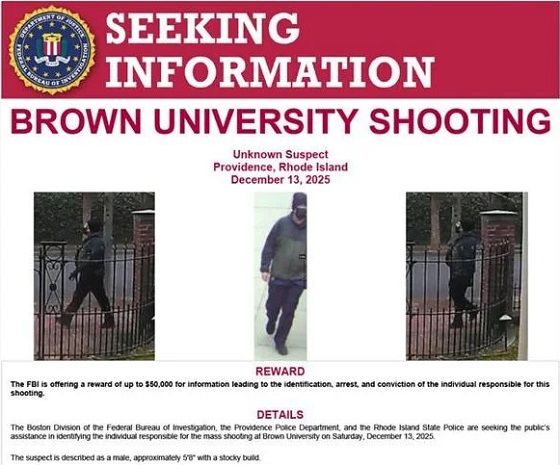
From The Center Square
By
Rhode Island officials said the suspected gunman in the Brown University mass shooting has been found dead of an apparent self-inflicted gunshot wound, more than 50 miles away in a storage facility in southern New Hampshire.
The shooter was identified as Claudio Manuel Neves-Valente, a 48-year-old Brown student and Portuguese national. Neves-Valente was found dead with a satchel containing two firearms inside in the storage facility, authorities said.
“He took his own life tonight,” Providence police chief Oscar Perez said at a press conference, noting that local, state and federal law officials spent days poring over video evidence, license plate data and hundreds of investigative tips in pursuit of the suspect.
Perez credited cooperation between federal state and local law enforcement officials, as well as the Providence community, which he said provided the video evidence needed to help authorities crack the case.
“The community stepped up,” he said. “It was all about groundwork, public assistance, interviews with individuals, and good old fashioned policing.”
Rhode Island Attorney General Peter Neronha said the “person of interest” identified by private videos contacted authorities on Wednesday and provided information that led to his whereabouts.
“He blew the case right open, blew it open,” Neronha said. “That person led us to the car, which led us to the name, which led us to the photograph of that individual.”
“And that’s how these cases sometimes go,” he said. “You can feel like you’re not making a lot of progress. You can feel like you’re chasing leaves and they don’t work out. But the team keeps going.”
The discovery of the suspect’s body caps an intense six-day manhunt spanning several New England states, which put communities from Providence to southern New Hampshire on edge.
“We got him,” FBI special agent in charge for Boston Ted Docks said at Thursday night’s briefing. “Even though the suspect was found dead tonight our work is not done. There are many questions that need to be answered.”
He said the FBI deployed around 500 agents to assist local authorities in the investigation, in addition to offering a $50,000 reward. He says that officials are still looking into the suspect’s motive.
Two students were killed and nine others were injured in the Brown University shooting Saturday, which happened when an undetected gunman entered the Barus and Holley building on campus, where students were taking exams before the holiday break. Providence authorities briefly detained a person in the shooting earlier in the week, but then released them.
Investigators said they are also examining the possibility that the Brown case is connected to the killing of a Massachusetts Institute of Technology professor in his hometown.
An unidentified gunman shot MIT professor Nuno Loureiro multiple times inside his home in Brookline, about 50 miles north of Providence, according to authorities. He died at a local hospital on Tuesday.
Leah Foley, U.S. attorney for Massachusetts, was expected to hold a news briefing late Thursday night to discuss the connection with the MIT shooting.


From the Daily Caller News Foundation
A woman who survived the Hanukkah terrorist attack at Bondi Beach in Australia said on Monday that police officers seemed less concerned about stopping the attack than they were about keeping her from fighting back.
A father and son of Pakistani descent opened fire on a Hanukkah celebration Sunday, killing at least 15 people and wounding 40, with one being slain on the scene by police and the other wounded and taken into custody. Vanessa Miller told Erin Molan about being separated from her three-year-old daughter during Monday’s episode of the “Erin Molan Show.”
“I tried to grab one of their guns,” Miller said. “Another one grabbed me and said ‘no.’ These men, these police officers, they know who I am. I hope they are hearing this. You are weak. You could have saved so many more people’s lives. They were just standing there, listening and watching this all happen, holding me back.”
Dear Readers:
As a nonprofit, we are dependent on the generosity of our readers.
Please consider making a small donation of any amount here.
Thank you!
WATCH:
“Two police officers,” Miller continued. “Where were the others? Not there. Nobody was there.”
New South Wales Minister of Police Yasmin Catley did not immediately respond to a request for comment from the Daily Caller News Foundation about Miller’s comments.
Australian Prime Minister Anthony Albanese vowed to enact further restrictions on guns in response to the attack at Bondi Beach, according to the Associated Press. The new restrictions would include a limit on how many firearms a person could own, more review of gun licenses, limiting the licenses to Australian citizens and “additional use of criminal intelligence” to determine if a license to own a firearm should be granted.
Sajid Akram, 50, and Naveed Akram, 24, reportedly went to the Philippines, where they received training prior to carrying out the Sunday attack, according to the Australian Broadcasting Corporation. Naveed Akram’s vehicle reportedly had homemade ISIS flags inside it.
Australia passed legislation that required owners of semi-automatic firearms and certain pump-action firearms to surrender them in a mandatory “buyback” following a 1996 mass shooting in Port Arthur, Tasmania, that killed 35 people and wounded 23 others. Despite the legislation, one of the gunmen who carried out the attack appeared to use a pump-action shotgun with an extended magazine.


Death by a thousand clicks – government censorship of Canada’s internet

Viral TikTok video shows 7-year-old cuddling great-grandfather before he’s euthanized

Canada releases new digital ID app for personal documents despite privacy concerns

Chinese Billionaire Tried To Build US-Born Baby Empire As Overseas Elites Turn To American Surrogates
-
Crime2 days ago
Bondi Beach Survivor Says Cops Prevented Her From Fighting Back Against Terrorists
-
 Automotive2 days ago
Ford’s EV Fiasco Fallout Hits Hard
-
 Agriculture1 day ago
Why is Canada paying for dairy ‘losses’ during a boom?
-
 Business1 day ago
Canada Hits the Brakes on Population
-
 Frontier Centre for Public Policy2 days ago
Canada Lets Child-Porn Offenders Off Easy While Targeting Bible Believers
-
 Agriculture1 day ago
Canadians should thank Trump for targeting supply management
-
 International2 days ago
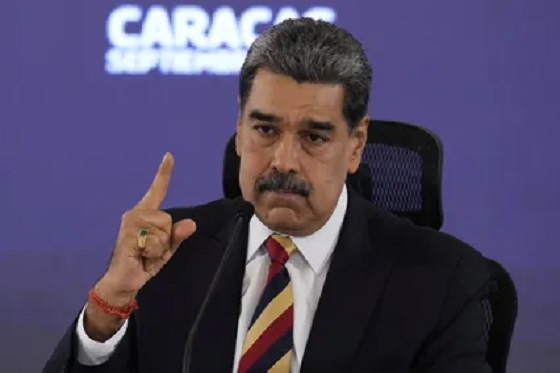
TOTAL AND COMPLETE BLOCKADE: Trump cuts off Venezuela’s oil lifeline
-
 Business1 day ago
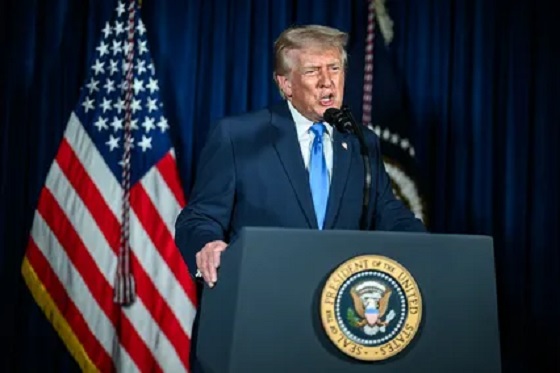
White House declares inflation era OVER after shock report