
Business
While China Hacks Canada, B.C. Sends Them a Billion-Dollar Ship Building Contract




This is like finding out your house was broken into and, instead of calling the cops, you hire the burglar to remodel your kitchen because he offered a good price.
Just days—days—after British Columbia Premier David Eby shrugs off federal concerns over awarding a billion-dollar ferry contract to China, and I’m quoting here, tells Ottawa to “honestly, just mind your own business”… we learn that China is hacking Canadian telecommunications infrastructure.
Let that sink in.
So here’s the story. British Columbia, a province of Canada that still pretends to care about sovereignty and jobs—just handed a massive, publicly funded ferry contract to China. Yes, China. Not a B.C. shipyard. Not a Canadian company. But a Chinese Communist Party–owned industrial complex. Because apparently, in the year 2025, a G7 nation that once built warships and railroads can’t even build a ferry. The country that designed the Avro Arrow now outsources its boatbuilding to Beijing.
Why? According to BC Ferries, the Chinese bid was the “strongest” and “most cost-effective.” Translation: they were the cheapest totalitarian regime available.
And to justify that? We’re told Canadian shipyards didn’t even bid. Why? Because they don’t have the “capacity.” Which sounds an awful lot like: we’ve let this industry rot for decades and now we’re pretending it’s just the market doing its thing.
Now, Premier Eby didn’t deny it. He didn’t fight it. He didn’t try to fix it. He just said, “It’s not ideal. But it’s too late.” Five years of procurement, so we’re locked in. No turning back. As if surrender is somehow a neutral policy.
And Chrystia Freeland? She called it “dismaying,” which is Canadian for we’re not going to do a thing about it. No federal funding, she said, and please make sure it’s cybersecure. From a Chinese state firm. Sure.
Meanwhile, here’s the part no one wants to say out loud: China is actively attacking Canada’s digital infrastructure. This isn’t some distant cyber operation. It’s happening now. Salt Typhoon, a Chinese state-linked group, exploited a Cisco vulnerability to compromise three core telecom devices. They siphoned data. Created a GRE tunnel. Pulled configuration files. They were inside the system. Watching. Collecting. Spying.
And while that’s going on, B.C. writes them a check.
This is like finding out your house was broken into and, instead of calling the cops, you hire the burglar to remodel your kitchen because he offered a good price.
Now business analysts, the same people who said NAFTA would be great for everyone, argue this is “industry standard.” They point out Canadian firms have used Chinese shipyards for years. Yes—and look where that got us. No shipbuilding capacity, no strategic leverage, and no national pride.
BC Ferries insists it’s not a total sellout. They’re spending $230 million on local refits and maintenance. Great—so we send the billion overseas and toss the leftovers to local workers. That’s not industrial policy. That’s industrial hospice care.
Unions and domestic builders like Seaspan have said clearly: We can do the work. We want to build. But they need policy. They need backing. And instead of standing up and saying, “Let’s build ships in Canada again,” David Eby shrugs and signs the dotted line.
And what does B.C. Premier David Eby say when the federal government dares to ask a reasonable question—like, “Hey, is sending a billion-dollar infrastructure deal to a Chinese state-owned company while China’s hacking your telecoms and stealing your IP a smart move?”
Eby’s response?
“Honestly, just mind your own business.”
That’s not spin. That’s what he said—on the record, during a Jas Johal radio interview. He told Ottawa, Chrystia Freeland, and every single Canadian taxpayer footing the bill: Stop asking questions. Don’t expect accountability. Just sit quietly and watch us outsource the building blocks of our own sovereignty to an authoritarian regime.
Eby then admits—almost casually—that the deal is “not ideal.” Right. Because funneling public funds to a hostile regime that’s openly undermining your democracy and infiltrating your critical infrastructure isn’t ideal. But he claims the decision can’t be reversed. Why? Because it would cost too much, and we don’t have the capacity to build our own ferries anymore.
Let that sink in. This isn’t Somalia. This is Canada. A G7 country. And the Premier of one of its most important provinces is now saying: We’re too broken to build ferries, so let the CCP do it.
While B.C. writes checks to a Chinese Communist Party–controlled shipyard to build vessels for public service, Chinese state-sponsored hackers are already inside Canadian networks—pulling data, monitoring traffic, and spying on political officials. These aren’t amateur criminals. These are agents of a foreign authoritarian regime. And they’re not looking for cat videos. They’re not trying to intercept your hockey stream. They’re looking for call metadata, SMS content, real-time location tracking, and political communications. You know, espionage.
This isn’t some speculative post from a blog or a heated Reddit thread. This is straight from a government-issued cyber intelligence bulletin, published on June 19, 2025, by the Canadian Centre for Cyber Security, Canada’s frontline cyber defense agency, in collaboration with the FBI. The bulletin confirms that a sophisticated Chinese state-sponsored threat actor, known as Salt Typhoon, orchestrated a targeted cyberattack in mid-February 2025, exploiting vulnerabilities in Cisco’s IOS XE software to infiltrate critical telecommunications infrastructure in Canada.
Specifically, Salt Typhoon zeroed in on a critical flaw, CVE-2023-20198, which allowed them to gain unauthorized access to three network devices registered to a major Canadian telecom provider. For those unfamiliar, this vulnerability is a remote code execution flaw that grants attackers admin-level privileges—essentially handing them the keys to the network. Once inside, they didn’t just poke around. They retrieved sensitive configuration files, which are like the blueprints of a network’s operations, and modified at least one to establish Generic Routing Encapsulation (GRE) tunnels. If you’re not a techie, GRE tunnels are a clever technique to create virtual pathways that bypass standard security controls, allowing attackers to quietly siphon off network traffic—think of it as tapping a phone line, but for entire data streams.
This wasn’t a smash-and-grab job. The bulletin details how Salt Typhoon’s actions were methodical, aimed at enabling long-term surveillance and data collection. By rerouting traffic through these GRE tunnels, they could access bulk customer data, including call metadata, location information, and potentially even the content of SMS messages or other communications. The targets? High-value individuals, such as government officials and political figures, whose data could fuel China’s broader espionage objectives. The bulletin warns that this is part of a global campaign, with similar attacks hitting telecoms in the U.S. and dozens of other countries, compromising providers like AT&T and Verizon.
The Canadian Centre for Cyber Security doesn’t mince words: Salt Typhoon is “almost certainly” backed by the People’s Republic of China, and their campaign is expected to persist, targeting Canadian organizations, especially telecoms and their clients, for the near and present future.
Now here’s where it gets interesting. Or infuriating.
Let’s look at CSIS’s own public report, released in 2024. Salt Typhoon isn’t named, no. But China is named. Over and over. Page 6 reads like a war warning that no one in Ottawa even bothered to read. It says, and I quote, “The People’s Republic of China continues to engage in sophisticated espionage and foreign interference… especially in critical mineral sectors and technology supply chains.”
Translation? They’re not just watching your data—they’re coming for your economy, your elections, and your sovereignty. This is more than cybercrime. This is geopolitical warfare. And China is winning because we’re too weak or too afraid to say no.
The CSIS report goes on: Chinese actors are infiltrating elections, immigration channels, even using AI and front groups to manipulate discourse and policy. Not someday. Now. Right now.
Let’s be completely clear: In February, China penetrated Canadian telecom infrastructure.
In June, we paid them to build ships.
How is that not a national scandal?
How do you allow that?
This is the collapse of common sense in real time. National security is not a partisan issue. It’s not theoretical. It’s not about trade. It’s about who holds the keys to your data, your infrastructure, and your future.
And right now, Canada’s government—and yes, its provinces—are not just letting that fall into China’s hands. They’re delivering it.
On a silver ferry.
Let that sink in.
Now ask yourself—what exactly are we getting in return? Where’s the national benefit? Where’s the plan? Where’s the damn spine?
David Eby says “BC First” like it means something. But how does it square with shipping public contracts straight to Beijing while China’s hacking your telecoms and eyeing your elections? You can’t call it “BC First” when you’re literally bankrolling Chinese state-owned industry while Canadian shipyards rot on the sidelines. That’s not leadership. That’s surrender.
And here’s the kicker—Eby’s been in multiple meetings with the feds. Four major First Ministers’ meetings, plus two sit-downs with Mark Carney, the man Liberals are touting as their next economic messiah. And you’re telling me not one person at those tables could put two brain cells together and say:
“Hey Mark, B.C. needs ferries. You want a manufacturing revival. Let’s cut a deal. You give us federal subsidies, we build these ships here at home. Yeah, it costs more up front, but it proves we’re serious about national industry. And we’re not handing vital infrastructure contracts to the same regime that’s compromising our telecoms and undermining our democracy.”
Would that not be common sense? Apparently not—because neither Carney nor Eby made that deal. They let it slide. They let the CCP win a contract while Salt Typhoon was actively hacking Canada’s backbone.
That’s not “hard choices.” That’s strategic failure. It’s cowardice masked as pragmatism.
Eby isn’t a dealmaker. He’s a decline manager. He’s the guy who shrugs and says, “Well, we can’t do it here,” and then signs a billion-dollar check to a foreign power with no accountability, no dignity, no leverage.
And Carney? The guy trying to pitch himself as the future of Canada’s economic revival? The guy who says we need to build, invest, strengthen? He let this go. Either he didn’t care, or he wasn’t paying attention. Either way—it’s incompetence at the highest level. And it proves the Liberals and the B.C. NDP are fully aligned in managing decline, not reversing it.
They told us Donald Trump was the threat. They told us he would sell out our values, undermine democracy, and abandon national interests. David Eby said it. Mark Carney echoed it. They told you they were the adults in the room—the ones who would put Canada first.
And what did they actually do?
They handed a billion-dollar public contract to a Chinese state-owned shipyard—while China is actively hacking our telecom networks and undermining our elections. They outsourced jobs, security, and dignity to the same regime their own intelligence agencies are warning us about.
David Eby said “BC First.” Mark Carney talks about reviving Canadian industry. But when the opportunity came—when they could have drawn a line, invested in our workforce, and told Beijing “no”—they caved. They chose cheap. They chose weak. They chose decline.
This is not leadership.
It’s not “strategic.”
It’s not “pragmatic.”
It’s pathetic.
And if this is what the NDP and Liberal vision looks like—deals for China, excuses for inaction, and silence while Canadian industry is gutted—then it’s time for an election.
We need real leadership. We need people who will fight for Canadian workers, Canadian infrastructure, and Canadian sovereignty. Not performative speeches. Not hollow slogans. Results. Accountability. Courage. This government has failed. Let the people decide. Call an election—before we lose more than just jobs and we can let someone lead who actually wants to make Canada First.


Yakk Stack

(Only 5 Days Left!) Claim Yours Before It’s GONE FOREVER
Hey, all.
Imagine this…you’re slicing into that fresh loaf from Loblaws or just making a Wonder-ful sammich, the one you’ve bought hundreds of times over the years, and suddenly… ka-ching!
A fat check lands in your mailbox.
Not from a lottery ticket, not from a side hustle – from the very store that’s been quietly owing you money for two decades of illegal price fixing.
Sound too good to be true?
It’s real.
It’s court-approved.
And right now, on December 7, 2025, you’ve got exactly 5 days to grab your share before the door slams shut. Don’t let this slip away – keep reading, feel that spark of possibility ignite, and let’s get you paid.
Back in 2001, you were probably juggling work, kids, or just surviving on that weekly grocery run. Little did you know, while you were reaching for the President’s Choice white bread or those golden rolls, Loblaws and their cronies were playing a sneaky game of price-fixing. They jacked up the cost of packaged bread across Canada – every loaf, every bun, every sneaky sandwich slice. For 20 years. From coast to coast to coast.
And now…the courts have spoken. $500 million in settlements to make it right. That’s not pocket change – that’s your money, recycled back into your life.
Given the number of people who will be throwing in a claim…this ain’t gunna be life-changing cash…but also, given the cost of food in Canada, it’s better than sweet fuck all, which you will receive by NOT doing this.
If you’re a Canadian resident (yep, that’s you, unless you’re in Quebec with your own sweet deal), and you’ve ever bought bread for your family – not for resale, just real life – between January 1, 2001, and December 31, 2021… you’re in.
No receipts needed.
No fancy proofs.
Just you, confirming your story, and boom – eligible.

Quick check: Were you under 18 back then?
Or an exec at Loblaw?
Nah, skip it.
But for the rest of us everyday schleps…Jackpot.
Again…the clock’s ticking on this.
Claims opened on September 11, 2025, and slam shut on December 12, 2025.
That’s this Friday.
Payments roll out in 2026, 6-12 months later, straight to your bank or mailbox.
Here’s what you need to do…
- Breathe deep, click → HEREQuebec frens →HERE
- 10 second form that’s completed by your autofill…30 seconds off of a mobile device.
- Hit submit and wait for that sweet cash to hit your account.
Again…this won’t be life saving money and most certainly ain’t gunna hit your account before Christmas.
And before you go out an Griswald yourself into a depost on pool in the backyard…you may only end up with enough cash for the Jam-of-the-Month…the gift that truly does give, all year round…just be a little patient.
If you end up with a couple of backyard steaks in time for summer…
Some treats for the children or grandchildren…
Maybe just a donation to the foodbank…
This is what’s owed to you. Your neighbors. Friends. Family.
Take advantage!
Banks
To increase competition in Canadian banking, mandate and mindset of bank regulators must change
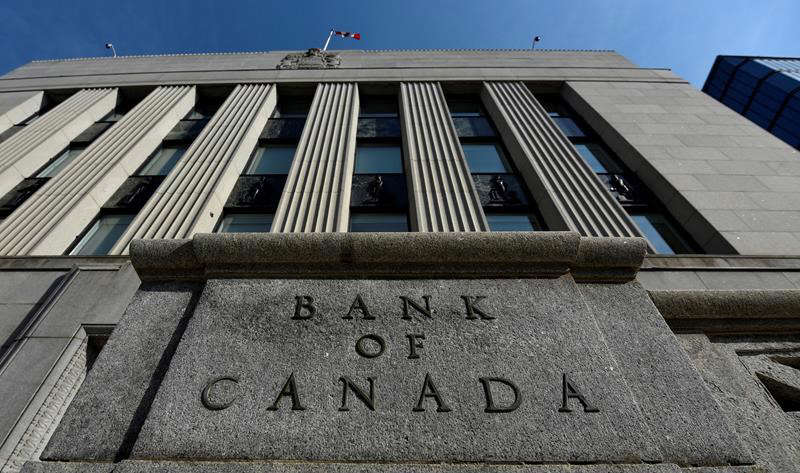
From the Fraser Institute
By Lawrence L. Schembri and Andrew Spence
Canada’s weak productivity performance is directly related to the lack of competition across many concentrated industries. The high cost of financial services is a key contributor to our lagging living standards because services, such as payments, are essential input to the rest of our economy.
It’s well known that Canada’s banks are expensive and the services that they provide are outdated, especially compared to the banking systems of the United Kingdom and Australia that have better balanced the objectives of stability, competition and efficiency.
Canada’s banks are increasingly being called out by senior federal officials for not embracing new technology that would lower costs and improve productivity and living standards. Peter Rutledge, the Superintendent of Financial Institutions and senior officials at the Bank of Canada, notably Senior Deputy Governor Carolyn Rogers and Deputy Governor Nicolas Vincent, have called for measures to increase competition in the banking system to promote innovation, efficiency and lower prices for financial services.
The recent federal budget proposed several new measures to increase competition in the Canadian banking sector, which are long overdue. As a marker of how uncompetitive the market for financial services has become, the budget proposed direct interventions to reduce and even eliminate some bank service fees. In addition, the budget outlined a requirement to improve price and fee transparency for many transactions so consumers can make informed choices.
In an effort to reduce barriers to new entrants and to growth by smaller banks, the budget also proposed to ease the requirement that small banks include more public ownership in their capital structure.
At long last, the federal government signalled a commitment to (finally) introduce open banking by enacting the long-delayed Consumer Driven Banking Act. Open banking gives consumers full control over who they want to provide them with their financial services needs efficiently and safely. Consumers can then move beyond banks, utilizing technology to access cheaper and more efficient alternative financial service providers.
Open banking has been up and running in many countries around the world to great success. Canada lags far behind the U.K., Australia and Brazil where the presence of open banking has introduced lower prices, better service quality and faster transactions. It has also brought financing to small and medium-sized business who are often shut out of bank lending.
Realizing open banking and its gains requires a new payment mechanism called real time rail. This payment system delivers low-cost and immediate access to nonbank as well as bank financial service providers. Real time rail has been in the works in Canada for over a decade, but progress has been glacial and lags far behind the world’s leaders.
Despite the budget’s welcome backing for open banking, Canada should address the legislative mandates of its most important regulators, requiring them to weigh equally the twin objectives of financial system stability as well as competition and efficiency.
To better balance these objectives, Canada needs to reform its institutional framework to enhance the resilience of the overall banking system so it can absorb an individual bank failure at acceptable cost. This would encourage bank regulators to move away from a rigid “fear of failure” cultural mindset that suppresses competition and efficiency and has held back innovation and progress.
Canada should also reduce the compliance burden imposed on banks by the many and varied regulators to reduce barriers to entry and expansion by domestic and foreign banks. These agencies, including the Office of the Superintendent of Financial Institutions, Financial Consumer Agency of Canada, Financial Transactions and Reports Analysis Centre of Canada, the Canada Deposit Insurance Corporation plus several others, act in largely uncoordinated manner and their duplicative effort greatly increases compliance and reporting costs. While Canada’s large banks are able, because of their market power, to pass those costs through to their customers via higher prices and fees, they also benefit because the heavy compliance burden represents a significant barrier to entry that shelters them from competition.
More fundamental reforms are needed, beyond the measures included in the federal budget, to strengthen the institutional framework and change the regulatory mindset. Such reforms would meaningfully increase competition, efficiency and innovation in the Canadian banking system, simultaneously improving the quality and lowering the cost of financial services, and thus raising productivity and the living standards of Canadians.

Lawrence L. Schembri
Senior Fellow, Fraser Institute

Andrew Spence


Media bound to pay the price for selling their freedom to (selectively) offend

Sometimes An Ingrate Nation Pt. 2: The Great One Makes His Choice

Recent price declines don’t solve Toronto’s housing affordability crisis

From Exception to Routine. Why Canada’s State-Assisted Suicide Regime Demands a Human-Rights Review
-
Business2 days ago
Recent price declines don’t solve Toronto’s housing affordability crisis
-
MAiD20 hours ago
From Exception to Routine. Why Canada’s State-Assisted Suicide Regime Demands a Human-Rights Review
-
 MAiD2 days ago
Health Canada report finds euthanasia now accounts for over 5% of deaths nationwide
-
 Daily Caller2 days ago
Tech Mogul Gives $6 Billion To 25 Million Kids To Boost Trump Investment Accounts
-
 Automotive2 days ago
Power Struggle: Governments start quietly backing away from EV mandates
-
 Energy2 days ago
Unceded is uncertain
-
 Business18 hours ago
Carney government should privatize airports—then open airline industry to competition
-
 Business2 days ago
New Chevy ad celebrates marriage, raising children