
Energy
Energy, climate, and economics — A smarter path for Canada




By Resource Works senior fellow Jerome Gessaroli
Canada has set ambitious climate goals, aiming to cut its greenhouse-gas emissions by 40 to 45 per cent by 2030, and to hit net-zero emissions by 2050.
Now a senior fellow at Resource Works, Jerome Gessaroli, argues that Canada is over-focusing internally on reducing greenhouse-gas emissions, when we should “look at cooperating with developing countries to jointly reduce emissions.”
He continues: “And we do that in a way that helps ourselves. It helps meet our own goals. That’s through Article 6 of the Paris Accord, allowing countries to share emission reduction credits from jointly developed projects.”
Reduction on a global scale
Article 6, says Gessaroli, means this: “We can work towards meeting our own emission goals, and can help developing countries meet theirs. We can do it in a way that’s much more efficient. We get a lot more bang for our buck than if we are trying to just do it domestically on our own.”
The point is that, in the end, emissions are reduced on a global scale — as he stressed in a five-part series that he wrote for Resource Works last November.
And in a study for the Macdonald-Laurier Institute (where he is a senior fellow) he wrote: “The benefits could be large. Canada could reduce emissions by 50 per cent more if it carried out methane reduction projects both internationally and domestically, rather than solely in Canada.”
But is Ottawa interested?
Gessaroli says the federal government expressed interest in Article 6 in 2019 — but has not moved since then.
“They barely looked at it. Since this requires government-to-government coordination, it needs Ottawa’s initiative. But there doesn’t seem to be too much interest, too much appetite in that.”
All Ottawa has said so far is: “Going forward, Canada will explore these and other similar options to strengthen international co-operation and generate incentives for further emission reductions.”
Gessaroli on Resource Works
Gessaroli has been working with Resource Works since he first spoke with our Stewart Muir, following a letter that Muir wrote in The Vancouver Sun in 2022: ‘Gas has key role to play in meeting 1.5C climate targets.’
Gessaroli saw in Resource Works advocacy for responsible resource development “for the people, the citizens of BC, in an environmentally responsible manner and in a manner that’s efficient, driven by the private sector.”
And: “Resource Works supports responsible resource development, not uncritical expansion. We have these resources. We should develop them, but in a way that benefits society, respects nature, respects the local peoples, and so that wide elements of society can benefit from that resource development.”
Gessaroli on electric vehicles
Gessaroli hit a shared interest with Resource Works in a 2024 paper for its Energy Futures Institute, critiquing BC’s plan to require that all new vehicles sold in the province must be electric zero-emission vehicles (ZEVs) by 2035.
For one thing, he wrote, BC would need to spend $1.8 billion to provide electric charging points for the vehicles. And billions more would be required to provide expanded power generation and transmission systems.

“The Government of BC should adjust or rescind its mandated targets for new minimum zero-emission vehicle sales.”
And on ZEV subsidies
Stewart Muir and Barry Penner, chair of the Energy Futures Institute, wrote a guest column last October in Business in Vancouver. They cited Gessaroli’s paper above, and noted: “According to Gessaroli, meeting BC’s ZEV targets will require an additional 2,700 gigawatt hours of electricity by 2030, and 9,700 gigawatt hours by 2040—almost equal to the output of two Site C dams.”
Gessaroli has also looked at the subsidies BC offers (up to $4,000) to people who buy an electric vehicle.
“The subsidies do help. They do incentivize people to buy EVs. But it’s a very costly way to reduce carbon emissions, anywhere upwards of $600, $700, even $800 a tonne to eliminate one tonne of carbon.
“When you look at the social cost of carbon, the government uses a figure around $170 a tonne. That’s the damage done from every tonne of carbon emitted into the atmosphere. So we’re paying $800 to remove one tonne of carbon when that same tonne of carbon does damage of about $170. That doesn’t sound like a very cost-effective way of getting rid of carbon, does it?”
Gessaroli on Donald Trump’s policies
Gessaroli says tariffs on imports are not the only benefit that Donald Trump plans for U.S. industry that will hurt Canada.
“He also wants to reduce tax rates, 15% for US manufacturers, and allow full deductibility for equipment purchases. You reduce regulations and red tape on companies while lowering their tax rates. They’re already competitive to begin with. Well, they’re going to be even more competitive, more innovative.”
For Canada, he says: “Get rid of the government heavy hand of overtaxing and enforcing inefficient and ineffective regulations. Get rid of all of that. Encourage competition in the marketplace. And over time, we’d find Canadians can be quite innovative and quite competitive in our own right. And we can hold our own. We can be better off.
“And there’d be more tax revenues being generated by the government. With the tax revenue, you can build the roads, build the hospitals, improve the healthcare system, things like that.
“But without this type of vibrant economic type activity, you’re going to get the stagnation we’re seeing right now.”
About Jerome Gessaroli
Gessaroli leads the Sound Economic Policy Project at the B.C. Institute of Technology. He is the lead Canadian co-author of Financial Management: Theory and Practice, a widely used textbook. His writing has appeared in many Canadian newspapers.
Stewart Muir, CEO of Resource Works, highlights Gessaroli’s impact: “Jerome brings a level of economic and policy analysis that cuts through the noise. His research doesn’t just challenge assumptions—it provides a roadmap for smarter, more effective climate and energy policies.
“Canada needs more thinkers like him, who focus on pragmatic solutions that benefit both the environment and the economy.”
Gessaroli and Karen, his wife of 34 years, live in Vancouver and enjoy cruising to unwind. In his downtime, Gessaroli reads about market ethics and political economy — which he calls his idea of relaxation.



By Dan McTeague
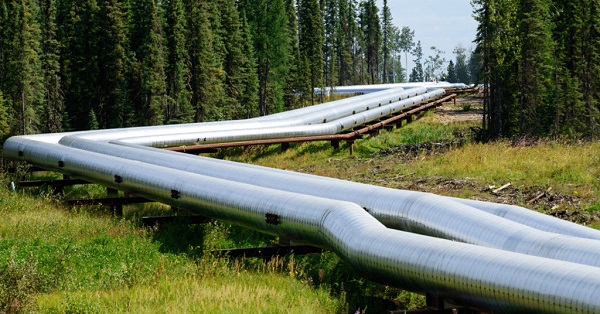
Will Carney’s new pipeline deal actually help get a pipeline built in Canada? As we said before, the devil is in the details.
While the establishment and mainstream media cheer on the new pipeline agreement, there are specific details you need to be aware of.
Dan McTeague explains in his latest video.

Family in Spain eating by candlelight during a blackout, April 2025
From Resource Works
Canada’s own 2024 grid scare proves we’re on the same path unless we change course.
Europe’s green-energy unraveling is no longer a distant cautionary tale. It’s a mirror — and Canada is already seeing the first cracks.
A new Wall Street Journal investigation lays out the European story in stark detail: a continent that slashed emissions faster than anyone else, only to discover that doing so by tearing down firm power before its replacement existed comes with brutal consequences — collapsing industry, sky-high electricity prices, political fragmentation, and a public increasingly unwilling to subsidize wishful thinking.
The tragedy isn’t that Europe tried to decarbonize quickly.
The tragedy is how they did it: by insisting on an “or” transition — renewables or fossil fuels — instead of what every energy-literate nation outside Europe pursued: renewables and fossil fuels, working together while the system evolves.
And here’s the uncomfortable truth:
Canada has already had its first European-style crisis. It happened in January 2024.
Canada’s early warning: the January 2024 electricity crunch
Most people have already forgotten it, because our political class desperately wanted you to. But in January 2024, Western Canada came within a whisker of a full-blown energy security breakdown. Alberta, Saskatchewan, and B.C. were stretched to their limit. The grid was under cascading stress. Contingency plans were activated. Alberta came terrifyingly close to rolling blackouts.
It wasn’t caused by climate change. It wasn’t caused by a mysterious cyberattack.
It was caused by the same structural brittleness now crippling Europe:
- Insufficient firm power, after years of political messaging that we could “electrify everything” without adding real generating capacity.
- Overreliance on intermittent sources not backed by storage or gas.
- A planning system that punted risk into the future, betting the grid could be stretched indefinitely.
The January 2024 event was not a blip. It was a preview.
Our European moment in miniature.
But instead of treating it as the national wake-up call it should have been, B.C. did something telling — and deeply damaging.
The B.C. government’s response: attack the messenger
Just a couple of years ago, an economist publicly warned about the economic price of emerging system vulnerabilities due to a groaning stack of “clean economy” policies.
The B.C. government didn’t respond with data, evidence, or even curiosity. Instead, a cabinet minister used the safety of legislative privilege — that gold-plated shield against accountability — to launch nasty personal attacks on the economist who raised the concerns, which themselves had originated in the government’s own analysis.
No engagement.
No counter-analysis.
No willingness to consider the system risks.
Just slurs — the very definition of anti-intellectual governance.
It was a moment that told the whole story:
Too many policymakers in this province believe that energy systems obey politics, not physics.
Physics always gets the last word.
Europe shows us what political denial turns into
The WSJ reporting couldn’t be clearer about the consequences of that denial:
- Germany: highest domestic electricity prices in the developed world.
- U.K.: highest industrial electricity rates among major economies.
- Industrial flight: chemical plants closing, data centres frozen, major players hinting at exiting Europe entirely.
- Grid instability: wind farms paid tens of millions not to generate because the grid can’t handle it.
- Public revolt: rising support for parties rejecting the entire green-transition agenda.
- Policy whiplash: governments rushing to build gas plants they swore they’d never need.
Europe is now an object lesson in how good intentions, executed poorly, can produce the exact opposite of what was promised: higher prices, higher volatility, declining competitiveness, and a public ready to abandon climate policy altogether.
This is precisely what January 2024 warned us about — but on a continental scale.
The system cost we keep pretending doesn’t exist
Every serious energy expert knows the truth Europe is now living: intermittent renewables require massive amounts of redundant capacity, storage, and backup generation. That’s why the U.K. now needs 120 gigawatts of capacity to serve a demand previously met with 60–70 gigawatts, even though electricity use hasn’t meaningfully grown.
This is the math policymakers prefer not to show the public.
And it’s why B.C.’s refusal to have an honest conversation about firm power is so dangerous.
If we electrify everything without ensuring affordable and abundant natural gas generation, we’re not building a green future.
We’re building Europe, 10 years early.
The lesson for Canada — especially for B.C.
Here is what Europe and January 2024 together say, in one clear voice:
1. There is no energy transition without firm power.
Renewables are part of the system, but they don’t run the system. Natural gas does. Hydro does. Nuclear does. Pretending otherwise is how you end up with rolling blackouts.
2. Political denial makes crises worse.
When ministers attack economists instead of answering them, it signals that ideology is running the show. Europe learned the cost of that. We will too, unless we change course.
3. Affordability is the foundation of public consent.
Europe lost the room. Once people see their bills double while factories close, the climate agenda becomes politically radioactive.
4. B.C. has an advantage Europe would kill for.
Europe dreams of having an abundant, local, low-carbon firm-power fuel like northeastern B.C.’s natural gas. We treat it like a political liability. That’s not strategy. It’s negligence.
5. The transition will fail if we don’t treat electricity like the national security asset it is.
Without energy, there is no industry.
Without industry, there is no prosperity.
Without prosperity, there is no climate policy that survives the next election cycle.
What we need now
Canada must embrace an “and” strategy:
Renewables and natural gas. Electrification and realism. Climate ambition and economic competitiveness.
January 2024 showed us the future in a flash. Europe shows us the end state if we keep ignoring the warning.
We can still choose something better. But only if we stop pretending that energy systems bend to political narratives — and start treating them with the seriousness they demand.
Resource Works News


Media bound to pay the price for selling their freedom to (selectively) offend

Sometimes An Ingrate Nation Pt. 2: The Great One Makes His Choice

Recent price declines don’t solve Toronto’s housing affordability crisis

From Exception to Routine. Why Canada’s State-Assisted Suicide Regime Demands a Human-Rights Review
-
MAiD2 days ago
From Exception to Routine. Why Canada’s State-Assisted Suicide Regime Demands a Human-Rights Review
-
 Business2 days ago
Carney government should privatize airports—then open airline industry to competition
-
 Business2 days ago
What’s Going On With Global Affairs Canada and Their $392 Million Spending Trip to Brazil?
-
Energy1 day ago
Canada following Europe’s stumble by ignoring energy reality
-
 Business2 days ago
Why Does Canada “Lead” the World in Funding Racist Indoctrination?
-
 Banks1 day ago
To increase competition in Canadian banking, mandate and mindset of bank regulators must change
-
 Business1 day ago
Loblaws Owes Canadians Up to $500 Million in “Secret” Bread Cash
-
 Media2 days ago
They know they are lying, we know they are lying and they know we know but the lies continue