
Daily Caller
‘Extraordinary’: El Salvador Agrees To Take In Any Gangbangers, Convicted Criminals Deported Out Of US



Salvadoran President Nayib Bukele and then-U.S. President Donald Trump, Sept. 25, 2019.

From the Daily Caller News Foundation
By Jason Hopkins
El Salvador President Nayib Bukele has agreed to imprison convicted criminals from any country that have been ordered deported out of the United States.
The extraordinary offer was made after Secretary of State Marco Rubio visited Bukele in San Salvador, the country’s capital city, to discuss a range of bilateral issues. The Central American leader not only agreed to take back his own country’s deportees, but also offered his “mega-prison” to house MS-13 members, Venezuelan Tren de Aragua gangbangers and any other criminal from around the world — including U.S. citizens.
The offer could prove crucial for the Trump White House as it moves forward with its detention and deportation operation after the unprecedented border crisis that was sparked during the previous administration. The 8.5 million border encounters that occurred at the U.S.-Mexico border during President Joe Biden’s era resulted in an unprecedented growth of the country’s illegal migrant population.
Dear Readers:
As a nonprofit, we are dependent on the generosity of our readers. Please consider making a small donation of any amount here. Thank you!
“We have offered the United States of America the opportunity to outsource part of its prison system,” Bukele posted on social media Monday night. “We are willing to take in only convicted criminals (including convicted U.S. citizens) into our mega-prison (CECOT) in exchange for a fee.”
“The fee would be relatively low for the U.S. but significant for us, making our entire prison system sustainable,” he continued.
The State Department confirmed the offer in a statement, adding that the “extraordinary gesture” has never been extended before by any other country.
“President Bukele agreed to take back all Salvadoran MS-13 gang members who are in the United States unlawfully,” said State Department spokesperson Tammy Bruce. “He also promised to accept and incarcerate violent illegal immigrants, including members of the Venezuelan Tren de Aragua gang, but also criminal illegal migrants from any country.”
The agreement follows an announcement in January by President Donald Trump that he would be utilizing a section of Guantanamo Bay to detain “the worst criminal illegal aliens.” The president said he would be sending up to 30,000 migrants with deportation orders to the Cuba-based naval base.

Previous administrations have utilized Guantanamo Bay for migrant detention in the past. The Clinton administration processed thousands of Haitians and housed Cuban asylum seekers at the naval base during the 1990s, and the Obama administration considered similar measures after the 2010 Haiti earthquake and the Biden administration also mulled the idea.
El Salvador, where the international crime syndicate MS-13 has a major presence, has long been plagued with violent crime. However, Bukele has made incredible strides in reducing his country’s crime rate since assuming office in 2019 through a no-nonsense policy of mass incarceration.
The Central American leader oversaw a 70% reduction of the country’s murder rate in 2023. When asked by the Daily Caller News Foundation in February 2024 how the U.S. could reduce crime rates in major cities, Bukele simply said “incarcerate the criminals.”
Sending deportees to El Salvador and Guantanamo Bay potentially solves two major hurdles for the Trump administration’s immigration enforcement agenda: recalcitrant countries that refuse to accept their deported citizens back and limited Immigration and Customs Enforcement (ICE) detention space. Racking up available bed space by the thousands can prevent ICE detention centers from being forced to release illegal migrants back into the community due to overcrowding.
Trump successfully coerced the Colombian president into taking back his county’s deportees after threatening him with stiff tariffs, and the Venezuelan government has also recently agreed to begin accepting their repatriated citizens.
Several high-profile criminal migrants were detained and released at the border before going on to commit heinous crimes in the U.S., such as Laken Riley’s killer Jose Ibarra and 12-year-old Jocelyn Nungaray’s alleged killers. More detention space can potentially help federal immigration authorities avoid releasing illegal migrants from custody.
Bukele “has agreed to the most unprecedented, extraordinary, extraordinary migratory agreement anywhere in the world,” Rubio said to the media after meeting with him at his lakeside country house outside San Salvador.
The historic offer from El Salvador immediately followed Rubio’s trip to Panama, in which he successfully prevented the key Central American country from renewing an infrastructure agreement with China, reducing the communist country’s influence in the region.

From the Daily Caller News Foundation
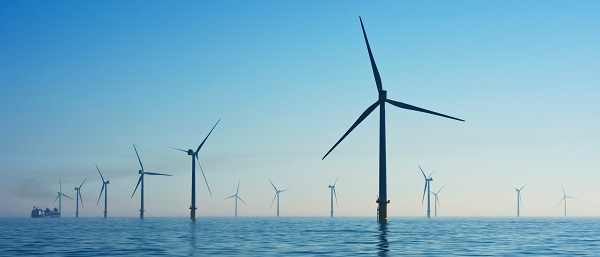
Interior Secretary Doug Burgum leveled the Trump administration’s latest broadside at the struggling U.S. offshore wind industry on Monday, ordering an immediate suspension of activities at the five big wind projects currently in development.
“Today we’re sending notifications to the five large offshore wind projects that are under construction that their leases will be suspended due to national security concerns,” Burgum told Fox Business host Maria Bartiromo. “During this time of suspension, we’ll work with the companies to try to find a mitigation. But we completed the work that President Trump has asked us to do. The Department of War has come back conclusively that the issues related to these large offshore wind programs have created radar interference that creates a genuine risk for the U.S.”
Predictably, reaction to Burgum’s order was immediate, with opponents of offshore wind praising the move, and industry supporters slamming it. In Semafor’s energy-related newsletter on Tuesday, energy and climate editor Tim McDowell quotes an unnamed ex-Energy Department official as claiming, “the Pentagon and intelligence services, which are normally sensitive to even extremely low-probability risks, never flagged this as a concern previously.” (RELATED: Trump Admin Orders Offshore Wind Farm Pauses Over ‘National Security Risks’)
Yet, a simple 30-second Google search finds a wealth of articles going back to as early as October 2014 discussing ways to mitigate the long-ago identified issue of interference with air defense radars by these enormous windmills, some of which are taller than the Eiffel Tower. It is a simple fact that the issue was repeatedly raised during the Biden Administration’s mad rush to speed these giant windmill operations into the construction phase by cutting corners in the permitting process.
In May, 2024, the Bureau of Ocean Energy Management’s (BOEM) own analysis related to the Atlantic Shores South project contains a detailed discussion of the potential impacts and suggests multiple ways to mitigate for them. An Oct. 29, 2024 memo of understanding between BOEM and the Biden Department of Defense calls for increased collaboration between the two departments as a response to concerns from members of Congress and others related to these very long-known potential impacts.
The Georgia Tech Research Institute published a study dated June 6, 2022 detailing “Radar Impacts, Potential Mitigation, from Offshore Wind Turbines.” That study was in fact commissioned by the National Academies of Sciences, Engineering, and Medicine (NASEM), a private non-profit that functions as an advisory group to the federal government.
Oh.
A report published in February 2024 by International Defense Security & Technology, Inc. describes the known issues thusly:
“Wind turbines can create clutter on radar screens in a number of ways. First, the metal towers and blades of wind turbines can reflect radar signals. This can create false returns on radar screens, which can make it difficult to detect and track real targets.
“Second, the rotating blades of wind turbines can create a Doppler effect on radar signals. This can cause real targets to appear to be moving at different speeds than they actually are. This can also make it difficult to track real targets.”
The simple Google search I conducted returns hundreds of articles dating all the way back to 2006 related to this long-known yet unresolved issue that could present a very real threat to national security. The fact that the Biden administration, in its religious zeal to speed these enormous offshore industrial projects into the construction phase, chose to downplay and ignore this threat in no way obligates his successor in office to commit the same dereliction of duty.
Some wind proponents are cynically raising concerns that a future Democratic administration could use this example as justification for cancelling oil and gas projects. It’s as if they’ve all forgotten about the previous four years of the Autopen presidency, which featured Joe Biden’s Day 1 order cancelling the 80% completed Keystone XL pipeline, a year-long moratorium on LNG export permitting, an attempt to set aside more than 200 million acres of the U.S. offshore from future leasing, and too many other destructive moves to detail here.
Again, a simple web search reveals that experts all over the world believe this is a real problem. If so, it needs to be addressed as a matter of national security. Burgum is intent on doing that. All half-baked talking points aside, this really isn’t complicated.
David Blackmon is an energy writer and consultant based in Texas. He spent 40 years in the oil and gas business, where he specialized in public policy and communications.
Daily Caller
While Western Nations Cling to Energy Transition, Pragmatic Nations Produce Energy and Wealth

From the Daily Caller News Foundation
History will likely remember 2025 as the year energy corporatists finally stopped pretending there is a climate crisis. For a decade, a bizarre theater of the absurd played out as titans of the oil and gas industry apologized for their core business while pledging allegiance to a “green transition” that existed mostly in the imaginations of Western bureaucrats. But the curtain has seemingly fallen.
ExxonMobil, one of the world’s largest energy producers, has slashed $10 billion from its low-carbon investment commitments through 2030. Simultaneously, the company announced that it expects $25 billion in earnings growth from 2024 to 2030 to be powered primarily by increases in oil and gas production, which will push daily output to 5.5 million barrels of oil equivalent by the end of the decade.
This is not a company abandoning climate responsibility but rather at last recognizing what has long been obvious: The path prescribed by the climate industrial complex is economically destructive and operationally impossible – even with massive government subsidies.
Dear Readers:
As a nonprofit, we are dependent on the generosity of our readers.
Please consider making a small donation of any amount here.
Thank you!
For years, the global energy strategy has been surreal. Companies that built the modern world on the back of energy-dense hydrocarbons indulged those celebrating the arrival of wind turbines and solar panels to power civilization. But reality, stubborn and unforgiving, has interrupted the psychedelic revelry.
ExxonMobil’s low-carbon investments will be paced to policy support and customer demand, says the company. That is corporate speak meaning that spending on green projects is paused unless the government – using our tax dollars – subsidizes the risk or until a market exists.
Megaprojects, once heralded as the future, are now in line for deferral. Why? Because without taxpayer handouts, the economics of trying to bury underground a plant food like carbon dioxide simply do not work – and defy common sense.
The energy sector is pivoting from a strategy of “grow clean at all costs” to “returns first, transition last.” “Green” projects are being relegated to a secondary capital bucket – a token for good PR instead of a core activity.
Europe’s Shell and Aker BP and Canada’s Enbridge have withdrawn from the Science Based Targets initiative to establish “science-based emissions reductions.” This was a retreat from what is described as a “credible, science-based net-zero framework” because there was neither credibility nor science. It was a political suicide pact. The energy giants looked at the cliff’s edge and refused to jump.
British multinational BP, having abandoned its promise to go “Beyond Petroleum,” has raised its oil and gas spending and softened its renewable targets.
ENEOS Holdings, a Japanese refiner, has discarded hydrogen production targets, with CEO Tomohide Miyata explaining that “the shift toward a carbon-neutral society appears to be slowing.”
These U-turns represent a renaissance in policy realism. Energy needs do not disappear because politicians make speeches at climate summits or corporations allocate funds to ESG programs or governments attempt to control consumption and choices of appliances and automobiles.
Second thoughts about an inevitably doomed “green” transition is a victory for the single mother in the U.S. trying to budget for winter heating and for the small business owner in the U.K. whose margins are crushed by one of the highest commercial electricity rates in the world. And for the billions of people in developing nations, this pivot could be salvation from generational poverty.
The question now is whether governments will recognize what corporations have made clear: that the energy transition was a fantasy infused with scientific language and draped in moralistic gingerbread. Or will they continue to increase subsidies and regulations?
Very likely, there will be a bifurcation: on the one hand, western bureaucracies, particularly in Europe, continuing an economic decline under mandates and taxes, and on the other, pragmatic governments, many of them in Asia, pursuing prosperity with fuels and technologies that work.
Vijay Jayaraj is a Science and Research Associate at the CO2 Coalition, Fairfax, Va. He holds an M.S. in environmental sciences from the University of East Anglia and a postgraduate degree in energy management from Robert Gordon University, both in the U.K., and a bachelor’s in engineering from Anna University, India. He served as a research associate with the Changing Oceans Research Unit at University of British Columbia, Canada.


Ottawa’s Newly Released Defence Plan Crosses a Dangerous Line

All 12 Vaccinated vs. Unvaccinated Studies Found the Same Thing: Unvaccinated Children Are Far Healthier

Carney Floor Crossing Raises Counterintelligence Questions aimed at China, Former Senior Mountie Argues
Ottawa is still dodging the China interference threat
-
 Digital ID1 day ago
Canadian government launches trial version of digital ID for certain licenses, permits
-
 Alberta1 day ago
Alberta Next Panel calls to reform how Canada works
-
 Agriculture1 day ago
End Supply Management—For the Sake of Canadian Consumers
-
 International1 day ago
Georgia county admits illegally certifying 315k ballots in 2020 presidential election
-
 Business1 day ago
The “Disruptor-in-Chief” places Canada in the crosshairs
-
 Artificial Intelligence1 day ago
UK Police Pilot AI System to Track “Suspicious” Driver Journeys
-
 Energy1 day ago
‘The electric story is over’
-
 International1 day ago
World-leading biochemist debunks evolutionary theory