Connect with us

International

California’s soaring electricity rates strain consumers, impact climate goals

Published

6 minute read

From The Center Square

By 

While the greenhouse gas reduction programs that raise electricity rates are part of California’s climate goals, the increased prices actually discourage individuals from switching away from using fossil fuels impacting California’s ambitious climate goals.

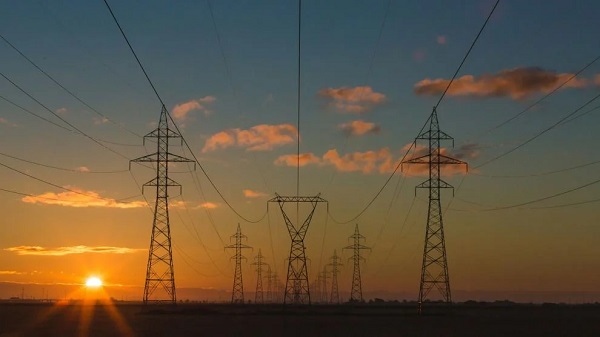
California has completed yet another year with some of the highest electricity rates in the country – almost double the national average. The state’s electricity rates have been increasing rapidly, outpacing inflation in recent years by approximately 47% from 2019 to 2023. This is due largely to the high rates charged by the state’s three large investor-owned utilities (IOUs).

According to a report published by the California Legislative Analyst Office, the factors driving rate increases are wildfire-related costs, greenhouse gas reduction mandates, and policies and differences in utility operational structures and services territories. Ratepayers bear the brunt of these costs with those who earn lower incomes and live in hotter areas of the state the most severely affected.

The report points out that while the greenhouse gas reduction programs that raise electricity rates are part of California’s climate goals, the increased prices actually discourage individuals from switching away from using fossil fuels impacting California’s ambitious climate goals.

These programs include the Renewable Portfolio Standard (RPS), which requires utilities to provide a percentage of retail electricity sales from renewable sources, raising costs for ratepayers. Additionally, SB 350 directs the CPUC to authorize ratepayer-funded energy efficiency programs to meet California’s goal of doubling energy efficiency savings by 2030.

“While many other states operate ratepayer-supported energy efficiency programs, on average, we estimate that Californians contribute a notably greater share of their rates to such programs than is typical across the country,” the report notes.

Electricity rates pay for numerous costs related to the construction, maintenance and operation of electricity systems including the generation, transmission and distribution components. However, these rates also pay for costs unrelated to servicing electricity.

“Most notably, the state and IOUs use revenue generated from electricity rates to support various state-mandated public purpose programs,” the report says. “These programs have goals such as increasing energy efficiency, expediting adoption of renewable energy sources, supporting the transition to zero-emission vehicles (ZEVs), and providing lower-income customers with financial assistance.”

The largest public purpose program is the California Alternate Rates for Energy (CARE), which provides discounts for lower-income customers. However, the report notes that while CARE benefits certain customers, it shifts the costs onto other slightly higher-income customers and that the majority of Californians spend a larger portion of their income on electricity compared to other states.

 “According to data from the federal Bureau of Labor Statistics, California households in the lowest quintile of the income distribution typically spend about 6 percent of their before-tax incomes on electricity, compared to less than 1 percent for the highest-income quintile of households,” reads the report. “Notably, high electricity rates also can impose burdens on moderate-income earners, since they also pay a larger share of their household incomes toward electricity than their higher-income counterparts but typically are not able to qualify for bill assistance programs.”

Electricity bills also reflect other state and local tax charges including utility taxes that are used to support programs such as fire response and parks in addition to the state-assessed charge on electricity use that is put into the Energy Resources Programs Account (ERPA). This account is used to pay for energy programs and planning activities.

While many of the funds recovered through electricity rates are fixed costs for programs, these costs increased in 2022 following the repeal of a state law that limited fixed charges at $10, requiring the California Public Utilities Commission (CPUC) to authorize fixed charges that vary by income. These come out to be around $24 per month for non-CARE customers and $6 per month for CARE customers.

Wildfire related costs have also been increasing. Before 2019, wildfire costs included in electricity rates charged by IOUs were negligible, but now it has grown between 7% and 13% of typical non-CARE customers. Reasons for this increase include California’s high wildfire risk and the state’s liability standard holding IOUs responsible for all costs associated with utility-caused wildfires.

“The magnitude of the damages and risks from utility-sparked wildfires have increased substantially in recent years,” reads the report. “Correspondingly, IOUs have spent unprecedented amounts in recent years on wildfire mitigation-related activities to try to reduce the likelihood of future utility-caused wildfires, with the associated costs often passed along to ratepayers. Furthermore, California IOUs and their ratepayers pay for insurance against future wildfires, including contributing to the California Wildfire Fund.”

According to the report, electricity use and rates for Claifornians are only expected to increase and the legislature will have to determine how to tackle the statewide climate goals while reducing the burden on ratepayers.

Todayville is a digital media and technology company. We profile unique stories and events in our community. Register and promote your community event for free.

Follow Author

Daily Caller

Is Ukraine Peace Deal Doomed Before Zelenskyy And Trump Even Meet At Mar-A-Lago?

Published on


From the Daily Caller News Foundation

By Wallace White

As Ukraine and the U.S. try one more time to reach agreement on terms for a peace deal to end the war with Russia, questions remain about whether a resolution is still possible after multiple stalled rounds of negotiations.

President Volodymyr Zelenskyy of Ukraine is set to meet with President Donald Trump at Mar-a-Lago on Sunday to discuss the current proposal for ending the war. The terms and language of the proposed deal have undergone substantial revisions since it was first presented in November, largely due to objections from Ukraine and other European powers.

Despite multiple rounds of peace negotiations fizzling out over the past year, foreign policy and defense experts told the Daily Caller News Foundation that Trump still has a chance to make peace if he can convince Putin that the cost of waging war outweighs the benefits, but that it’s unlikely any of the parties will leave the table satisfied.

Dear Readers:

As a nonprofit, we are dependent on the generosity of our readers.

Please consider making a small donation of any amount here.

Thank you!

“The President’s team sees that stark reality, but also envisions a golden future for Ukraine once the fighting stops—a prosperous, strong, independent nation could rise from the ashes we see today,” Morgan Murphy, former Trump White House official and current Republican Senate candidate in Alabama, told the DCNF. “To get there will take a deal that likely leaves all parties—Ukraine, Russia, and Europe—unhappy when they leave the negotiation table.”

While Russia has signaled some willingness to make compromises, most recently saying it would accept Ukrainian European Union membership, Putin has so far not agreed to any ceasefire in the interim. U.S. officials previously told the DCNF that they resolved “90%” of the issues between Russia and Ukraine in the new deal, but stopped short of elaborating on the outstanding issues.

Zelenskyy expressed cautious optimism about his ongoing talks with Trump’s team in an X post on Christmas Day, but emphasized that a few “sensitive issues” still need to be worked out. While those points of contention weren’t specifically named, Ukraine has long objected to any territorial concessions to Russia and has sought additional security guarantees from the U.S. and European allies.

A number of foreign policy experts, including those who spoke to the Daily Caller News Foundation, warn that excessive concessions to Moscow could embolden U.S. adversaries around the world, including China.

“A rushed or weak settlement would do real damage to U.S. national security,” Carrie Filipetti, executive director of the Vandenberg Coalition, told the DCNF. “It would tell Putin that aggression pays and signal to adversaries like China that borders and sovereignty are negotiable. That is not peace, it is an invitation for the next crisis.”

Putin has continued to strike Ukraine relentlessly during ongoing talks, mainly targeting critical energy infrastructure. Despite Putin’s continued push to win militarily in Ukraine, Heather Nauert, a former U.S. State Department spokesperson, told the DCNF that his actions come less from a position of strength and more from desperation to quickly end the war before he is forced to concede.

“While Putin likely still thinks he can win, his actions are those of someone who is increasingly desperate,” Nauert told the DCNF. “With Vladimir Putin, you don’t get peace because you ask nicely; you get peace when he sees he can’t improve his position by continuing to wage his war. History shows that Moscow only takes negotiations seriously when the pressure is real and sustained.”

Despite projecting resolve publicly, Moscow has paid a staggering price for its war in Ukraine, with various estimates putting casualties among Kremlin forces at no fewer than 600,000. Russia has nevertheless made slow but steady gains on the battlefield, including taking the town of Siversk on Tuesday.

Putin’s government expected a short conflict and swift victory after the initial invasion of Ukraine. But Russian forces were repelled decisively in the 2022 assault on Kyiv, leading to multiple counter-offensives from Ukraine and the resulting protracted war.

Ukraine has held its ground at great cost to itself, needing significant support from the U.S. and Europe. The U.S. has spent over $180 billion on Ukraine since the war began in 2022, and Trump recently signed a bill allocating $800 million of support for Ukraine over the next two years.

Ukraine is dead set on gaining better future security guarantees from the U.S. in exchange for any peace, and U.S. officials previously told the DCNF that the new provisions offer guarantees that function similarly to NATO’s Article 5, promising mutual defense if one is attacked.

“I am not sure he can cut that deal without a commitment to Ukraine, by the U.S. and our allies, that we will stand behind them until a satisfactory peace deal can be made,” Bruce Carlson, retired U.S. Air Force general and former director of the National Reconnaissance Office, told the DCNF. “In recent negotiations with the Ukrainians and other allies [Trump] has made some compromises. Now, with a very confident Putin, he will have to re-sell this new and modified deal.”

Continue Reading

Business

Residents in economically free states reap the rewards

Published on

From the Fraser Institute

By Matthew D. Mitchell

A report published by the Fraser Institute reaffirms just how much more economically free some states are compared with others. These are places where citizens are allowed to make more of their economic choices. Their taxes are lighter, and their regulatory burdens are easier. The benefits for workers, consumers and businesses have been clear for a long time.

There’s another group of states to watch: “movers” that have become much freer in recent decades. These are states that may not be the freest, but they have been cutting taxes and red tape enough to make a big difference.

How do they fare?

recently explored this question using 22 years of data from the same Economic Freedom of North America index. The index uses 10 variables encompassing government spending, taxation and labour regulation to assess the degree of economic freedom in each of the 50 states.

Some states, such as New Hampshire, have long topped the list. It’s been in the top five for three decades. With little room to grow, the Granite State’s level of economic freedom hasn’t budged much lately. Others, such as Alaska, have significantly improved economic freedom over the last two decades. Because it started so low, it remains relatively unfree at 43rd out of 50.

Three states—North Carolina, North Dakota and Idaho—have managed to markedly increase and rank highly on economic freedom.

In 2000, North Carolina was the 19th most economically free state in the union. Though its labour market was relatively unhindered by the state’s government, its top marginal income tax rate was America’s ninth-highest, and it spent more money than most states.

From 2013 to 2022, North Carolina reduced its top marginal income tax rate from 7.75 per cent to 4.99 per cent, reduced government employment and allowed the minimum wage to fall relative to per-capita income. By 2022, it had the second-freest labour market in the country and was ninth in overall economic freedom.

North Dakota took a similar path, reducing its 5.54 per cent top income tax rate to 2.9 per cent, scaling back government employment, and lowering its minimum wage to better reflect local incomes. It went from the 27th most economically free state in the union in 2000 to the 10th freest by 2022.

Idaho saw the most significant improvement. The Gem State has steadily improved spending, taxing and labour market freedom, allowing it to rise from the 28th most economically free state in 2000 to the eighth freest in 2022.

We can contrast these three states with a group that has achieved equal and opposite distinction: California, Delaware, New Jersey and Maryland have managed to decrease economic freedom and end up among the least free overall.

What was the result?

The economies of the three liberating states have enjoyed almost twice as much economic growth. Controlling for inflation, North Carolina, North Dakota and Idaho grew an average of 41 per cent since 2010. The four repressors grew by just 24 per cent.

Among liberators, statewide personal income grew 47 per cent from 2010 to 2022. Among repressors, it grew just 26 per cent.

In fact, when it comes to income growth per person, increases in economic freedom seem to matter even more than a state’s overall, long-term level of freedom. Meanwhile, when it comes to population growth, placing highly over longer periods of time matters more.

The liberators are not unique. There’s now a large body of international evidence documenting the freedom-prosperity connection. At the state level, high and growing levels of economic freedom go hand-in-hand with higher levels of incomeentrepreneurshipin-migration and income mobility. In economically free states, incomes tend to grow faster at the top and bottom of the income ladder.

These states suffer less povertyhomelessness and food insecurity and may even have marginally happier, more philanthropic and more tolerant populations.

In short, liberation works. Repression doesn’t.

Continue Reading

Trending

X