
Frontier Centre for Public Policy
Global Warming Predictions of Doom Are Dubious


From the Frontier Centre for Public Policy
By Ian Madsen
What if the scariest climate predictions are more fiction than fact?
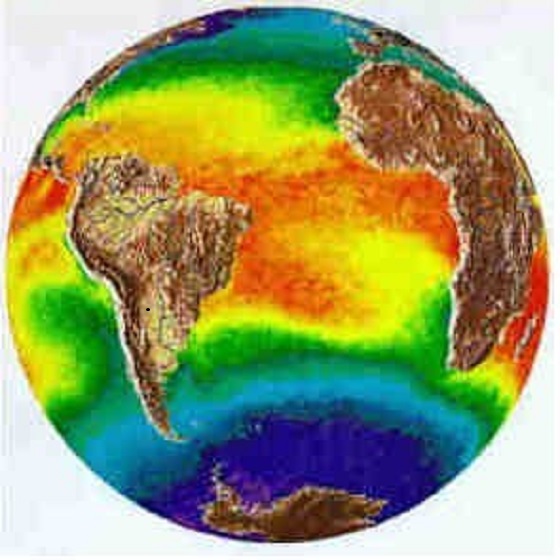
The International Panel on Climate Change (IPCC) aims to highlight the urgent threats climate change poses. It projects severe consequences, including longer and more intense urban heat waves, as the World Resources Institute noted, along with increased storms, floods, and crop failures. IPCC claims that our current path leads to a temperature increase of at least three degrees Celsius above pre-industrial (circa 1750-1850) levels if the world does not drastically reduce carbon dioxide or just carbon emissions. However, this assessment and the attendant predictions are dubious.
The first uncertainty is the pre-industrial global temperatures. There were no precise thermometers at random sites or in major towns until late in the 19th century. Therefore, researchers use ice cores and lake and sea sediments as proxies. The U.S. National Aeronautics and Space Administration admits that pre-1880 data are limited. It provides many examples showing how even modern temperatures can be incomparable from region to region and from past to present and consequently are adjusted to approximate comparability.
What cannot be explained away is the Medieval Warm Period, which lasted from about 800 AD to around 1300 AD, and the subsequent cooling period that ‘bottomed’ about 1700 AD called the Little Ice Age. Human activity did not cause either one, and they were not merely regional phenomena confined to the North Atlantic and Western Europe. In the Middle Ages, Vikings settled in Greenland and were able to grow crops. The weather cooled dramatically, and they abandoned their colonies in the 15th century. During the Little Ice Age, there were many crop failures and famines in Europe, and the river Thames reliably froze over, with ice thick enough to hold winter fairs on.
Temperatures did not rise significantly until well into the 19th century. Suppose the recent temperature increase between one and one and one-half degrees Celsius is correct. This is only a third of the way toward a more tolerable (i.e., more livable, with less disease and fewer cold-related deaths) climate and cannot be termed “global boiling,” as the Secretary-General of the United Nations called it in 2023.

At three or more degrees of warming, IPCC researchers (“Climate Change 2023 Synthesis Report: Summary for Policymakers Sixth Assessment Report,” “AR6” pp. 15-16) have “high confidence” in more severe hurricanes, typhoons and cyclones; large floods; deadlier heatwaves and droughts; lower glacier-fed river flow; and lower crop yields.
Yet, their predictions are vague and generalized. So far, there are few signs that these calamities are increasing in frequency or intensity – hurricanes, cyclones, and typhoons are not. Indeed, humanity is coping well: The UN’s Food and Agriculture Organization observed that 2024 grain production was the second-highest on record.
Here are a few erroneous predictions the New American found: the United Nations Environmental Program (UNEP)’s 2005 warning of 50 million climate refugees by 2010; the University of East Anglia’s 2000 prediction that the United Kingdom would rarely have snow in winter; and several early-2000s prognostications of the Arctic Ocean being ice-free in summer by 2016 – none has happened. A critique from May of 2020 of the thirty-eight models used to predict futures observed that the predictions of the amalgamated model used by the IPCC consistently and substantially overestimated actual warming.
Longer and hotter heat waves in cities are not the end of the world. They are unpleasant but manageable. Practical methods of urban cooling are spreading globally. Heat-related deaths are still far fewer than those from cold (by a ten-to-one ratio). If it gets hotter occasionally, humanity can and will survive.
Ian Madsen is the Senior Policy Analyst at the Frontier Centre for Public Policy.

From the Frontier Centre for Public Policy
By David Redman
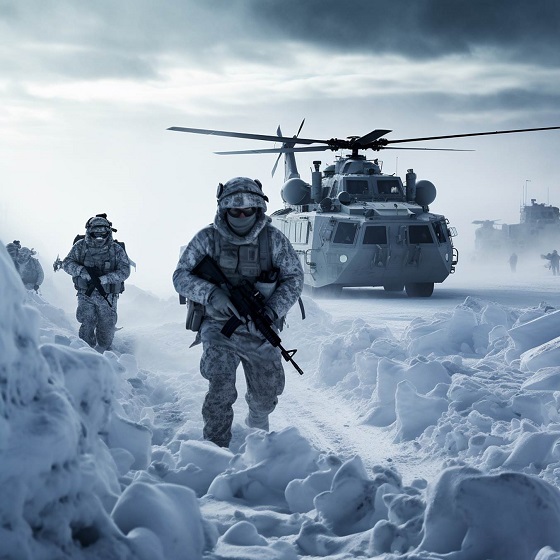
Canada’s Defence Mobilization Plan blurs legal lines, endangers untrained civil servants, and bypasses provinces. The Plan raises serious questions about military overreach, readiness, and political motives behind rushed federal emergency planning.
The new defence plan looks simple on paper. The risks are anything but.
Canadians have grown used to bad news about the Canadian Armed Forces (CAF), but the newly revealed defence mobilization plan is in a category of its own.
After years of controversy over capability, morale, and leadership challenges, the military’s senior ranks now appear willing to back a plan that misunderstands emergency law, sidelines provincial authority, and proposes to place untrained civil servants in harm’s way.
The document is a Defence Mobilization Plan (DMP), normally an internal framework outlining how the military would expand or organize its forces in a major crisis.
The nine-page plan was dated May 30, 2025, but only reached public view when media outlets reported on it. One article reports that the plan would create a supplementary force made up of volunteer public servants from federal and provincial governments. Those who join this civil defence corps would face less restrictive age limits, lower fitness requirements, and only five days of training per year. In that time, volunteers would be expected to learn skills such as shooting, tactical movement, communicating, driving a truck, and flying a drone. They would receive medical coverage during training but not pensionable benefits.
The DMP was circulated to 20 senior commanders and admirals, including leaders at NORAD, NATO, special forces, and Cybercom. The lack of recorded objection can reasonably raise concerns about how thoroughly its implications were reviewed.
The legal context explains much of the reaction. The Emergencies Act places responsibility for public welfare and public order emergencies on the provinces and territories unless they request federal help. Emergency response is primarily a provincial role because provinces oversee policing, natural disaster management, and most front-line public services. Yet the DMP document seems to assume federal and military control in situations where the law does not allow it. That is a clear break from how the military is expected to operate.
The Emergency Management Act reinforces that civilian agencies lead domestic emergencies and the military is a force of last resort. Under the law, this means the CAF is deployed only after provincial and local systems have been exhausted or cannot respond. The Defence Mobilization Plan, however, presents the military as a routine responder, which does not match the legal structure that sets out federal and provincial roles.
Premiers have often turned to the military first during floods and fires, but those political habits do not remove the responsibility of senior military leaders to work within the law and respect their mandate.
Capacity is another issue. Combat-capable personnel take years to train, and the institution is already well below its authorized strength. Any task that diverts resources from readiness weakens national defence, yet the DMP proposes to assign the military new responsibilities and add a civilian component to meet them.
The suggestion that the military and its proposed civilian force should routinely respond to climate-related events is hard to square with the CAF’s defined role. It raises the question of whether this reflects policy misjudgment or an effort to apply military tools to problems that are normally handled by civilian systems.
The plan also treats hazards unrelated to warfighting as if the military is responsible for them. Every province and territory already has an emergency management organization that monitors hazards, coordinates responses and manages recovery. These systems use federal support when required, but the military becomes involved only when they are overwhelmed. If Canada wants to revive a 1950s-style civil defence model, major legislative changes would be needed. The document proceeds as if no such changes are required.
The DMP’s training assumptions deepen the concerns. Suggesting that tasks such as “shooting, moving, communicating, driving a truck and flying a drone” can be taught in a single five-day block does not reflect the standards of any modern military. These skills take time to learn and years to master.
The plan also appears aligned with the government’s desire to show quick progress toward NATO’s defence spending benchmark of two percent of GDP and eventually five percent. Its structure could allow civil servants’ pay and allowances to be counted toward defence spending.
Any civil servant who joins this proposed force would be placed in potentially hazardous situations with minimal training. For many Canadians, that level of risk will seem unreasonable.
The fact that the DMP circulated through senior military leadership without signs of resistance raises concerns about accountability at the highest levels. That the chief of the defence staff reconsidered the plan only after public criticism reinforces those concerns.
The Defence Mobilization Plan risks placing civil servants in danger through a structure that appears poorly conceived and operationally weak. The consequences for public trust and institutional credibility are becoming difficult to ignore.
David Redman had a distinguished military career before becoming the head of the Alberta Emergency Management Agency in 2004. He led the team in developing the 2005 Provincial Pandemic Influenza Plan. He retired in 2013. He writes here for the Frontier Centre for Public Policy.

From the Frontier Centre for Public Policy
By Lee Harding
Ottawa says Bill C-9 fights hate. Critics say it turns ordinary disagreement into a potential crime.
Discriminatory hate is not a good thing. Neither, however, is the latest bill by the federal Liberal government meant to fight it. Civil liberties organizations and conservative commentators warn that Bill C-9 could do more to chill legitimate speech than curb actual hate.
Bill C-9 creates a new offence allowing up to life imprisonment for acts motivated by hatred against identifiable groups. It also creates new crimes for intimidation or obstruction near places of worship or community buildings used by identifiable groups. The bill adds a new hate propaganda offence for displaying terrorism or hate symbols.
The Canadian Civil Liberties Association (CCLA) warns the legislation “risks criminalizing some forms of protected speech and peaceful protest—two cornerstones of a free and democratic society—around tens of thousands of community gathering spaces in Canada.” The CCLA sees no need to add to existing hate laws.
Bill C-9 also removes the requirement that the Attorney General consent to lay charges for existing hate propaganda offences. The Canadian Constitution Foundation (CCF) calls this a major flaw, noting it removes “an important safeguard for freedom of expression that has been part of Canada’s law for decades.” Without that safeguard, decisions to prosecute may depend more on local political pressures and less on consistent national standards.
Strange as it sounds, hatred just will not be what it used to be if this legislation passes. The core problem begins with how the bill redefines the term itself.
Previously, the Supreme Court of Canada said hatred requires “extreme manifestations” of detestation or vilification that involve destruction, abhorrence or portraying groups as subhuman or innately evil. Instead, Bill C-9 defines hatred as “detestation or vilification,” stronger than “disdain or dislike.” That is a notably lower threshold. This shift means that ordinary political disagreement or sharp criticism could now be treated as criminal hatred, putting a wide range of protected expression at real risk.
The bill also punishes a hateful motivation more than the underlying crime. For example, if a criminal conviction prompted a sentence of two years to less than five years, a hateful motivation would add as much as an additional five years of jail time.
On paper, most Canadians may assume they will never be affected by these offences. In practice, the definition of “hate” is already stretched far beyond genuine threats or violence.
Two years ago, the 1 Million March for Children took place across Canada to protest the teaching of transgender concepts to schoolchildren, especially the very young. Although such opposition is a valid position, unions, LGBT advocates and even Newfoundland and Labrador Conservatives adopted the “No Space For Hate” slogan in response to the march. That label now gets applied far beyond real extremism.
Public pressure also shapes how police respond to protests. If citizens with traditional values protest a drag queen story hour near a public library, attendees may demand that police lay charges and accuse officers of implicit hatred if they refuse. The practical result is clear: officers may feel institutional pressure to lay charges to avoid being accused of bias, regardless of whether any genuine threat or harm occurred.
Police, some of whom take part in Pride week or work in stations decorated with rainbow colours in June, may be wary of appearing insensitive or intolerant. There have also been cases where residents involved in home invasion incidents were charged, and courts later determined whether excessive force was used. In a similar way, officers may lay charges first and allow the courts to sort out whether a protest crossed a line. Identity-related considerations are included in many workplace “sensitivity training” programs, and these broader cultural trends may influence how such situations are viewed. In practice, this could mean that protests viewed as ideologically unfashionable face a higher risk of criminal sanction than those aligned with current political priorities.
If a demonstrator is charged and convicted for hate, the Liberal government could present the prosecution as a matter for the justice system rather than political discretion. It may say, “It was never our choice to charge or convict these people. The system is doing its job. We must fight hate everywhere.”
Provincial governments that support prosecution will be shielded by the inability to show discretion, while those that would prefer to let matters drop will be unable to intervene. Either way, the bill could increase tensions between Ottawa and the provinces. This could effectively centralize political authority over hate-related prosecutions in Ottawa, regardless of regional differences in values or enforcement priorities.
The bill also raises concerns about how symbols are interpreted. While most Canadians would associate the term “hate symbol” with a swastika, some have linked Canada’s former flag to extremism. The Canadian Anti-Hate Network did so in 2022 in an educational resource entitled “Confronting and preventing hate in Canadian schools.”
The flag, last used nationally in 1965, was listed under “hate-promoting symbols” for its alleged use by the “alt-right/Canada First movement” to recall when Canada was predominantly white. “Its usage in modern times is an indicator of hate-promoting beliefs,” the resource insisted. If a historic Canadian symbol can be reclassified this easily, it shows how subjective and unstable the definition of a “hate symbol” could become under this bill.
These trends suggest the legislation jeopardizes not only symbols associated with Canada’s past, but also the values that supported open debate and free expression. Taken together, these changes do not merely target hateful behaviour. They create a legal framework that can be stretched to police dissent and suppress unpopular viewpoints. Rest in peace, free speech.
Lee Harding is a research fellow for the Frontier Centre for Public Policy.


Wayne Gretzky’s Terrible, Awful Week.. And Soccer/ Football.

Western Campuses Help Build China’s Digital Dragnet With U.S. Tax Funds, Study Warns

Common Vaccines Linked to 38-50% Increased Risk of Dementia and Alzheimer’s

Trump DOJ seeks to quash Pfizer whistleblower’s lawsuit over COVID shots
-
 Great Reset2 days ago
Viral TikTok video shows 7-year-old cuddling great-grandfather before he’s euthanized
-
 Daily Caller1 day ago
Chinese Billionaire Tried To Build US-Born Baby Empire As Overseas Elites Turn To American Surrogates
-
 Alberta2 days ago
Schools should go back to basics to mitigate effects of AI
-
 International2 days ago
At Least 15 Killed In Shooting Targeting Jewish Community At Australia’s Bondi Beach, Police Say
-
 International1 day ago
Two states designate Muslim group as terrorist
-
 Business1 day ago
Major tax changes in 2026: Report
-
 Digital ID1 day ago
Canada releases new digital ID app for personal documents despite privacy concerns
-
 Censorship Industrial Complex1 day ago
Death by a thousand clicks – government censorship of Canada’s internet