
Censorship Industrial Complex
A License to Censor? The Fierce Fight Over the GEC’s Renewal



|
What happens when an agency meant to protect Americans from foreign propaganda starts tiptoeing over the line into the realm of domestic censorship? Enter the Global Engagement Center (GEC), a charming creation of the US State Department that was originally tasked with combating foreign disinformation. It sounds like something out of a spy novel: shadowy entities sowing chaos through whisper campaigns and disinformation dumps. But now, the real drama lies in how this agency has extended its reach beyond foreign threats and into the murky waters of the internet’s free speech landscape.
Of course, the GEC would prefer to be seen as a benevolent referee, helping social media giants like Facebook and YouTube play the good guys in the battle against digital deception. In theory, this agency is all about countering Russian bots and Iranian trolls. But somehow, along the way, its mission stretched to a point where the average American scrolling through a feed can almost feel the government’s fingers tapping on their shoulder, cautioning them about what’s “trustworthy.” It’s no wonder people are starting to worry. “Protecting” Free Speech with Blacklists and Bans Let’s break down how the GEC manages to defend democracy in ways that look suspiciously undemocratic. The agency works directly with social media platforms, advising them on what narratives might be feeding the foreign propaganda machine. Sounds reasonable—until it doesn’t. The GEC has dipped into its federal piggy bank to fund initiatives creating online blacklists and flagging content for removal. Some say it’s about “maintaining integrity” online; others say it looks a lot like censorship on the taxpayer’s dime. To critics, this looks like the first few moves of a chess game where the GEC is lining up for a checkmate on free expression. And they’re not alone. Skeptics of the GEC’s approach argue that these actions open the door to a sanitized internet, where only approved opinions make the cut. Who gets to decide what’s misleading or manipulative? Turns out, it’s not entirely clear, and this vagueness is what has civil liberties watchdogs gnashing their teeth. Paul Nakasone: Former Spy, Current AI Board Member, and GEC’s Biggest Fan Amid the ruckus, the GEC does have a few high-profile cheerleaders. One of them is none other than Paul Nakasone, a former NSA Director who now sits on the board of OpenAI. He’s come out swinging in favor of the GEC, showering praise on its efforts to shield American audiences from outside influence. For someone who once helmed the NSA, Nakasone knows a thing or two about surveillance, and his endorsement feels like a tacit nod from the intelligence community itself. But even as he applauds the GEC, some are asking the obvious question: why is a former NSA chief, now positioned at the bleeding edge of AI technology, so invested in this government office’s future? Could it be that he sees a future where government-sponsored “truth” filters bleed into the algorithmic architecture of social media platforms? The GEC’s methods may have started with a noble purpose, but Nakasone’s involvement shines a light on the agency’s proximity to power and influence, making many wonder if the GEC is merely a cudgel for elites to enforce their narrative. Bipartisan Endorsement: The Ultimate Shield Then there’s the bipartisan protection the GEC enjoys, courtesy of Senators John Cornyn and Chris Murphy, the Republican-Democrat duo that co-parented the agency into existence back in 2016. In the world of American politics, finding anything both sides agree on is as rare as a unicorn, so when they do align, it’s usually worth a closer look. Cornyn and Murphy are now pushing for the GEC’s reauthorization, hoping to give it another seven-year lease on life. Their logic? Keep the GEC’s scope foreign-focused and off-limits when it comes to domestic politics. The proposal includes a “strict ban” on US political meddling and tighter financial oversight—measures meant to steer the GEC back toward its original, “noble” mission. Yet, those promises don’t seem to be allaying fears. After all, what constitutes meddling, exactly? And how far does “foreign-focused” go on the internet where “foreign” is about as easy to define as air? If there’s one thing Washington excels at, it’s drawing the line right where it’s convenient, then redrawing it when no one’s looking. The GEC’s Real Legacy: Democracy or Control? At its core, the GEC’s story isn’t one of pure villainy or virtue; it’s the all-too-common tale of mission creep. Born to protect, it evolved into a protector so zealous it could become the very thing it claimed to fight. In a landscape where free speech is already under constant siege, the GEC’s growth raises the age-old question: who watches the watchers? So, here we stand, with two powerful senators asking us to trust that the GEC’s next seven years won’t resemble the questionable track record of the last. Whether you see this as a necessary shield or a potential weapon against dissent, one thing is clear—the GEC’s presence in the digital ecosystem is likely to remain contentious, polarizing, and above all, inescapably tangled in the web of modern-day propaganda wars. The Global Engagement Center, with its sleek mission of unmasking foreign propaganda, has certainly racked up its share of victories abroad, unearthing disinformation from the usual suspects—Russia, China, and other state-sponsored actors. But back home, it’s a different story. While the GEC might like to see itself as an indispensable line of defense, a growing number of Americans see it as something altogether more insidious: a tool for quashing dissent under the shiny guise of “security.” The backlash isn’t just coming from the fringes; it’s led by Republican lawmakers who accuse the GEC of overstepping its mandate, straying from a mission to combat foreign influence and dabbling instead in something far more contentious: influencing American political discourse. Conservatives argue that the GEC has a cozy relationship with major social media platforms, where it’s allegedly advising them to tag and downrank content from right-leaning sources, all under the sanctified banner of “disinformation.” In a country already primed to erupt over issues of free speech, it’s an explosive allegation that’s landed the GEC in the crosshairs of national outrage. The Conservative Media Strikes Back Fed up and ready to push back, some of the biggest conservative media names have banded together with the state of Texas to launch a lawsuit against the Department of State. Platforms like The Daily Wire and The Federalist are taking aim at what they claim is a calculated attempt by the GEC to label their content as “disinformation,” a charge they argue has made them radioactive for advertisers and throttled their visibility on social media.  Their argument is simple but searing: a federal agency is directly infringing on the First Amendment by blocking or burying conservative viewpoints in the very same channels it was established to keep open. This accusation has given conservatives a rallying cry, a David-vs-Goliath scenario where state-backed censors go after political speech under the flimsiest pretexts. Leading the legal crusade is Texas Attorney General Ken Paxton, who’s never one to mince words. Paxton has openly accused the GEC of being on a crusade of its own—one aimed not at safeguarding democracy, but at suffocating it. In Paxton’s view, the GEC has gone rogue, turning from a shield against foreign interference to a battering ram against American freedoms. Enter Congress: The Great Reassessment The uproar has made its way to Capitol Hill, where figures like Rep. Darrell Issa are pounding the drum for a major reassessment of the GEC’s practices. Issa, along with a cadre of similarly concerned lawmakers, has raised the alarm about how far the GEC’s operations have expanded. It’s one thing to combat the well-oiled disinformation machines of Moscow or Beijing. But it’s something else entirely to be monitoring, blacklisting, and deplatforming opinions within US borders under the same disinformation protocols. For Issa, this isn’t just mission creep; it’s an outright defiance of the GEC’s mandate. The agency, he contends, has blurred the line between legitimate counter-disinformation efforts and outright censorship, especially when that censorship just so happens to lean in one political direction. Issa and others argue that under the pretext of fighting foreign influence, the GEC is developing an appetite for policing thought—a role Congress never intended it to fill. Reform or Dismantle: The Fight Over the GEC’s Future And now, Washington is embroiled in a growing debate over what to do with the GEC. On one side are those who argue that the center just needs a tighter leash, and a few accountability measures to ensure it sticks to foreign threats and foreign threats only. On the other side are those who say the GEC’s existence is a danger to American principles — perhaps a well-intentioned experiment gone horribly wrong. They’re pushing for its complete dismantling, arguing that no amount of reform can protect an agency with such sweeping power from abusing it. In an ironic twist, the very tools created to protect democracy now stand accused of eroding it, launching a bitter tug-of-war over the American ideal of free speech versus the unquantifiable need to “protect” citizens from supposedly dangerous ideas. Are we safer for it? Or are we on a slow slide into a digital age where the government, deciding what counts as legitimate speech, becomes the very propagandist it claims to fight? At the least, the GEC seems to have lost its way, now accused of extending its mission to target domestic media—particularly conservative voices. Its partnerships with organizations like the Global Disinformation Index (GDI) have turned into a flashpoint for accusations of bias, with critics arguing that these alliances are driving the GEC’s work right into partisan territory. The GDI, a non-profit that presents itself as an impartial watchdog against misinformation, has its own critics, many of whom argue that its “disinformation” classifications are less about protecting the public and more about ensuring the “right” voices dominate the information landscape. Conservative media outlets have consistently found themselves on the wrong end of these classifications, flagged as threats to the sanctity of truth while more progressive-leaning sources, somehow, skate by. This raises questions about how these ostensibly neutral organizations are choosing their targets and how much influence the government-backed GEC has on these classifications. An Ethical Tug-of-War: Security, Truth, or Free Speech? As the debate heats up over the GEC’s impending renewal, we’re not just talking about a procedural rubber stamp. The reauthorization of the GEC is emerging as a proxy battle over far deeper questions: What role should the government play in policing information? And where is the line between safeguarding the public and controlling it? On one hand, there’s the argument that a body like the GEC is essential for a world where foreign states meddle with domestic politics through armies of bots and fake accounts. Without it, we’re told, Americans would be defenseless against the unrelenting tidal wave of foreign-sponsored fake news designed to sow chaos and division. Yet, that same narrative has an underbelly—a creeping encroachment on civil liberties, a kind of censorship wearing the costume of patriotism, where political biases steer the GEC’s focus. Congress at a Crossroads: To Renew, Reform, or Repeal? Congress now faces a critical decision: Do they rubber-stamp the GEC for another seven years and trust that reforms and restrictions can keep it in check? Or is it time to dismantle a mechanism that critics argue is increasingly indistinguishable from the very disinformation campaigns it claims to fight? Senators are debating an array of reforms, from tighter financial oversight to strict prohibitions on domestic content moderation. But skeptics aren’t convinced that a few added layers of oversight will suffice; the GEC’s history suggests that mission creep may be inevitable, and with it, the erosion of free expression. If the GEC’s renewal goes through with little structural change, the implications will reverberate far beyond Washington. It could set a precedent where government-sanctioned “disinformation” monitoring becomes normalized as part of the American media landscape, allowing those in power to define and punish “disinformation” with little accountability. The potential for abuse here is staggering. Setting Precedents for a Digital Battlefield The GEC saga is a window into the heart of a much larger debate over information warfare and the role of government in a digital age. If the GEC continues to exercise its authority as both referee and player in the information space, it could pave the way for similar agencies to wield censorship as an arm of policy. We might soon find ourselves living in a digital landscape where what’s considered “misinformation” conveniently aligns with what’s politically inconvenient for those in power. Ultimately, the GEC’s future will set the tone for how the US balances national security with its commitment to free speech. As the Senate weighs its options, the stakes couldn’t be higher. This decision will define the boundaries of governmental influence over the public’s access to information, shaping the next chapter of American engagement in the digital world. The choice to renew, reform, or repeal the GEC is no small moment—it’s a defining one, with repercussions for every American’s right to think, speak, and decide for themselves what is truth and what is manipulation. |
|
|
|
Thank you for considering a contribution. Each donation not only supports our operations but also strengthens our efforts to challenge injustices and advocate for those who cannot speak out.
|

Censorship Industrial Complex
Top constitutional lawyer warns against Liberal bills that could turn Canada into ‘police state’

From LifeSiteNews
‘Freedom in Canada is dying slowly and gradually, not by a single fell swoop, but by a thousand cuts,’ wrote John Carpay of the JCCF.
One of Canada’s top constitutional legal experts has warned that freedom in the nation is “dying slowly” because of a host of laws both passed and now proposed by the Liberal federal government of Prime Minister Mark Carney, saying it is “up to citizens” to urge lawmakers to reverse course.
In an opinion piece that was published in the Epoch Times on December 15, John Carpay, who heads the Justice Centre for Constitutional Freedoms (JCCF), gave a bleak outlook on no less than six Liberal laws, which he warned will turn Canada into a “police state.”
“Freedom in Canada is dying slowly and gradually, not by a single fell swoop, but by a thousand cuts,” he wrote.
Carpay gave the example of laws passed in the United Kingdom dealing with freedom of online speech, noting how in Canada “too few Canadians have spoken out against the federal government gradually taking over the internet through a series of bills with innocuous and even laudable titles.”
“How did the United Kingdom end up arresting thousands of its citizens (more than 30 per day) over their Facebook, X, and other social media posts? This Orwellian nightmare was achieved one small step at a time. No single step was deemed worthy of fierce and effective opposition by British citizens,” he warned.
Carpay noted how UK citizens essentially let it happen that their rights were taken away from them via mass “state surveillance.”
He said that in Canada Bill C-11, also known as the Online Streaming Act, passed in 2023, “undermines net neutrality.” Bill C-11 mandates that Big Tech companies pay to publish Canadian content on their platforms. As a result, Meta, the parent company of Facebook and Instagram, blocked all access to news content in Canada.
“The Online Streaming Act undermines net neutrality (all online content being treated equally) and amounts to an aggressive expansion of government control over the internet and media companies. The CRTC now has broad power over what Canadians watch, hear, and access online, deciding what is discoverable, permissible, or even visible,” noted Carpay.
Carpay also warned about two recent bills before the House of Commons: Bill C-2, the Strong Borders Act, Bill C-8, and Bill C-9, as well as the Combating Hate Act.
He cautioned that Bill C-2, as it reads, “authorizes warrantless demands for subscriber data and metadata from online providers.”
“Bill C-2 should be called the Strong Surveillance Act, as it gives sweeping powers to a host of non-police government officials to conduct warrantless searches,” warned Carpay.
He observed how Bill C-2 would grant law enforcement “unprecedented powers to monitor Canadians’ digital activity,” without any “judicial oversight.”
“Any online service provider—including social media and cloud platforms, email domain hosts and even smaller service providers—would be compelled to disclose subscriber information and metadata,” he warned.
When it comes to Bill C-8, or The Critical Cyber Systems Protection Act, Carpay warned that if passed it would “allow government to kick Canadians off the internet.”
“The government’s pretext for the Critical Cyber Systems Protection Act is to ‘modernize’ Canada’s cybersecurity framework and protect it against any threats of ‘interference, manipulation, disruption or degradation,’” wrote Carpay.
“Sadly, it remains entirely unclear whether ‘disinformation’ (as defined by government) would constitute ‘interference, manipulation, disruption or degradation’.”
Lawyer warns new laws ‘grant government unprecedented control’
Bill C-9, the Combating Hate Act, has been blasted by constitutional experts as allowing empowered police and the government to go after those it deems have violated a person’s “feelings” in a “hateful” way.
Carpay, who has warned about this bill and others, noted that when it comes to Bill C-9, it affects Canadians’ right to religious freedom, as it “removes needed protection from religious leaders (and others) who wish to proclaim what their sacred scriptures teach about human sexuality.”
“Marc Miller, Minister of Canadian Identity and Culture, has stated publicly that he views certain Bible and Koran passages as hateful. Bill C-9 would chill free speech, especially on the internet where expression is recorded indefinitely, and particularly for activists, journalists, and other people expressing opinions contrary to government-approved narratives,” he wrote.
“This law also vastly increases the maximum sentences that could be imposed if a judge feels that the offence was ‘motivated by hatred,’ and creates new offences. It prohibits merely displaying certain symbols linked to hate or terrorism in public, and extends criminal liability to peaceful protest activity.”
Carpay said that both C-8 and C-9 together “collectively grant government unprecedented control over online speech, news, streaming services, and digital infrastructure.”
He said that the Liberal federal government is “transforming Canada’s centuries-old traditions of free speech and privacy rights into something revocable at the pleasure of the CRTC, politicians, and bureaucrats,” adding that Canadians need to wake up.
“Laziness and naivete are not valid reasons for failing to rise up (peacefully!) and revolt against all of these bills, which are slowly but surely turning Canada into a police state,” he wrote.
Carpay said that Canadians need to contact their MPs and “demand the immediate repeal of the Online Streaming Act and the Online News Act,” and “reject” the other bills before the House.
When it comes to Bill C-9, as reported by LifeSiteNews, the Canadian Constitution Foundation (CCF) launched a petition demanding that a Liberal government bill that would criminalize parts of the Bible dealing with homosexuality under Canada’s new “hate speech” laws be fully rescinded.
The amendments to Bill C-9 have been condemned by the Canadian Conference of Catholic Bishops, who penned an open letter to the Carney Liberals, blasting the proposed amendment and calling for its removal.
Censorship Industrial Complex
How Wikipedia Got Captured: Leftist Editors & Foreign Influence On Internet’s Biggest Source of Info

Fr0m Stossel TV
I once reported how great Wikipedia is. But now, it’s manipulated by leftists. That’s a big problem because its bad information corrupts AI and search results. Even c0-founder Larry Sanger agrees.
But that’s just the beginning of the problem because “Wikipedia’s information spreads into everything online,” says @ashleyrindsbergmedia of @NPOVmedia .
That means when your ask ChatGPT, Google, or your phone a question, it’ll likely to take leftist spin straight from Wikipedia. Wikipedia bans most right-wing news sources and suggests Donald Trump is an authoritarian fascist (but they don’t even call Fidel Castro’s successor authoritarian).
They’ve turned my Wikipedia page into a smear against me.
I explain in this video.
_ _ _ _ _ _
To make sure you receive the weekly video from Stossel TV, sign up here:
https://www.johnstossel.com/#subscrib…
_ _ _ _ _ _


Trump DOJ seeks to quash Pfizer whistleblower’s lawsuit over COVID shots

Alberta introducing three “all-season resort areas” to provide more summer activities in Alberta’s mountain parks

The case for expanding Canada’s energy exports
Trump admin wants to help Canadian woman rethink euthanasia, Glenn Beck says
-
 International2 days ago
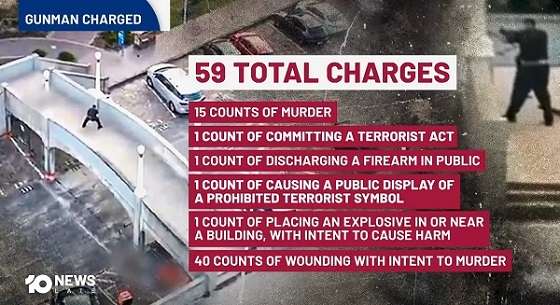
Bondi Beach Shows Why Self-Defense Is a Vital Right
-
 Crime2 days ago
Bondi Beach Survivor Says Cops Prevented Her From Fighting Back Against Terrorists
-
 Automotive2 days ago
Ford’s EV Fiasco Fallout Hits Hard
-
 Crime2 days ago
The Uncomfortable Demographics of Islamist Bloodshed—and Why “Islamophobia” Deflection Increases the Threat
-
 Frontier Centre for Public Policy1 day ago
Canada Lets Child-Porn Offenders Off Easy While Targeting Bible Believers
-
 Alberta2 days ago
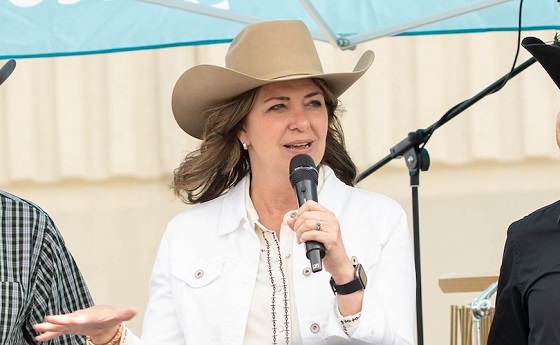
Danielle Smith slams Skate Canada for stopping events in Alberta over ban on men in women’s sports
-
 International2 days ago
TOTAL AND COMPLETE BLOCKADE: Trump cuts off Venezuela’s oil lifeline
-
 International2 days ago
House Rejects Bipartisan Attempt To Block Trump From Using Military Force Against Venezuela