
Also Interesting
The Growth of Online Casinos in Alberta Amid Changing Provincial Regulations


Alberta has announced plans to permit private companies to operate online gambling platforms. This regulatory shift follows Ontario’s successful model, where private gambling websites coexist with government-run platforms. Alberta’s initiative aims to move beyond the current monopoly held by the Alberta Gaming, Liquor and Cannabis (AGLC) through its Play Alberta website. With the introduction of Bill 16 in April 2024 by Minister Dale Nally, the provincial government’s authority to manage and conduct gaming in Alberta has been clarified, paving the way for a regulated and competitive
online gambling market.
The current online gambling market in Alberta is predominantly controlled by Play Alberta, which is estimated to hold 45% of the market share. Despite this, unregulated online gaming sites still account for approximately 55% of Alberta’s iGaming market. Bill 16, also known as the Red Tape Reduction Statutes Amendment Act, aims to reduce this unregulated market by officially permitting and regulating private online gambling operators. This move is expected to align Alberta’s online gambling practices with those of Ontario, the only Canadian province that currently allows privately owned gambling websites. In Ontario, more than 50 regulated private operators manage 80 gambling
websites.
Revenue and Economic Considerations
The fiscal impact of online gambling in Alberta has been significant. In the first quarter of the 2024-25 fiscal year, online gambling revenues reached $726 million, up from $540 million in the prior year. Since its launch in October 2020, Play Alberta has taken around $5.36 billion in total bets over 12 months ending March 31, contributing $234 million to Alberta’s general revenue fund. This financial input highlights the potential benefits of expanding the market to include multiple operators.
Ontario’s experience showcases the economic benefits of a regulated and competitive online gambling market. Ontario’s iGaming sector has contributed CA$2.7 billion to the province’s GDP and created almost 15,000 full-time equivalent jobs in the second year after its inception. A report by Deloitte revealed that Ontario’s market had hit or nearly reached many of its year-five projections within two years, offering a promising benchmark for Alberta as it makes regulatory changes.
One challenge Alberta may face is integrating self-exclusion infrastructure across online gambling sites. Experts like Dr. Nigel Turner emphasize the importance of responsible gambling practices. Unlike Alberta, Ontario currently lacks provincewide self-exclusion tools and mandatory limit-setting, which Alberta is considering implementing. Minister Dale Nally has indicated that Alberta aims to create a safer and more responsible gambling environment by introducing these tools, aligning with the goal of reducing the unregulated market and ensuring player safety.
Private Operators Entering Alberta’s Online Gambling Market
The entry of private operators, such as FanDuel online casino, is expected to reshape Alberta’s online gambling market. Increased competition from private operators will likely lead to more gaming options and better technologies, improving the user experience. Ontario’s model demonstrates the benefits of a competitive market, including the reduced influence of unregulated offshore sites.
The inclusion of operators like FanDuel presents substantial growth opportunities for Alberta’s online gambling sector. FanDuel’s presence will expand the selection of games and enhance user experiences, contributing to increased provincial revenues through regulated activities. This aligns with Alberta’s objective of fostering a secure and responsible gambling environment while capitalizing on the economic advantages of a well-regulated market.
Economic and Job Growth Projections
Canada’s online casino industry is on track to surpass $2 billion in gross gaming revenue in 2024, nearly tripling from the $750 million recorded in 2020. This growth has spurred job creation, with over 25,000 direct jobs expected in 2024. As more Canadians engage with online gambling, economic contributions from this sector continue to expand, impacting industries such as software development, customer support, marketing, and finance.

Approximately 20 million Canadians, or about 50% of the population, engaged with online casinos at least once in 2024, a significant increase from 10 million in 2020. This growing user base highlights the widespread adoption of online gambling. In Alberta, per-capita gambling spending is notably high, with many participants using unregulated sites. The province aims to draw these funds into the regulated market, ensuring that online gambling activities occur within safe and legal frameworks.
Regulatory Framework and Consultation Process
The Alberta government has initiated consultations to develop a comprehensive strategy for the future online gambling market. These discussions involve key stakeholders, including casinos, racing entertainment centers, and First Nations, ensuring that diverse perspectives are considered. A primary goal of these consultations is to create a framework that promotes safety, responsibility, and economic benefits for the province.
Minister Dale Nally has emphasized that opening the market will only proceed once a robust regulatory framework is in place. This cautious approach aims to eliminate the influence of unregulated offshore gambling websites, ensuring that all activities are subject to provincial oversight. An independent administrator, similar to iGaming Ontario, is planned to oversee the commercial market in Alberta.
The revenue split between Alberta’s government and private operators remains under discussion. In Ontario, the provincial government takes 20% of revenues from regulated gambling websites, contributing $790 million in taxes last year. This model may offer insights into potential revenue-sharing arrangements in Alberta, balancing the need to attract private operators with the goal of maximizing public revenues.
Challenges and Opportunities in Alberta’s Online Gambling Market
Alberta’s move toward a regulated online gambling market faces the challenge of attracting private operators who may hesitate to share player information with AGLC, the operator of Play Alberta. Private operators have expressed reluctance to disclose data to a direct competitor. Addressing these concerns will be essential for building a competitive and dynamic market.
Alberta’s high per-capita gambling spending underscores the potential for regulated online gambling to channel more funds within the province. By capturing this existing gambling activity through regulated channels, Alberta can enhance player safety while generating significant economic benefits.
Conclusion
Alberta’s transition toward a regulated online gambling market is poised to generate significant economic growth and job creation, while enhancing player safety and responsible gambling practices. By following Ontario’s successful model, Alberta has the potential to build a competitive, secure, and regulated iGaming environment. As the province finalizes its regulatory framework and addresses challenges like data-sharing concerns, it can unlock the benefits of a growing iGaming market while protecting both players and the public interest. Alberta’s careful approach ensures that this shift benefits the province’s economy while safeguarding players from unregulated sites.


WATCH From Underdog to Top Broodmare (video)
Executive Producers Jeff Robillard (Horse Racing Alberta) and Mike Little (Shinelight Entertainment)

What began as an underdog story became a legacy of excellence. Crackers Hot Shot didn’t just race — she paved the way for future generations, and in doing so became one of the most influential producers the province has known.
The extraordinary journey of Crackers Hot Shot — once overlooked, now revered — stands as one of Alberta’s finest success stories in harness racing and breeding.
Born in humble circumstances and initially considered rough around the edges, Crackers Hot Shot overcame long odds to carve out a career that would forever impact the province’s racing industry. From a “wild, unhandled filly” to Alberta’s “Horse of the Year” in 2013, to producing foals who carry her spirit and fortitude into future generations.
Her influence ripples through Alberta’s racing and breeding landscape: from how young stock are prepared, to the aspirations of local breeders who now look to “the mare that did it” as proof that world-class talent can emerge from Alberta’s paddocks.
“Crackers Hot Shot, she had a tough start. She wasn’t much to look at when we first got her” — Rod Starkewski
“Crackers Hot Shot was left on her own – Carl Archibald heard us talking, he said ‘I’ll go get her – I live by there’. I think it took him 3 days to dig her out of the snow. She was completely wild – then we just started working on her. She really needed some humans to work with her – and get to know that people are not scary.” — Jackie Starkewski
“Crackers Hot Shot would be one of the top broodmares in Albeta percentage wise if nothing else. Her foals hit the track – they’re looking for the winners circle every time.” — Connie Kolthammer
Visit thehorses.com to learn more about Alberta’s Horse Racing industry.

Alberta is the latest province in Canada looking to welcome a new regulated iGaming market. Regions like Ontario have already proved how successful the industry can become. It’s not just for the gambling industry itself but for the infrastructure and development it can foster through the astounding amounts of tax revenue it can bring in. According to Delasport, in 2024 alone, Ontario reported Gross Gambling Revenue (GGR) figures of CA$3.2 billion. The staggering amount also represented a year-on-year increase of over 30%.
Given the potential for much-needed tax revenue injections, Alberta now wants to follow suit, albeit via its own regulatory model. The notion of regulated iGaming in the province has long been debated and is now finally ready to go ahead. While there is much work to be done, authorities are optimistic that the move will be a rousing success.
Early reactions point to the growing appetite for digital platforms that offer secure and convenient play. Industry observers often point to resources like an Esports Insider guide when discussing how online gaming continues to expand. Guides like these highlight safe and secure casino sites that locals can access and play on. The best sites provide a gold standard that Albertan sites should look to emulate. By offering expansive gaming libraries, together with generous player bonuses, fast payments, and adequate safeguards for players, these sites have become trusted members of the global industry.
For local regions like Red Deer, legal iGaming could have a positive effect if handled properly. The tax revenue generated from the industry could go a long way toward helping a lot of locals. Programs like the Integrated Coordinated Access (ICA), which help connect people in need with appropriate social services, could be better provided for. Of course, the final regulations will dictate how many and which programs benefit from tax revenues. However, social causes like this are a good example of how tax revenues can be used to help as many people as possible.
Local areas like Red Deer may also benefit through reinvestment. Infrastructure projects, community programs, or healthcare funding could all be supported by revenue streams that come from regulated play. While projections vary, the expectation is that even a small share of provincial income could create visible change at the municipal level. So long as the funds are allocated with appropriate oversight, the province as a whole would benefit greatly from iGaming revenue. The extra funding is needed more than ever in the wake of US tariffs and the realignment of global trade.
Local businesses could also feel an indirect boost. With online platforms drawing more attention to gaming as a form of entertainment, cafes, bars, and sports lounges may see opportunities to host events tied to esports or watch parties. This type of cross-promotion has worked well in other regions where iGaming has become part of mainstream culture. Red Deer, with its active student population and lively arts scene, is well-positioned to adapt.
With gambling regulations often being harsh in other regions, there’s often pushback whenever the industry wants to gain a foothold in a new locality. While many look at societal issues, those who are pro-business are quick to point out that gambling represents huge inflows of revenue wherever it’s treated fairly by regulators. That kind of windfall simply can’t be ignored. In many ways, the gambling industry is treated differently, usually subjected to higher taxes than other industries to balance out any concerns that may exist.
Technology also plays a major role in shaping this future. Faster internet connections, mobile devices, and secure payment tools have made it possible for online gaming to be part of everyday life. Players in Red Deer already use digital wallets for shopping, subscriptions, and travel bookings. Extending that convenience to entertainment feels like a natural step. The province’s move to regulate iGaming is less about introducing something entirely new and more about bringing order to a practice that already exists in the shadows.
Cultural attitudes also matter. Red Deer is a community that blends tradition with a growing openness to digital solutions. Events like esports tournaments and online streaming have already captured attention among younger residents. The addition of regulated iGaming could be viewed as part of this broader shift toward digital entertainment. As with music, film, and television, the move from physical venues to online access has reshaped how people engage with their favourite pastimes.

From Underdog to Top Broodmare

Landmark 2025 Study Says Near-Death Experiences Can’t Be Explained Away

STUDY: TikTok, Instagram, and YouTube Shorts Induce Measurable “Brain Rot”
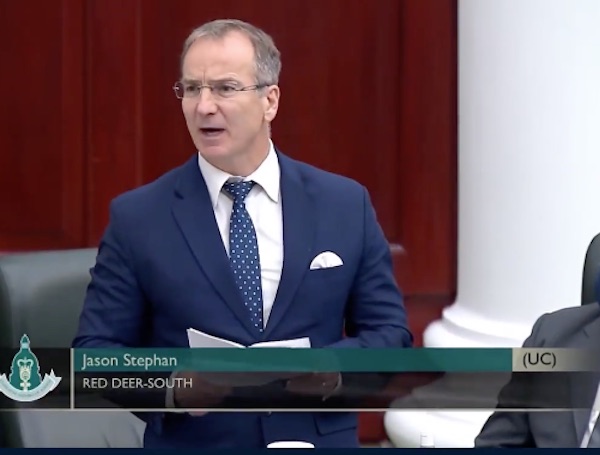
Red Deer’s Jason Stephan calls for citizen-led referendum on late-term abortion ban in Alberta
-
Opinion2 days ago
Landmark 2025 Study Says Near-Death Experiences Can’t Be Explained Away
-
Focal Points2 days ago
STUDY: TikTok, Instagram, and YouTube Shorts Induce Measurable “Brain Rot”
-
Alberta2 days ago
Red Deer’s Jason Stephan calls for citizen-led referendum on late-term abortion ban in Alberta
-
 Business2 days ago
Blacked-Out Democracy: The Stellantis Deal Ottawa Won’t Show Its Own MPs
-
 Artificial Intelligence24 hours ago
Google denies scanning users’ email and attachments with its AI software
-
 Agriculture1 day ago
Health Canada pauses plan to sell unlabeled cloned meat
-
 Indigenous2 days ago
Indigenous activist wins landmark court ruling for financial transparency
-
 Health1 day ago
Organ donation industry’s redefinitions of death threaten living people