
Alberta
Province introduces civilian oversight of RCMP in Alberta: Committees to oversee RCMP service delivery



Alberta’s government is making sure communities have a say in how they are policed by the RCMP.
Ensuring Albertans are kept safe is a priority for Alberta’s government, which is why it introduced and passed the Police Amendment Act, 2022 in the fall session of 2022. This important piece of legislation is strengthening RCMP ties to the communities they serve and improving police accountability by mandating civilian governance bodies for municipalities policed by the RCMP. An order in council for the legislation was signed today, with the new regulations coming into force March 1, 2025.
The creation of the municipal and regional policing committees and the Provincial Police Advisory Board will ensure large and small municipalities have a role in setting province-wide policing priorities and performance goals for the RCMP to ensure service delivery reflects and addresses local needs.
The changes coming into force through the amendments and new regulations represent a collaborative effort on the part of municipalities, the RCMP and Alberta’s government to improve public safety in communities throughout the province.

“By creating new civilian governance bodies, we’re responding to Albertans’ long-standing desire for more say in how the RCMP police their communities while advancing a paradigm shift that sees local police across the province as an extension and a reflection of the communities they serve. Unique communities have unique public safety priorities and the creation of civilian governance bodies will address this issue. Creating mandatory civilian governance bodies also ensures accountability, as officers will be held responsible for their actions and behaviour.”
“Amendments to the Police Act support your Alberta RCMP’s ongoing efforts to ensure that communities have a strong voice in their policing priorities. In particular, it will assist our work on local resourcing, responding to calls for mental health and addictions issues, targeting prolific offenders, and dealing with hate crimes. The Alberta RCMP welcomes any changes or enhancements to oversight and governance that help us meet the needs of the communities we serve.”
“Our association’s 265-member communities welcome the provincial government’s effort to build stronger ties between the RCMP and the communities they serve. We hope these policing committees and the Provincial Police Advisory Board lead to improved public safety in communities throughout Alberta.”
Municipal and regional policing committees
Communities with municipal policing contracts and populations of more than 15,000 will be required to appoint municipal policing committees to oversee RCMP service delivery for their area. These committees will work with elected municipal officials to set policing priorities for the community, report on initiatives to support those goals, and create safety plans with their local RCMP detachments, authorities and agencies.
RCMP-policed communities with populations between 5,000 and 15,000 will be represented by regional policing committees to which they will be required to recruit and appoint members. These civilian committees will represent the interests and concerns of the public to the RCMP leadership in their district, work with local officials to identify and address public safety concerns for their region, and report on the implementation of programs and services to address them.
The Provincial Police Advisory Board
Small and rural communities policed by the RCMP with populations under 5,000 will be represented by a new advisory board. The Provincial Police Advisory Board will represent the interests and concerns of Albertans in these communities, support integrated safety planning and liaise with Alberta’s government, the RCMP and municipalities to align policing priorities and resources to help address local concerns and challenges. The 15-person board will include dedicated seats for representatives from Alberta Municipalities, Rural Municipalities of Alberta, and First Nations and Métis communities, as well as community representation for each of the province’s RCMP districts.
Quick facts
- The Police Amendment Act, 2022 received royal assent on Dec. 15, 2022, with the aim of improving police accountability, strengthening ties with communities and enhancing public confidence by reforming existing policing practices.
- The Police Amendment Act, 2022 made a number of amendments to the Police Act, including the creation of civilian governance bodies in jurisdictions policed by the RCMP.
- The Public Safety Statutes Amendment Act, 2024 received royal assent on May 16, and included amendments that allow for the regulation of municipal police committee memberships.
- Both the Police Amendment Act, 2022 amendments and the new regulations created to support these municipal and regional civilian governance bodies will come into force on March 1, 2025.
Related information



From the Fraser Institute
Odds are, you can’t tell whether this sentence was written by AI. Schools across Canada face the same problem. And happily, some are finding simple solutions.
Manitoba’s Division Scolaire Franco-Manitobaine recently issued new guidelines for teachers, to only assign optional homework and reading in grades Kindergarten to six, and limit homework in grades seven to 12. The reason? The proliferation of generative artificial intelligence (AI) chatbots such as ChatGPT make it very difficult for teachers, juggling a heavy workload, to discern genuine student work from AI-generated text. In fact, according to Division superintendent Alain Laberge, “Most of the [after-school assignment] submissions, we find, are coming from AI, to be quite honest.”
This problem isn’t limited to Manitoba, of course.
Two provincial doors down, in Alberta, new data analysis revealed that high school report card grades are rising while scores on provincewide assessments are not—particularly since 2022, the year ChatGPT was released. Report cards account for take-home work, while standardized tests are written in person, in the presence of teaching staff.
Specifically, from 2016 to 2019, the average standardized test score in Alberta across a range of subjects was 64 while the report card grade was 73.3—or 9.3 percentage points higher). From 2022 and 2024, the gap increased to 12.5 percentage points. (Data for 2020 and 2021 are unavailable due to COVID school closures.)
In lieu of take-home work, the Division Scolaire Franco-Manitobaine recommends nightly reading for students, which is a great idea. Having students read nightly doesn’t cost schools a dime but it’s strongly associated with improving academic outcomes.
According to a Programme for International Student Assessment (PISA) analysis of 174,000 student scores across 32 countries, the connection between daily reading and literacy was “moderately strong and meaningful,” and reading engagement affects reading achievement more than the socioeconomic status, gender or family structure of students.
All of this points to an undeniable shift in education—that is, teachers are losing a once-valuable tool (homework) and shifting more work back into the classroom. And while new technologies will continue to change the education landscape in heretofore unknown ways, one time-tested winning strategy is to go back to basics.
And some of “the basics” have slipped rapidly away. Some college students in elite universities arrive on campus never having read an entire book. Many university professors bemoan the newfound inability of students to write essays or deconstruct basic story components. Canada’s average PISA scores—a test of 15-year-olds in math, reading and science—have plummeted. In math, student test scores have dropped 35 points—the PISA equivalent of nearly two years of lost learning—in the last two decades. In reading, students have fallen about one year behind while science scores dropped moderately.
The decline in Canadian student achievement predates the widespread access of generative AI, but AI complicates the problem. Again, the solution needn’t be costly or complicated. There’s a reason why many tech CEOs famously send their children to screen-free schools. If technology is too tempting, in or outside of class, students should write with a pencil and paper. If ChatGPT is too hard to detect (and we know it is, because even AI often can’t accurately detect AI), in-class essays and assignments make sense.
And crucially, standardized tests provide the most reliable equitable measure of student progress, and if properly monitored, they’re AI-proof. Yet standardized testing is on the wane in Canada, thanks to long-standing attacks from teacher unions and other opponents, and despite broad support from parents. Now more than ever, parents and educators require reliable data to access the ability of students. Standardized testing varies widely among the provinces, but parents in every province should demand a strong standardized testing regime.
AI may be here to stay and it may play a large role in the future of education. But if schools deprive students of the ability to read books, structure clear sentences, correspond organically with other humans and complete their own work, they will do students no favours. The best way to ensure kids are “future ready”—to borrow a phrase oft-used to justify seesawing educational tech trends—is to school them in the basics.

Paige MacPherson
Senior Fellow, Education Policy, Fraser Institute
From the Canadian Energy Centre
For Canada, the path to a stronger economy — and stronger global influence — runs through energy.
That’s the view of David Detomasi, a professor at the Smith School of Business at Queen’s University.
Detomasi, author of Profits and Power: Navigating the Politics and Geopolitics of Oil, argues that there is a moral case for developing Canada’s energy, both for Canadians and the world.

David Detomasi. Photo courtesy Smith School of Business, Queen’s University
CEC: What does being an energy superpower mean to you?
DD: It means Canada is strong enough to affect the system as a whole by its choices.
There is something really valuable about Canada’s — and Alberta’s — way of producing carbon energy that goes beyond just the monetary rewards.
CEC: You talk about the moral case for developing Canada’s energy. What do you mean?
DD: I think the default assumption in public rhetoric is that the environmental movement is the only voice speaking for the moral betterment of the world. That needs to be challenged.
That public rhetoric is that the act of cultivating a powerful, effective economic engine is somehow wrong or bad, and that efforts to create wealth are somehow morally tainted.
I think that’s dead wrong. Economic growth is morally good, and we should foster it.
Economic growth generates money, and you can’t do anything you want to do in social expenditures without that engine.
Economic growth is critical to doing all the other things we want to do as Canadians, like having a publicly funded health care system or providing transfer payments to less well-off provinces.
Over the last 10 years, many people in Canada came to equate moral leadership with getting off of oil and gas as quickly as possible. I think that is a mistake, and far too narrow.
Instead, I think moral leadership means you play that game, you play it well, and you do it in our interest, in the Canadian way.
We need a solid base of economic prosperity in this country first, and then we can help others.
CEC: Why is it important to expand Canada’s energy trade?
DD: Canada is, and has always been, a trading nation, because we’ve got a lot of geography and not that many people.
If we don’t trade what we have with the outside world, we aren’t going to be able to develop economically, because we don’t have the internal size and capacity.
Historically, most of that trade has been with the United States. Geography and history mean it will always be our primary trade partner.
But the United States clearly can be an unreliable partner. Free and open trade matters more to Canada than it does to the U.S. Indeed, a big chunk of the American people is skeptical of participating in a global trading system.
As the United States perhaps withdraws from the international trading and investment system, there’s room for Canada to reinforce it in places where we can use our resource advantages to build new, stronger relationships.
One of these is Europe, which still imports a lot of gas. We can also build positive relationships with the enormous emerging markets of China and India, both of whom want and will need enormous supplies of energy for many decades.
I would like to be able to offer partners the alternative option of buying Canadian energy so that they are less reliant on, say, Iranian or Russian energy.
Canada can also maybe eventually help the two billion people in the world currently without energy access.
CEC: What benefits could Canadians gain by becoming an energy superpower?
DD: The first and primary responsibility of our federal government is to look after Canada. At the end of the day, the goal is to improve Canada’s welfare and enhance its sovereignty.
More carbon energy development helps Canada. We have massive debt, an investment crisis and productivity problems that we’ve been talking about forever. Economic and job growth are weak.
Solving these will require profitable and productive industries. We don’t have so many economic strengths in this country that we can voluntarily ignore or constrain one of our biggest industries.
The economic benefits pay for things that make you stronger as a country.
They make you more resilient on the social welfare front and make increasing defence expenditures, which we sorely need, more affordable. It allows us to manage the debt that we’re running up, and supports deals for Canada’s Indigenous peoples.
CEC: Are there specific projects that you advocate for to make Canada an energy superpower?
DD: Canada’s energy needs egress, and getting it out to places other than the United States. That means more transport and port facilities to Canada’s coasts.
We also need domestic energy transport networks. People don’t know this, but a big chunk of Ontario’s oil supply runs through Michigan, posing a latent security risk to Ontario’s energy security.
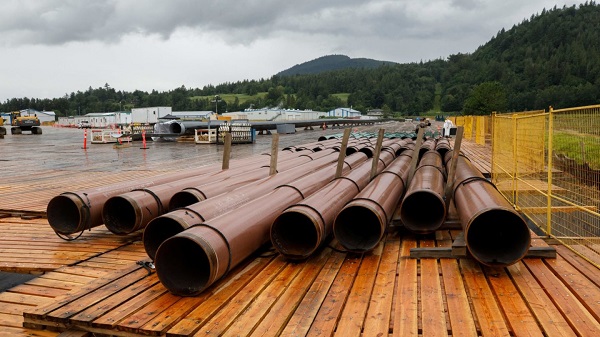
We need to change the perception that pipelines are evil. There’s a spiderweb of them across the globe, and more are being built.
Building pipelines here, with Canadian technology and know-how, builds our competitiveness and enhances our sovereignty.
Economic growth enhances sovereignty and provides the resources to do other things. We should applaud and encourage it, and the carbon energy sector can lead the way.


Wayne Gretzky’s Terrible, Awful Week.. And Soccer/ Football.

Western Campuses Help Build China’s Digital Dragnet With U.S. Tax Funds, Study Warns

Common Vaccines Linked to 38-50% Increased Risk of Dementia and Alzheimer’s

The day the ‘King of rock ‘n’ roll saved the Arizona memorial
-
 Automotive2 days ago
The $50 Billion Question: EVs Never Delivered What Ottawa Promised
-
 Alberta1 day ago
Alberta introducing three “all-season resort areas” to provide more summer activities in Alberta’s mountain parks
-
 COVID-1922 hours ago
Trump DOJ seeks to quash Pfizer whistleblower’s lawsuit over COVID shots
-
 Business1 day ago
Storm clouds of uncertainty as BC courts deal another blow to industry and investment
-
 Agriculture1 day ago
Growing Alberta’s fresh food future
-
 International24 hours ago
Trump admin wants to help Canadian woman rethink euthanasia, Glenn Beck says
-
Alberta23 hours ago
The case for expanding Canada’s energy exports
-
 Censorship Industrial Complex21 hours ago
Ottawa’s New Hate Law Goes Too Far