
National
By-election Bombshell! Justin Trudeau’s Liberals lose safe Toronto riding




Benefit of hindsight
Feel free to start coming back any time, big guy
Well, of course I saw it coming all along. What kind of fool could have imagined the Liberal in Toronto — St. Paul’s had any chance?
Hang on. I’m just getting word that I didn’t see it coming. In fact, as recently as Monday night I wrote a post I’ll be hearing about until the cows come home. Sorry about that!
Here are the actual final results, barring any recounts, which may not happen because Conservative Don Stewart’s margin of victory, while slim, is too large to trigger an automatic recount.
Congratulations, Don Stewart! I never doubted you’d win. Hang on. I’m just getting word that I doubted you’d win as recently as last night.
Things will now start to happen quickly. Expect Liberals to work their way through four of the five Kübler-Ross stages of grief before lunch. Denial will come easily, benefiting as it does from long practice. Acceptance may take longer.
The Paul Wells newsletter is fun reading even when I’m calling the results of a by-election wrong! Imagine how much you’ll enjoy it when I’m right about something!
In part this is because on paper there isn’t that much to accept. The day’s news is not earth-shaking and, in isolation, should not be taken as definitive. It’s true that by-elections are strange events, though if you add them together they do have some predictive power. It’s true that Leslie Church’s long service as Chrystia Freeland’s chief of staff turned out to be more of a hindrance than a help, a data point whose implications the Deputy Prime Minister won’t want to think much about today. It’s true the Liberals didn’t even try all that hard, if by “didn’t try all that hard” you mean “they tried as hard as they possibly could, my God they tried so hard, my God.”
But a single off-season defeat in a riding the Liberals have, in fact, previously lost during the Paleozoic era is not a larger thing to accept than, say, a punishing loss to Ireland and Norway in a Security Council vote at the UN. Or the loss of two senior cabinet ministers in a controversy in which the ministers who quit were radiantly, obviously in the right. Don’t take my word on that, incidentally: ask David Lametti, who agreed with Jody Wilson-Raybould but managed to keep his job anyway. For a while.
A single by-election defeat is not a larger thing to accept than the prime minister’s documented history of slapping on dark makeup for social occasions, a habit that stretched from junior college to young adulthood. It’s not a bigger deal than firing your finance minister during a global fiscal calamity so you can replace him with somebody who knows less about money. It’s not evidence of poorer strategic thinking than the choice of Parliament as the venue for dismantling a new Conservative leader, given that Parliament has long been where Justin Trudeau and most of his government perform worst.
It’s not a bigger deal than mocking monetary policy during an election campaign. It’s not a big new development, compared to the Prime Minister’s reluctance to meet his own cabinet ministers to discuss business, an oddity of his management style that’s been documented in a growing number of books (look out for Marc Garneau’s this fall!).

The prime minister has been on the ropes before, so to speak, and all those trials have made him the man he is today. Or rather, I suppose, his response to them has. I have no particular advice for Justin Trudeau today, or to the party he leads with the unstinting consent of its members. I screwed up last night by sending a column before the facts were in, so I’m feeling a little sheepish this morning. I’ll let Liberals decide what to do next.
As recently as two summers ago, I used to give them advice. It amounted to this: Notice when something you’re doing isn’t working. Change it. Make sure people see you changing it, so you don’t look quite so full of yourself. Rinse and repeat.
That post from 2022 ends:
“Don’t worry. He won’t take this advice either. Whatever the Liberal leader does on his return from the sunless south, it probably won’t resemble anything we’ve mentioned today. He’ll probably keep doing what he’s been doing. With the same results.”
Let me read to you
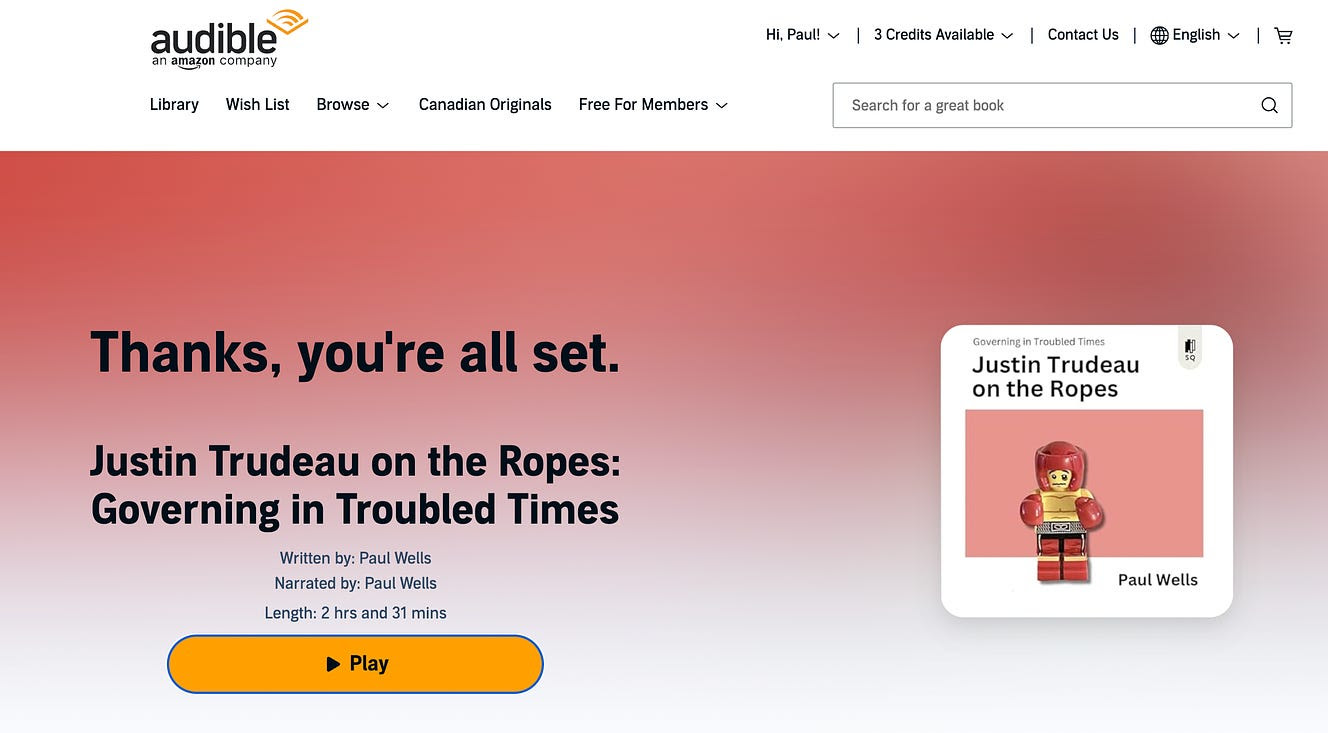
My excellent short bestselling book, Justin Trudeau on the Ropes: Governing in Troubled Times, is now an audiobook, narrated by the author, who is me. Here it is on Audible. Other platforms soon.
 |
Here’s the story of the book, if you’re just catching up. Here’s an episode of my podcast with guest host Vassy Kapelos interviewing me about the book. Paper and ebook editions remain easy to find and buy, for yourself or friends.
We decided to make the audiobook some time after we published the, uh, more booky formats. It’s a response to surprising and gratifying demand. It’s also a promissory note: If this belated audiobook edition finds an audience, it won’t be my last.
There’s a school of thought that says there’s not much demand for nonfiction Canadian audiobooks. Here’s your chance to confound the skeptics. Thanks as always for your support.


From the Fraser Institute
By Tegan Hill and Jason Clemens
Recent court decision adds to growing uncertainty in B.C.
A recent decision by the B.C. Court of Appeal further clouds private property rights and undermines investment in the province. Specifically, the court determined British Columbia’s mineral claims system did not follow the province’s Declaration on the Rights of Indigenous Peoples Act (DRIPA), which incorporated the United Nations Declaration on the Rights of Indigenous Peoples (UNDRIP) into law.
DRIPA (2019) requires the B.C. provincial government to “take all measures necessary to ensure the laws of British Columbia are consistent with the Declaration,” meaning that all legislation in B.C. must conform to the principles outlined in the UNDRIP, which states that “Indigenous peoples have the right to the lands, territories and resources which they have traditionally owned, occupied or otherwise used or acquired.” The court’s ruling that the provincial government is not abiding by its own legislation (DRIPA) is the latest hit for the province in terms of ongoing uncertainty regarding property rights across the province, which will impose massive economic costs on all British Columbians until it’s resolved.
Consider the Cowichan First Nations legal case. The B.C. Supreme Court recently granted Aboriginal title to over 800 acres of land in Richmond valued at $2.5 billion, and where such aboriginal title is determined to exist, the court ruled that it is “prior and senior right” to other property interests. Put simply, the case puts private property at risk in BC.
The Eby government is appealing the case, yet it’s simultaneously negotiating bilateral agreements that similarly give First Nations priority rights over land swaths in B.C.
Consider Haida Gwaii, an archipelago on Canada’s west coast where around 5,000 people live—half of which are non-Haida. In April 2024, the Eby government granted Haida Aboriginal title over the land as part of a bilateral agreement. And while the agreement says private property must be honoured, private property rights are incompatible with communal Aboriginal title and it’s unclear how this conflict will be resolved.
Moreover, the Eby government attempted to pass legislation that effectively gives First Nations veto power over public land use in B.C. in 2024. While the legislation was rescinded after significant public backlash, the Eby’s government’s continued bilateral negotiations and proposed changes to other laws indicate it’s supportive of the general move towards Aboriginal title over significant parts of the province.
UNDRIP was adopted by the United Nations in 2007 and the B.C. Legislature adopted DRIPA in 2019. DRIPA requires that the government must secure “free, prior and informed consent” before approving projects on claimed land. Premier Eby is directly tied to DRIPA since he was the attorney general and actually drafted the interpretation memo.
The recent case centres around mineral exploration. Two First Nations groups—the Gitxaala Nation and the Ehattesaht First Nation—claimed the duty to consult was not adequately met and that granting mineral claims in their land “harms their cultural, spiritual, economic, and governance rights over their traditional territories,” which is inconsistent with DRIPA.
According to a 2024 survey of mining executives, more uncertainty is the last thing B.C. needs. Indeed, 76 per cent of respondents for B.C. said uncertainty around protected land and disputed land claims deters investment compared to only 29 per cent and 44 per cent (respectively) for Saskatchewan.
This series of developments have and will continue to fuel uncertainty in B.C. Who would move to or invest in B.C. when their private property, business, and investment is potentially at risk?
It’s no wonder British Columbians are leaving the province in droves. According to the B.C. Business Council, nearly 70,000 residents left B.C. for other parts of Canada last year. Similarly, business investment (inflation-adjusted) fell by nearly 5 per cent last year, exports and housing starts were down, and living standards in the province (as measured by per-person GDP) contracted in both 2023 and 2024.
B.C.’s recent developments will only worsen uncertainty in the province, deterring investment and leading to stagnant or even declining living standards for British Columbians. The Eby government should do its part to reaffirm private property rights, rather than continue fuelling uncertainty.

Tegan Hill
Director, Alberta Policy, Fraser Institute

Jason Clemens
Executive Vice President, Fraser Institute
From LifeSiteNews
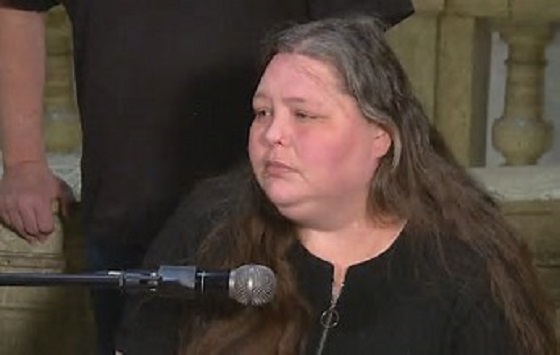
Jolene Van Alstine was approved for euthanasia after tiring of waiting years for surgery in Canada
A Canadian woman is looking to die by state-sanctioned euthanasia because she has had to endure long wait times to get what she considers to be proper care for a rare parathyroid disease.
The woman is Jolene Van Alstine, whose condition, normocalcemic primary hyperparathyroidism (nPHPT), causes her to experience vomiting, nausea, and bone pain.
As noted in a recent CBC report, Van Alstine claims she is not able to get proper surgery to remove her parathyroid in her home province of Saskatchewan, as there are no surgeons in that province who can perform that type of surgery.
She has said her “friends have stopped visiting me” and she is “isolated” and living “alone lying on the couch for eight years, sick and curled up in a ball, pushing for the day to end.”
“I go to bed at six at night because I can’t stand to be awake anymore,” she said.
As a result of her frustrations with the healthcare system, Van Alstine applied for Canada’s Medical Assistance in Dying (MAiD). She was approved for the procedure on January 7, 2026.
Saskatchewan Health Minister Jeremy Cockrill met with Van Alstine last month to try to see if he could help her, but what they talked about remains confidential.
“The Government of Saskatchewan expresses its sincere sympathy for all patients who are suffering with a difficult health diagnosis,” the government said.
As reported by LifeSiteNews, over 23,000 Canadians have died while on wait lists for medical care as Prime Minister Mark Carney’s Liberal government is focused on euthanasia expansions.
A new Euthanasia Prevention Coalition report revealed that Canada has euthanized 90,000 people since 2016, the year it was legalized.
Americans offering Jolene surgery help now say they have made contact with her
Van Alstine’s story has gone viral on the social media platform X, catching the attention of well-known American personalities, some who have claimed they can help her.
“If there is any surgeon in America who can do this, I’ll pay for this patient to come down here for treatment,” Glenn Beck wrote Tuesday on X.
“THIS is the reality of ‘compassionate’ progressive healthcare. Canada must END this insanity and Americans can NEVER let it spread here.”
According to Beck in a subsequent X post, he has had “surgeons who emailed us standing by to help her.”
“We are in contact with Jolene and her husband! Please continue to pray for her health,” he wrote on X.
“Will update more soon.”
As reported by LifeSiteNews recently, a Conservative MP’s private member’s bill that, if passed, would ban euthanasia for people with mental illness received the full support of the Euthanasia Prevention Coalition.
Lobby groups have pushed for MAiD to be expanded to minors.
Desiring to expand the procedure to even more Canadians, former Prime Minister Justin Trudeau’s government sought to expand from just the chronically and terminally ill to those suffering solely from mental illness. The current Liberal government appears to want to continue with the MAiD regime.
However, in February, after pushback from pro-life, medical, and mental health groups as well as most of Canada’s provinces, the federal government delayed the mental illness expansion until 2027.

Media bound to pay the price for selling their freedom to (selectively) offend

Sometimes An Ingrate Nation Pt. 2: The Great One Makes His Choice

Recent price declines don’t solve Toronto’s housing affordability crisis
From Exception to Routine. Why Canada’s State-Assisted Suicide Regime Demands a Human-Rights Review
-
 COVID-192 days ago
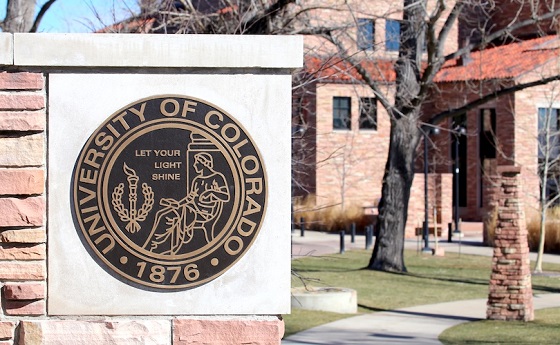
University of Colorado will pay $10 million to staff, students for trying to force them to take COVID shots
-
 Bruce Dowbiggin2 days ago
Integration Or Indignation: Whose Strategy Worked Best Against Trump?
-
 espionage2 days ago
Western Campuses Help Build China’s Digital Dragnet With U.S. Tax Funds, Study Warns
-
 Bruce Dowbiggin2 days ago
Wayne Gretzky’s Terrible, Awful Week.. And Soccer/ Football.
-
 Agriculture2 days ago
Canada’s air quality among the best in the world
-
 Business1 day ago
Canada invests $34 million in Chinese drones now considered to be ‘high security risks’
-
 Health2 days ago
CDC Vaccine Panel Votes to End Universal Hep B Vaccine for Newborns
-
 Business2 days ago
The EU Insists Its X Fine Isn’t About Censorship. Here’s Why It Is.