
Food
The Trudeau government’s latest assault on transparency is buried in Bill C-69


From the Macdonald Laurier Institute
By Aaron Wudrick for Inside Policy
The new powers granted to the minister of health under Bill C-69 are considerable. For example, they allow the minister to unilaterally make decisions regarding drug approvals and food safety regulations, effectively pulling products off the shelves of stores without the typical procedural safeguards. This concentration of power in the hands of the minister circumvents much-needed scrutiny and risks politicizing health decisions.
As the Trudeau government scrambles to pass its spring 2024 budget measures through Parliament before the summer recess, most of the media’s focus has centred on the budget’s headline measure, the increase in the capital gains inclusion rate. Unusually, Finance Minister Chrystia Freeland chose not to include that change in its main budget bill, saying she would instead soon introduce those measures in a separate bill.
Meanwhile, the remainder of the budget measures are contained in Bill C-69, an omnibus bill that has attracted little media attention. That is a shame, as it contains provisions that warrant closer scrutiny, particularly the proposed changes to the Food and Drug Act. These amendments grant the minister of health sweeping powers, exacerbating the Trudeau government’s longstanding habit of undermining proper procedural channels when it finds them to be inconvenient.
The new powers granted to the minister of health under Bill C-69 are considerable. For example, they allow the minister to unilaterally make decisions regarding drug approvals and food safety regulations, effectively pulling products off the shelves of stores without the typical procedural safeguards. This concentration of power in the hands of the minister circumvents much-needed scrutiny and risks politicizing health decisions. It is not hard to see how such authority could easily lead to arbitrary or politically motivated actions, further diminishing public trust in a health system battered by the COVID-19 pandemic.
Health Minister Mark Holland defends these new powers by arguing that they are necessary for protecting public health swiftly and effectively and suggests that only a “dishonest” minister would misuse such powers. He fails to mention that governance should not rely solely on the personal integrity of individual ministers but on robust, transparent processes that ensure accountability. It is concerning that Holland advocates bypassing established departmental procedures, which raises questions about the motivations behind these proposed changes.
A more appropriate regulatory approach would trust independent agencies, including Health Canada, to oversee the safety of health products. Establishing clear guidelines and procedures for evaluating and removing unsafe products would ensure consistency, fairness, and transparency in decision-making processes.
Unfortunately, this approach contrasts sharply with the Trudeau government’s preference for consolidating power and limiting oversight.

For instance, the Trudeau government has been criticized for its use of secret orders-in-council, which bypass public scrutiny and reduce transparency. These orders often contain sensitive decisions that the government simply prefers to keep out of the public eye.
The government has also allowed the federal access to information system to atrophy, with frequent delays and heavily redacted documents further undermining the principle of open government.
In 2017, the Trudeau government introduced changes that critics argued would limit the independence and effectiveness of the Parliamentary Budget Officer (PBO). These amendments allowed the government to control the PBO’s work plan and staffing, potentially reducing its ability to hold the government accountable. More recently, the government cut the budget of the Information Commissioner’s office, undermining the capacity of an already overwhelmed independent officer of Parliament to hold the government to account, with the commissioner herself noting that “this reduction in my budget will spell long delays for complainants who are seeking information from government institutions.”
Further examples of this troubling trend include the government’s proposal in the early days of the COVID-19 pandemic that sought to grant the government extraordinary powers to tax and spend unilaterally – without parliamentary approval – for almost two years. Later in the pandemic, the government faced significant criticism from Auditor General Karen Hogan for the lack of transparency and accountability regarding the allocation and spending of tens of billions in relief funds: “I am concerned about the lack of rigour on post-payment verifications and collection activities,” Hogan said in 2022.
Taken together, a clear pattern emerges of a government that regularly seeks to undermine transparency, limit oversight, and concentrate power within the executive branch, and Bill C-69 is just the latest attempt.
The government should back off and drop these proposed new unilateral ministerial powers. Strong regulatory oversight, coupled with transparency and accountability, won’t impair the government’s ability to regulate health products – all while safeguarding democratic principles and public trust.
Aaron Wudrick is the Director of the Domestic Policy Program at the Macdonald-Laurier Institute.


From the Frontier Centre for Public Policy
Livestock contribute far less to emissions than activists claim, and eliminating them would weaken nutrition, resilience and food security
The war on livestock pushed by Net Zero ideologues is not environmental science; it’s a dangerous, misguided campaign that threatens global food security.
The priests of Net Zero 2050 have declared war on the cow, the pig and the chicken. From glass towers in London, Brussels and Ottawa, they argue that cutting animal protein, shrinking herds and pushing people toward lentils and lab-grown alternatives will save the climate from a steer’s burp.
This is not science. It is an urban belief that billions of people can be pushed toward a diet promoted by some policymakers who have never worked a field or heard a rooster at dawn. Eliminating or sharply reducing livestock would destabilize food systems and increase global hunger. In Canada, livestock account for about three per cent of total greenhouse gas emissions, according to Environment and Climate Change Canada.
Activists speak as if livestock suddenly appeared in the last century, belching fossil carbon into the air. In reality, the relationship between humans and the animals we raise is older than agriculture. It is part of how our species developed.
Two million years ago, early humans ate meat and marrow, mastered fire and developed larger brains. The expensive-tissue hypothesis, a theory that explains how early humans traded gut size for brain growth, is not ideology; it is basic anthropology. Animal fat and protein helped build the human brain and the societies that followed.
Domestication deepened that relationship. When humans raised cattle, sheep, pigs and chickens, we created a long partnership that shaped both species. Wolves became dogs. Aurochs, the wild ancestors of modern cattle, became domesticated animals. Junglefowl became chickens that could lay eggs reliably. These animals lived with us because it increased their chances of survival.
In return, they received protection, veterinary care and steady food during drought and winter. More than 70,000 Canadian farms raise cattle, hogs, poultry or sheep, supporting hundreds of thousands of jobs across the supply chain.
Livestock also protected people from climate extremes. When crops failed, grasslands still produced forage, and herds converted that into food. During the Little Ice Age, millions in Europe starved because grain crops collapsed. Pastoral communities, which lived from herding livestock rather than crops, survived because their herds could still graze. Removing livestock would offer little climate benefit, yet it would eliminate one of humanity’s most reliable protections against environmental shocks.
Today, a Maasai child in Kenya or northern Tanzania drinking milk from a cow grazing on dry land has a steadier food source than a vegan in a Berlin apartment relying on global shipping. Modern genetics and nutrition have pushed this relationship further. For the first time, the poorest billion people have access to complete protein and key nutrients such as iron, zinc, B12 and retinol, a form of vitamin A, that plants cannot supply without industrial processing or fortification. Canada also imports significant volumes of soy-based and other plant-protein products, making many urban vegan diets more dependent on long-distance supply chains than people assume. The war on livestock is not a war on carbon; it is a war on the most successful anti-poverty tool ever created.
And what about the animals? Remove humans tomorrow and most commercial chickens would die of exposure, merino sheep would overheat under their own wool and dairy cattle would suffer from untreated mastitis (a bacterial infection of the udder). These species are fully domesticated. Without us, they would disappear.
Net Zero 2050 is a climate target adopted by federal and provincial governments, but debates continue over whether it requires reducing livestock herds or simply improving farm practices. Net Zero advocates look at a pasture and see methane. Farmers see land producing food from nothing more than sunlight, rain and grass.
So the question is not technical. It is about how we see ourselves. Does the Net Zero vision treat humans as part of the natural world, or as a threat that must be contained by forcing diets and erasing long-standing food systems? Eliminating livestock sends the message that human presence itself is an environmental problem, not a participant in a functioning ecosystem.
The cow is not the enemy of the planet. Pasture is not a problem to fix. It is a solution our ancestors discovered long before anyone used the word “sustainable.” We abandon it at our peril and at theirs.
Dr. Joseph Fournier is a senior fellow at the Frontier Centre for Public Policy. An accomplished scientist and former energy executive, he holds graduate training in chemical physics and has written more than 100 articles on energy, environment and climate science.

This is a special preview article from the:
U.S. President Donald Trump’s trade policy is often chaotic and punitive. But on one point, he is right: Canada’s agricultural supply management system has to go. Not because it is unfair to the United States, though it clearly is, but because it punishes Canadians. Supply management is a government-enforced price-fixing scheme that limits consumer choice, inflates grocery bills, wastes food, and shields a small, politically powerful group of producers from competition—at the direct expense of millions of households.
And yet Ottawa continues to support this socialist shakedown. Last week, Prime Minister Mark Carney told reporters supply management was “not on the table” in negotiations for a renewed United States-Mexico-Canada Trade Agreement, despite U.S. negotiators citing it as a roadblock to a new deal.
Supply management relies on a web of production quotas, fixed farmgate prices, strict import limits, and punitive tariffs that can approach 300 percent. Bureaucrats decide how much milk, chicken, eggs, and poultry Canadians farmers produce and which farmers can produce how much. When officials misjudge demand—as they recently did with chicken and eggs—farmers are legally barred from responding. The result is predictable: shortages, soaring prices, and frustrated consumers staring at emptier shelves and higher bills.
This is not a theoretical problem. Canada’s most recent chicken production cycle, ending in May 2025, produced one of the worst supply shortfalls in decades. Demand rose unexpectedly, but quotas froze supply in place. Canadian farmers could not increase production. Instead, consumers paid more for scarce domestic poultry while last-minute imports filled the gap at premium prices. Eggs followed a similar pattern, with shortages triggering a convoluted “allocation” system that opened the door to massive foreign imports rather than empowering Canadian farmers to respond.
Over a century of global experience has shown that central economic planning fails. Governments are simply not good at “matching” supply with demand. There is no reason to believe Ottawa’s attempts to manage a handful of food categories should fare any better. And yet supply management persists, even as its costs mount.
Those costs fall squarely on consumers. According to a Fraser Institute estimate, supply management adds roughly $375 a year to the average Canadian household’s grocery bill. Because lower-income families spend a much higher proportion of their income on food, the burden falls most heavily on them.
The system also strangles consumer choice. European countries produce thousands of varieties of high-quality cheeses at prices far below what Canadians pay for largely industrial domestic products. But our import quotas are tiny, and anything above them is hit with tariffs exceeding 245 percent. As a result, imported cheeses can cost $60 per kilogram or more in Canadian grocery stores. In Switzerland, one of the world’s most eye-poppingly expensive countries, where a thimble-sized coffee will set you back $9, premium cheeses are barely half the price you’ll find at Loblaw or Safeway.
Canada’s supply-managed farmers defend their monopoly by insisting it provides a “fair return” for famers, guarantees Canadians have access to “homegrown food” and assures the “right amount of food is produced to meet Canadian needs.” Is there a shred of evidence Canadians are being denied the “right amount” of bread, tuna, asparagus or applesauce? Of course not; the market readily supplies all these and many thousands of other non-supply-managed foods.
Like all price-fixing systems, Canada’s supply management provides only the illusion of stability and security. We’ve seen above what happens when production falls short. But perversely, if a farmer manages to get more milk out of his cows than his quota, there’s no reward: the excess must be
dumped. Last year alone, enough milk was discarded to feed 4.2 million people.
Over time, supply management has become less about farming and more about quota ownership. Artificial scarcity has turned quotas into highly valuable assets, locking out young farmers and rewarding incumbents.
Why does such a dysfunctional system persist? The answer is politics. Supply management is of outsized importance in Quebec, where producers hold a disproportionate share of quotas and are numerous enough to swing election results in key ridings. Federal parties of all stripes have learned the cost of crossing this lobby. That political cowardice now collides with reality. The USMCA is heading toward mandatory renegotiation, and supply management is squarely in Washington’s sights. Canada depends on tariff-free access to the U.S. market for hundreds of billions of dollars in exports. Trading away a deeply-flawed system to secure that access would make economic sense.
Instead, Ottawa has doubled down. Not just with Carney’s remarks last week but with Bill C-202, which makes it illegal for Canadian ministers to reduce tariffs or expand quotas on supply-managed goods in future trade talks. Formally signalling that Canada’s negotiating position is hostage to a tiny domestic lobby group is reckless, and weakens Canada’s hand before talks even begin.
Food prices continue to rise faster than inflation. Forecasts suggest the average family will spend $1,000 more on groceries next year alone. Supply management is not the only cause, but it remains a major one. Ending it would lower prices, expand choice, reduce waste, and reward entrepreneurial farmers willing to compete.
If Donald Trump can succeed in forcing supply management onto the negotiating table, he will be doing Canadian consumers—and Canadian agriculture—a favour our own political class has long refused to deliver.
The original, full-length version of this article was recently published in C2C Journal. Gwyn Morgan is a retired business leader who was a director of five global corporations.


Alberta’s huge oil sands reserves dwarf U.S. shale
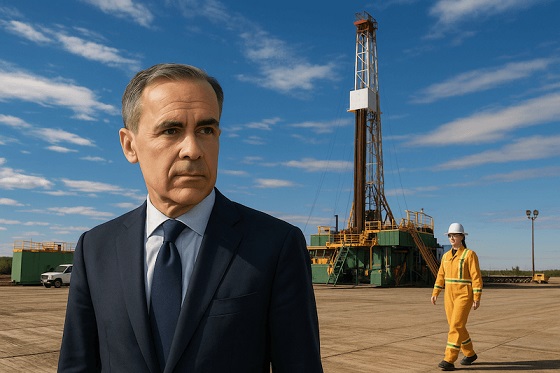
Canada’s sudden rediscovery of energy ambition has been greeted with a familiar charge: hypocrisy
COP30 finally admits what resource workers already knew: prosperity and lower emissions must go hand in hand

Canada’s New Green Deal
-
 armed forces9 hours ago
Ottawa’s Newly Released Defence Plan Crosses a Dangerous Line
-
 espionage8 hours ago
Carney Floor Crossing Raises Counterintelligence Questions aimed at China, Former Senior Mountie Argues
-
 Censorship Industrial Complex2 days ago
Canadian university censors free speech advocate who spoke out against Indigenous ‘mass grave’ hoax
-
 Health7 hours ago
All 12 Vaccinated vs. Unvaccinated Studies Found the Same Thing: Unvaccinated Children Are Far Healthier
-
 Energy10 hours ago
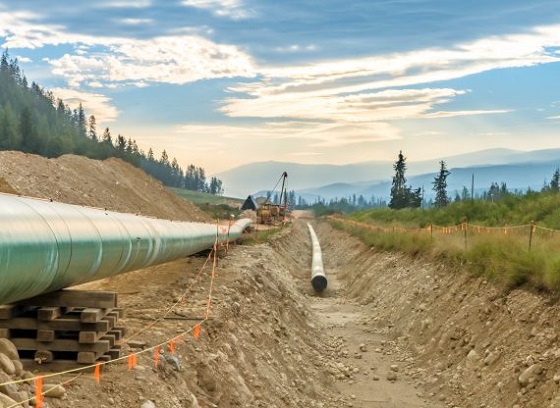
75 per cent of Canadians support the construction of new pipelines to the East Coast and British Columbia
-
 Energy2 days ago
‘The electric story is over’
-
 International2 days ago
Georgia county admits illegally certifying 315k ballots in 2020 presidential election
-
 Business2 days ago
Some Of The Wackiest Things Featured In Rand Paul’s New Report Alleging $1,639,135,969,608 In Gov’t Waste