
Frontier Centre for Public Policy
The Great Canadian Hoax exposed


From the Frontier Centre for Public Policy
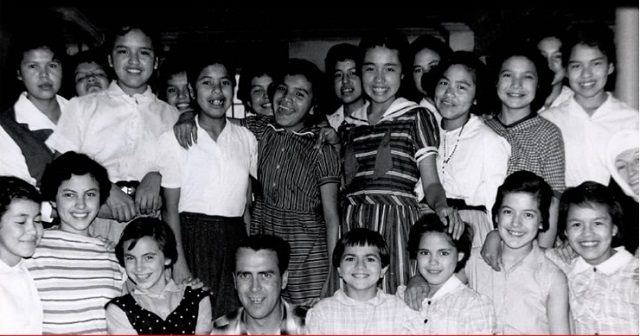
Grave Error: How The Media Misled Us (and the Truth about Residential Schools) edited by C.P. Champion and Tom Flanagan, Truth North and Dorchester Review, 343pp, $21.99) is a companion volume to Frontier’s From Truth Comes Reconciliation, which was published in 2021 (second edition is forthcoming). The two reviews published here are by Colin Alexander and Peter Best. The book demonstrates that there is no forensic evidence of Indian Residential School children that have been murdered and buried in residential school yards. There are a number of reasons for not believing the claim that children were murdered in these schools. Canadians are anxious to know the truth about the schools, and this book along with Frontier’s book go a long way to dispel the myths that have developed about the murder of residential school children. The book has been a top seller on Amazon since it was published in early January 2024.
This scholarly book of essays demolishes the narrative that any children went missing from Indian residential schools (IRS), let alone thousands, or that there are mass graves. Grave Error, in fact, debunks what essayist Jonathan Kay calls “a media-fuelled social panic over unmarked graves.” Mainstream media around the world—not just in Canada—ran with this press release issued on May 27, 2021:
This past weekend, with the help of a ground penetrating radar [GPR] specialist, the stark truth of the preliminary findings became known – the confirmation of the remains of 215 children who were students at the Kamloops Indian Residential School [KRS]. …
To our knowledge, these missing children are undocumented deaths,” stated Kukpi7 Rosanne Casimir. “Some were as young as three years old. …
Mainstream news media and politicians took the press release to heart, with Prime Minister Justin Trudeau lowering flags on federal buildings to half-mast for six long months. So debauched have the Enlightenment’s principles of inquiry become, along with those of responsible journalism, that it took outsiders to question the truth of this release.

Yes, Ground Penetrating Radar (GPR) found disturbed ground in the orchard near the school. That is because the land had buried drainage tiles from a septic system that had been installed in 1924. In any case, except for orphans and those whose upbringing was beyond their parents’ capacity, the IRS required a minimum age of six for admission.
No children were murdered and buried surreptitiously at night. Schools were paid on a headcount of children, so there was not a single name unaccounted for. There is a death certificate for every death, with burials either in the nearby cemetery or returned to their reserves. TB and other communicable diseases rampant everywhere caused most IRS deaths a century ago. Since the introduction of antibiotics, the death toll has been much lower. Many graves in recognized cemeteries are unmarked because the customarily used wooden crosses deteriorated over time. Despite that, in December 2021, Canadian Press called unmarked graves the story of the year!
Len Marchand’s autobiography, Breaking the Trail, provides an antidote for the horror stories at KRS. A former attendee during the time of the alleged murders and burials, he became Canada’s first Indigenous cabinet minister. The worst he says of his time there was that meals included mushy potatoes.

Essayist Ian Gentles says the juggernaut of misinformation began with the CBC program The Journal on October 30, 1990. Interviewed by Barbara Frum, Grand Chief of the Assembly of First Nations, Phil Fontaine, said he had been physically and sexually abused at his school. This led to a tsunami of former IRS attendees asserting similar allegations. Unfortunately, Ms. Frum did not ask who perpetrated the abuse, whether staff or fellow students. Or why he did not make a complaint to the police. I emailed Mr. Fontaine asking those questions but without receiving an answer.
Some essayists accept the proposition that there were real atrocities. I am not sure they were widespread. There were only a few successful prosecutions reported by the Truth and Reconciliation Commission. There are probably some abuses at boarding schools. Was it really an atrocity to cut an IRS attendee’s hair on arrival or to exchange a uniform for an orange shirt? Essayist and former staff member at Stringer Hall in Inuvik, Rodney Clifton, has described children on their return after the summer break with their families. They were often in poor physical condition, and some were still wearing the clothing, unwashed in the meantime, that they left the school with.
Essayist Tom Flanagan scores a bull’s-eye when quoting John Ioannidis, medical researcher at Stanford University: “The greater the financial and other interests and prejudices in a scientific field, the less likely the research findings are to be true.” With money almost unlimited for Indigenous issues, a multi-billion-dollar industry has grown out of pleading for money and telling Indigenous youth to feel sorry for themselves. By extension, the industry has prospered from laying guilt on schoolchildren and taxpayers. As shown in Lonely Death of an Ojibwa Boy by Robert MacBain, that includes what I construe to be a fraud, the Gord Downie and Chanie Wenjack charity.
I also disagree with essayists saying the Indigenous were dealt a bad hand, let alone that they need new treaties. What about the previously downtrodden Asian Canadians who have surpassed their white counterparts in incomes? Yes, Canada welcomed Indians into the armed forces for the Boer Wars and the two World Wars, only to treat them like dirt when the wars ended. But today there has been a role-reversal. Now Indigenous leaders can say whatever they want, and no one calls them out on saying outrageous things.
To me, the failure of Canada’s Indigenous policy derives from the excesses of the welfare state which, since the demise of the fur trade, destroyed self-reliance and work ethic—Indigenous cultures were destroyed, if you will. Now Canadians kowtow to demands for renewed tribalism and self-determination resembling South Africa’s apartheid. That would give leaders prestige and money for doing little. For followers, it connotes marginalization and second-class citizenship. No one is considering the needs of next generations living in violence-wracked settlements having no economic reason to exist, and in urban slums. It eludes notice that those who are educated and skilled and engaged in or preparing for rewarding employment seldom become addicts or commit suicide, and they seldom go to jail.
The billions paid out for the IRS and mass graves hoaxes are not delivering acceptable housing or any other help that works. I know an unemployed and all but unemployable Inuk who got a cheque for $95,000 in April 2023. By July he had blown it all and was again scrounging for cigarettes. Many billions add to GDP and salve a nation’s conscience. But enriching prostitutes and drug dealers does not address real needs.
That said, there are templates, notably in Asia, for raising Third World peoples into the First World in a single generation. I recommend Grave Error as a starting point for radically different thinking about what needs to be done to help Indigenous Canadians succeed in our country.
Colin Alexander was publisher of the Yellowknife News of the North for many years, and the advisor on education for Ontario’s Royal Commission on the Northern Environment. His latest book is Justice on Trial: Jordan Peterson’s case and others show we need to fix a broken legal system.


From the Frontier Centre for Public Policy
By Lee Harding
Alarming claims out of P.E.I. point to deep foreign interference, and the federal government keeps stalling. Why?
Explosive new allegations of Chinese interference in Prince Edward Island show Canada’s institutions may already be compromised and Ottawa has been slow to respond.
The revelations came out in August in a book entitled “Canada Under Siege: How PEI Became a Forward Operating Base for the Chinese Communist Party.” It was co-authored by former national director of the RCMP’s proceeds of crime program Garry Clement, who conducted an investigation with CSIS intelligence officer Michel Juneau-Katsuya.
In a press conference in Ottawa on Oct. 8, Clement referred to millions of dollars in cash transactions, suspicious land transfers and a network of corporations that resembled organized crime structures. Taken together, these details point to a vulnerability in Canada’s immigration and financial systems that appears far deeper than most Canadians have been told.
P.E.I.’s Provincial Nominee Program allows provinces to recommend immigrants for permanent residence based on local economic needs. It seems the program was exploited by wealthy applicants linked to Beijing to gain permanent residence in exchange for investments that often never materialized. It was all part of “money laundering, corruption, and elite capture at the highest levels.”
Hundreds of thousands of dollars came in crisp hundred-dollar bills on given weekends, amounting to millions over time. A monastery called Blessed Wisdom had set up a network of “corporations, land transfers, land flips, and citizens being paid under the table, cash for residences and property,” as was often done by organized crime.
Clement even called the Chinese government “the largest transnational organized crime group in the history of the world.” If true, the allegation raises an obvious question: how much of this activity has gone unnoticed or unchallenged by Canadian authorities, and why?
Dean Baxendale, CEO of the China Democracy Fund and Optimum Publishing International, published the book after five years of investigations.
“We followed the money, we followed the networks, and we followed the silence,” Baxendale said. “What we found were clear signs of elite capture, failed oversight and infiltration of Canadian institutions and political parties at the municipal, provincial and federal levels by actors aligned with the Chinese Communist Party’s United Front Work Department, the Ministry of State Security. In some cases, political donations have come from members of organized crime groups in our country and have certainly influenced political decision making over the years.”
For readers unfamiliar with them, the United Front Work Department is a Chinese Communist Party organization responsible for influence operations abroad, while the Ministry of State Security is China’s main civilian intelligence agency. Their involvement underscores the gravity of the allegations.
It is a troubling picture. Perhaps the reason Canada seems less and less like a democracy is that it has been compromised by foreign actors. And that same compromise appears to be hindering concrete actions in response.
One example Baxendale highlighted involved a PEI hotel. “We explore how a PEI hotel housed over 500 Chinese nationals, all allegedly trying to reclaim their $25,000 residency deposits, but who used a single hotel as their home address. The owner was charged by the CBSA, only to have the trial shut down by the federal government itself,” he said. The case became a key test of whether Canadian authorities were willing to pursue foreign interference through the courts.
The press conference came 476 days after Bill C-70 was passed to address foreign interference. The bill included the creation of Canada’s first foreign agent registry. Former MP Kevin Vuong rightly asked why the registry had not been authorized by cabinet. The delay raises doubts about Ottawa’s willingness to confront the problem directly.
“Why? What’s the reason for the delay?” Vuong asked.
Macdonald-Laurier Institute foreign policy director Christopher Coates called the revelations “beyond concerning” and warned, “The failures to adequately address our national security challenges threaten Canada’s relations with allies, impacting economic security and national prosperity.”
Former solicitor general of Canada and Prince Edward Island MP Wayne Easter called for a national inquiry into Beijing’s interference operations.
“There’s only one real way to get to the bottom of what is happening, and that would be a federal public inquiry,” Easter said. “We need a federal public inquiry that can subpoena witnesses, can trace bank accounts, can bring in people internationally, to get to the bottom of this issue.”
Baxendale called for “transparency, national scrutiny, and most of all for Canadians to wake up to the subtle siege under way.” This includes implementing a foreign influence transparency commissioner and a federal registry of beneficial owners.
If corruption runs as deeply as alleged, who will have the political will to properly respond? It will take more whistleblowers, changes in government and an insistent public to bring accountability. Without sustained pressure, the system that allowed these failures may also prevent their correction.
Lee Harding is a research fellow for the Frontier Centre for Public Policy.

From the Frontier Centre for Public Policy
Canada’s homelessness crisis has intensified dramatically, with about 60,000 people homeless this Christmas and chronic homelessness becoming entrenched as shelters overflow and encampments spread. Policy failures in immigration, housing, monetary policy, shelters, harm reduction, and Indigenous governance have driven the crisis. Only reversing these policies can meaningfully address it.
Encampments that were meant to be temporary have become a permanent feature in our communities
As Canadians settle in for the holiday season, 60,000 people across this country will spend Christmas night in a tent, a doorway, or a shelter bed intended to be temporary. Some will have been there for months, perhaps years. The number has quadrupled in six years.
In October 2024, enumerators in 74 Canadian communities conducted the most comprehensive count of homelessness this country has attempted. They found 17,088 people sleeping without shelter on a single autumn night, and 4,982 of them living in encampments. The count excluded Quebec entirely. The real number is certainly higher.
In Ontario alone, homelessness increased 51 per cent between 2016 and 2024. Chronic homelessness has tripled. For the first time, more than half of all homelessness in that province is chronic. People are no longer moving through the system. They are becoming permanent fixtures within it.
Toronto’s homeless population more than doubled between April 2021 and October 2024, from 7,300 to 15,418. Tents now appear in places that were never seen a decade ago. The city has 9,594 people using its shelter system on any given night, yet 158 are turned away each evening because no beds are available.
Calgary recorded 436 homeless deaths in 2023, nearly double the previous year. The Ontario report projects that without significant policy changes, between 165,000 and 294,000 people could experience homelessness annually in that province alone by 2035.
The federal government announced in September 2024 that it would allocate $250 million over two years to address encampments. Ontario received $88 million for ten municipalities. The Association of Municipalities of Ontario calculated that ending chronic homelessness in their province would require $11 billion over ten years. The federal contribution represents less than one per cent of what is needed.
Yet the same federal government found $50 billion for automotive subsidies and battery plants. They borrow tonnes of money to help foreign car manufacturers with EVs, while tens of thousands are homeless. But money alone does not solve problems. Pouring billions into a bureaucratic system that has failed spectacularly without addressing the policies that created the crisis would be useless.
Five years ago, tent cities were virtually unknown in most Canadian communities. Recent policy choices fuelled it, and different choices can help unmake it.
Start with immigration policy. The federal government increased annual targets to over 500,000 without ensuring housing capacity existed. Between 2021 and 2024, refugees and asylum seekers experiencing chronic homelessness increased by 475 per cent. These are people invited to Canada under federal policy, then abandoned to municipal shelter systems already at capacity.
Then there is monetary policy. Pandemic spending drove inflation, which made housing unaffordable. Housing supply remains constrained by policy. Development charges, zoning restrictions, and approval processes spanning years prevent construction at the required scale. Municipal governments layer fees onto new developments, making projects uneconomical.
Shelter policy itself has become counterproductive. The average shelter stay increased from 39 days in 2015 to 56 days in 2022. There are no time limits, no requirements, no expectations. Meanwhile, restrictive rules around curfews, visitors, and pets drive 85 per cent of homeless people to avoid shelters entirely, preferring tents to institutional control.
The expansion of harm reduction programs has substituted enabling for treatment. Safe supply initiatives provide drugs to addicts without requiring participation in recovery programs. Sixty-one per cent cite substance use issues, yet the policy response is to make drug use safer rather than to make sobriety achievable. Treatment programs with accountability would serve dignity far better than an endless supply of free drugs.
Indigenous people account for 44.6 per cent of those experiencing chronic homelessness in Northern Ontario despite comprising less than three per cent of the general population. This overrepresentation is exacerbated by policies that fail to recognize Indigenous governance and self-determination as essential. Billions allocated to Indigenous communities are never scrutinized.
The question Canadians might ask this winter is whether charity can substitute for competent policy. The answer is empirically clear: it cannot. What is required before any meaningful solutions is a reversal of the policies that broke it.
Marco Navarro-Genie is vice-president of research at the Frontier Centre for Public Policy and co-author with Barry Cooper of Canada’s COVID: The Story of a Pandemic Moral Panic (2023).


Canadian government launches trial version of digital ID for certain licenses, permits
Alberta Next Panel calls to reform how Canada works
Georgia county admits illegally certifying 315k ballots in 2020 presidential election

End Supply Management—For the Sake of Canadian Consumers
-
 Energy2 days ago
‘The electric story is over’
-
 Business2 hours ago
ICYMI: Largest fraud in US history? Independent Journalist visits numerous daycare centres with no children, revealing massive scam
-
 Energy2 days ago
The Top News Stories That Shaped Canadian Energy in 2025 and Will Continue to Shape Canadian Energy in 2026
-
 Daily Caller1 day ago
US Halts Construction of Five Offshore Wind Projects Due To National Security
-
 Alberta1 day ago
Alberta Next Panel calls for less Ottawa—and it could pay off
-
 Daily Caller1 day ago
While Western Nations Cling to Energy Transition, Pragmatic Nations Produce Energy and Wealth
-
 Fraser Institute2 days ago
Carney government sowing seeds for corruption in Ottawa
-
 Bruce Dowbiggin1 day ago
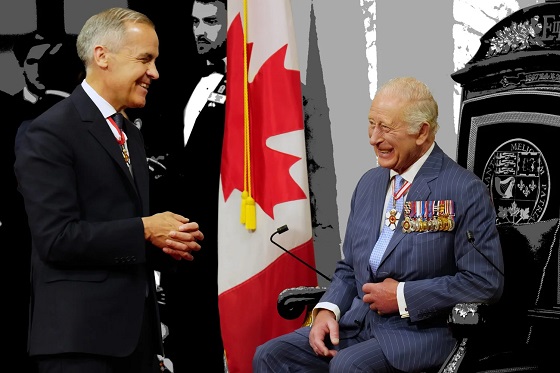
Be Careful What You Wish For In 2026: Mark Carney With A Majority