
Energy
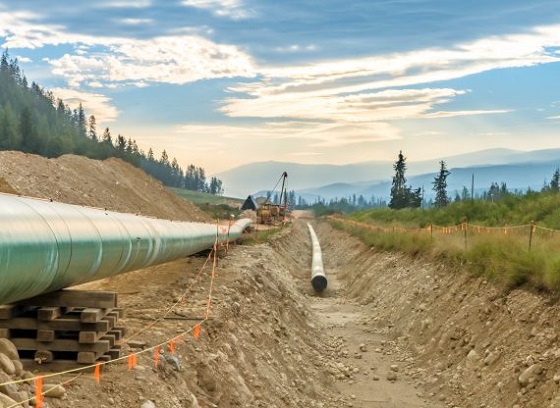
75 per cent of Canadians support the construction of new pipelines to the East Coast and British Columbia



-
71 per cent of Canadians find the approval process too long.
-
67 per cent of Quebecers support the Marinvest Energy natural gas project.
“While there has always been a clear majority of Canadians supporting the development of new pipelines, it seems that the trade dispute has helped firm up this support,” says Gabriel Giguère, senior policy analyst at the MEI. “From coast to coast, Canadians appreciate the importance of the energy industry to our prosperity.”
Three-quarters of Canadians support constructing new pipelines to ports in Eastern Canada or British Columbia in order to diversify our export markets for oil and gas.
This proportion is 14 percentage points higher than it was last year, with the “strongly agree” category accounting for almost all of the increase.
For its part, Marinvest Energy’s natural gas pipeline and liquefaction plant project, in Quebec’s North Shore region, is supported by 67 per cent of Quebecers polled, who see it as a way to reduce European dependence on Russian natural gas.
Moreover, 54 per cent of Quebecers now say they support the development of the province’s own oil resources. This represents a six-point increase over last year.

“This year again, we see that this preconceived notion according to which Quebecers oppose energy development is false,” says Mr. Giguère. “Quebecers’ increased support for pipeline projects should signal to politicians that there is social acceptability, whatever certain lobby groups might think.”
It is also the case that seven in ten Canadians (71 per cent) think the approval process for major projects, including environmental assessments, is too long and should be reformed. In Quebec, 63 per cent are of this opinion.
The federal Bill C-5 and Quebec Bill 5 seem to respond to these concerns by trying to accelerate the approval of certain large projects selected by governments.
In July, the MEI recommended a revision of the assessment process in order to make it swift by default instead of creating a way to bypass it as Bill C-5 and Bill 5 do.
“Canadians understand that the burdensome assessment process undermines our prosperity and the creation of good, well-paid jobs,” says Mr. Giguère. “While the recent bills to accelerate projects of national interest are a step in the right direction, it would be better simply to reform the assessment process so that it works, rather than creating a workaround.”
A sample of 1,159 Canadians aged 18 and older were surveyed between November 27 and December 2, 2025. The results are accurate to within ± 3.5 percentage points, 19 times out of 20.

This article supplied by Troy Media.

Oil markets are shrugging off war and sanctions, a sign that oversupply now matters more than disruption
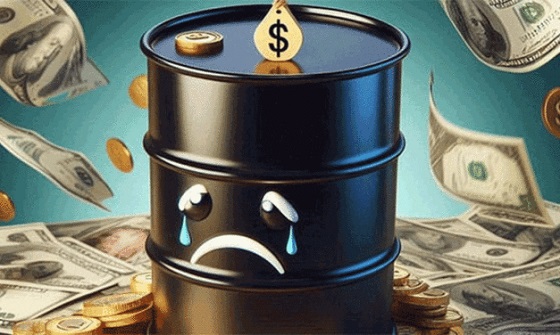
Oil producers hoping geopolitics would lift prices are running into a harsh reality. Markets are brushing off wars and sanctions as traders focus instead on expectations of a deep and persistent oil glut.
That shift was evident last week. Despite several geopolitical developments that would once have pushed prices higher, including the U.S. seizure of a Venezuelan crude tanker and fresh Ukrainian strikes on Russian energy infrastructure, oil markets barely reacted, with prices ending the week lower.
Brent crude settled Friday at US$61.12 a barrel and U.S. West Texas Intermediate at US$57.44, capping a weekly drop of more than four per cent.
Instead of responding to disruption headlines, markets were reacting to a different risk. Bearish sentiment, rather than geopolitics, continued to dominate as expectations of a “2026 glut” took centre stage.
At the heart of that outlook is a growing supply overhang. The oil market is grappling with whether sanctioned Russian and Iranian cargoes should still be counted as supply. That uncertainty helps explain why prices have been slow to react to a glut that is already forming on the water, said Carol Ryan, writing for The Wall Street Journal.
The scale of that buildup is significant. There are 1.4 billion barrels of oil “on the water,” 24 per cent higher than the average for this time of year between 2016 and 2024, according to oil analytics firm Vortexa. These figures capture shipments still in transit or cargoes that have yet to find a buyer, a clear sign that supply is running ahead of immediate demand.
Official forecasts have reinforced that view. Last week, the International Energy Agency trimmed its projected 2026 surplus to 3.84 million barrels per day, down from 4.09 million barrels per day projected previously. Even so, the IEA still sees a large oversupply relative to global demand.
Demand growth offers little relief. The IEA expects growth of 830 kb/d (thousand barrels per day) in 2025 and 860 kb/d in 2026, with petrochemical feedstocks accounting for a larger share of incremental demand. That pace remains modest against the volume of supply coming to market.
OPEC, however, has offered a different assessment. In its latest report, the group pointed to a near balance, forecasting demand for OPEC+ crude averaging about 43 million barrels per day in 2026, roughly in line with what it produced in November.
Reflecting that confidence. OPEC+ kept policy steady late in November, pausing planned output hikes for the first quarter of 2026 while more than three million barrels per day of cuts remain in place. Those measures are supportive in theory, but markets have shown little sign of being persuaded.
Recent geopolitical events underline that scepticism. The ongoing Russia-Ukraine war and Ukrainian strikes on Russian energy infrastructure, including reported hits on facilities such as the Slavneft-YANOS refinery in Yaroslavl, again failed to lift prices. Russia-Ukraine headlines pulled prices down more than strikes lifted them, according to media reports, suggesting traders were more attuned to “peace deal” risk than to supply disruption.
Washington’s move against Venezuelan crude shipments offered another test. The U.S. seizure of a Venezuelan tanker, the first formal seizure under the 2019 sanctions framework, had a muted price impact, writes Marcin Frackiewicz of Oilprice.com.
Venezuela’s exports fell sharply in the days that followed, but markets remained largely unmoved. One explanation is that Venezuela’s output is no longer large enough to tighten global balances the way it once did, and that abundant global supply has reduced the geopolitical premium.
Taken together, the signal is hard to miss. Oil producers, including in Canada, face a reality check in a market that no longer rewards headlines, only discipline and demand.
Toronto-based Rashid Husain Syed is a highly regarded analyst specializing in energy and politics, particularly in the Middle East. In addition to his contributions to local and international newspapers, Rashid frequently lends his expertise as a speaker at global conferences. Organizations such as the Department of Energy in Washington and the International Energy Agency in Paris have sought his insights on global energy matters.
Troy Media empowers Canadian community news outlets by providing independent, insightful analysis and commentary. Our mission is to support local media in helping Canadians stay informed and engaged by delivering reliable content that strengthens community connections and deepens understanding across the country.
From the Fraser Institute
By Annika Segelhorst and Elmira Aliakbari
According to Steven Guilbeault, former environment minister under Justin Trudeau and former member of Prime Minister Carney’s cabinet, “Switching to an electric vehicle is one of the most impactful things Canadians can do to help fight climate change.”
And the Carney government has only paused Trudeau’s electric vehicle (EV) sales mandate to conduct a “review” of the policy, despite industry pressure to scrap the policy altogether.
So clearly, according to policymakers in Ottawa, EVs are essentially “zero emission” and thus good for environment.
But is that true?
Clearly, EVs have some environmental advantages over traditional gasoline-powered vehicles. Unlike cars with engines that directly burn fossil fuels, EVs do not produce tailpipe emissions of pollutants such as nitrogen dioxide and carbon monoxide, and do not release greenhouse gases (GHGs) such as carbon dioxide. These benefits are real. But when you consider the entire lifecycle of an EV, the picture becomes much more complicated.
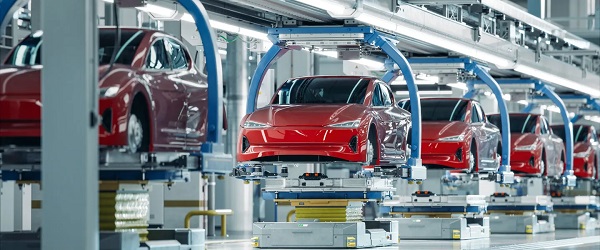
Unlike traditional gasoline-powered vehicles, battery-powered EVs and plug-in hybrids generate most of their GHG emissions before the vehicles roll off the assembly line. Compared with conventional gas-powered cars, EVs typically require more fossil fuel energy to manufacture, largely because to produce EVs batteries, producers require a variety of mined materials including cobalt, graphite, lithium, manganese and nickel, which all take lots of energy to extract and process. Once these raw materials are mined, processed and transported across often vast distances to manufacturing sites, they must be assembled into battery packs. Consequently, the manufacturing process of an EV—from the initial mining of materials to final assembly—produces twice the quantity of GHGs (on average) as the manufacturing process for a comparable gas-powered car.
Once an EV is on the road, its carbon footprint depends on how the electricity used to charge its battery is generated. According to a report from the Canada Energy Regulator (the federal agency responsible for overseeing oil, gas and electric utilities), in British Columbia, Manitoba, Quebec and Ontario, electricity is largely produced from low- or even zero-carbon sources such as hydro, so EVs in these provinces have a low level of “indirect” emissions.
However, in other provinces—particularly Alberta, Saskatchewan and Nova Scotia—electricity generation is more heavily reliant on fossil fuels such as coal and natural gas, so EVs produce much higher indirect emissions. And according to research from the University of Toronto, in coal-dependent U.S. states such as West Virginia, an EV can emit about 6 per cent more GHG emissions over its entire lifetime—from initial mining, manufacturing and charging to eventual disposal—than a gas-powered vehicle of the same size. This means that in regions with especially coal-dependent energy grids, EVs could impose more climate costs than benefits. Put simply, for an EV to help meaningfully reduce emissions while on the road, its electricity must come from low-carbon electricity sources—something that does not happen in certain areas of Canada and the United States.
Finally, even after an EV is off the road, it continues to produce emissions, mainly because of the battery. EV batteries contain components that are energy-intensive to extract but also notoriously challenging to recycle. While EV battery recycling technologies are still emerging, approximately 5 per cent of lithium-ion batteries, which are commonly used in EVs, are actually recycled worldwide. This means that most new EVs feature batteries with no recycled components—further weakening the environmental benefit of EVs.
So what’s the final analysis? The technology continues to evolve and therefore the calculations will continue to change. But right now, while electric vehicles clearly help reduce tailpipe emissions, they’re not necessarily “zero emission” vehicles. And after you consider the full lifecycle—manufacturing, charging, scrapping—a more accurate picture of their environmental impact comes into view.

Annika Segelhorst
Junior Economist

Elmira Aliakbari


Death by a thousand clicks – government censorship of Canada’s internet
Politicians should be honest about environmental pros and cons of electric vehicles

Chinese Billionaire Tried To Build US-Born Baby Empire As Overseas Elites Turn To American Surrogates

Canada releases new digital ID app for personal documents despite privacy concerns
-
Automotive13 hours ago
Politicians should be honest about environmental pros and cons of electric vehicles
-
 Agriculture2 days ago
Why is Canada paying for dairy ‘losses’ during a boom?
-
 Business2 days ago
Canada Hits the Brakes on Population
-
 Daily Caller2 days ago
‘Almost Sounds Made Up’: Jeffrey Epstein Was Bill Clinton Plus-One At Moroccan King’s Wedding, Per Report
-
 Crime2 days ago
Brown University shooter dead of apparent self-inflicted gunshot wound
-
 Business2 days ago
Trump signs order reclassifying marijuana as Schedule III drug
-
 Bruce Dowbiggin24 hours ago
Hunting Poilievre Covers For Upcoming Demographic Collapse After Boomers
-
 Alberta1 day ago
Alberta’s new diagnostic policy appears to meet standard for Canada Health Act compliance