
Health
23,000+ Canadians died waiting for health care in one year as Liberals pushed euthanasia


From LifeSiteNews
Tens of thousands of Canadians have died while on waitlists in recent years, according to new data. Meanwhile, euthanasia now accounts for five percent of all deaths in Canada.
Over 23,000 Canadians have died while on waitlists for medical care as Liberals focused on euthanasia expansions.
According to government figures published on November 26 by Canadian think tank SecondStreet.org, 23,746 patients died on government waiting lists for health care between April 2024 and March 2025.
“What’s really sad is that behind many of these figures are stories of patients suffering during their final years – grandparents who dealt with chronic pain while waiting for hip operations, people leaving children behind as they die waiting for heart operations, so much suffering,” SecondStreet.org President Colin Craig explained.
“It doesn’t have to be this way. If we copied better-performing European public health systems, we could greatly reduce patient suffering,” he continued.
According to the data, collected through Freedom of Information (FOI) requests, there has been a three percent increase of deaths while on waitlists compared to last year. The number is likely much higher, as the reports did not include figures from Alberta and some parts of Manitoba.
Data further revealed that 100,876 Canadians have died while waiting for care since 2018, thanks to increased wait times and insufficient staffing.
“It’s interesting that governments will regularly inspect restaurants and report publicly if there’s a minor problem such as a missing paper towel holder,” Craig noted. “Meanwhile, no government reports publicly on patients dying on waiting lists. It’s quite hypocritical.”

At the same time, the Liberal government has worked to expand euthanasia 13-fold since it was legalized, making it the fastest growing euthanasia program in the world. Meanwhile, Health Canada has released a series of studies on advance requests for assisted suicide.
As LifeSiteNews reported earlier this week, so-called “Medical Assistance in Dying” (MAID) is responsible for five percent of all deaths in Canada in 2024.
At the same time, internal documents from Ontario doctors in 2024 that revealed Canadians are choosing euthanasia because of poverty and loneliness, not as a result of an alleged terminal illness.
Currently, wait times to receive genuine health care in Canada have increased to an average of 27.7 weeks, leading some Canadians to despair and opt for assisted suicide instead of waiting for medical aid. At the same time, sick and elderly Canadians who have refused to end their lives have reported being called “selfish” by their providers.
In one case, an Ontario doctor revealed that a middle-aged worker, whose ankle and back injuries had left him unable to work, felt that the government’s insufficient support was “leaving (him) with no choice but to pursue” euthanasia.
Other cases included an obese woman who described herself as a “useless body taking up space,” which one doctor argued met the requirements for assisted suicide because obesity is “a medical condition which is indeed grievous and irremediable.”
The most recent reports show that euthanasia is the sixth highest cause of death in Canada. However, it was not listed as such in Statistics Canada’s top 10 leading causes of death from 2019 to 2022.

Health
News RFK Jr.’s vaccine committee to vote on ending Hepatitis B shot recommendation for newborns
From LifeSiteNews
The goal is to examine whether vaccines on the recommended schedule are contributing to the rise in allergies, autoimmune diseases, and other conditions such as autism.
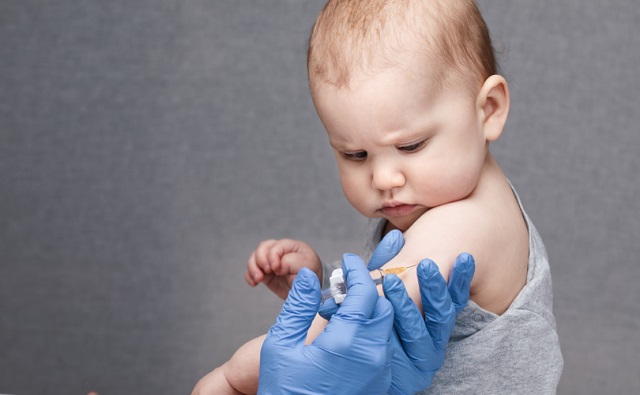
Vaccine advisors to Department of Health and Human Services Secretary Robert F. Kennedy Jr. plan to vote on ending the recommendation of the Hepatitis B shot for infants and discuss other changes to the childhood vaccination schedule.
The federal advisers, selected by RFK Jr., will meet on Thursday and Friday to review the childhood vaccination schedule, according to a report from The Washington Post. The goal is to examine whether vaccines on the recommended schedule are contributing to the rise in allergies, autoimmune diseases, and other conditions such as autism.
The vaccine panel, headed by Kirk Milhoan, a pediatric cardiologist and critic of the COVID shots, plans to vote on ending the Hepatitis B vaccine recommendation for infants within 24 hours of birth. The panel will decide whether to delay the first dose to a later time.
Critics of the very early administration of the first Hepatitis B vaccine dose argue that it represents an unnecessary risk, as the vast majority of children are not at risk of infection.
The vaccine committee makes recommendations to the CDC director on the vaccine schedule. Directors have typically adopted the panel’s recommendations, compelling insurers to cover certain vaccines. These recommendations also provide a guideline for most pediatricians and medical organizations.
READ: Florida moving to be first state to end all childhood vaccine mandates
“We’re looking at what may be causing some of the long-term changes we’re seeing in population data in children, specifically things such as asthma and eczema and other autoimmune diseases,” Milhoan told The Washington Post.
“What we’re trying to do is figure out if there are factors within vaccines,” he added.
He said that the committee is examining the potential dangers of using aluminum as an adjuvant, an ingredient meant to trigger an immune response strong enough for the body to develop antibodies and protect the person from the disease.
RFK Jr.’s panel has been heavily criticized by establishment health organizations and the pharmaceutical industry. Big Pharma officials have said that removing aluminum from vaccines and replacing it with another adjuvant would cost billions of dollars and take years.
The CDC recently revised its website on the issue of autism and vaccines, now stating, “The claim ‘vaccines do not cause autism’ is not an evidence-based claim because studies have not ruled out the possibility that infant vaccines cause autism.” The CDC had previously held that there was definitely no link between vaccines and autism. The change was made at the direct order of RFK Jr.
The McCullough Foundation, founded by famous cardiologist and COVID response critic Dr. Peter McCullough, goes even further in its critique of childhood vaccines. In a recent extensive report, the authors analyzed 12 studies comparing routinely vaccinated with unvaccinated children. According to the report, all of these studies showed “superior overall health outcomes among the unvaccinated, including significantly lower risks of chronic medical problems and neuropsychiatric disorders such as ASD [Autism spectrum disorder].”
From the Brownstone Institute
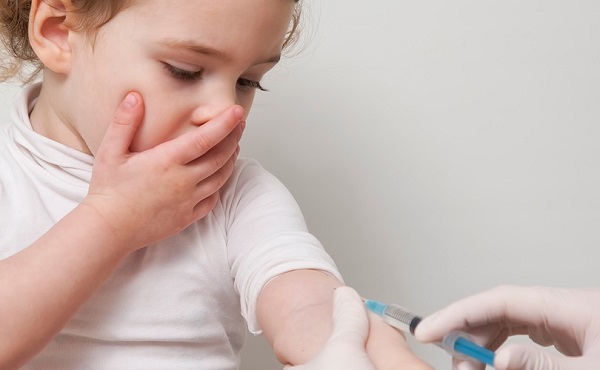
I recently purchased Aaron Siri’s new book Vaccines, Amen. As I flipped though the pages, I noticed a section devoted to his now-famous deposition of Dr Stanley Plotkin, the “godfather” of vaccines.
I’d seen viral clips circulating on social media, but I had never taken the time to read the full transcript — until now.
Siri’s interrogation was methodical and unflinching…a masterclass in extracting uncomfortable truths.
A Legal Showdown
In January 2018, Dr Stanley Plotkin, a towering figure in immunology and co-developer of the rubella vaccine, was deposed under oath in Pennsylvania by attorney Aaron Siri.
The case stemmed from a custody dispute in Michigan, where divorced parents disagreed over whether their daughter should be vaccinated. Plotkin had agreed to testify in support of vaccination on behalf of the father.
What followed over the next nine hours, captured in a 400-page transcript, was extraordinary.
Plotkin’s testimony revealed ethical blind spots, scientific hubris, and a troubling indifference to vaccine safety data.
He mocked religious objectors, defended experiments on mentally disabled children, and dismissed glaring weaknesses in vaccine surveillance systems.
A System Built on Conflicts
From the outset, Plotkin admitted to a web of industry entanglements.
He confirmed receiving payments from Merck, Sanofi, GSK, Pfizer, and several biotech firms. These were not occasional consultancies but long-standing financial relationships with the very manufacturers of the vaccines he promoted.
Plotkin appeared taken aback when Siri questioned his financial windfall from royalties on products like RotaTeq, and expressed surprise at the “tone” of the deposition.
Siri pressed on: “You didn’t anticipate that your financial dealings with those companies would be relevant?”
Plotkin replied: “I guess, no, I did not perceive that that was relevant to my opinion as to whether a child should receive vaccines.”
The man entrusted with shaping national vaccine policy had a direct financial stake in its expansion, yet he brushed it aside as irrelevant.
Contempt for Religious Dissent
Siri questioned Plotkin on his past statements, including one in which he described vaccine critics as “religious zealots who believe that the will of God includes death and disease.”
Siri asked whether he stood by that statement. Plotkin replied emphatically, “I absolutely do.”
Plotkin was not interested in ethical pluralism or accommodating divergent moral frameworks. For him, public health was a war, and religious objectors were the enemy.
He also admitted to using human foetal cells in vaccine production — specifically WI-38, a cell line derived from an aborted foetus at three months’ gestation.
Siri asked if Plotkin had authored papers involving dozens of abortions for tissue collection. Plotkin shrugged: “I don’t remember the exact number…but quite a few.”
Plotkin regarded this as a scientific necessity, though for many people — including Catholics and Orthodox Jews — it remains a profound moral concern.
Rather than acknowledging such sensitivities, Plotkin dismissed them outright, rejecting the idea that faith-based values should influence public health policy.
That kind of absolutism, where scientific aims override moral boundaries, has since drawn criticism from ethicists and public health leaders alike.
As NIH director Jay Bhattacharya later observed during his 2025 Senate confirmation hearing, such absolutism erodes trust.
“In public health, we need to make sure the products of science are ethically acceptable to everybody,” he said. “Having alternatives that are not ethically conflicted with foetal cell lines is not just an ethical issue — it’s a public health issue.”
Safety Assumed, Not Proven
When the discussion turned to safety, Siri asked, “Are you aware of any study that compares vaccinated children to completely unvaccinated children?”
Plotkin replied that he was “not aware of well-controlled studies.”
Asked why no placebo-controlled trials had been conducted on routine childhood vaccines such as hepatitis B, Plotkin said such trials would be “ethically difficult.”
That rationale, Siri noted, creates a scientific blind spot. If trials are deemed too unethical to conduct, then gold-standard safety data — the kind required for other pharmaceuticals — simply do not exist for the full childhood vaccine schedule.
Siri pointed to one example: Merck’s hepatitis B vaccine, administered to newborns. The company had only monitored participants for adverse events for five days after injection.
Plotkin didn’t dispute it. “Five days is certainly short for follow-up,” he admitted, but claimed that “most serious events” would occur within that time frame.
Siri challenged the idea that such a narrow window could capture meaningful safety data — especially when autoimmune or neurodevelopmental effects could take weeks or months to emerge.
Siri pushed on. He asked Plotkin if the DTaP and Tdap vaccines — for diphtheria, tetanus and pertussis — could cause autism.
“I feel confident they do not,” Plotkin replied.
But when shown the Institute of Medicine’s 2011 report, which found the evidence “inadequate to accept or reject” a causal link between DTaP and autism, Plotkin countered, “Yes, but the point is that there were no studies showing that it does cause autism.”
In that moment, Plotkin embraced a fallacy: treating the absence of evidence as evidence of absence.
“You’re making assumptions, Dr Plotkin,” Siri challenged. “It would be a bit premature to make the unequivocal, sweeping statement that vaccines do not cause autism, correct?”
Plotkin relented. “As a scientist, I would say that I do not have evidence one way or the other.”
The MMR
The deposition also exposed the fragile foundations of the measles, mumps, and rubella (MMR) vaccine.
When Siri asked for evidence of randomised, placebo-controlled trials conducted before MMR’s licensing, Plotkin pushed back: “To say that it hasn’t been tested is absolute nonsense,” he said, claiming it had been studied “extensively.”
Pressed to cite a specific trial, Plotkin couldn’t name one. Instead, he gestured to his own 1,800-page textbook: “You can find them in this book, if you wish.”
Siri replied that he wanted an actual peer-reviewed study, not a reference to Plotkin’s own book. “So you’re not willing to provide them?” he asked. “You want us to just take your word for it?”
Plotkin became visibly frustrated.
Eventually, he conceded there wasn’t a single randomised, placebo-controlled trial. “I don’t remember there being a control group for the studies, I’m recalling,” he said.
The exchange foreshadowed a broader shift in public discourse, highlighting long-standing concerns that some combination vaccines were effectively grandfathered into the schedule without adequate safety testing.
In September this year, President Trump called for the MMR vaccine to be broken up into three separate injections.
The proposal echoed a view that Andrew Wakefield had voiced decades earlier — namely, that combining all three viruses into a single shot might pose greater risk than spacing them out.
Wakefield was vilified and struck from the medical register. But now, that same question — once branded as dangerous misinformation — is set to be re-examined by the CDC’s new vaccine advisory committee, chaired by Martin Kulldorff.
The Aluminium Adjuvant Blind Spot
Siri next turned to aluminium adjuvants — the immune-activating agents used in many childhood vaccines.
When asked whether studies had compared animals injected with aluminium to those given saline, Plotkin conceded that research on their safety was limited.
Siri pressed further, asking if aluminium injected into the body could travel to the brain. Plotkin replied, “I have not seen such studies, no, or not read such studies.”
When presented with a series of papers showing that aluminium can migrate to the brain, Plotkin admitted he had not studied the issue himself, acknowledging that there were experiments “suggesting that that is possible.”
Asked whether aluminium might disrupt neurological development in children, Plotkin stated, “I’m not aware that there is evidence that aluminum disrupts the developmental processes in susceptible children.”
Taken together, these exchanges revealed a striking gap in the evidence base.
Compounds such as aluminium hydroxide and aluminium phosphate have been injected into babies for decades, yet no rigorous studies have ever evaluated their neurotoxicity against an inert placebo.
This issue returned to the spotlight in September 2025, when President Trump pledged to remove aluminium from vaccines, and world-leading researcher Dr Christopher Exley renewed calls for its complete reassessment.
A Broken Safety Net
Siri then turned to the reliability of the Vaccine Adverse Event Reporting System (VAERS) — the primary mechanism for collecting reports of vaccine-related injuries in the United States.
Did Plotkin believe most adverse events were captured in this database?
“I think…probably most are reported,” he replied.
But Siri showed him a government-commissioned study by Harvard Pilgrim, which found that fewer than 1% of vaccine adverse events are reported to VAERS.
“Yes,” Plotkin said, backtracking. “I don’t really put much faith into the VAERS system…”
Yet this is the same database officials routinely cite to claim that “vaccines are safe.”
Ironically, Plotkin himself recently co-authored a provocative editorial in the New England Journal of Medicine, conceding that vaccine safety monitoring remains grossly “inadequate.”
Experimenting on the Vulnerable
Perhaps the most chilling part of the deposition concerned Plotkin’s history of human experimentation.
“Have you ever used orphans to study an experimental vaccine?” Siri asked.
“Yes,” Plotkin replied.
“Have you ever used the mentally handicapped to study an experimental vaccine?” Siri asked.
“I don’t recollect…I wouldn’t deny that I may have done so,” Plotkin replied.
Siri cited a study conducted by Plotkin in which he had administered experimental rubella vaccines to institutionalised children who were “mentally retarded.”
Plotkin stated flippantly, “Okay well, in that case…that’s what I did.”
There was no apology, no sign of ethical reflection — just matter-of-fact acceptance.
Siri wasn’t done.
He asked if Plotkin had argued that it was better to test on those “who are human in form but not in social potential” rather than on healthy children.
Plotkin admitted to writing it.
Siri established that Plotkin had also conducted vaccine research on the babies of imprisoned mothers, and on colonised African populations.
Plotkin appeared to suggest that the scientific value of such studies outweighed the ethical lapses—an attitude that many would interpret as the classic ‘ends justify the means’ rationale.
But that logic fails the most basic test of informed consent. Siri asked whether consent had been obtained in these cases.
“I don’t remember…but I assume it was,” Plotkin said.
Assume?
This was post-Nuremberg research. And the leading vaccine developer in America couldn’t say for sure whether he had properly informed the people he experimented on.
In any other field of medicine, such lapses would be disqualifying.
A Casual Dismissal of Parental Rights
Plotkin’s indifference to experimenting on disabled children didn’t stop there.
Siri asked whether someone who declined a vaccine due to concerns about missing safety data should be labelled “anti-vax.”
Plotkin replied, “If they refused to be vaccinated themselves or refused to have their children vaccinated, I would call them an anti-vaccination person, yes.”
Plotkin was less concerned about adults making that choice for themselves, but he had no tolerance for parents making those choices for their own children.
“The situation for children is quite different,” said Plotkin, “because one is making a decision for somebody else and also making a decision that has important implications for public health.”
In Plotkin’s view, the state held greater authority than parents over a child’s medical decisions — even when the science was uncertain.
The Enabling of Figures Like Plotkin
The Plotkin deposition stands as a case study in how conflicts of interest, ideology, and deference to authority have corroded the scientific foundations of public health.
Plotkin is no fringe figure. He is celebrated, honoured, and revered. Yet he promotes vaccines that have never undergone true placebo-controlled testing, shrugs off the failures of post-market surveillance, and admits to experimenting on vulnerable populations.
This is not conjecture or conspiracy — it is sworn testimony from the man who helped build the modern vaccine program.
Now, as Health Secretary Robert F. Kennedy, Jr. reopens long-dismissed questions about aluminium adjuvants and the absence of long-term safety studies, Plotkin’s once-untouchable legacy is beginning to fray.
Republished from the author’s Substack


Landmark 2025 Study Says Near-Death Experiences Can’t Be Explained Away

STUDY: TikTok, Instagram, and YouTube Shorts Induce Measurable “Brain Rot”
Blacked-Out Democracy: The Stellantis Deal Ottawa Won’t Show Its Own MPs
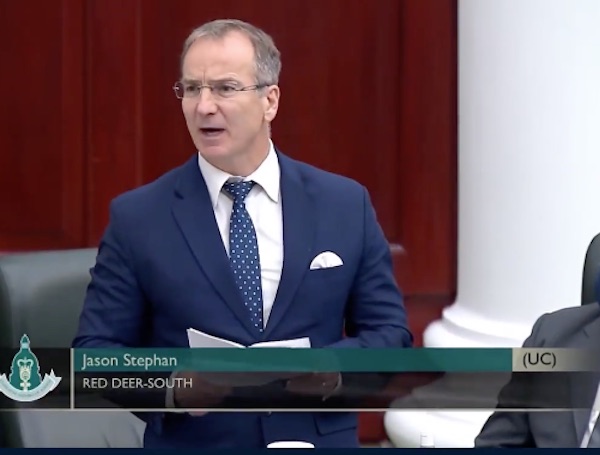
Red Deer’s Jason Stephan calls for citizen-led referendum on late-term abortion ban in Alberta
-
 Business2 days ago
Recent price declines don’t solve Toronto’s housing affordability crisis
-
 Daily Caller2 days ago
Tech Mogul Gives $6 Billion To 25 Million Kids To Boost Trump Investment Accounts
-
 Alberta1 day ago
Alberta will defend law-abiding gun owners who defend themselves
-
 Business2 days ago
Canada’s future prosperity runs through the northwest coast
-
 Alberta1 day ago
This new Canada–Alberta pipeline agreement will cost you more than you think
-
 Business2 days ago
Ottawa’s gun ‘buyback’ program will cost billions—and for no good reason
-
 National2 days ago
Canada Needs an Alternative to Carney’s One Man Show
-
 Artificial Intelligence2 days ago
The Emptiness Inside: Why Large Language Models Can’t Think – and Never Will