
Opinion
The 3Rs are very important, when it’s convenient, when it’s trendy…….


Reduce, Reuse, Recycle, the 3Rs is popular among people and is tossed out there, often, in the news. When it comes to plastic bottles, bags and straws but not when it comes to cars and neighbourhoods, for example.
There are a lot of small cars out there and most often it is an economic decision, but not always. You go to any parking lot, even those in front of discount stores and you will see many new, very large vehicles. The 3Rs do not seem to apply to our vehicles, apparently.
Our neighbourhoods offer another example. We all seem to be clamouring for newer, bigger homes in new neighbourhoods. When I was growing up it was normal to see a family of six living in houses of a 1,000 square feet. Now a family of six is rare but houses of 1000 square feet is rarer, and even rarer still is a family of six living in a 1000 square foot house.
The 3Rs comes into play when you hit retirement and it is usually a health or an economic decision.
Why do we march on Parliament Hill to stop using plastic straws and piping oil if we insist on bigger houses and bigger cars?
History says that we are building on the best agricultural land as we expand our cities with new neighbourhoods. I do not think reducing our arable land or reusing or recycling our farmland into residential neighbourhoods and industrial parks is in the goal of the 3Rs philosophy.
It seems to me that we pave over 1000s of acres of farmland to build newer homes every year, but we are worked up over how many plastic straws hit our waste management sites.
Every city has older run down neighbourhoods, ignored or avoided by homebuyers and politicians. Often times they become rentals or the first step on the property ladder, seldom thought about in the 3Rs scheme of things. Focusing on appearances and not on the potential it often easier to build or buy new houses in new neighbourhoods.
I live in an older neighbourhood, a mid century home, with deer visiting my yard. I have a view of trees and a short walk to the creek. I also have decade old cracks in my sidewalk, a shrub growing in my street. The neighbour’s house sold recently but it was a hard sell and it went for less than it was bought for almost 10 years ago. A realtor mentioned that people want new, modern homes inside mid-century houses. They see antiques and character as simply old.
So the politicians are only following the wishes of the populace when they abandon the 3Rs, pave over farmland to make room for new homes, new roads and new conveniences.
Are we only environmentalists when it is convenient and only in trends?
I do not wish to live in a cave, but I think that there is a sense of disproportionate importance in our lives that needs addressing.
Maybe the answer is paving new roads out of used plastic bags and straws, and building new houses out of bricks made of compacted trash. Maybe, and this may be unrealistic, we could just reduce the number of neighbourhoods, recycle our old houses and reuse abandoned schools.
Just a thought.


From the Daily Caller News Foundation
As Ukraine and the U.S. try one more time to reach agreement on terms for a peace deal to end the war with Russia, questions remain about whether a resolution is still possible after multiple stalled rounds of negotiations.
President Volodymyr Zelenskyy of Ukraine is set to meet with President Donald Trump at Mar-a-Lago on Sunday to discuss the current proposal for ending the war. The terms and language of the proposed deal have undergone substantial revisions since it was first presented in November, largely due to objections from Ukraine and other European powers.
Despite multiple rounds of peace negotiations fizzling out over the past year, foreign policy and defense experts told the Daily Caller News Foundation that Trump still has a chance to make peace if he can convince Putin that the cost of waging war outweighs the benefits, but that it’s unlikely any of the parties will leave the table satisfied.
As a nonprofit, we are dependent on the generosity of our readers.
Please consider making a small donation of any amount here.
Thank you!
“The President’s team sees that stark reality, but also envisions a golden future for Ukraine once the fighting stops—a prosperous, strong, independent nation could rise from the ashes we see today,” Morgan Murphy, former Trump White House official and current Republican Senate candidate in Alabama, told the DCNF. “To get there will take a deal that likely leaves all parties—Ukraine, Russia, and Europe—unhappy when they leave the negotiation table.”
While Russia has signaled some willingness to make compromises, most recently saying it would accept Ukrainian European Union membership, Putin has so far not agreed to any ceasefire in the interim. U.S. officials previously told the DCNF that they resolved “90%” of the issues between Russia and Ukraine in the new deal, but stopped short of elaborating on the outstanding issues.
Zelenskyy expressed cautious optimism about his ongoing talks with Trump’s team in an X post on Christmas Day, but emphasized that a few “sensitive issues” still need to be worked out. While those points of contention weren’t specifically named, Ukraine has long objected to any territorial concessions to Russia and has sought additional security guarantees from the U.S. and European allies.
It is important if we succeed in organizing what we discussed today with President Trump’s envoys. Some documents, as I see it, are nearly ready, and some documents are fully prepared. Of course, there is still work to be done on sensitive issues. But together with the American… pic.twitter.com/kCmrNOaQBQ
— Volodymyr Zelenskyy / Володимир Зеленський (@ZelenskyyUa) December 25, 2025
A number of foreign policy experts, including those who spoke to the Daily Caller News Foundation, warn that excessive concessions to Moscow could embolden U.S. adversaries around the world, including China.
“A rushed or weak settlement would do real damage to U.S. national security,” Carrie Filipetti, executive director of the Vandenberg Coalition, told the DCNF. “It would tell Putin that aggression pays and signal to adversaries like China that borders and sovereignty are negotiable. That is not peace, it is an invitation for the next crisis.”
Putin has continued to strike Ukraine relentlessly during ongoing talks, mainly targeting critical energy infrastructure. Despite Putin’s continued push to win militarily in Ukraine, Heather Nauert, a former U.S. State Department spokesperson, told the DCNF that his actions come less from a position of strength and more from desperation to quickly end the war before he is forced to concede.
“While Putin likely still thinks he can win, his actions are those of someone who is increasingly desperate,” Nauert told the DCNF. “With Vladimir Putin, you don’t get peace because you ask nicely; you get peace when he sees he can’t improve his position by continuing to wage his war. History shows that Moscow only takes negotiations seriously when the pressure is real and sustained.”
Despite projecting resolve publicly, Moscow has paid a staggering price for its war in Ukraine, with various estimates putting casualties among Kremlin forces at no fewer than 600,000. Russia has nevertheless made slow but steady gains on the battlefield, including taking the town of Siversk on Tuesday.
Putin’s government expected a short conflict and swift victory after the initial invasion of Ukraine. But Russian forces were repelled decisively in the 2022 assault on Kyiv, leading to multiple counter-offensives from Ukraine and the resulting protracted war.
Ukraine has held its ground at great cost to itself, needing significant support from the U.S. and Europe. The U.S. has spent over $180 billion on Ukraine since the war began in 2022, and Trump recently signed a bill allocating $800 million of support for Ukraine over the next two years.
Ukraine is dead set on gaining better future security guarantees from the U.S. in exchange for any peace, and U.S. officials previously told the DCNF that the new provisions offer guarantees that function similarly to NATO’s Article 5, promising mutual defense if one is attacked.
“I am not sure he can cut that deal without a commitment to Ukraine, by the U.S. and our allies, that we will stand behind them until a satisfactory peace deal can be made,” Bruce Carlson, retired U.S. Air Force general and former director of the National Reconnaissance Office, told the DCNF. “In recent negotiations with the Ukrainians and other allies [Trump] has made some compromises. Now, with a very confident Putin, he will have to re-sell this new and modified deal.”
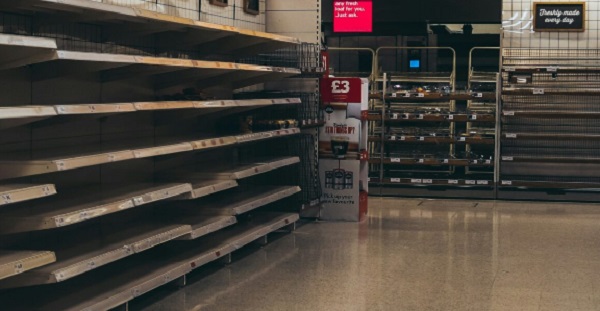

People criticize capitalism. A recent Axios-Generation poll says, “College students prefer socialism to capitalism.”
Why?
Because they believe absurd myths. Like the claim that the Soviet Union “wasn’t real socialism.”
Socialism guru Noam Chomsky tells students that. He says the Soviet Union “was about as remote from socialism as you could imagine.”
Give me a break.
The Soviets made private business illegal.
If that’s not socialism, I’m not sure what is.
“Socialism means abolishing private property and … replacing it with some form of collective ownership,” explains economist Ben Powell. “The Soviet Union had an abundance of that.”
Socialism always fails. Look at Venezuela, the richest country in Latin America about 40 years ago. Now people there face food shortages, poverty, misery and election outcomes the regime ignores.
But Al Jazeera claims Venezuela’s failure has “little to do with socialism, and a lot to do with poor governance … economic policies have failed to adjust to reality.”
“That’s the nature of socialism!” exclaims Powell. “Economic policies fail to adjust to reality. Economic reality evolves every day. Millions of decentralized entrepreneurs and consumers make fine tuning adjustments.”
Political leaders can’t keep up with that.
Still, pundits and politicians tell people, socialism does work — in Scandinavia.
“Mad Money’s Jim Cramer calls Norway “as socialist as they come!”
This too is nonsense.
“Sweden isn’t socialist,” says Powell. “Volvo is a private company. Restaurants, hotels, they’re privately owned.”
Norway, Denmark and Sweden are all free market economies.
Denmark’s former prime minister was so annoyed with economically ignorant Americans like Bernie Sanders calling Scandanavia “socialist,” he came to America to tell Harvard students that his country “is far from a socialist planned economy. Denmark is a market economy.”
Powell says young people “hear the preaching of socialism, about equality, but they don’t look on what it actually delivers: poverty, starvation, early death.”
For thousands of years, the world had almost no wealth creation. Then, some countries tried capitalism. That changed everything.
“In the last 20 years, we’ve seen more humans escape extreme poverty than any other time in human history, and that’s because of markets,” says Powell.
Capitalism makes poor people richer.
Former Rep. Jamaal Bowman (D-N.Y.) calls capitalism “slavery by another name.”
Rep. Alexandria Ocasio-Cortez (D-N.Y.) claims, “No one ever makes a billion dollars. You take a billion dollars.”
That’s another myth.
People think there’s a fixed amount of money. So when someone gets rich, others lose.
But it’s not true. In a free market, the only way entrepreneurs can get rich is by creating new wealth.
Yes, Steve Jobs pocketed billions, but by creating Apple, he gave the rest of us even more. He invented technology that makes all of us better off.
“I hope that we get 100 new super billionaires,” says economist Dan Mitchell, “because that means 100 new people figured out ways to make the rest of our lives better off.”
Former Labor Secretary Robert Reich advocates the opposite: “Let’s abolish billionaires,” he says.
He misses the most important fact about capitalism: it’s voluntary.
“I’m not giving Jeff Bezos any money unless he’s selling me something that I value more than that money,” says Mitchell.
It’s why under capitalism, the poor and middle class get richer, too.
“The economic pie grows,” says Mitchell. “We are much richer than our grandparents.”
When the media say the “middle class is in decline,” they’re technically right, but they don’t understand why it’s shrinking.
“It’s shrinking because more and more people are moving into upper income quintiles,” says Mitchell. “The rich get richer in a capitalist society. But guess what? The rest of us get richer as well.”
I cover more myths about socialism and capitalism in my new video.

There’s No Bias at CBC News, You Say? Well, OK…

Carney Floor Crossing Raises Counterintelligence Questions aimed at China, Former Senior Mountie Argues
2025: The Year The Narrative Changed

Religion on trial: what could happen if Canada passes its new hate speech legislation

Australian PM booed at Bondi vigil as crowd screams “shame!”
FDA warns ‘breast binder’ manufacturers to stop marketing to gender-confused girls
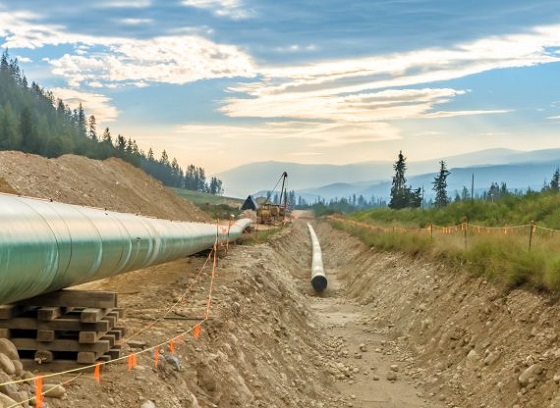
75 per cent of Canadians support the construction of new pipelines to the East Coast and British Columbia
-
 armed forces2 days ago
Remembering Afghanistan and the sacrifices of our military families
-
 Fraser Institute2 days ago
How to talk about housing at the holiday dinner table
-
 Opinion2 days ago
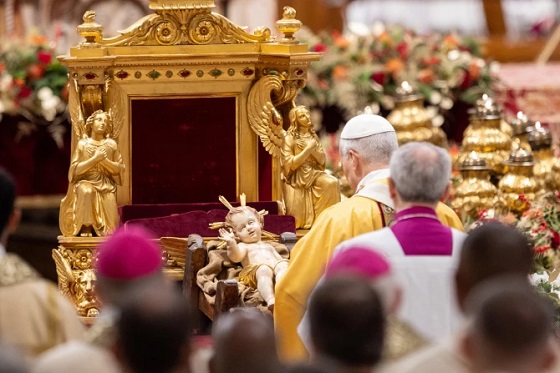
Pope Leo XIV’s Christmas night homily
-
 Frontier Centre for Public Policy2 days ago
Tent Cities Were Rare Five Years Ago. Now They’re Everywhere
-
 Fraser Institute1 day ago
Carney government sowing seeds for corruption in Ottawa
-
 Alberta1 day ago
Alberta Next Panel calls for less Ottawa—and it could pay off
-
 Business18 hours ago
Residents in economically free states reap the rewards
-
 Bruce Dowbiggin17 hours ago
Be Careful What You Wish For In 2026: Mark Carney With A Majority