
Alberta
Public Statement from Pastor James Coates

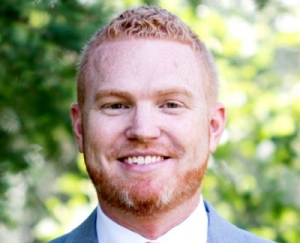

This statement from Pastor James Coates is featured on the website of Edmonton’s GraceLife Church. It was updated the day he turned himself into police for violating Alberta’s Health Act. Coates has been in custody since he turned himself into police on Tuesday, because he refuses to agree to the conditions of his release.
PUBLIC STATEMENT
Dear fellow Albertans,

It goes without saying this has been an incredibly difficult 11 months. The effects and ramifications of COVID-19 on our precious province are not insignificant. We sympathize with everyone who has suffered loss in this time, whether it be the loss of a loved one, or loss stemming from government lockdowns (such as economic loss or suffering as a result of being denied necessary health care).
Given the attention our church has received in recent days, we want to address the broader public on our reasons for gathering as a local church. What follows is not a theological defence. We have already addressed that sufficiently here, here, here and here (and it is primarily and predominantly obedience to our Lord and Savior Jesus Christ that has shaped our stance). Instead, what follows will shed light on our approach to what is being called a “pandemic.” The reason we put “pandemic” in quotes is because the definition of a pandemic was changed about 10 years ago. At one time, a pandemic was defined as an infectious disease that resulted in a certain percentage of excess deaths over and above normal annual averages. The definition was changed in connection with H1N1 to remove this threshold. Ten years ago, COVID-19 would not have qualified as a pandemic. In fact, not even close.
When COVID-19 first appeared, we shifted to livestream and abided by most of the new government guidelines for our gatherings. But when the first declared public health emergency ended, we opened our doors and returned to nearly normal gatherings on Sunday June 21st, 2020. We did so recognizing COVID-19 was much less severe than the government had initially projected. This sentiment was reflected in the assessment of the Premier of Alberta, who deliberately referred to COVID-19 as “influenza” multiple times in a speech announcing the end of the first declared public health emergency.
In early July, it was brought to our attention that two separate individuals had attended our gatherings on two consecutive Sundays and subsequently tested positive for the virus (both cases being unrelated to each other). At that time, we did our own internal contact tracing (prior to AHS notifying us of the exposure), many of our congregants were tested, and it was determined that no transmission of the virus had taken place. Out of an abundance of caution, we shifted exclusively to livestream and shutdown all other ministries for two weeks (14 days). We did this to mitigate any further spread of COVID-19. When it was evident that no further spread had taken place, we resumed our nearly normal gatherings. Since then, we have gathered as a church each Sunday without incident (28 Sundays to date).
Having engaged in an immense amount of research, interacting with both doctors and frontline healthcare workers, it is apparent that the negative effects of the government lockdown measures on society far surpass the effects of COVID-19. The science being used to justify lockdown measures is both suspect and selective. In fact, there is no empirical evidence that lockdowns are effective in mitigating the spread of the virus. We are gravely concerned that COVID-19 is being used to fundamentally alter society and strip us all of our civil liberties. By the time the so-called “pandemic” is over, if it is ever permitted to be over, Albertans will be utterly reliant on government, instead of free, prosperous, and independent.
As such, we believe love for our neighbor demands that we exercise our civil liberties. We do not see our actions as perpetuating the longevity of COVID-19 or any other virus that will inevitably come along. If anything, we see our actions as contributing to its end – the end of destructive lockdowns and the end of the attempt to institutionalize the debilitating fear of viral infections. Our local church is clear evidence that governmental lockdowns are unnecessary. In fact, it is also evidence of how harmful they are. Without going into detail, we recently lost the life of one of our precious congregants who was denied necessary health care due to government lockdown measures.
Consider the following statistics. It is alleged that 129,075 Albertans have tested positive for the virus. That works out to just less than 3% of the population. However, it needs to be pointed out that the PCR test being used to test for COVID-19 is fraught with false positives. This is especially true, since at least until recently, Alberta was running the PCR test at 40 amplifications. As such, the number of Albertans who have actually contracted the virus is likely significantly less. It is also vital to highlight that more than 99% of those who contract the virus will fully recover.
Alberta is currently reporting 1,782 COVID-related deaths. It is critically important to articulate it this way. There is a big difference between dying from COVID and dying with COVID. But it is also critical to note that these COVID-related deaths, as tragic as they are, have not resulted in a statistically significant increase in excess deaths (and the average age of those who have died related to COVID-19 is 82, consistent with life expectancy in Alberta). Sadly, most of these individuals would have likely died due to various other lethal co-morbidities (and it immensely grieves us that in many cases they were forced to die apart from their family unnecessarily). In addition, experts estimate that deaths, in the long run, resulting from government lockdown measures will surpass COVID-related deaths 10 to 1 (e.g. premature deaths resulting from not receiving necessary health care, suicides, drug overdoses, addictions, the development of chronic health conditions, total loss of income, family breakdown, etc.). In fact, it would seem that COVID-related deaths are being treated as though they are somehow more tragic than any and all other deaths.
Many Albertans are afraid and are convinced of the efficacy of government lockdowns for two reasons: misinformation and fearmongering. The media has so pounded the COVID-19 drum since the “pandemic” began, almost exclusively emphasizing caseload and deaths, that people are fearful. So fearful, in fact, they have been convinced that yielding up their civil liberties to the government is in their best interests. It is difficult to have not lost confidence in the mainstream media. It would seem as though journalism is on life-support in our province. The media should be made up of the most thorough, discerning, and investigative people in our society. Instead, many of them seem to be serving an ideological agenda. Now more than ever, it is vital that Albertans exercise discernment when listening to the mainstream media.
What do we believe people should do? We believe they should responsibly return to their lives. Churches should open, businesses should open, families and friends should come together around meals, and people should begin to exercise their civil liberties again. Otherwise we may not get them back. In fact, some say we are on the cusp of reaching the point of no return. Protect the vulnerable, exercise reasonable precautions, but begin to live your lives again.
That said, living life comes with risks. Every time we get behind the wheel of a car, we are assuming a degree of risk. We accept that risk due to the benefits of driving. Yes, though vastly overblown, there are associated risks with COVID-19, as there are with other infections. Human life, though precious, is fragile. As such, death looms over all of us. That is why we need a message of hope. One that addresses our greatest need. That message is found in Jesus Christ. It is found in Him because all of us have sinned and have fallen short of God’s perfect standard of righteousness (Rom 3:23). To sin is to violate the holiness and righteousness of God. As our Creator, He is the one who will judge us according to our deeds and no one will stand on their own merit in that judgment. Therefore, we need a substitute. One who has both lived the life we could not and died the death we deserve.
Praise be to God, there is! God the Father commissioned His Son into the world, to take upon Himself human flesh (John 1:14), being true God and true man, whereby He lived under the Law of God (Gal 4:4), fulfilled it in every respect, was tempted in all things as we are, and yet was without sin (Heb 4:15). Then, in obedience to the Father, He went to the cross, drank the full cup of the Father’s wrath for the sin of all who would ever believe on His name, died, and rose again! In this way, He proved He had conquered both sin and death, our two greatest enemies. He has ascended into heaven and is now seated at the right hand of the Father (Col 3:1), awaiting the time of His Second Coming.
In the meantime, this message of salvation is to be proclaimed to all people (Matt 28:18–20). In fact, the church exists to proclaim this message! That if you would turn from your sin and believe on the Lord Jesus Christ, putting full trust in His finished work on the cross along with His resurrection from the dead, you will be saved! Not only will all of your sins be forgiven you, but you will also be credited with a perfect record of righteousness; the very righteousness of Christ (2 Cor 5:21). And so, we would urge you to be reconciled to God through His Son this day. The very one who has given you life and breath.
Should you do so, you will receive eternal life and will experience life after death (John 11:25).
Death looms over all of us. But there is a message of concrete hope, in the gospel of the Lord Jesus Christ.

Alberta
Trump’s Venezuela Geopolitical Earthquake Shakes up Canada’s Plans as a “Net Zero” Energy Superpower


From Energy Now
By Ron Wallace
Get the Latest Canadian Focused Energy News Delivered to You! It’s FREE: Quick Sign-Up Here
Prime Minister Carney’s ‘well-laid plans’ for Canada to become a net zero energy superpower may suddenly be at risk – with significant consequences for Alberta. Recent events in Venezuela should force a careful re-examination of the economic viability of producing “decarbonized” heavy oil.
Having amassed military forces in the Caribbean throughout 2025 under Operation Southern Spear, on 3 January 2026 the Trump administration launched Operation Absolute Resolve, termed one of the most dramatic U.S. military actions in the Western Hemisphere since Operation Just Cause in Panama in 1989. Targeting multiple locations across Venezuela it led to the capture and removal of Venezuelan President Nicolás Maduro and his wife Cilia Flores. Initially held aboard the USS Iwo Jima they have been taken to the U.S. to face criminal charges for “narcoterrorism” and other offences.
In what has been termed a “$17 trillion reset”, Alberta may be at risk of losing its hard-won U.S. Gulf Coast (USGC) dominance to a resurgent rival – this coming at a time when Alberta and Canada are proposing to expend billions on “decarbonized” oil with punitive regulatory conditions that would not apply to Venezuelan, or any other international producers, of heavy oil. With U.S. forces capturing President Nicolás Maduro and President Trump declaring American administration of Venezuela to “get the oil flowing” again, the revival of Venezuela’s vast heavy crude reserves—over 300 billion barrels, the world’s largest—could flood the market with a cheaper, proximate supply tailored to U.S. refineries.
Historically, Alberta capitalized on Venezuela’s collapse when production there plummeted, due to mismanagement and sanctions, from 3 million barrels per day in the mid-2000’s to under 1 million today. This allowed Canadian heavy blends like Western Canadian Select to become the dominant feedstock for U.S. Gulf Coast refiners. In 2025, Canada supplied over one-third of the region’s heavy imports, tightening differentials and bolstering Alberta’s revenues.
A U.S.-revived Venezuelan oil industry, even if investment for infrastructure takes years to implement, would be a serious threat that risks displacing Canadian oil with lower-cost alternative supplies that also are geographically closer to U.S. refiners. This seismic geopolitical shift now confronts Prime Minister Mark Carney and Premier Danielle Smith as they attempt to implement their November 2025 Memorandum of Understanding (MoU), one that commits Alberta to produce “decarbonized” oil through massive carbon capture projects like Pathways Plus associated with Carbon Pricing Equivalency Agreements, are vastly expensive measures that could undermine Canadian price competitiveness against unsanctioned Venezuelan crude. Possibly of greater importance, Canadian insistence on “net zero” targets associated with pipelines and heavy oil production, policies that have caused significant capital flight from the Canadian energy sector, may further diminish the attractiveness of Alberta oil projects to international investors. Since 2015 Canada has experienced a flight of investment capital approaching CAD$650 billion due to lost, or deferred, resource projects – particularly in the energy sector. Will these policies and plans for the Alberta-Canada MoU allow Canada to become an “energy superpower” in this new age of international competition?
While short-term disruptions from the U.S. intervention might temporarily tighten heavy supply (and therefore benefit Canadian producers) the long-term prospect of U.S.-controlled Venezuelan oil production unquestionably represents a sea-change for international oil markets and may, potentially strengthen the economic case, if not urgency, for new Canadian Pacific pipelines to provide market access away from the U.S.
Historically, the U.S.–Venezuela oil trade relationship was a highly integrated system that was seriously disrupted, beginning in the 1970’s, by nationalization programs and by subsequent U.S. sanctions. The U.S. Gulf Coast (USGC) refinery complex is among the most highly developed in the world, one that required billions in investments for coking, desulfurization and hydrocracker units specifically designed to process heavy, sour Venezuelan crude. Importing approximately 40 million barrels of heavy crude per month in 2025, the USGC refiners scrambled to replace lost, sanctioned Venezuelan oil with Canadian Cold Lake, Mexican Maya and Brazilian heavy grades. Canada, offering a supply that was stable, pipeline‑connected and geopolitically low‑risk was the only producer with enough heavy crude to meaningfully offset those Venezuelan losses. In the twelve months ending February 2025, Canada supplied 13.6 million barrels/month representing 34% (the largest single source) to those U.S. refiners. As a result, Canadian Cold Lake and WCS differentials tightened with the Cold Lake WTI discount narrowing from $13.57/bbl (February) to $9.45/bbl (May).
However, with a federal government consumed with concerns about emissions and the attainment of an improbable national goal of Net Zero, and with terms in an MoU that will require material capital expenditures to produce “decarbonized” oil, Alberta and Canada would be wise to recognize that this geopolitical sea-change will affect not just prior assumptions about Canadian oil production (and MoU’s) but may yet work to change the fundamental economic assumptions of global oil economics.
Premier Smith has consistently argued that Canada needs to develop an “alternate reality” one in which Alberta oil producers and international export pipelines allow Canada to contribute to global energy security in ways that preclude “economic self-destruction.” In face of these geopolitical events, especially at a time of mounting national deficits, Canada may have precious little time to get its act together to effectively, and competitively, maintain and secure international markets for Alberta oil.
Dr. Ron Wallace is a former National Energy Board member who has also worked in the Venezuelan heavy oil sector.
From the Canadian Energy Centre
Canada’s energy landscape changed significantly in 2025, with mounting U.S. economic pressures reinforcing the central role oil and gas can play in safeguarding the country’s independence.
Here are the Canadian Energy Centre’s top five most-viewed stories of the year.
5. Alberta’s massive oil and gas reserves keep growing – here’s why

The Northern Lights, aurora borealis, make an appearance over pumpjacks near Cremona, Alta., Thursday, Oct. 10, 2024. CP Images photo
Analysis commissioned this spring by the Alberta Energy Regulator increased the province’s natural gas reserves by more than 400 per cent, bumping Canada into the global top 10.
Even with record production, Alberta’s oil reserves – already fourth in the world – also increased by seven billion barrels.
According to McDaniel & Associates, which conducted the report, these reserves are likely to become increasingly important as global demand continues to rise and there is limited production growth from other sources, including the United States.
4. Canada’s pipeline builders ready to get to work

Photo courtesy Coastal GasLink
Canada could be on the cusp of a “golden age” for building major energy projects, said Kevin O’Donnell, executive director of the Mississauga, Ont.-based Pipe Line Contractors Association of Canada.
That eagerness is shared by the Edmonton-based Progressive Contractors Association of Canada (PCA), which launched a “Let’s Get Building” advocacy campaign urging all Canadian politicians to focus on getting major projects built.
“The sooner these nation-building projects get underway, the sooner Canadians reap the rewards through new trading partnerships, good jobs and a more stable economy,” said PCA chief executive Paul de Jong.
3. New Canadian oil and gas pipelines a $38 billion missed opportunity, says Montreal Economic Institute

Steel pipe in storage for the Trans Mountain Pipeline expansion in 2022. Photo courtesy Trans Mountain Corporation
In March, a report by the Montreal Economic Institute (MEI) underscored the economic opportunity of Canada building new pipeline export capacity.
MEI found that if the proposed Energy East and Gazoduq/GNL Quebec projects had been built, Canada would have been able to export $38 billion worth of oil and gas to non-U.S. destinations in 2024.
“We would be able to have more prosperity for Canada, more revenue for governments because they collect royalties that go to government programs,” said MEI senior policy analyst Gabriel Giguère.
“I believe everybody’s winning with these kinds of infrastructure projects.”
2. Keyera ‘Canadianizes’ natural gas liquids with $5.15 billion acquisition

Keyera Corp.’s natural gas liquids facilities in Fort Saskatchewan, Alta. Photo courtesy Keyera Corp.
In June, Keyera Corp. announced a $5.15 billion deal to acquire the majority of Plains American Pipelines LLP’s Canadian natural gas liquids (NGL) business, creating a cross-Canada NGL corridor that includes a storage hub in Sarnia, Ontario.
The acquisition will connect NGLs from the growing Montney and Duvernay plays in Alberta and B.C. to markets in central Canada and the eastern U.S. seaboard.
“Having a Canadian source for natural gas would be our preference,” said Sarnia mayor Mike Bradley.
“We see Keyera’s acquisition as strengthening our region as an energy hub.”
1. Explained: Why Canadian oil is so important to the United States

Enbridge’s Cheecham Terminal near Fort McMurray, Alberta is a key oil storage hub that moves light and heavy crude along the Enbridge network. Photo courtesy Enbridge
The United States has become the world’s largest oil producer, but its reliance on oil imports from Canada has never been higher.
Many refineries in the United States are specifically designed to process heavy oil, primarily in the U.S. Midwest and U.S. Gulf Coast.
According to the Alberta Petroleum Marketing Commission, the top five U.S. refineries running the most Alberta crude are:
- Marathon Petroleum, Robinson, Illinois (100% Alberta crude)
- Exxon Mobil, Joliet, Illinois (96% Alberta crude)
- CHS Inc., Laurel, Montana (95% Alberta crude)
- Phillips 66, Billings, Montana (92% Alberta crude)
- Citgo, Lemont, Illinois (78% Alberta crude)


The U.S. Just Removed a Dictator and Canada is Collateral Damage

Dark clouds loom over Canada’s economy in 2026

The Real Reason Canada’s Health Care System Is Failing

Trying to Defend Maduro’s Legitimacy

Vacant Somali Daycares In Viral Videos Are Also Linked To $300 Million ‘Feeding Our Future’ Fraud

Federal funds FROZEN after massive fraud uncovered: Trump cuts off Minnesota child care money

Coffee, Nicotine, and the Politics of Acceptable Addiction
-
 Frontier Centre for Public Policy1 day ago
Is Canada still worth the sacrifice for immigrants?
-
 International1 day ago
Network of Nonprofits with Marxist and CCP Ties, and Elected Socialists Race to Counter Washington’s Narrative of the Maduro Raid
-
 Entertainment17 hours ago
Nearly half of Netflix kids shows push LGBTQ content, watchdog warns
-
 Education1 day ago
Mother petitions Supreme Court after school hid daughter’s ‘gender transition’
-
 International16 hours ago
Watch your a** Petro. Trump threatens Colombian President
-
 Environment1 day ago
Left-wing terrorists sabotage German power plant, causing massive power outage
-
Alberta1 day ago
Trump’s Venezuela Geopolitical Earthquake Shakes up Canada’s Plans as a “Net Zero” Energy Superpower
-
 Energy1 day ago
Trump’s Venezuela Move: A $17 Trillion Reset of Global Geopolitics and a Pivotal Shift in US Energy Strategy