
Censorship Industrial Complex
Politicians Urge Social Media Platforms to “Quickly and Decisively” Censor Hurricane “Misinformation”

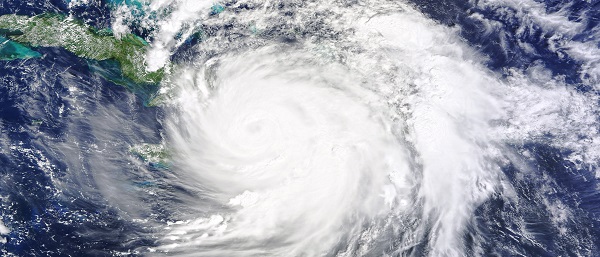

News release from Reclaim The Net
Despite recent pushback for politicians encouraging social media platforms to increase censorship online, in the wake of Hurricanes Helene and Milton, a cadre of Democratic House representatives from the affected regions have appealed to major social media platforms to intensify their efforts to censor alleged “misinformation” related to the storms.

We obtained a copy of the letter for you here.
“We write to your platforms with an urgent request on behalf of states affected by the devastation of Hurricane Helene and those currently being impacted by Hurricane Milton,” the letter states. “In the aftermath of Helene, we have witnessed a troubling surge in misinformation, disinformation, conspiracy theories, and scams that are hindering recovery efforts and exploiting vulnerable individuals and families.”
The representatives say are concerned about the proliferation of false claims and blame these reportedly false claims for the hindering of recovery efforts. The congresswomen also say that social media posts are undermining public confidence in institutions.
The call for a crackdown on misinformation was articulated in a letter addressed to seven major social media entities, including Meta, X, TikTok, Discord, YouTube, Snap, and Instagram. Authored by Representatives Deborah Ross (D-N.C.), Kathy Castor (D-Fla.), Nikema Williams (D-Ga.), and Wiley Nickel (D-N.C.), the letter alleges that misinformation is having a dire impact.
The letter doesn’t directly demand censorship of alleged misinformation, but it does put pressure on platforms to police speech, saying that they have the “power and the responsibility” to “improve the digital spaces.”
The congresswomen say that they “strongly encourage” platforms to act “quickly and decisively.”
In a press conference today, President Biden dismissed some of the criticism of the response to the hurricane as “lies” and said, “Those who have been spreading these lies to try to undermine the opposition, they are going to pay a price for it.”
The political pressure on social media platforms to step in regarding a major event echoes what happened during the Covid pandemic.
During the pandemic, the call for online censorship by politicians and health authorities under the guise of combating misinformation became a contentious issue. This initiative, aimed at preventing the spread of allegedly harmful or misleading information about the virus, its transmission, and treatments, led to a wide array of interventions by social media platforms and tech companies.
As part of these efforts, platforms like Facebook, Twitter, and YouTube introduced policies to flag, remove, or demote content that contradicted the evolving understanding of health authorities such as the World Health Organization (WHO) and the Centers for Disease Control and Prevention (CDC). The intent was supposedly to protect public health; however, the execution of these policies often resulted in the suppression of legitimate discourse and the removal of content that later proved to be accurate.

Censorship Industrial Complex
US Under Secretary of State Slams UK and EU Over Online Speech Regulation, Announces Release of Files on Past Censorship Efforts


Sarah Rogers’ comments draw a new line in the sand between America’s First Amendment and Europe’s tightening grip on online speech.
|
|
Censorship Industrial Complex
Canadian university censors free speech advocate who spoke out against Indigenous ‘mass grave’ hoax
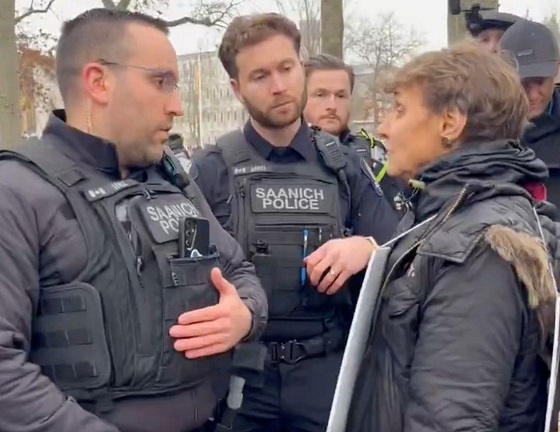
From LifeSiteNews
Dr. Frances Widdowson was arrested and given a ticket at the University of Victoria campus after trying to engage in conversation about ‘the disputed claims of unmarked graves in Kamloops.’
A Canadian academic who spoke out against claims there are mass unmarked graves of kids on former Indigenous residential schools, and who was arrested on a university campus as a result for trespassing, is fighting back with the help of a top constitutional group.
Dr. Frances Widdowson was arrested and given a ticket on December 2, 2025, at the University of Victoria (UVic) campus after trying to engage in conversation about “the disputed claims of unmarked graves in Kamloops,” noted the Justice Centre for Constitutional Freedoms (JCCF) in a recent news release.
According to the JCCF, Widdowson was trying to initiate a “good faith” conversation with people on campus, along with the leader of OneBC provincial party, Dallas Brodi.
“My arrest at the University of Victoria is an indication of an institution that is completely unmoored from its academic purpose,” said Widdowson in a statement made available to LifeSiteNews.
She added that the “institution” has been “perpetuating the falsehood” of the remains of 215 children “being confirmed at Kamloops since 2021, and is intent on censoring any correction of this claim.”
“This should be of concern for everyone who believes that universities should be places of open inquiry and critical thinking, not propaganda and indoctrination,” she added.
UVic had the day before Widdowson’s arrest warned on its website that those in favor of free speech were “not permitted to attend UVic property for the purpose of speaking publicly.”
Despite the warning, Widdowson, when she came to campus, was met with some “100 aggressive protesters assembled where she intended to speak at Petch Fountain,” noted the JCCF.
The protesters consisted of self-identified Communists, along with Antifa-aligned people and Hamas supporters.
When Widdowson was confronted by university security, along with local police, she was served with a trespass notice.
“When she declined to leave, she was arrested, detained for about two hours, and charged under British Columbia’s Trespass Act—an offence punishable by fines up to $2,000 or up to six months’ imprisonment,” said the JCCF.
According to Constitutional lawyer Glenn Blackett, UVic actions are shameful, as it “receives hundreds of millions of taxpayer dollars annually while it facilitates the arrest of Canadians attempting to engage in free inquiry on campus.”
Widdowson’s legal team, with the help of the JCCF, will be defending her ticket to protect her “Charter-protected freedoms of expression and peaceful assembly.”
Widdowson served as a tenured professor at Mount Royal University in Calgary, Alberta, before she was fired over criticism of her views on identity politics and Indigenous policy, notes the JCCF. She was vindicated, however, as an arbitrator later found her termination was wrongful.
In 2021 and 2022, the mainstream media ran with inflammatory and dubious claims that hundreds of children were buried and disregarded by Catholic priests and nuns who ran some Canadian residential schools. The reality is, after four years, there have been no mass graves discovered at residential schools.
However, as the claims went unfounded, over 120 churches, most of them Catholic and many of them on Indigenous lands that serve the local population, have been burned to the ground, vandalized, or defiled in Canada since the spring of 2021.
Last year, retired Manitoba judge Brian Giesbrecht said Canadians are being “deliberately deceived by their own government” after blasting the former Trudeau government for “actively pursuing” a policy that blames the Catholic Church for the unfounded “deaths and secret burials” of Indigenous children.
As reported by LifeSiteNews, new private members’ Bill C-254, “An Act To Amend The Criminal Code” introduced by New Democrat MP Leah Gazan, looks to give jail time to people who engage in so-called “Denialism.” The bill would look to jail those who question the media and government narrative surrounding Canada’s “Indian Residential School system” that there are mass graves despite no evidence to support this claim.


“Magnitude cannot be overstated”: Minnesota aid scam may reach $9 billion

Largest fraud in US history? Independent Journalist visits numerous daycare centres with no children, revealing massive scam
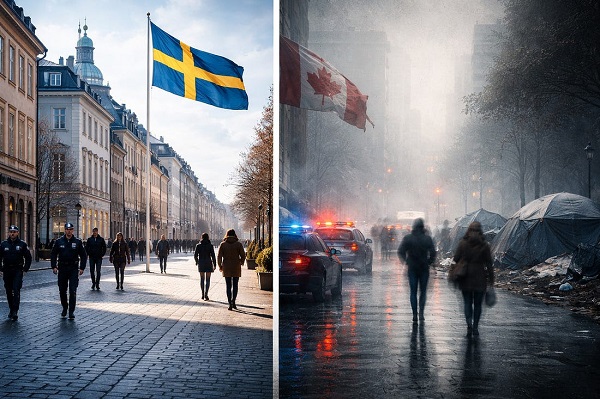
Sweden Fixed What Canada Won’t Even Name
US Under Secretary of State Slams UK and EU Over Online Speech Regulation, Announces Release of Files on Past Censorship Efforts

Is Ukraine Peace Deal Doomed Before Zelenskyy And Trump Even Meet At Mar-A-Lago?
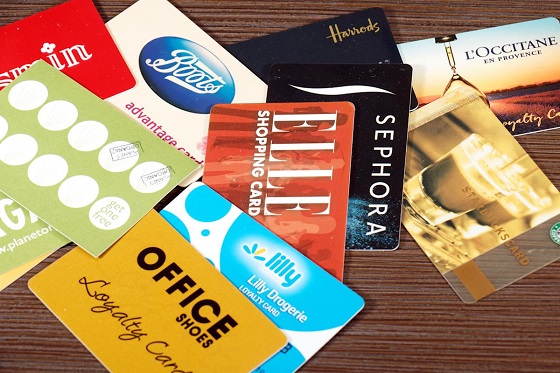
What Do Loyalty Rewards Programs Cost Us?

China Stages Massive Live-Fire Encirclement Drill Around Taiwan as Washington and Japan Fortify
-
 Business1 day ago
How convenient: Minnesota day care reports break-in, records gone
-
 Business1 day ago
The great policy challenge for governments in Canada in 2026
-
 Opinion2 days ago
Globally, 2025 had one of the lowest annual death rates from extreme weather in history
-
 International1 day ago
Trump confirms first American land strike against Venezuelan narco networks
-
 International7 hours ago
Maduro says he’s “ready” to talk
-
 Bruce Dowbiggin7 hours ago
The Rise Of The System Engineer: Has Canada Got A Prayer in 2026?
-
 International7 hours ago
LOCKED AND LOADED: Trump threatens U.S. response if Iran slaughters protesters