
Alberta
New opinion surveys reveal overwhelming majority of Canadians support our Oil and Gas industry

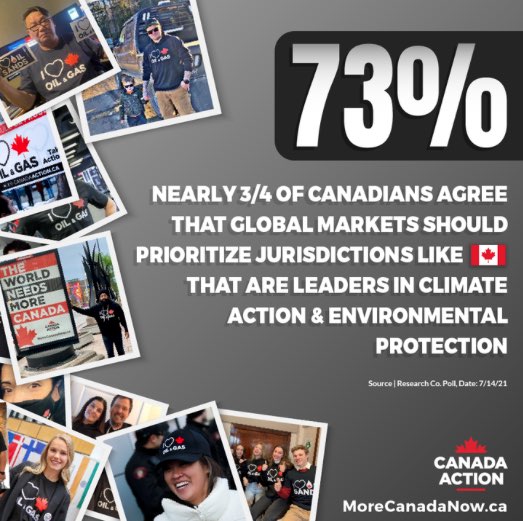

News Release from Canada Action
We are very excited to share some recent and encouraging polling results today. According to a July 2021 public opinion survey conducted by Research Co, new data shows that Canada’s public perception of our responsible energy industry is very positive.

Here are some of the key findings:
- Almost three in four (73 percent) Canadians polled agree Canada should be a preferred global supplier of energy because of its climate and environmental record.
- Nearly seven in ten (69 percent) say they have personally benefited from the oil and gas sector.
- 70 percent agree that resource development could help alleviate systemic poverty within Indigenous communities.
- Two thirds of Canadians (66 percent) support Canada’s role as a global oil and gas supplier.
- Almost three in four Canadians (73 percent) acknowledge Canada’s prosperity is supported by the oil and gas sector and that Canadian oil and gas production helps fund important social programs like health care and education.
Referring to the fact 73 percent of Canadians polled also agreed it’s essential First Nations be included in project development to establish long-term revenue sources for their communities, JP Gladu, acting Executive Director of Indigenous Resource Network, noted the following:
Taken collectively, this is all exceptional news for all of Canada’s natural resource industries. Your support for our positive, fact based message about why the world needs more Canadian energy and resources is helping make a difference.
A Majority of Canadians ‘Agree’ that Canada Should be a Preferred Global Supplier of Energy: POLL

A new public opinion survey conducted by Research Co. on behalf of Canada Action has found that a majority of Canadians across the country support the vital oil and gas sector! The poll, released on July 14th, showed that 68% of participants ‘agree’ that Canada should be the choice supplier to meet future oil and gas demand, while two-thirds (66%) support Canada’s role as a global oil and gas supplier versus just 19% who were opposed.
Additionally, almost three in four Canadians (73%) acknowledged Canada’s prosperity is supported by the oil and gas sector and that the industry helps fund important social programs such as healthcare and education.
“It’s a strong and very welcome result, and one that shows most Canadians feel proud of the work their energy sector is doing to enhance its record on ESG criteria. The results also show most Canadians believe the world needs more Canadian energy and are aware of the importance of the sector to the prosperity of families and communities right across the country,” said Cody Battershill, Canada Action founder.

Between 2000 and 2018, approximately $493 billion in government revenues were generated by Canada’s oil and gas industry, capital which has been used pay for schools, hospitals, roads and the workers that make these projects possible/operational. Every Canadian has benefitted from oil and gas in some way, shape, or form; nearly seven-in-ten Canadians (69%) of participants also acknowledged that Canada’s oil and gas sector has benefitted them personally.
Nearly three-in-four Canadians (73%) also agreed that global markets should prioritize jurisdictions like Canada that are leaders in climate action and environmental protection. This is a logical choice as Canada’s oil and gas industry ranks number one for Environmental, Social, and Governance (ESG) practices among nations with the largest oil reserves, and of the world’s top 20 producers, 2nd for governance and social progress and 4th on the environment.
“Given the world requires $525 billion of new oil and gas investment per year just to meet current demand, we think we ought to push for Canada to receive a sizeable share of this investment,” Battershill added.

Canada’s world-class ESG performance shows that our nation is home to one of the most environmentally conscious and sustainable oil and gas industries in the world. With future supply gaps on the horizon, it only makes sense that ESG-focussed investors look to Canada as a choice supplier for as long as the world needs oil – and it will for many decades to come.
73% of participants also agreed that it’s essential First Nations be included in project development to establish long-term revenue sources for their communities.
“These are heartening results. Indigenous nations and businesses want to be partners in resource development. This poll shows there’s widespread support to work together for the benefit of all,” said JP Gladu, acting Executive Director of the Indigenous Resource Network.
Below is a summary of all poll results collected by Research Co.
Poll Results:

– Two-thirds of Canadians (66%) support Canada’s role as a global oil and gas supplier, while one-in-five (19%) are opposed
– Almost seven-in-ten Canadians (69%) say the oil and gas industry has benefitted them personally
– Almost three-in-four Canadians (73%) agree that global markets should prioritize jurisdictions like Canada that are leaders in climate action and environmental protection
– Almost three-in-four Canadians (73%) agree that Canadian oil and gas products help fund important social programs like healthcare and education for Canadians
– More than seven-in-ten Canadians (72%) agree that sustainability measures are better served when energy is sourced from Canada compared to less environmentally friendly jurisdictions

– Seven-in-ten Canadians (70%) agree that Canada should be the choice recipient of investments due to its climate leadership and environmental policies
– More than two-thirds of Canadians (68%) agree that Canada should be the choice supplier to meet future oil and gas demand
– Over three-in-five Canadians (64%) agree that investing in Canada’s oil and gas sector makes sense if you value climate leadership, social progress and transparency
– Fewer than half of Canadians (45%) were aware that Canada is a leader for environmental, social and governance (ESG) practices among countries with the largest oil and gas reserves
– More than two-in-five Canadians (43%) were aware that Canadian energy companies are global leaders in carbon capture, utilization and storage

– Just over two-in-five Canadians (41%) were aware that Canadian natural gas exported to Asia can reduce global emissions by displacing coal power usage
– Almost three-in-four Canadians (73%) agree that global markets should prioritize jurisdictions like Canada that are leaders in climate leadership and environmental protection
– Almost three-in-four Canadians (73%) agree that Canada should be a destination of choice for energy investment due to its climate leadership, worker safety and environmental policies
– More than two-thirds of Canadians (68%) agree that Canada should be the choice supplier to meet future oil and gas demand
– Almost three-in-four Canadians (74%) think Canada should act in a similar fashion to Norway when it comes to energy practices, as the nation has said they will continue to maximize the value created from their oil and gas reserves

– Almost three-in-four Canadians (73%) agree that Canada’s prosperity is supported by the oil and gas sector practices
– Almost three-in-four Canadians (73%) agree that it is essential that First Nations be included in project development to establish long-term revenue sources for their communities
– Seven-in-ten Canadians (70%) agree that Systemic poverty within Indigenous communities could be alleviated with resource development
– Almost seven-in-ten Canadians (69%) agree that Indigenous and non-Indigenous communities in Canada should play a role in supplying our energy to meet domestic and global demands
– More than half of Canadians (56%) agree with the decision related to the TMX expansion, while one-in-five (21%) disagree, and a similar proportion (22%) are undecided. Support for the decision is highest in Alberta and Atlantic Canada (each at 63%), followed by Ontario (57%), Saskatchewan and Manitoba (56%), British Columbia (55%) and Quebec (52%)
– Over three-in-five Canadians (62%) think the Indigenous communities support the Trans Mountain Pipeline (TMX) project
– More than three-in-ten Canadians (31%) are more likely to support the Trans Mountain expansion upon learning of the views of Indigenous communities, while 7% are less likely to support. More than two-in-five (47%) say their position has not changed as a result of this fact
Results were based on an online study among 1,000 adults in Canada, conducted July 7 to 9, 2021 and weighted for age, gender and region. The margin of error—which measures sample variability—is +/- 3.1 percentage points, nineteen times out of twenty.
Join Us Today!

Learn more about Canada’s sustainable energy industry by joining us on Facebook, Twitter, and Instagram today – hope to see you there!
Back to Energy – Canada Action



This article supplied by Troy Media.

The mayor’s controversial term is over, but a divided conservative base may struggle to take the city in a new direction
Calgary’s mayoral election went to a recount. Independent candidate Jeromy Farkas won with 91,112 votes (26.1 per cent). Communities First candidate Sonya Sharp was a very close second with 90,496 votes (26 per cent) and controversial incumbent mayor Jyoti Gondek finished third with 71,502 votes (20.5 per cent).
Gondek’s embarrassing tenure as mayor is finally over.
Gondek’s list of political and economic failures in just a single four-year term could easily fill a few book chapters—and most likely will at some point. She declared a climate emergency on her first day as Calgary’s mayor that virtually no one in the city asked for. She supported a four per cent tax increase during the COVID-19 pandemic, when many individuals and families were struggling to make ends meet. She snubbed the Dec. 2023 menorah lighting during Hanukkah because speakers were going to voice support for Israel a mere two months after the country was attacked by the bloodthirsty terrorist organization Hamas. The
Calgary Party even accused her last month of spending over $112,000 in taxpayers’ money for an “image makeover and brand redevelopment” that could have benefited her re-election campaign.
How did Gondek get elected mayor of Calgary with 176,344 votes in 2021, which is over 45 per cent of the electorate?
“Calgary may be a historically right-of-centre city,” I wrote in a recent National Post column, “but it’s experienced some unusual voting behaviour when it comes to mayoral elections. Its last three mayors, Dave Bronconnier, Naheed Nenshi and Gondek, have all been Liberal or left-leaning. There have also been an assortment of other Liberal mayors in recent decades like Al Duerr and, before he had a political epiphany, Ralph Klein.”
In fairness, many Canadians used to support the concept of balancing their votes in federal, provincial and municipal politics. I knew of some colleagues, friends and family members, including my father, who used to vote for the federal Liberals and Ontario PCs. There were a couple who supported the federal PCs and Ontario Liberals in several instances. In the case of one of my late
grandfathers, he gave a stray vote for Brian Mulroney’s federal PCs, the NDP and even its predecessor, the Co-operative Commonwealth Federation.
That’s not the case any longer. The more typical voting pattern in modern Canada is one of ideological consistency. Conservatives vote for Conservative candidates, Liberals vote for Liberal candidates, and so forth. There are some rare exceptions in municipal politics, such as the late Toronto mayor Rob Ford’s populistconservative agenda winning over a very Liberal city in 2010. It doesn’t happen very often these days, however.
I’ve always been a proponent of ideological consistency. It’s a more logical way of voting instead of throwing away one vote (so to speak) for some perceived model of political balance. There will always be people who straddle the political fence and vote for different parties and candidates during an election. That’s their right in a democratic society, but it often creates a type of ideological inconsistency that doesn’t benefit voters, parties or the political process in general.
Calgary goes against the grain in municipal politics. The city’s political dynamics are very different today due to migration, immigration and the like. Support for fiscal and social conservatism may still exist in Alberta, but the urban-rural split has become more profound and meaningful than the historic left-right divide. This makes the task of winning Calgary in elections more difficult for today’s provincial and federal Conservatives, as well as right-leaning mayoral candidates.
That’s what we witnessed during the Oct. 20 municipal election. Some Calgary Conservatives believed that Farkas was a more progressive-oriented conservative or centrist with a less fiscally conservative plan and outlook for the city. They viewed Sharp, the leader of a right-leaning municipal party founded last December, as a small “c” conservative and much closer to their ideology. Conversely, some Calgary Conservatives felt that Farkas, and not Sharp, would be a better Conservative option for mayor because he seemed less ideological in his outlook.
When you put it all together, Conservatives in what used to be one of the most right-leaning cities in a historically right-leaning province couldn’t decide who was the best political option available to replace the left-wing incumbent mayor. Time will tell if they chose wisely.
Fortunately, the razor-thin vote split didn’t save Gondek’s political hide. Maybe ideological consistency will finally win the day in Calgary municipal politics once the recount has ended and the city’s next mayor has been certified.
Michael Taube is a political commentator, Troy Media syndicated columnist and former speechwriter for Prime Minister Stephen Harper. He holds a master’s degree in comparative politics from the London School of Economics, lending academic rigour to his political insights.
Troy Media empowers Canadian community news outlets by providing independent, insightful analysis and commentary. Our mission is to support local media in helping Canadians stay informed and engaged by delivering reliable content that strengthens community connections and deepens understanding across the country

WATCH From Underdog to Top Broodmare (video)
Executive Producers Jeff Robillard (Horse Racing Alberta) and Mike Little (Shinelight Entertainment)

What began as an underdog story became a legacy of excellence. Crackers Hot Shot didn’t just race — she paved the way for future generations, and in doing so became one of the most influential producers the province has known.
The extraordinary journey of Crackers Hot Shot — once overlooked, now revered — stands as one of Alberta’s finest success stories in harness racing and breeding.
Born in humble circumstances and initially considered rough around the edges, Crackers Hot Shot overcame long odds to carve out a career that would forever impact the province’s racing industry. From a “wild, unhandled filly” to Alberta’s “Horse of the Year” in 2013, to producing foals who carry her spirit and fortitude into future generations.
Her influence ripples through Alberta’s racing and breeding landscape: from how young stock are prepared, to the aspirations of local breeders who now look to “the mare that did it” as proof that world-class talent can emerge from Alberta’s paddocks.
“Crackers Hot Shot, she had a tough start. She wasn’t much to look at when we first got her” — Rod Starkewski
“Crackers Hot Shot was left on her own – Carl Archibald heard us talking, he said ‘I’ll go get her – I live by there’. I think it took him 3 days to dig her out of the snow. She was completely wild – then we just started working on her. She really needed some humans to work with her – and get to know that people are not scary.” — Jackie Starkewski
“Crackers Hot Shot would be one of the top broodmares in Albeta percentage wise if nothing else. Her foals hit the track – they’re looking for the winners circle every time.” — Connie Kolthammer
Visit thehorses.com to learn more about Alberta’s Horse Racing industry.


From Underdog to Top Broodmare
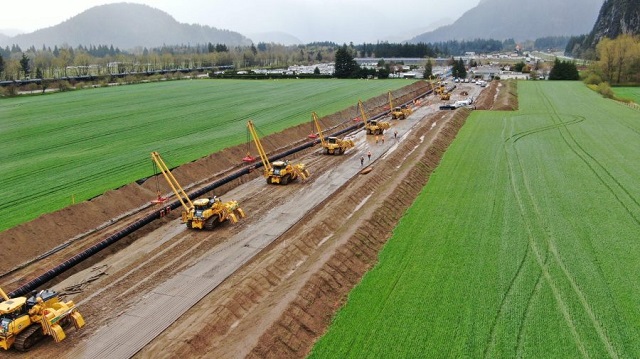
Trans Mountain executive says it’s time to fix the system, expand access, and think like a nation builder
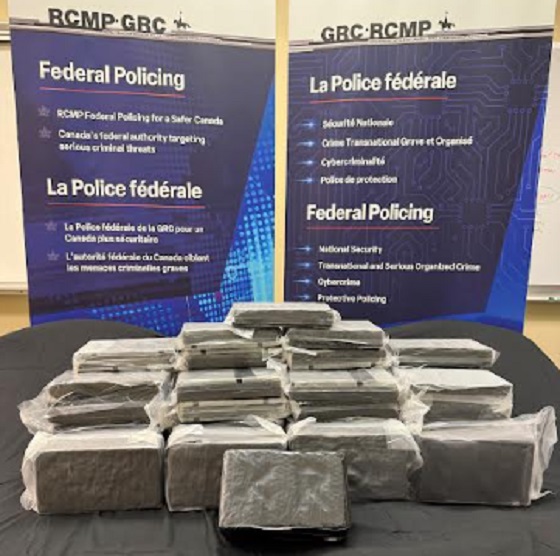
Coutts border officers seize 77 KG of cocaine in commercial truck entering Canada – Street value of $7 Million

The painful return of food inflation exposes Canada’s trade failures
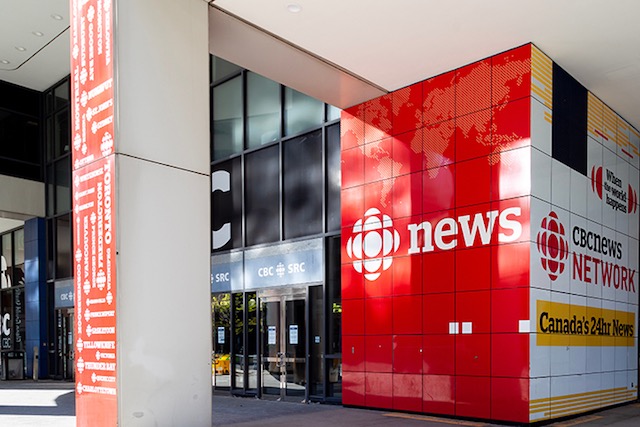
CBC uses tax dollars to hire more bureaucrats, fewer journalists

Thousands of Albertans march to demand independence from Canada
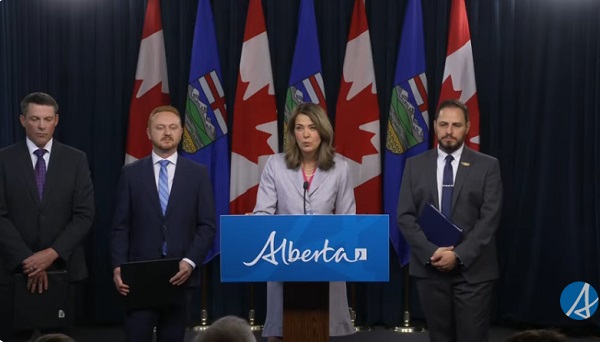
Premier Smith sending teachers back to school and setting up classroom complexity task force
-
 Business1 day ago
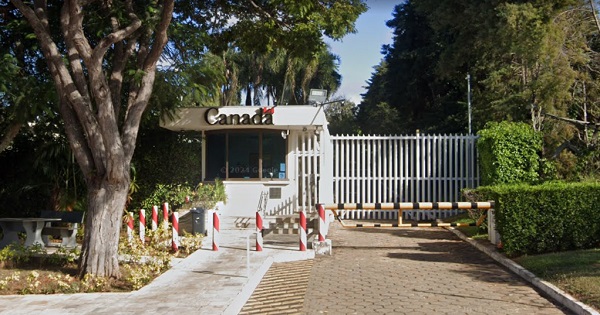
You Won’t Believe What Canada’s Embassy in Brazil Has Been Up To
-
 Censorship Industrial Complex1 day ago
Senate Grills Meta and Google Over Biden Administration’s Role in COVID-Era Content Censorship
-
 Business23 hours ago
Mystery cloaks Doug Ford’s funding of media through Ontario advertising subsidy
-
 Crime11 hours ago
Public Execution of Anti-Cartel Mayor in Michoacán Prompts U.S. Offer to Intervene Against Cartels
-
 Automotive1 day ago
Carney’s Budget Risks Another Costly EV Bet
-
 Environment19 hours ago
The era of Climate Change Alarmism is over
-
 International10 hours ago
Nigeria better stop killing Christians — or America’s coming “guns-a-blazing”
-
 Aristotle Foundation11 hours ago
B.C. government laid groundwork for turning private property into Aboriginal land