
Daily Caller
Musk Reveals To Tucker Why He Thinks 2024 Will Be Last Election If Dems Win

From the Daily Caller News Foundation

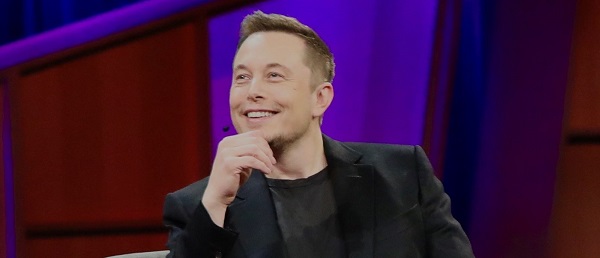
Tech billionaire Elon Musk said Monday that he believes Democrats will eliminate swing states if they are re-elected in the 2024 election.
Musk said during an interview with Daily Caller News Foundation co-founder Tucker Carlson that Democrats will legalize the status of illegal immigrants, which will in turn allow them to become citizens and vote in future elections. He said that this scenario would turn the U.S. into a “single party country,” as the illegal immigrants voting in elections will largely back Democratic candidates.
“My prediction is if there’s another 4 years of a [Democrat] administration, they will legalize so many illegals that are there that the next election there won’t be any swing states,” Musk told Carlson. “And we’ll be a single party country just like California is a single party state. It’s a super majority Dem state in California.”
Elon Musk is all in.
(0:00) Elon Musk Is All in on Donald Trump
(6:35) Providing Starlink to Victims of Hurricane Helene
(9:22) If Trump Loses, This Is the Last Election
(21:49) The Epstein and Diddy Client List
(33:38) Vaccines
(35:49) The Movement to Decriminalize Crime… pic.twitter.com/jNqB1ThqQz— Tucker Carlson (@TuckerCarlson) October 7, 2024
The tech mogul said there will not be another election if Republican nominee Donald Trump does not win in November, causing him to endorse and support the former president.
“My view is that if Trump doesn’t win this election, it’s the last election we’re gonna have,” Musk said. “That the Dem machine has been importing so many people, bringing in so many illegals … they’re transporting large numbers of illegals to swing states. If you look at the numbers, these are the numbers from the government website, so like from the Democrat administrative government website … and there are triple digit numbers of illegals to all the swing states and in some cases, it’s 700% in the last three years.”
Musk further criticized California’s new law banning local governments from requiring voter identification.
The D.C. Council passed the “Local Resident Voting Rights Amendment Act” in 2022 to allow non-citizens to cast ballots in local elections. House Democrats urged members in May to oppose a Republican-led bill to bar the city government from allowing illegal immigrants to vote in local elections.
House Speaker Mike Johnson told CNN’s Jake Tapper in September that several states, including swing states, have found “thousands of non-citizens” are registered to vote, warning these illegal votes could “determine the outcome of the [2024] election.” Trump and Johnson discussed drafting legislation to require proof of citizenship in order to register to vote in April, NBC News reported.

From the Daily Caller News Foundation
By Jason Cohen
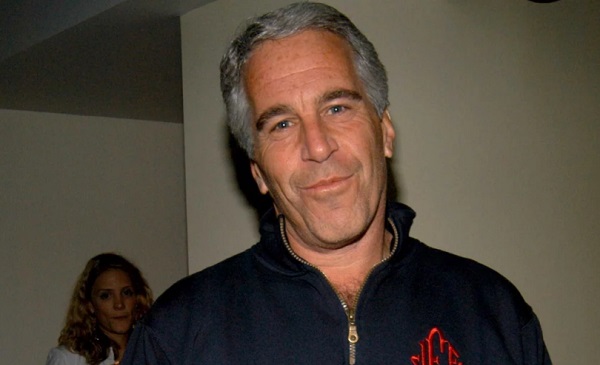
Former White House adviser Steve Bannon warned on Friday that Republicans would suffer major losses if President Donald Trump’s administration does not move to release documents related to deceased pedophile Jeffrey Epstein’s crimes and associations.
Axios reported on Sunday that a two-page memo showed the Department Of Justice (DOJ) and FBI found no evidence Epstein kept a “client list” or was murdered, but public doubts have continued. Bannon said on “Bannon’s War Room” that failure to release information would lead to the dissipation of one-tenth of the Make America Great Again (MAGA) movement and significant losses for the Republican Party in the 2026 midterms and the 2028 presidential election.
Dear Readers:
As a nonprofit, we are dependent on the generosity of our readers.
Please consider making a small donation of any amount here.
Thank you!
“It’s not about just a pedophile ring and all that, it’s about who governs us, right? And that’s why it’s not going to go away … For this to go away, you’re going to lose 10% of the MAGA movement,” Bannon said. “If we lose 10% of the MAGA movement right now, we’re going to lose 40 seats in ’26, we’re going to lose the [presidency]. They don’t even have to steal it, which they’re going to try to do in ’28, because they’re going to sit there and they go, ‘They’ve disheartened the hardest-core populist nationalists’ — that’s always been who governs us.”
Bannon also demanded the publication of all the Epstein documents on “Bannon’s War Room” Thursday. He called on the DOJ to go to court and push for the release of the documents or for Trump to appoint a special counsel to manage the publication.
Epstein was arrested in 2019 and charged with sex trafficking. Shortly after, he was found dead in his New York Metropolitan Correctional Center cell shortly after. Officials asserted that he hanged himself in his cell.
However, Epstein’s death has sparked years of theories because of the malfunctioning of prison cameras, along with guards admitting to falsifying documents about checking on the then-inmate. The DOJ inspector general later confirmed that multiple surveillance cameras outside of his cell were inoperable, while others captured the common area outside his door.
Both Bannon and Daily Caller News Foundation co-founder Tucker Carlson have speculated that Epstein had connections to intelligence agencies.
Former Labor Secretary Alex Acosta allegedly indicated that Epstein was tied to intelligence, according to Vicky Ward in The Daily Beast.
From the Daily Caller News Foundation
By Craig Rucker
According to a study in Science Advances, over 90% of ocean plastic comes from just 10 rivers, eight of which are in Asia. The United States, by contrast, contributes less than 1%. Yet Pew treats all nations as equally responsible, promoting one-size-fits-all policies that fail to address the real source of the issue.
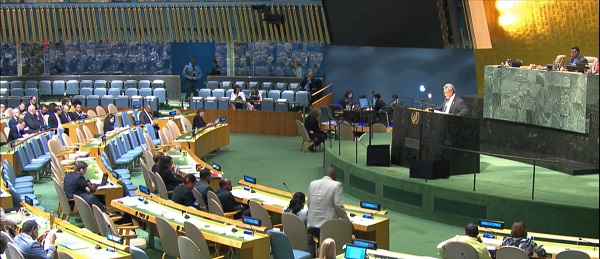
Just as people were beginning to breathe a sigh of relief thanks to the Trump administration’s rollback of onerous climate policies, the United Nations is set to finalize a legally binding Global Plastics Treaty by the end of the year that will impose new regulations, and, ultimately higher costs, on one of the world’s most widely used products.
Plastics – derived from petroleum – are found in everything from water bottles, tea bags, and food packaging to syringes, IV tubes, prosthetics, and underground water pipes. In justifying the goal of its treaty to regulate “the entire life cycle of plastic – from upstream production to downstream waste,” the U.N. has put a bull’s eye on plastic waste. “An estimated 18 to 20 percent of global plastic waste ends up in the ocean,” the UN says.
As delegates from over 170 countries prepare for the final round of negotiations in Geneva next month, debate is intensifying over the future of plastic production, regulation, and innovation. With proposals ranging from sweeping bans on single-use plastics to caps on virgin plastic output, policymakers are increasingly citing the 2020 Pew Charitable Trusts report, Breaking the Plastic Wave, as one of the primary justifications.
But many of the dire warnings made in this report, if scrutinized, ring as hollow as an empty PET soda bottle. Indeed, a closer look reveals Pew’s report is less a roadmap to progress than a glossy piece of junk science propaganda—built on false assumptions and misguided solutions.
Pew’s core claim is dire: without urgent global action, plastic entering the oceans will triple by 2040. But this alarmist forecast glosses over a fundamental fact—plastic pollution is not a global problem in equal measure. According to a study in Science Advances, over 90% of ocean plastic comes from just 10 rivers, eight of which are in Asia. The United States, by contrast, contributes less than 1%. Yet Pew treats all nations as equally responsible, promoting one-size-fits-all policies that fail to address the real source of the issue.
This blind spot has serious consequences. Pew’s solutions—cutting plastic production, phasing out single-use items, and implementing rigid global regulations—miss the mark entirely. Banning straws in the U.S. or taxing packaging in Europe won’t stop waste from being dumped into rivers in countries with little or no waste infrastructure. Policies targeting Western consumption don’t solve the problem—they simply shift it or, worse, stifle useful innovation.
The real tragedy isn’t plastic itself, but the mismanagement of plastic waste—and the regulatory stranglehold that blocks better solutions. In many countries, recycling is a government-run monopoly with little incentive to innovate. Meanwhile, private-sector entrepreneurs working on advanced recycling, biodegradable materials, and AI-powered sorting systems face burdensome red tape and market distortion.
Pew pays lip service to innovation but ultimately favors centralized planning and control. That’s a mistake. Time and again, it’s been technology—not top-down mandates—that has delivered environmental breakthroughs.
What the world needs is not another top-down, bureaucratic report like Pew’s, but an open dialogue among experts, entrepreneurs, and the public where new ideas can flourish. Imagine small-scale pyrolysis units that convert waste into fuel in remote villages, or decentralized recycling centers that empower informal waste collectors. These ideas are already in development—but they’re being sidelined by policymakers fixated on bans and quotas.
Worse still, efforts to demonize plastic often ignore its benefits. Plastic is lightweight, durable, and often more environmentally efficient than alternatives like glass or aluminum. The problem isn’t the material—it’s how it has been managed after its use. That’s a “systems” failure, not a material flaw.
Breaking the Plastic Wave champions a top-down, bureaucratic vision that limits choice, discourages private innovation, and rewards entrenched interests under the guise of environmentalism. Many of the groups calling for bans are also lobbying for subsidies and regulatory frameworks that benefit their own agendas—while pushing out disruptive newcomers.
With the UN expected to finalize the treaty by early 2026, nations will have to face the question of ratification. Even if the Trump White House refuses to sign the treaty – which is likely – ordinary Americans could still feel the sting of this ill-advised scheme. Manufacturers of life-saving plastic medical devices, for example, are part of a network of global suppliers. Companies located in countries that ratify the treaty will have no choice but to pass the higher costs along, and Americans will not be spared.
Ultimately, the marketplace of ideas—not the offices of policy NGOs—will deliver the solutions we need. It’s time to break the wave of junk science—not ride it.
Craig Rucker is president of the Committee For A Constructive Tomorrow (www.CFACT.org).

Alberta Next: Immigration
Elon Musk forms America Party after split with Trump
The Digital Services Tax Q&A: “It was going to be complicated and messy”
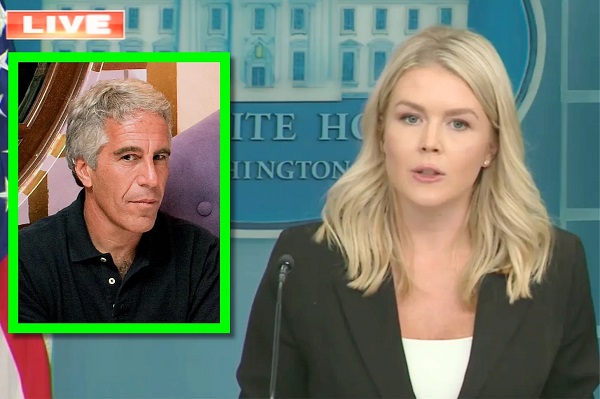
Eyebrows Raise as Karoline Leavitt Answers Tough Questions About Epstein
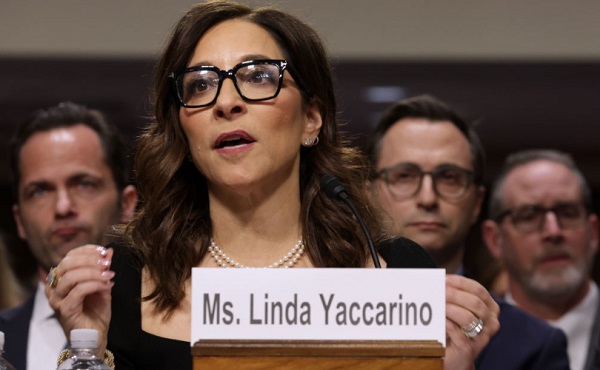
WEF-linked Linda Yaccarino to step down as CEO of X

FDA requires new warning on mRNA COVID shots due to heart damage in young men

Carney’s new agenda faces old Canadian problems
-
 Business2 days ago
CBC six-figure salaries soar
-
 Addictions2 days ago
Can addiction be predicted—and prevented?
-
 International2 days ago
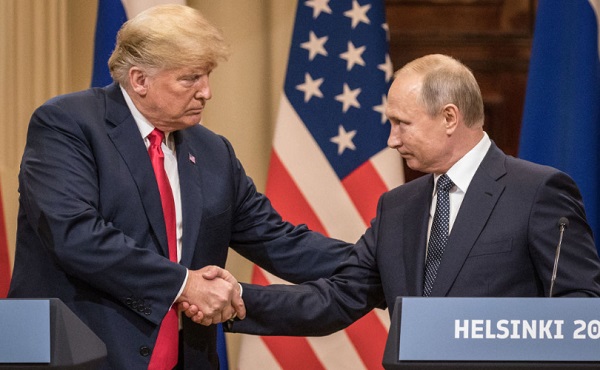
Support for the Ukraine war continues because no one elected is actually in charge.
-
 Business2 days ago
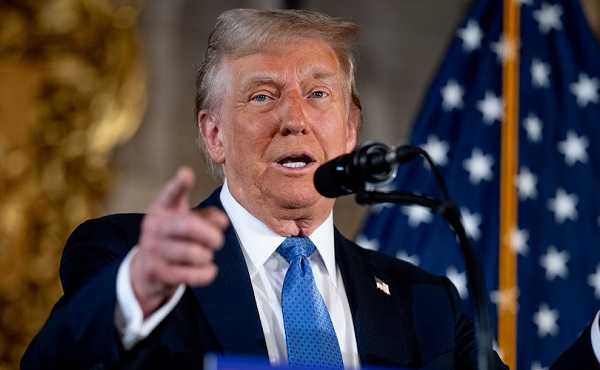
Trump slaps Brazil with tariffs over social media censorship
-
 National1 day ago
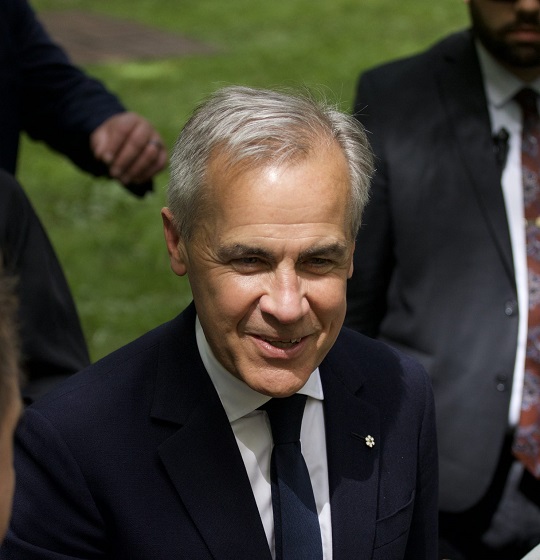
How Long Will Mark Carney’s Post-Election Honeymoon Last? – Michelle Rempel Garner
-
 espionage1 day ago
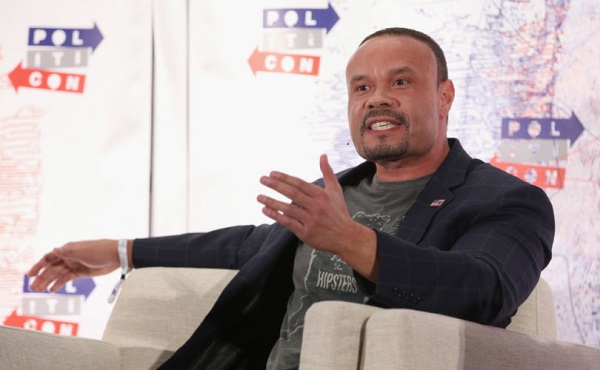
FBI’s Dan Bongino may resign after dispute about Epstein files with Pam Bondi
-
 Addictions2 days ago
More young men want to restrict pornography: survey
-
 Brownstone Institute2 days ago
Net Zero: The Mystery of the Falling Fertility