



From Resource Works

If we force a transition that increases the cost of living, threatens grid reliability, and denies developing nations the dense energy they need to rise out of poverty, what have we actually achieved?
Finance expert warns that political timelines for transition defy the laws of physics and economics while threatening living standards.
In the polarized world of energy policy, it is becoming increasingly difficult to find conversations that prioritize practical reality over political idealism. We are often presented with a binary choice: either you are for the planet, or you are against it. But as I often find when digging deeper into these issues on the Power Struggle podcast, the real world is far too complex for such simple narratives.
I recently had the opportunity to sit down with Jerome Gessaroli to strip away the rhetoric and look at the hard numbers. For those who don’t know him, Gessaroli is a finance professor at the British Columbia Institute of Technology, a senior fellow with the Macdonald-Laurier Institute, and a valued member of the Resource Works Advisory Council. He is a thinker who deals in data, not daydreams.

Stewart Muir with Jerome Gesaroli on Power Struggle Podcast
Our conversation focused on a topic that makes many policymakers uncomfortable: the widening gap between our energy transition targets and the physical capacity to meet them.
The Fundamental Equation
We began with a premise that should be obvious but is frequently forgotten in the halls of government in Ottawa or Brussels. Gessaroli laid it out as a fundamental fact that underscores every economic decision a nation makes.
“There is a direct link, a direct correlation, between energy consumption and living standards,” Gessaroli told me. “And so if we expect to improve our living standards in the future, then we will likely be expending more energy.”
This is the inescapable equation of modern life. In the West, where we have enjoyed stable grids and abundant fuel for a century, we sometimes delude ourselves into thinking we can maintain our prosperity while shrinking our energy footprint. But globally, the trend is moving in the opposite direction.
Gessaroli pointed out that while we debate carbon taxes and caps here, the majority of the planet is focused on survival and advancement.
“A lot of the growth in energy consumption will be through the Third World,” he explained. “They’ve just got a huge population, and they want to pursue economic growth, have a better standard of living, and that will require a lot more energy.”
The View from the Developing World
To illustrate this, Gessaroli drew on his observations from India. He described seeing farmers burning dung to create heat and energy—a practice born of necessity, but one that traps populations in poverty and creates localized health hazards. The path out of that poverty isn’t found in wishful thinking; it’s found in density.
“Now, if they expect to have a better standard of living in the future . . . they’re going to be looking at more intensive sources of energy, like coal, natural gas, nuclear, whatever,” Gessaroli said. “They need to use more energy in order to raise their living standards.”
This brings us to one of the most contentious points in the global climate dialogue. We often hear Western politicians ask, with a mix of confusion and frustration, why nations like China and India are still building new coal-power plants. If the technology for wind and solar exists, why aren’t they leaping straight to it?
I found Gessaroli’s answer to be a necessary dose of realism. It isn’t that these nations hate the environment; it’s that they love stability.
“They know how to do it extremely efficiently. They have the local domestic sources,” Gessaroli noted, referring to coal reserves. “There’s a source of energy security in that they don’t have to import the product.”
In an era of geopolitical instability, energy security is national security. Relying on domestic coal provides a safety net that imported fuels or intermittent renewables cannot yet match. As Gessaroli put it: “The type of power that is generated by a coal plant, for instance, is stable, reliable power.”
The Timeline Mismatch
This doesn’t mean the world isn’t changing. It is. Gessaroli was quick to acknowledge that the green energy sector is booming. Innovation is happening. But there is a massive disconnect between the pace of engineering and the pace of political promises.
“There is a lot of growth in terms of other types of energy production. They’re growing quite rapidly and they’re improving over time,” Gessaroli said. “But it’s just not in line with the time frames that our politicians and policymakers are telling us that the targets have to be met by.”
This is the crux of the “power struggle.” We are being sold a vision of the future with a delivery date that defies the laws of physics and economics.
The EV Challenge and the Scale of Site C
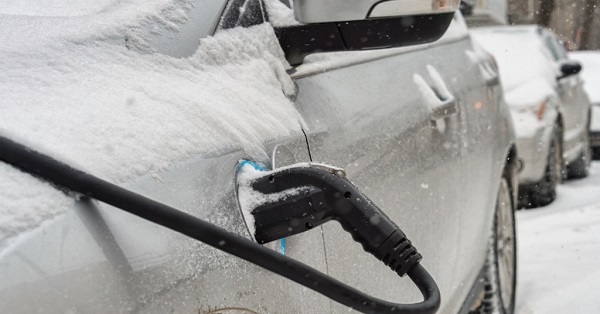
Perhaps nowhere is this disconnect more visible than in the push for electric vehicles (EVs). Governments are setting aggressive target dates to ban the sale of internal combustion engines. On paper, it looks like a victory for the climate. But as a finance professor, Gessaroli looks at the balance sheet of power generation.
“What they don’t realize is the activity, the investment, required to actually make that happen,” he said. “Where is all that extra power going to come from?”
This is not a rhetorical question. It is a logistical nightmare. To put it in a local context, we looked at British Columbia. We have just spent years and billions of dollars completing the Site C hydro dam, a massive engineering project designed to secure our grid for the future.
However, Gessaroli’s calculations suggest that the new power demand from a full EV transition alone means we would need two times the amount of power currently generated by the new Site C hydro dam.
Let that sink in. It took us decades of planning, regulatory hurdles, and construction to build one Site C. To meet the government’s EV mandates, we effectively need to build two more, immediately. And that doesn’t even account for the rest of the economy.
“If we want to decarbonize mines and other industrial projects as well, then we’re going to have to find the extra power,” Gessaroli added.
If we cannot build the generation capacity in time, the demand will simply outstrip supply. Prices will skyrocket, and reliability will plummet.
The Unintended Consequences
Towards the end of our discussion, Gessaroli posed a question that has stuck with me. It challenges the moral high ground often claimed by the most aggressive climate activists.
If we force a transition that increases the cost of living, threatens grid reliability, and denies developing nations the dense energy they need to rise out of poverty, what have we actually achieved?
It all leads to his key question: What if the green revolution is hurting the people it aims to protect?
It is a question that deserves an honest answer, not more slogans. As we look toward a future of increased energy demand, we need to listen to experts like Gessaroli who understand that you cannot legislate your way around the laws of thermodynamics.
Watch the video on Power Struggle
Power Struggle on social media
- Power Struggle on LinkedIn
- Power Struggle on Instagram
- Power Struggle on Facebook
- Power Struggle on X
Resource Works News