Opinion
Journalism: Back to Basics


How cool is it that in the 21st century it isn’t just news anchors, professional investigative journalists or beat reporters that bring us news and current events? Today, average JoAnne Public contributes to a globally collective knowledge. What is less cool, however, is the vast amount of not-really journalistic style writing that permeates media with biased opinions or fake news. Sometimes it’s hard to decipher good journalistic pieces from stories rife with personal beliefs or judgements. Whether you are a reader or writer of today’s news, keeping an eye out for just a few ‘tells’ means you’ll perhaps consume or create more real news and fewer opinion pieces.
Accuracy
It’s pretty exciting to be the first to report a story, or to read the earliest account of a story. You know what is less exciting? Finding out you read misinformation after you shared it with friends, or learning you released a story before all your facts were confirmed. It is far better to be right than to be first; both as a reader and a writer. I think we can all agree that anything premature is, well…not great.
Sources
Remember back in school when you had to write a bibliography to prove where you found your information? The same basic rules apply to good news reporting too. Although citations don’t always have to be formal, there should be some mention of the source of the information. This doesn’t mean confidential contributors should be named, though. Sometimes protection of privacy is important to a story!
Naming sources not only lends credibility to a story, but doing so supports the validity of any quoted numbers or stats too. For example, I could tell you eleventy nine percent of drivers pick their noses at a stop light. If I don’t also tell you which studies prove this, shouldn’t you question the legitimacy of that statistic?
Free from Bias
Good reporting demands sharing all sides of a story. We’ve all read stories about kids constantly on their devices today and never looking up to experience the people right in front of them. Presumably, they’re on social media, playing games, and generally wasting their lives. But what about the kid texting a parent living away from the family home, or communicating with a teacher about an assignment, or talking a friend through a trying time? Do we also get to read about how those kids are experiencing real relationships, trauma, joy, or easing the loneliness of a loved one through their device? Do we get to learn about how that kid is making a difference in the life of another not sitting in that group?
It’s important for good journalism to tell all sides of the story without injecting personal views, emotional attachment to one side or the other, and to keep stereotypes out of the story. According to the Reuters Handbook of Journalism, although it’s acceptable to include other people’s opinions in a story, the writer should steer clear of expressing their own opinions. So as long as both the kid with her face in her device AND, for example, the disapproving onlooker both have a voice in a story, it all balances out!
We all know if it’s on the Internet it must be true, but keeping an eye out for legitimate journalism fosters the smartitude in all of us.


Censorship Industrial Complex
Jordan Peterson, Canadian lawyer warn of ‘totalitarian’ impact of Trudeau’s ‘Online Harms’ bill

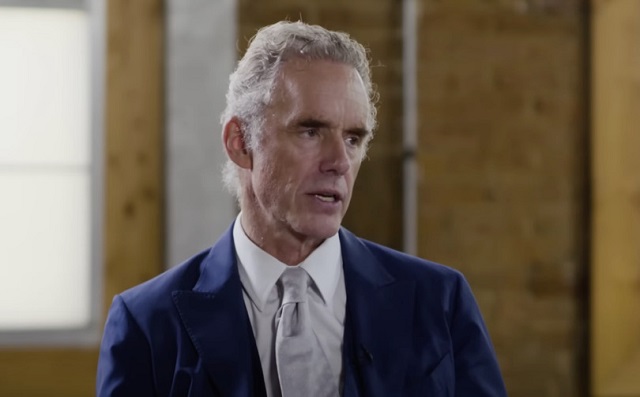
From LifeSiteNews
“You don’t even know who it is… you can be accused regardless of your intent, regardless of the factual [reality], or [the] reality of your utterance, by people who do not have to identify themselves or take any responsibility whatsoever if their denunciation turns out to be false,”
In a recent podcast episode, well-known Canadian psychologist Jordan Peterson and Queen’s University law professor Bruce Pardy blasted Prime Minister Justin Trudeau and his government over Bill C-63, the Online Harms Act, a proposed piece of legislation which, if passed, could lead to large fines and even jail time for vaguely defined online “hate speech” infractions.
“Recently, the Trudeau woke mob has managed to extend themselves even further into the legal nether lands with a new bill called C-63, which isn’t law in Canada yet, but is soon likely to be, and it is the most totalitarian Western bill I’ve ever seen by quite a large margin and in multiple dimensions,” said Peterson in a recent Everything You Need to Know video podcast dated April 14, which was posted on his YouTube channel.
“And that was my conclusion, upon reading it and then my conclusion, upon rereading it and rereading it again, because I like to make sure I have these things right.”
Joining Peterson was Canadian lawyer Bruce Pardy and podcaster Konstantin Kisin. Pardy serves as executive director of Rights Probe, a law and liberty thinktank, and professor of law at Queen’s University in Kingston, Ontario. As for Kisin, he is a Russian-British satirist, social commentator, who serves as co-host of the TRIGGERnometry YouTube show.
Peterson noted that in his view, Bill C-63 is “designed… to produce a more general regime for online policing.”
“To me, that’s what it looks like,” he said.
The trio spent the better part of two hours discussing Bill C-63, which was introduced by Justice Minister Arif Virani in the House of Commons in February and was immediately blasted by constitutional experts as troublesome.
Among other things, the bill calls for the creation of a Digital Safety Commission, a digital safety ombudsperson, and the Digital Safety Office, all tasked with policing internet content, including already illegal internet content such as child exploitation material.
However, the bill also seeks to police “hate” speech online with broad definitions, severe penalties, and dubious tactics.
Details of the new legislation to regulate the internet show the bill could lead to more people jailed for life for “hate crimes” or fined $50,000 and jailed for posts that the government defines as “hate speech” based on gender, race, or other categories.
Right at the start of the interview, Peterson noted that when thinking about Bill C-63, he thought of it as a “real masterpiece of right thinking, utopian, resentful foolishness.”
Due to the fact that the bill allows for accusations to be filed by anyone, and that there is no obligation for the government to reveal the name of the accuser to the accused, Peterson warned that Bill C-63 could see widespread corruption by individuals acting in bad faith.
“You don’t even know who it is… you can be accused regardless of your intent, regardless of the factual [reality], or [the] reality of your utterance, by people who do not have to identify themselves or take any responsibility whatsoever if their denunciation turns out to be false,” he warned.
Pardy chimed in to say that when it comes to Bill C-63, Canadians “don’t even know what the rules are going to be.”
“Basically, it just gives the whole control of the thing to our government agency, to the bureaucrats, to do as they think,” he said.
Regarding Pardy’s remarks, Peterson observed that the Trudeau government is effectively “establishing an entirely new bureaucracy” with an “unspecified range of power with non-specific purview that purports to protect children from online exploitation” but has the possibility of turning itself into an internet “policing state.”
Bill uses protecting kids as ‘cover,’ will have a ‘chilling effect upon speech’
Pardy told Peterson that one of the main issues with C-63, in his view, is that it “starts with the cover of protecting children… from online harm,” but that beneath this “great cover” it “enables” a crackdown on the “very idea of free speech.”
Pardy warned that Bill C-63 will see the return of an “old” Human Rights Act provision, titled Section 13, that was repealed by the Conservative government of Prime Minister Stephen Harper in 2013 after it was found to have violated the right to free expression.
“One of the problems with the human rights regime is that complaints can be made very, very easily without a lawyer, without any cost,” said Pardy. “And because the Canadian federal government has jurisdiction over the internet, this section is going to authorize complaints of all kinds to be made against people who are speaking their minds online…”
Pardy noted that the revival of this type of process will “have a chilling effect upon speech, no question about it,” and it risks ending the “idea of free speech itself.”
Pardy observed that society already has a mechanism to protect kids, despite modern society’s idea that the “government is responsible for keeping people safe.”
“That’s ignoring the best mechanism we already have to keep children safe, which is their parents, right. It’s assuming that this is what this state is for if you went up to somebody on the street, anybody at random,” he said.
“We’ve lost the proposition that we’ve made a choice to have this large overwhelming government tell us what to do in place of all of the other things we used to have.”
Speaking further, Pardy observed that what laws like Bill C-63, and many other laws already passed by the Trudeau Liberals such as Bill C-16, are attempting to do, is change the way people perceive how laws should be enforced.
“The ethos of managerialism has supplanted the rule of law as the basic idea instead of the rule of law,” said the law professor.
“We have rule by law now, which means that the law is nothing more than a tool for the government to use to create a law on a whim,” he continued, adding that this is “not the way the Western legal system used to work.”
Criminalizing ‘hateful’ speech is ‘troublesome’ if bureaucrats decide what is ‘hateful’
In a recent opinion piece critical of Bill C-63, law professor Dr. Michael Geist said that the text of the bill is “unmistakable” in how it will affect Canadians’ online freedoms.
Geist noted that the new bill will allow a new digital safety commission to conduct “secret commission hearings” against those found to have violated the law.
“The poorly conceived Digital Safety Commission lacks even basic rules of evidence, can conduct secret hearings, and has been granted an astonishing array of powers with limited oversight. This isn’t a fabrication,” Geist wrote.
He observed specifically how Section 87 of the bill “literally” says “the Commission is not bound by any legal or technical rules of evidence.”
Peterson noted that giving “hate speech” such prominence and such a broad definition is “troublesome” as it will be up to bureaucrats to decide what is “hateful.”
“The whole notion of hateful speech, that’s troublesome. One, for me, because there’s an obvious element of subjective judgment in it,” he said, questioning who gets to decide what is “hateful” and on what “grounds” do they have the authority to make such a judgement.
Peterson warned that if Canada decides to “open the door” of tasking bureaucrats with determining what is or isn’t “hateful” speech, and if it blocks transparency on who is making accusations of hate, it “leads us to anonymous denunciation,” which he sees as dangerous because it fails to hold complainants accountable.
To make his point, Peterson said that “everybody, including every school child who’s like older than three, and maybe even three,” understands that there’s almost “nothing worse than a snitch, and all children are wise enough to know that.”
“Even if you are being bullied at school, let’s say, it has to get pretty damn brutal and bad before going to report it to the authorities is acceptable or justifiable,” he said.
“Now you know you can debate about the conditions under which that should or shouldn’t occur. My point is that even kids know that.”
Geist has noted that when it comes to Bill C-63, the “most obvious solution” to amend the bill “is to cut out the Criminal Code and Human Rights Act provisions, which have nothing to do with establishing internet platform liability for online harms.”
Giving historcal examples for why Bill C-63 worries him, Peterson explained that “we certainly know from places like the Soviet Union, just exactly what happens, or East Germany, what happens when one-third of the citizens, which was the case in East Germany, become government informers.”
“…Trust is gone. The worst people have the upper hand. It’s a complete catastrophe… Now in Bill C-63, you have a concatenation of these problems… now you know hate speech is going to be constrained and it can be identified by anonymous informants,” forecasted the psychologist.
Indeed, it is not just Peterson, Pardy and Geist who are warning of Bill C-63, but major law groups as well.
The Justice Centre for Constitutional Freedoms (JCCF) has said Bill C-63 is “the most serious threat to free expression in Canada in generations. This terrible federal legislation, Bill C -63, would empower the Canadian Human Rights Commission to prosecute Canadians over non-criminal hate speech.”
JCCF president John Carpay recently hand-delivered a petition with 55,000-plus signatures to Canada’s Minister of Justice and all MPs, urging them to reconsider their sponsoring of the law.

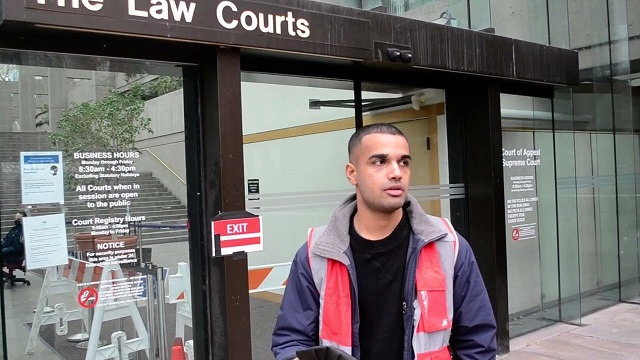
Just In: The Trudeau government intervenes at last minute to save a convicted climate agitator from deportation. The Pakistani co-founder of Save Old Growth— who first came to Canada in 2019 on a study permit— has been arrested at least 10 times and convicted of mischief. Zain Haq was due to be deported to Pakistan on Monday.
Despite a judge’s ruling denying his last hope of staying , Haq got a call from his Liberal MP’s office saying he gets to stay in B.C. after all. Good, because we’d hate for him to feel oppressed by the country in which he’s squatting. The news thrilled the nepo babies who have B.C. by the throat.
So Haq goes from unrepentant jerk to Christ crucified. Naturally. Victim politics have become the animating impulse in Western society. Attaching yourself to a forlorn cause like Haq is grounds for beatification And make no mistake, there are legions in identical little tents on campus quads who are cheering a non-Canadian defying The Man.
To generations brought up on the travails of feminist oppression, climate degradation, indigenous grievance and gender dysphoria there is nothing so sacred as a victim is all his purity, crushed by the Great White Satan of western culture. Haq is just the latest in a police lineup of wobbly performance artists taking a rhapsodic bow before the Liberal/ NDP/Green clique. While thumbing his nose at Canadians.
That’s why the current fetish for Palestinian outrage has such legs as it spreads across campuses and governmental buildings in the West. Anyone (but a white, straight male) can apply for the designation of victim. Join the party! And what a model it is! While many have tried to emulate them, none have managed the nihilist hat trick of violence, obstinacy and craven guilt quite like the Palestinians who’ve been pushing this agenda since the 1972 Munich Olympics.

Having eschewed frontal military attacks on Israel and western targets as ineffective, the PLO and its successors discovered that the more grisly the attack, the more black their message — in Munich they massacred 11 Israeli athletes— there was a segment of leftist Western culture that couldn’t get enough of their heinous tactics. (Stephen Spielberg’s 2005 film Munich pitied his fellow Jews killed in Munich but concluded that all this revenge stuff was a dead end.)
Huh. Their Arab neighbours want nothing to do with Arafat’s Children. Egypt has a wall preventing Gazans from entering their county, Jordan has expelled them for counter-insurgency, Saudi Arabia ignores them. Only Qatar offers refuge. And then only to the billionaire kleptocrats who run Hamas from penthouses in Doha.
The Oct. 7 massacre is just the latest in this dance of death with western liberals. People of a certain age will recall the Marxist-besotted Vanessa Redgrave brandishing a Kalashnikov while dancing with the PLO and its rascally leader Yasser Arafat. Her 1977 film The Palestinian was an orgy of guilt and hatred toward Israel. She’s had plenty of imitators in the media ever since. In 2021 over 100 actors— including Richard Gere, Claire Foy, Tilda Swinton, and Susan Sarandon— slammed the terrorist designation of Palestinian “rights groups”.
The same apologists are now saying that, sure, Oct. 7 went a little too far, but Palestinian repatriation means a few eggs are going to get smashed in the making of a terror state. They want a cease fire with good taste.

Were the PLO successors in Hamas and Hezbollah able to articulate some coherent vision of the future beyond slaughter then these western struggle sessions might seem justified. It’s no surprise that Arafat was the epitome of “never misses an opportunity to miss an opportunity” in negotiations. If there’s one constant in the multiple denials of treaties with Israel it is their unflinching demand that Palestinians throw every Jew they encounter into the Mediterranean on a march from “the river to the sea”.
The implacable marriage with extreme violence and racial hatred is their one and only position. Non-negotiable. None of this has any effect on the hot-house Marxists and anarchists who’ve set up shop in the universities and colleges of the West. In their protected status among the leafy tendrils of the Ivy League, a little brush with terror seems to titillate them. Occupying the quad in identical tents suppled by unnamed international groups dedicated to the overthrow of capitalism is their bougie weekend of roughing it in the bush.
Most probably wish they could experience a little of the martyrdom like the Palestinians (a gentle martyrdom naturally) or at the very least a cinematic clash wth authority such as their parents experienced at the hands of Chicago mayor Richard Daley during the 1968 Democratic convention. A tender tussle covered by their parents Medicare.
Who will stand up to these playtime antisemites? Alas, the grownups in the schools administration and in governments are cut from the same cloth. Having created safe spaces from micro aggression on their campus , they excuse the youthful exuberance of their students. (If your politics are radical, that is.) Like president Joe Biden they do the suck-and-blow of modern debate. They decry antisemitism while cautioning that we just don’t understand the depths of Palestinian oppression. Evan as students call for a new Holocaust.
Having it both ways with Hamas means a one-way invitation to more chaos. Because there is no agenda beyond the performative terror extolled by demonstrators against Israel there is no way to rationally critique Hezbollah or Hamas. At least the Nazis proposed some freakazoid homeland for their people as they heartlessly slaughtered anyone who got in their way.
So it all becomes mob mentality packaged for feckless media. The Hamas doctoral groupies don’t demand anything from Hamas beyond their faux-serious chants and designer kaffiyehs in the House of Commons. No doubt Zia Haq will be joining them again soon in the struggle. If Stephen Guilbeault can go from criminal to cabinet, Canada is wide open to him now.
Bruce Dowbiggin @dowbboy is the editor of Not The Public Broadcaster A two-time winner of the Gemini Award as Canada’s top television sports broadcaster, he’s a regular contributor to Sirius XM Canada Talks Ch. 167. New from the team of Evan & Bruce Dowbiggin now for pre-order: Deal With It: The Trades That Stunned The NHL & Changed Hockey. From Espo to Boston in 1967 to Gretz in L.A. in 1988 to Patrick Roy leaving Montreal in 1995, the stories behind the story. Launching on paperback and Kindle on #Amazon this week.


Fentanyl Fiasco: The Tragic Missteps of BC’s Drug Policy
Peckford: The legality and morality of our country are no longer aligned

Canada’s advantage as the world’s demand for plastic continues to grow
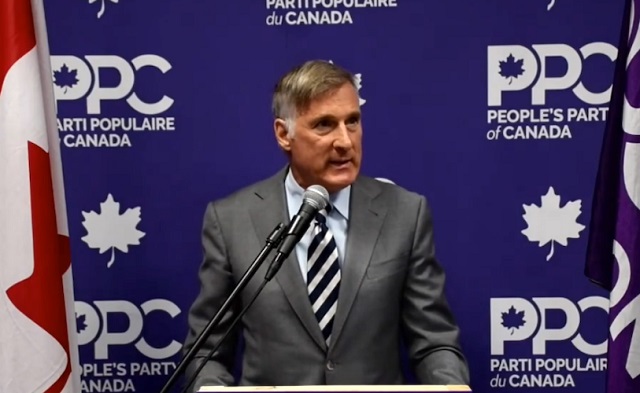
Maxime Bernier says it’s ‘astounding’ Alberta is ‘pushing’ COVID boosters, tells Danielle Smith to stop it
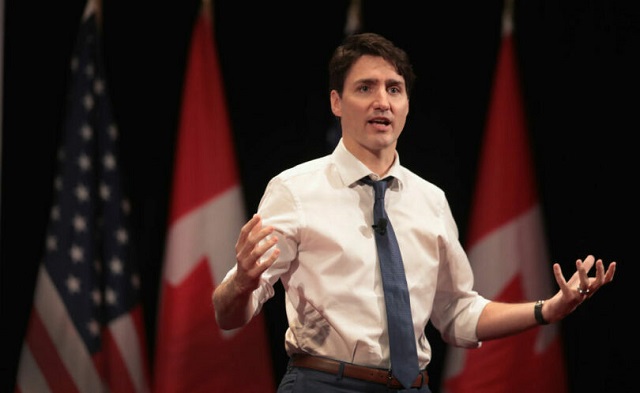
Trudeau’s 2024 budget includes $150 million to promote ‘2SLGBTQI+’ ideology at home and abroad
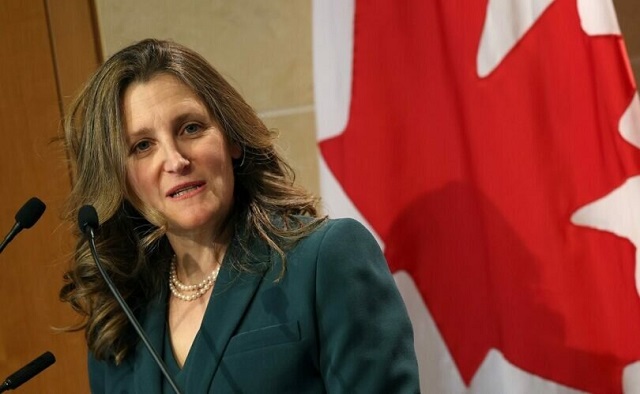
Trudeau’s 2024 budget could drive out investment as housing bubble continues
Canada Has All the Elements to be a Winner in Global Energy — Now Let’s Do It


-
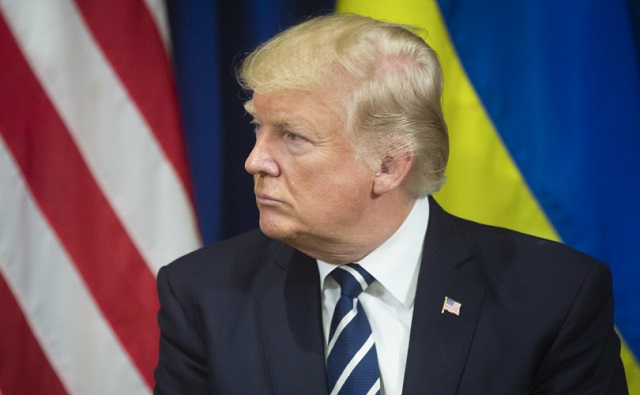 conflict2 days ago
Col. Douglas Macgregor torches Trump over support for bill funding wars in Ukraine and Israel
-
 Censorship Industrial Complex1 day ago
Now We Are Supposed to Cheer Government Surveillance?
-
 Alberta1 day ago
Red Deer Doctor critical of Alberta’s COVID response to submit report to Danielle Smith this May
-
 Alberta16 hours ago
Activity-Based Hospital Funding in Alberta: Insights from Quebec and Australia
-
 Health2 days ago
Transgender activists are threatening the author of scathing UK report on child ‘sex changes’
-
 Business14 hours ago
UN plastics plans are unscientific and unrealistic
-
 International2 days ago
Biden admin expands Title IX to include ‘gender identity,’ sparking conservative backlash
-
 Business13 hours ago
Taxpayers criticize Trudeau and Ford for Honda deal