
Uncategorized
Horror difficult to erase for Indonesians as toll tops 1,400


PALU, Indonesia — For some who survived the massive earthquake and tsunami on Indonesia’s Sulawesi island last week, the memories and the horror of experiencing a disaster that has left more than 1,400 people dead are both hard to erase and understand.

Furniture maker Khairul Hassan recalled working at a shop near the beach in front of a row of warehouses when the ground came alive and shook violently. He ran to a nearby hill and watched as the ocean heaved up and hurled forward. Now he can’t forget.
“I saw the waves come and sweep out everything — buildings, factories, warehouses and some people who were lost, racing from the waves, some of them women and children,” he said Wednesday. “Also, warehouse workers who were trapped under goods, all swept by the sea. It’s so tragic. It’s so scary to remember.”
Five days later, aid was slowly creeping into areas where victims have become increasingly desperate after being left without food, water, fuel and medicine. In one
“I’m so happy,” said Heruwanto, 63, who goes by one name. He was clutching a box of instant noodles. “I really haven’t eaten for three days.”
The official death toll increased to 1,407 on Wednesday, with thousands injured and more than 70,000 displaced from their homes, said national disaster agency spokesman Sutopo Purwo Nugroho. He said the number of dead would increase, but that rescue crews had reached all affected areas.
The U.N. humanitarian office estimated that some 200,000 people need assistance in the disaster zone and announced a $15 million allocation to bolster relief efforts. Help has been slow to reach many victims, especially those living in areas cut off by impassable roads. But large fuel and food conveys, guarded by security forces, have been making their way in.
Miles (
All that remained of many beachside homes was their foundations. Wrecked houses still standing were spray painted with appeals for aid. On the wall of one dwelling, “Help us Mr. President” was scrawled in big lettering.
The town of Donggala to the northwest of Palu was relatively unscathed. A few houses had collapsed and a couple of large boats were beached. Residents were relaxed and smiling in contrast to the anguish and tension evident across Palu.
In addition to the quake and tsunami, Indonesia also demonstrated Wednesday what it means to sit on the Pacific “Ring of Fire” when a volcano erupted in another part of Sulawesi island about 940
Experts said it’s possible the quake accelerated the eruption, but there is no concrete evidence to prove that. Activity at the volcano had been increasing since August and began surging on Monday, Kasbani, who heads Indonesia’s Volcanology and Geology Disaster Mitigation Agency and uses one name, told an online news portal.
More than 25 countries offered assistance after President Joko “Jokowi” Widodo appealed for international help. He visited the disaster zone Wednesday, saying there’s still work to be done, but that conditions were improving with businesses starting to reopen, helping people to start returning their lives to normal.He said U.S. President Donald Trump called him Tuesday night, offering assistance.
“We are going in phases. There are lots of things happening related to evacuation, as aid and fuel are also coming in,” he said, noting that 30 people remain buried under rubble at the Roa Roa Hotel in Palu.
Some homeless residents weren’t waiting for help. Dozens sifted through what remained of the flattened complex of warehouses along Palu’s ravaged coastline, looking for anything they could salvage to eat, sell or help them rebuild. They carted away corrugated metal, wood, piping and other items.
Others pulled out small cartons of milk, soft drinks, rice, sweets and painkillers. They were young and old, middle class and poor, university students and sullen young men.
“We have to do this because there’s no assistance from the government,” said Zaitun Rajamangili, 41, adding that his home was swept away but his family survived.
Following widespread looting and aid vehicles being stopped and surrounded by people on roads, Indonesian military chief Hadi Tjahyanto said one soldier and one police officer would be placed on every aid truck and soldiers would be sent to secure markets, the airport and fuel depots to maintain order. He added that a Singaporean military transport plane will help evacuate victims from the airport in Palu. In addition, aircraft from South Korea, the United Kingdom and Japan were expected to ferry aid.
Australia announced it will send 50 medical professionals as part of a $3.6 million aid package.
The U.N. said the Indonesian Ministry of Social Affairs has asked the U.N. children’s agency, UNICEF, to send social workers to support vulnerable children who are alone or became separated from their families. It said the World Health Organization is warning that a lack of shelter and damaged water sanitation facilities could lead to outbreaks of communicable diseases.
Indonesia, a vast archipelago of 260 million people, is frequently struck by earthquakes, volcanic eruptions and tsunamis because of its location on the “Ring of Fire,” an arc of volcanoes and fault lines in the Pacific Basin. A powerful quake on the island of Lombok killed 505 people in August.
___
Associated Press writers Niniek Karmini in Palu, Indonesia; Margie Mason and Eileen Ng in Jakarta, Indonesia; Rod McGuirk in Canberra, Australia; and Edith M. Lederer at the United Nations contributed to this report.
Stephen Wright, The Associated Press



The cost of the bureaucracy increased by $6 billion last year, according to newly released numbers in Public Accounts disclosures. The Canadian Taxpayers Federation is calling on Prime Minister Mark Carney to immediately shrink the bureaucracy.
“The Public Accounts show the cost of the federal bureaucracy is out of control,” said Franco Terrazzano, CTF Federal Director. “Tinkering around the edges won’t cut it, Carney needs to take urgent action to shrink the bloated federal bureaucracy.”
The federal bureaucracy cost taxpayers $71.4 billion in 2024-25, according to the Public Accounts. The cost of the federal bureaucracy increased by $6 billion, or more than nine per cent, over the last year.
The federal bureaucracy cost taxpayers $39.6 billion in 2015-16, according to the Public Accounts. That means the cost of the federal bureaucracy increased 80 per cent over the last 10 years. The government added 99,000 extra bureaucrats between 2015-16 and 2024-25.
Half of Canadians say federal services have gotten worse since 2016, despite the massive increase in the federal bureaucracy, according to a Leger poll.
Not only has the size of the bureaucracy increased, the cost of consultants, contractors and outsourcing has increased as well. The government spent $23.1 billion on “professional and special services” last year, according to the Public Accounts. That’s an 11 per cent increase over the previous year. The government’s spending on professional and special services more than doubled since 2015-16.
“Taxpayers should not be paying way more for in-house government bureaucrats and way more for outside help,” Terrazzano said. “Mere promises to find minor savings in the federal bureaucracy won’t fix Canada’s finances.
“Taxpayers need Carney to take urgent action and significantly cut the number of bureaucrats now.”
Table: Cost of bureaucracy and professional and special services, Public Accounts
| Year | Bureaucracy | Professional and special services |
|
$71,369,677,000 |
$23,145,218,000 |
|
|
$65,326,643,000 |
$20,771,477,000 |
|
|
$56,467,851,000 |
$18,591,373,000 |
|
|
$60,676,243,000 |
$17,511,078,000 |
|
|
$52,984,272,000 |
$14,720,455,000 |
|
|
$46,349,166,000 |
$13,334,341,000 |
|
|
$46,131,628,000 |
$12,940,395,000 |
|
|
$45,262,821,000 |
$12,950,619,000 |
|
|
$38,909,594,000 |
$11,910,257,000 |
|
|
$39,616,656,000 |
$11,082,974,000 |

From the Daily Caller News Foundation
By Jason Hopkins
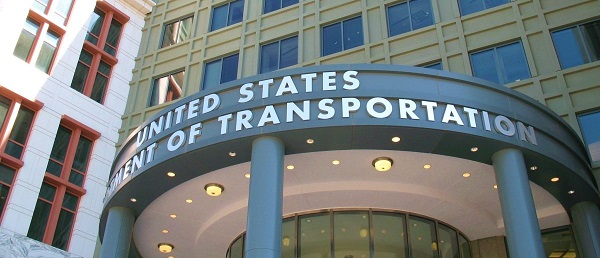
The Trump administration is creating a first-of-its-kind task force aimed at ushering in a new “Golden Age” of beautiful infrastructure across the U.S.
The Department of Transportation (DOT) will announce the establishment of the Beautifying Transportation Infrastructure Council (BTIC) on Thursday, the Daily Caller News Foundation exclusively learned. The BTIC seeks to advise Transportation Secretary Sean Duffy on design and policy ideas for key infrastructure projects, including highways, bridges and transit hubs.
“What happened to our country’s proud tradition of building great, big, beautiful things?” Duffy said in a statement shared with the DCNF. “It’s time the design for America’s latest infrastructure projects reflects our nation’s strength, pride, and promise.”
“We’re engaging the best and brightest minds in architectural design and engineering to make beautiful structures that move you and bring about a new Golden Age of Transportation,” Duffy continued.
Mini scoop – here is the DOT’s rollout of its Beautifying Transportation Infrastructure Council, which will be tasked with making our buildings beautiful again. pic.twitter.com/
9iV2xSxdJM — Jason Hopkins (@jasonhopkinsdc) October 23, 2025
The DOT is encouraging nominations of the country’s best architects, urban planners, artists and others to serve on the council, according to the department. While ensuring that efficiency and safety remain a top priority, the BTIC will provide guidance on projects that “enhance” public areas and develop aesthetic performance metrics.
The new council aligns with an executive order signed by President Donald Trump in August 2025 regarding infrastructure. The “Making Federal Architecture Beautiful Again” order calls for federal public buildings in the country to “respect regional architectural heritage” and aims to prevent federal construction projects from using modernist and brutalist architecture styles, instead returning to a classical style.
“The Founders, in line with great societies before them, attached great importance to Federal civic architecture,” Trump’s order stated. “They wanted America’s public buildings to inspire the American people and encourage civic virtue.”
“President George Washington and Secretary of State Thomas Jefferson consciously modeled the most important buildings in Washington, D.C., on the classical architecture of ancient Athens and Rome,” the order continued. “Because of their proven ability to meet these requirements, classical and traditional architecture are preferred modes of architectural design.”
The DOT invested millions in major infrastructure projects since Trump’s return to the White House. Duffy announced in August a $43 million transformation initiative of the New York Penn Station in New York City and in September unveiledmajor progress in the rehabilitation and modernization of Washington Union Station in Washington, D.C.
The BTIC will comprise up to 11 members who will serve two-year terms, with the chance to be reappointed, according to the DOT. The task force will meet biannually. The deadline for nominations will end Nov. 21.


From Underdog to Top Broodmare

Boris Johnson Urges Ukraine to Continue War
Federal major projects list raises questions
Is affirming existing, approved projects truly the best we can do in Canada?

Crown seeks to punish peaceful protestor Chris Barber by confiscating his family work truck “Big Red”

Health Canada suggests MAiD expansion by pre-approving ‘advance requests’

Google denies scanning users’ email and attachments with its AI software
-
 Alberta2 days ago
Net Zero goal is a fundamental flaw in the Ottawa-Alberta MOU
-
 Food2 days ago
Canada Still Serves Up Food Dyes The FDA Has Banned
-
 Alberta1 day ago
Keynote address of Premier Danielle Smith at 2025 UCP AGM
-
 Artificial Intelligence1 day ago
‘Trouble in Toyland’ report sounds alarm on AI toys
-
 Addictions2 days ago
Manitoba Is Doubling Down On A Failed Drug Policy
-
 COVID-191 day ago
The dangers of mRNA vaccines explained by Dr. John Campbell
-
 COVID-192 days ago
FDA says COVID shots ‘killed’ at least 10 children, promises new vaccine safeguards
-
 Daily Caller1 day ago
Tom Homan Predicts Deportation Of Most Third World Migrants Over Risks From Screening Docs