
COVID-19
Free speech victory: Charges against nurse who opposed vaccine mandates defeated

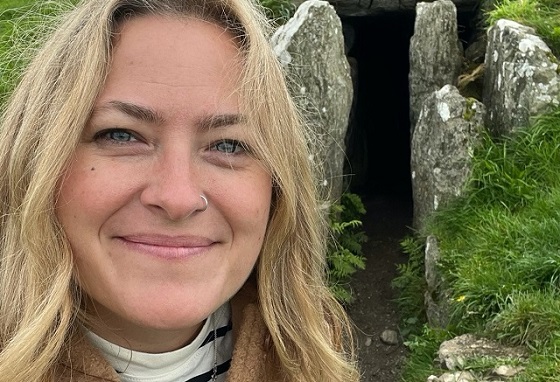

News release from the Justice Centre for Constitutional Freedom
The Justice Centre is pleased to announce that the College of Registered Nurses of Saskatchewan (CRNS) has ruled in favour of nurse Leah McInnes following an October and November 2023 disciplinary hearing. The Investigation Committee of the CRNS had charged Ms. McInnes with spreading “misinformation” because she had voiced her concerns about vaccine mandates. The outcome vindicates her right to professionally advocate for medical ethics and evidence-based health policy.“This is a significant victory for free expression and democratic participation. Nurses, doctors, psychologists, teachers, lawyers, engineers and all Canadians who work in a regulated profession have the freedom to advocate for their beliefs and should not face threats from their own professional association or professional regulator,” stated John Carpay, President of the Justice Centre. Ms. McInnes had been charged by the CRNS’s Investigation Committee, which investigates and prosecutes professional misconduct complaints, for her social media advocacy and for protesting vaccine mandates. The Investigation Committee’s broad allegation against Ms. McInnes was that her advocacy, including her use of the common term “vaccine mandate,” amounted to “misinformation.” Ms. McInnes is a mother of two and has been a Registered Nurse in Saskatchewan since 2013. Ms. McInnes’s advocacy was measured and balanced. She had supported vaccines as an important tool in Covid-management efforts while also pointing to emerging scientific evidence regarding viral loads and transmission, which showed that Covid vaccines did not eliminate transmission. Ms. McInnes opposed vaccine mandates as a violation of basic ethical principles of autonomy and informed and voluntary consent of each and every patient. When Covid vaccines were introduced and voluntarily received in the spring and summer of 2021, the question of vaccine mandates was publicly debated across Canada. On June 30, 2021, the Saskatchewan Government indicated that it would not enforce a vaccine mandate because doing so would pose a “potential violation of health information privacy,” and, later, that it would “infringe on people’s personal rights.” The Saskatchewan Government also stated that a vaccine mandate for provincial employees was not being considered and, on September 10, 2021, rejected a proof-of-vaccination system, stating that mandates create “two classes of citizens based on… vaccination status,” and would be a “divisive path for a government to take.” Similar sentiments were echoed by Alberta’s Jason Kenney and Ontario’s Doug Ford, who claimed it would lead to a “split society.”Around the same time, the Saskatchewan Union of Nurses was calling for the “mandatory immunization” of all healthcare workers–a demand repeated by many, including Saskatchewan NDP leader Ryan Meili and a group of Saskatchewan Health Authority’s Medical Health Officers. Guided by her conscience and professional ethics, notably, her respect for bodily autonomy and informed consent, Ms. McInnes vocally opposed vaccine mandates. She protested vaccine mandates by holding a sign that read, “RN against Mandates and Vax Passports.” According to the Investigation Committee of the College, this sign amounted to “misinformation” with an intention to deceive. Shortly after Ms. McInnes’s advocacy began, the Saskatchewan Government changed course and imposed a vaccine mandate.


A fellow Registered Nurse filed a complaint, calling Ms. McInnes, “Leah aka anti-vaxxer.”The complaint resulted in charges, including the charge that Ms. McInnes knowingly spread misinformation on the basis that, purportedly, no “vaccination mandates” had ever been implemented. It appeared that, according to the Investigation Committee, only a policy of “restrain and vaccinate” qualified as a “vaccine mandate.”After an initial investigation, the Investigation Committee proposed an agreement that would have Ms. McInnes admit to professional misconduct, but she rejected this offer, choosing instead to stand up for her professional and Charter rights. The Investigation Committee charged her on March 28, 2023, and filed a Notice of Hearing, the details of which were later expanded after counsel for Ms. McInnes demanded clarity from the College as to what exactly the College alleged to be “misinformation”, “disinformation” or “misleading” information.Ms. McInnes’s expert witness, former Chief Medical Officer of Health of Ontario Dr. Richard Schabas, confirmed that the term “vaccine mandate” had, in the medical profession, no special meaning beyond its meaning in everyday language. In all contexts, “vaccine mandate” refers to a requirement to either get injected or lose certain rights or freedoms. “Ms. McInnes used the term ‘vaccine mandate’ just as nearly everyone else did in public discourse, including the Toronto Star, the CBC, CTV, the Saskatoon Star Phoenix, CKOM, the Saskatchewan Union of Nurses, academia, Occupational Health and Safety, Saskatchewan Health Authority, the Saskatchewan NDP, and governments,” stated Andre Memauri, co-counsel for Ms. McInnes. “But the Investigation Committee nevertheless forced Ms. McInnes through this painful process, causing her needless grief,” continued Memauri.The Investigation Committee also alleged that Ms. McInnes knowingly spread misinformation about Covid vaccines. Ms. McInnes had posted that vaccines did not provide sterilizing immunity, i.e., that vaccinated people could contract and transmit the virus. During the hearings that took place in 2023, experts, including the Investigation Committee’s own expert, testified that vaccines do not provide sterilizing immunity, vindicating Ms. McInnes. Co-counsel to Ms. McInnes, Glenn Blackett, says, “It’s chilling to recall that this vitally important fact, that the Covid vaccine did not provide sterilizing immunity, was broadly censored while Canadians were supposedly debating the wisdom of vaccine mandates. Poor information makes for poor decisions.”Thankfully for Ms. McInnes and all Canadians who depend on an informed and ethical nursing profession, the Discipline Committee of the College accepted the evidence presented to them and found that Ms. McInnes had, in no way, misinformed the public.Mr. Blackett continued, “This is a hugely important decision, not just for Ms. McInnes, who embodies the ‘moral courage’ Canadians should expect of all health professionals. It is perhaps most important for upholding a nurse’s right to voice ethical and scientific dissent and to participate in democratic discourse. The importance of professional freedom of speech and conscience can hardly be overstated. Science, ethics and democracy simply do not operate without freedom to think and speak. If you can’t trust a professional, be it a nurse, doctor or lawyer, to tell you what they think is true, you can’t trust them at all.”As for Ms. McInnes, she sees this as a victory for free speech in the medical community which will only lead to better outcomes. “I very much value the right of my colleagues to express opinions different than mine and support them in their endeavours to seek change in healthcare and government policy they perceive to be in the public interest. I’m grateful that the CRNS Discipline Committee recognized my right to do the same, as it’s only in the collection of our opinions that the public truly benefits,” she stated. After hearings and submissions in October and November 2023, the College’s Discipline Committee published their decision on January 12, 2024, dismissing all charges against Ms. McInnes. In their decision, the Discipline Committee stated that the case against Ms. McInnes should not have even proceeded to a hearing.

From LifeSiteNews
A judge ruled that the Ontario Court of Justice is already ‘satisfied’ with Chris Barber’s sentence and taking away his very livelihood would be ‘disproportionate.’
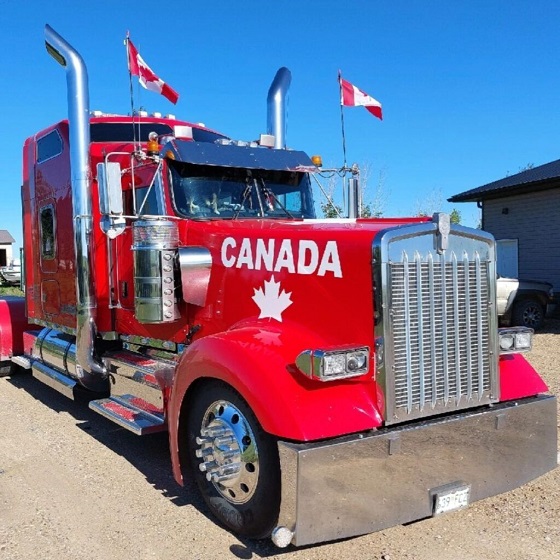
A Canadian judge has dismissed a demand from Canadian government lawyers to seize Freedom Convoy leader Chris Barber’s “Big Red” semi-truck.
On Friday, Ontario Court of Justice Judge Heather Perkins-McVey denied the Crown’s application seeking to forfeit Barber’s truck.
She ruled that the court is already “satisfied” with Barber’s sentence and taking away his very livelihood would be “disproportionate.”
“This truck is my livelihood,” said Barber in a press release sent to LifeSiteNews.
“Trying to permanently seize it for peacefully protesting was wrong, and I’m relieved the court refused to allow that to happen,” he added.
Criminal defense lawyer Marwa Racha Younes was welcoming of the ruling as well, stating, “We find it was the right decision in the circumstances and are happy with the outcome.”
John Carpay, president of the Justice Centre for Constitutional Freedoms (JCCF), said the decision is “good news for all Canadians who cherish their Charter freedom to assemble peacefully.”
READ: Freedom Convoy protester appeals after judge dismissed challenge to frozen bank accounts
“Asset forfeiture is an extraordinary power, and it must not be used to punish Canadians for participating in peaceful protest,” he added in the press release.
As reported recently by LifeSiteNews, the Canadian government claimed that Barber’s truck is an “offence-related property” relating to his involvement in the 2022 protests against Canada’s COVID mandates.
At this time, the court ruling ends any forfeiture proceedings for the time being, however Barber will continue to try and appeal his criminal conviction and house arrest sentence.
Barber’s truck, a 2004 Kenworth long-haul he uses for business, was a focal point in the 2022 protests. He drove it to Ottawa, where it was parked for an extended period of time, but he complied when officials asked him to move it.
On October 7, 2025, after a long trial, Ontario Court Justice Perkins-McVey sentenced Barber and Tamara Lich, the other Freedom Convoy leader, to 18 months’ house arrest. They had been declared guilty of mischief for their roles as leaders of the 2022 protest against COVID mandates, and as social media influencers.
Lich and Barber have filed appeals of their own against their house arrest sentences, arguing that the trial judge did not correctly apply the law on their mischief charges.
Government lawyers for the Crown have filed an appeal of the acquittals of Lich and Barber on intimidation charges.
The pair’s convictions came after a nearly two-year trial despite the nonviolent nature of the popular movement.

From LifeSiteNews
Protestor Evan Blackman’s legal team argues Trudeau’s Emergencies Act-based bank account freezes were punitive state action tied directly to protest participation.
A Freedom Convoy protester whose bank accounts were frozen by the Canadian government says a judge erred after his ruling did not consider the fact that the funds were frozen under the Emergencies Act, as grounds for a stay of proceedings.
In a press release sent out earlier this week, the Justice Centre for Constitutional Freedoms (JCCF) said that Freedom Convoy protestor Evan Blackman will challenge a court ruling in his criminal case via an appeal with the Ontario Superior Court of Justice.
“This case raises serious questions about how peaceful protest is treated in Canada and about the lasting consequences of the federal government’s unlawful use of the Emergencies Act,” noted constitutional lawyer Chris Fleury. “The freezing of protestors’ bank accounts was part of a coordinated effort to suppress dissent, and courts ought to be willing to scrutinize that conduct.”
Blackman was arrested on February 18, 2022, during the police crackdown on Freedom Convoy protests against COVID restrictions, which was authorized by the Emergencies Act (EA). The EA was put in place by former Prime Minister Justin Trudeau’s Liberal government, which claimed the protests were violent, despite no evidence that this was the case.
Blackman’s three bank accounts with TD Bank were frozen due to his participation in the Freedom Convoy, following a directive ordered by Trudeau.
As reported by LifeSiteNews, in November of this year, Blackman was convicted at his retrial even though he had been acquitted at his original trial. In 2023, Blackman’s “mischief” and “obstructing police” charges were dismissed by a judge due to lack of evidence and the “poor memory of a cop regarding key details of the alleged criminal offences.”
His retrial resulted in Blackman getting a conditional discharge along with 12 months’ probation and 122 hours of community service, along with a $200 victim fine surcharge.
After this, Blackman’s application for a stay of proceedings was dismissed by the court. He had hoped to have his stay of proceedings, under section 24(1) of the Charter of Rights and Freedoms, allowed. However, the judge ruled that the freezing of his bank accounts was legally not related to his arrest, and because of this, the stay of proceedings lacked standing.
The JCCF disagreed with this ruling, noting, it “stands in contrast to a Federal Court decision finding that the government’s invocation of the Emergencies Act was unreasonable and violated Canadians’ Charter rights, including those targeted by the financial measures used against Freedom Convoy protestors.”
As of press time, a hearing date has not been scheduled.
In 2024, Federal Court Justice Richard Mosley ruled that Trudeau was “not justified” in invoking the Emergencies Act.
In early 2022, the Freedom Convoy saw thousands of Canadians from coast to coast come to Ottawa to demand an end to COVID mandates in all forms. Despite the peaceful nature of the protest, Trudeau’s federal government enacted the EA in mid-February.
After the protesters were cleared out, which was achieved through the freezing of bank accounts of those involved without a court order as well as the physical removal and arrest of demonstrators, Trudeau revoked the EA on February 23, 2022.


Geopolitics no longer drives oil prices the way it used to
Canadian university censors free speech advocate who spoke out against Indigenous ‘mass grave’ hoax

Carney Floor Crossing Raises Counterintelligence Questions aimed at China, Former Senior Mountie Argues
Ex-FDA Commissioners Against Higher Vaccine Standards Took $6 Million From COVID Vaccine Makers

There’s No Bias at CBC News, You Say? Well, OK…

Australian PM booed at Bondi vigil as crowd screams “shame!”
FDA warns ‘breast binder’ manufacturers to stop marketing to gender-confused girls
-
 armed forces1 day ago
Remembering Afghanistan and the sacrifices of our military families
-
 Opinion1 day ago
Pope Leo XIV’s Christmas night homily
-
 Fraser Institute1 day ago
How to talk about housing at the holiday dinner table
-
 Frontier Centre for Public Policy1 day ago
Tent Cities Were Rare Five Years Ago. Now They’re Everywhere
-
 Fraser Institute12 hours ago
Carney government sowing seeds for corruption in Ottawa
-
 Alberta12 hours ago
Alberta Next Panel calls for less Ottawa—and it could pay off
-
 Business4 hours ago
Residents in economically free states reap the rewards
-
 Alberta3 hours ago
Alberta project would be “the biggest carbon capture and storage project in the world”