
Agriculture
European farmers continue to protest New World Order’s anti-food agenda


From LifeSiteNews
By Frank Wright

As the farmer-led protests in the EU rage on, globalists are slowly learning that labeling those demanding the ability to provide food for the future as ‘extremist’ is not going to work.
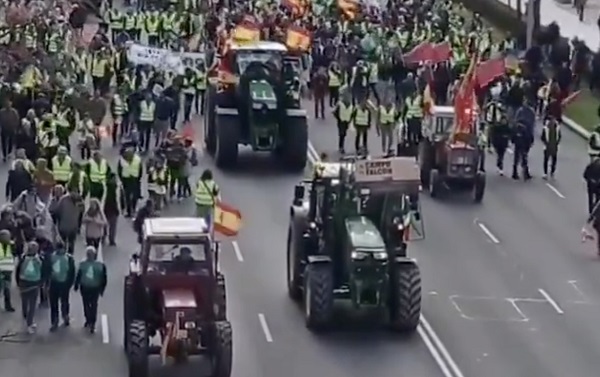
Farmer protests in Europe continue to escalate, with Belgian farmers blockading the capital yesterday, Monday February, 26, with 900 tractors and driving through police barricades.
Belgian farmers sprayed police with manure and lit bonfires with tires in a fiery day of action which saw barbed wire and anti-tank obstacles placed outside European Union institutions, and police dousing the crowd with water cannons.
The action comes days after a convoy of Spanish farmers lead an estimated 20,000 people to protest outside the Spanish Ministry of Agriculture.
The plea of one Spanish farmer at the February 21 protest was stark. Silvia Ruiz, 46, a livestock farmer from the north-central area of Burgos told The Associated Press.
It is impossible to live from the rural industry, which is what we want, to live from our work. That is all we ask for.
Video from Madrid showed the scale of the protest, at which AP said banners were displayed reading “Farmers in Extinction” and “There is no life without farming.”
#BREAKING #Spain Large-scale demonstrations by farmers are ongoing in the Spanish capital of Madrid. pic.twitter.com/RFbMt8Lgko
— The National Independent (@NationalIndNews) February 21, 2024
Spanish farmers conducted another four-day national action in early February, their complaints echoing what The Daily Telegraph called “common talking points from what has been an eruption of farmers protests in the Netherlands, France, Belgium, Germany, Poland, Greece, Italy and Spain over recent months.” Protests have also emerged in England and Wales in recent months.
Reasons to be fearful
The reasons given by farmers for their Europe-wide action present a direct challenge to the policies of European governments – which they say are resulting in extreme pressure on small-scale farmers. British farmers issued a desperate plea last September, saying they too were “struggling to survive.”
So what are the issues facing European farmers? This report examines the policies and practices which have combined to produce a hostile environment for Europe’s small scale farmers.
Agenda 21 – a coordinated effort?
Though the protests have many dimensions, including the imposition of carbon “Net Zero” related measures, with the removal of subsidies and the threat of cheap imports, some critics argue that small-scale farming across Europe is facing a systematic and coordinated attempt to replace them – with large-scale, state-controlled agriculture.
A documentary published by the Epoch Times in September 2023 argues that soaring food prices and food shortages “have little to do with climate change – but are the direct result of an environmental policy that was conceived over 30 years ago.”
The reference in the documentary, titled “No Farmers: No Food” is to“Agenda 21,” the United Nations’ “Master Plan for Humanity” for the 21st Century. Now renamed Agenda 2030, with that year being given as the target for the agenda’s implementation, it is a program that dates back as far as 1989.
The agenda’s seemingly laudable goals to “eradicate global poverty,” reduce consumer waste and combat the degradation of the natural world whilst promoting prosperity can be seen in another dimension.
An ‘excuse for government to do what they want’
Christian journalist Alex Newman says in the documentary that this noble-sounding agenda simply “gives government an excuse to do whatever they want, under the guise of meeting these goals.”
From its inception, the “master plan” demanded increased “trade liberalization,” the strengthening of “international institutions” backed by a series of “development banks” from government and private finance to drive accelerated global coordination.
Yet “trade liberalization” and a punitive regulatory environment are two factors cited by farmers across Europe which they say are threatening their very existence.
‘Green’ farmers also in protest
Farmers who support measures to limit pesticide use and the move to less polluting means of production have also mobilized to protest against “the neoliberal policies in agriculture the WTO has been promoting for decades which have led to the systematic impoverishment of farmers.”
A group called the European Coordination Via Campesina (ECVC), which represents small-holder farmers in 21 European countries, highlights the worsening struggle for survival faced by small-scale farmers. In a February 25 report, farmers Morgan Ody and Vincent Delobel spoke out in advance of the World Trade Organization’s 13th ministerial conference in Abu Dhabi.
These are the people who produce Europe’s food – whether conventionally or organically, on a small or a medium scale. They stand united by a shared reality: They are fed up with spending their lives working incessantly without ever getting a decent income. We have reached this point after decades of neoliberal agricultural policies and free trade agreements. Production costs have risen steadily in recent years, while prices paid to farmers have stagnated or even fallen.
The effect on small-scale farmers has been devastating – but beneficial for corporations.
“All the while, through mergers and speculation, large agroindustrial groups have gotten bigger and stronger, putting increased pressure on prices and practices for farmers.”
‘Like the Soviet Union’
This argument, coming from farmers supportive of sensible “sustainable development” measures, echoes a warning given by U,S, conservative scholar Victor Davis Hanson.
Hanson’s segment in “No Farmers: No Food” treats this issue as a matter of the concentration of food production in the hands of the state – or under its direction.
They feel that humans don’t need meat-based protein. They want to either force people to follow their paradigms – or they want to buy or accumulate farmland and that’s how they’re going to farm it.
It’s sort of like Mao’s cultural revolution or the Soviet Union – and it results in disasters.
At least 45 million people are said to have “been starved, tortured or beaten to death” under Mao’s “Cultural Revolution,” with the forced collectivization of farms in the Soviet Union contributing to a famine which caused the deaths of at least 3 million people between 1931 and 1934.
Hanson says this example does not deter the “academic mind,” which “always has the answers, but never in the real world.”
What is happening in the real world is, according to Hanson, the systematic global consolidation of farming in the hands of state and corporate power.
“They want large blocks [of farming] run by the government – or by private consortia” where meat can be largely eradicated by the control of agricultural production.
The real world action of Bill Gates
Hanson cites the example of Bill Gates’ purchase of large tracts of farmland, coupled with the stated objectives of his “philanthropic” organization.
The Bill and Melinda Gates Foundation had by 2017 granted an estimated $6 billion of investment in the future of farming according to one small farmer’s campaign group, GRAIN.
Its 2021 report argued that the foundation is “driving the food system in the wrong direction,” saying “[Gates’] funding overwhelmingly went to research institutes rather than farmers. They were also mainly directed at shaping policies to support industrial farming, not smallholders.”
Far from providing “the substantial flow of new and additional financial resources to developing countries” exhorted by the 1989 UN statement on Agenda 21, the Gates Foundation sends 80-90 percent of its funds to U.S. and Europe based NGOs, “buying political influence” and promoting a “corporate-industrial farming agenda.”
The funding patterns of Gates’ so-called charity “illustrates the point of where the priorities of the Foundation lie.”
Killing small farmers
These priorities are opposed to those of small farmers – whether in the developed or the developing world. Both populations are plagued with farmer suicides – from India through Australia and the United States, given plummeting prices and the increasing pressure to consolidate farming. Studies in Ireland, France and the U.K. show far higher rates of suicide amongst farmers – a trend that has continued over the last decade, as this 2015 report shows.
The pressure driving farmers to desperation is related to a model exampled, as Alex Newman argues, on that adopted in China.
“We are seeing that in China now, where these giant, mechanized, corporate, big-government controlled mega-farms are displacing all these little small family farms,” he says.
The stated aims of Agenda 30 may be an example of Hanson’s “academic answer” – which is contradicted by the real world effects it has produced.
Ally versus ally?
Diplomatic tensions now accompany farmer protests, and have spread beyond Eastern Europe to the West.
The Prime Minister of France Gabriel Attal responded to recent protests in France, acknowledging a further dimension of the threat to small farmers’ livelihoods: cheap imports from Ukraine.
Attal said his government is working to protect French farmers against imports from Ukraine of chicken, eggs, sugar and cereals.
“Solidarity with Ukraine is obviously essential, but it cannot be to the detriment of our farmers,” the prime minister said.
Attal’s remarks, reported by Britain’s Independent on February 22, recall the ongoing blockade of the border by Polish farmers – undertaken in protest against cheap imports.
Poland continues to block Ukrainian grain
Farmers have attempted to block imports of Ukrainian grain, with two acts of grain destruction alleged in the past month. Ukrainian news outlet European Pravda reported the following incident
On the night of 24-25 February in Poland, Ukrainian grain exports suffered the most extensive damage since the beginning of the farmer protests, with the attackers damaging 160 tonnes of Ukrainian grain.
A social media post recorded the aftermath of the grain spill, showing the alleged sabotage.
Awaria mechanizmu zamykającego 🤦🏼
Lokalizacja: Kotomierz
Źródło: Internet pic.twitter.com/TAPWPpRe1i— Edgar Wolność Polska (@EdgarWolnosc) February 25, 2024
The incident comes weeks after a similar event on February 11, when according to the same report, “Polish farmers protesting near the Ukrainian border spilled some grain from three Ukrainian lorries near the Yahodyn-Dorohusk checkpoint.”
The Ukrainian deputy Prime Minister Alexander Kubrakov complained of “160 tons of Ukrainian grain destroyed…[in] the fourth case of vandalism at Polish railway stations.”
Farmers fighting for a viable life are now fracturing former alliances, showing the state-level impact of the issue of food security.
Against the grain
Polish farmers began their attempts to block Ukrainian imports in late November, with assurances from the new Polish Minister of Agriculture providing only a temporary pause. The protests follow a troubled year for Ukrainian grain exports, with the EU conceding to demands from Bulgaria, Hungary, Poland, Romania and Slovakia with a temporary ban on Ukrainian maize, wheat, rapeseed and sunflower seed from May-June, 2023.
The ban was extended until September 15. When it was lifted, Reuters reported that “Slovakia, Poland and Hungary imposed national restrictions on Ukrainian grain imports after the European Union executive decided not to extend its ban on imports into those countries and fellow EU members Bulgaria and Romania.”
The reason supplied was to protect domestic farmers from being undermined by cheap imports.
“The countries have argued that cheap Ukrainian agricultural goods – meant mainly to transit further west and to ports – get sold locally, harming their own farmers.”
Following the elections on October 15, the incoming Polish government of Donald Tusk, a noted globalist, appears unwilling to confront the farmers directly. Last week, the Polish government snubbed the Ukrainian delegation, failing to appear at a recent meeting convened by Ukraine’s President Volodymyr Zelensky to end the crisis. According to Agence France Presse (AFP):
Ukraine’s prime minister went to the border with Poland on Friday [February 23] hoping to end weeks of protests by Polish farmers but he said no-one from the neighboring government turned up for talks.
Zelensky proposed the frontier meeting, issuing a statement saying Ukraine’s grain did not go to the Polish market “at the request of the Polish side.”
Zelensky’s remarks appear to be contradicted by the continued attempts to export Ukrainian grain into Poland.
He added: “We are willing and will do everything to resolve this issue.”
But Tusk’s chief of staff Jan Grabiec told AFP that Warsaw had not sent a delegation because a meeting “makes no sense at the moment.”
He said the two sides were “far” from a deal to end the showdown.
“Unfortunately, there is not yet a Ukrainian proposition that allows to hope for an end to the deadlock in commercial relations.”
The two governments are set to meet on March 26 in an attempt to resolve a crisis, which by then will have been ongoing for over ten months. The snub by Tusk’s pro-EU and pro-Ukraine administration shows the extraordinary power of the farmer’s movement in shifting public opinion on an alliance which formerly saw Zelensky receive a “hero’s welcome” in Poland last April. Going against the Ukrainian grain was unthinkable only a year ago.
Farmers and the future
The farmer protests have been caricatured as “agrarian populism” – a progressive phrase intended as as slur. In characterizing these protests as irrational, and bracketing them with extremism, critics such as the U.K.-based European Consortium for Political Research seek to frames this crisis as one which “emphasizes the antagonistic relationship between the virtuous peasants and people from the countryside on the one side, and the evil and corrupt urban elites on the other.”
Yet the farmer movement is not driven by fantasies of good and evil, but by basic reality. Farmers across the world claim the current system is threatening their very existence.
Many are taking their own lives, with many others taking to the streets. It seems that some governments are now taking notice. As the protests continue, the message is breaking through to the would be managers of the Master Plan for Humanity – that if the demand for food and a future without misery is defined as extremist, then it is not the small-scale farmers who must give way.


A new program funded by the Sustainable Canadian Agricultural Partnership will accelerate expansion in Alberta greenhouses and vertical farms.
Albertans want to keep their hard-earned money in the province and support producers by choosing locally grown, high-quality produce. The new three-year, $10-milllion Growing Greenhouses program aims to stimulate industry growth and provide fresh fruit and vegetables to Albertans throughout the year.
“Everything our ministry does is about ensuring Albertans have secure access to safe, high-quality food. We are continually working to build resilience and sustainability into our food production systems, increase opportunities for producers and processors, create jobs and feed Albertans. This new program will fund technologies that increase food production and improve energy efficiency.”
“Through this investment, we’re supporting Alberta’s growers and ensuring Canadians have access to fresh, locally-grown fruits and vegetables on grocery shelves year-round. This program strengthens local communities, drives innovation, and creates new opportunities for agricultural entrepreneurs, reinforcing Canada’s food system and economy.”
The Growing Greenhouses program supports the controlled environment agriculture sector with new construction or expansion improvements to existing greenhouses and vertical farms that produce food at a commercial scale. It also aligns with Alberta’s Buy Local initiative launched this year as consumers will be able to purchase more local produce all year-round.
The program was created in alignment with the needs identified by the greenhouse sector, with a goal to reduce seasonal import reliance entering fall, which increases fruit and vegetable prices.
“This program is a game-changer for Alberta’s greenhouse sector. By investing in expansion and innovation, we can grow more fresh produce year-round, reduce reliance on imports, and strengthen food security for Albertans. Our growers are ready to meet the demand with sustainable, locally grown vegetables and fruits, and this support ensures we can do so while creating new jobs and opportunities in communities across the province. We are very grateful to the Governments of Canada and Alberta for this investment in our sector and for working collaboratively with us.”
Sustainable Canadian Agricultural Partnership (Sustainable CAP)
Sustainable CAP is a five-year, $3.5-billion investment by federal, provincial and territorial governments to strengthen competitiveness, innovation and resiliency in Canada’s agriculture, agri-food and agri-based products sector. This includes $1 billion in federal programs and activities and $2.5 billion that is cost-shared 60 per cent federally and 40 per cent provincially/territorially for programs that are designed and delivered by provinces and territories.
Quick facts
- Alberta’s greenhouse sector ranks fourth in Canada:
- 195 greenhouses produce $145 million in produce and 60 per cent of them operate year-round.
- Greenhouse food production is growing by 6.2 per cent annually.
- Alberta imports $349 million in fresh produce annually.
- The program supports sector growth by investing in renewable and efficient energy systems, advanced lighting systems, energy-saving construction, and automation and robotics systems.
Related information
From the Fraser Institute
By Annika Segelhorst and Elmira Aliakbari
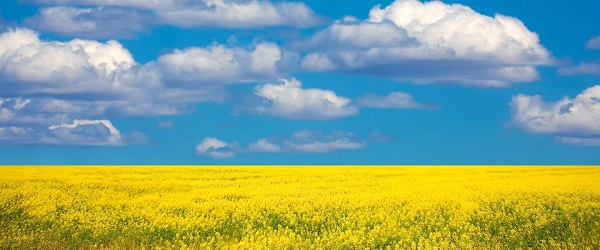
Canadians care about the environment and breathing clean air. In 2023, the share of Canadians concerned about the state of outdoor air quality was 7 in 10, according to survey results from Abacus Data. Yet Canada outperforms most comparable high-income countries on air quality, suggesting a gap between public perception and empirical reality. Overall, Canada ranks 8th for air quality among 31 high-income countries, according to our recent study published by the Fraser Institute.
A key determinant of air quality is the presence of tiny solid particles and liquid droplets floating in the air, known as particulates. The smallest of these particles, known as fine particulate matter, are especially hazardous, as they can penetrate deep into a person’s lungs, enter the blood stream and harm our health.
Exposure to fine particulate matter stems from both natural and human sources. Natural events such as wildfires, dust storms and volcanic eruptions can release particles into the air that can travel thousands of kilometres. Other sources of particulate pollution originate from human activities such as the combustion of fossil fuels in automobiles and during industrial processes.
The World Health Organization (WHO) and the Canadian Council of Ministers of the Environment (CCME) publish air quality guidelines related to health, which we used to measure and rank 31 high-income countries on air quality.
Using data from 2022 (the latest year of consistently available data), our study assessed air quality based on three measures related to particulate pollution: (1) average exposure, (2) share of the population at risk, and (3) estimated health impacts.
The first measure, average exposure, reflects the average level of outdoor particle pollution people are exposed to over a year. Among 31 high-income countries, Canadians had the 5th-lowest average exposure to particulate pollution.
Next, the study considered the proportion of each country’s population that experienced an annual average level of fine particle pollution greater than the WHO’s air quality guideline. Only 2 per cent of Canadians were exposed to fine particle pollution levels exceeding the WHO guideline for annual exposure, ranking 9th of 31 countries. In other words, 98 per cent of Canadians were not exposed to fine particulate pollution levels exceeding health guidelines.
Finally, the study reviewed estimates of illness and mortality associated with fine particle pollution in each country. Canada had the fifth-lowest estimated death and illness burden due to fine particle pollution.
Taken together, the results show that Canada stands out as a global leader on clean air, ranking 8th overall for air quality among high-income countries.

Canada’s record underscores both the progress made in achieving cleaner air and the quality of life our clean air supports.

Annika Segelhorst
Junior Economist

Elmira Aliakbari


Canada invests $34 million in Chinese drones now considered to be ‘high security risks’

CDC Vaccine Panel Votes to End Universal Hep B Vaccine for Newborns
The Climate-Risk Industrial Complex and the Manufactured Insurance Crisis

Wayne Gretzky’s Terrible, Awful Week.. And Soccer/ Football.

Affordable housing out of reach everywhere in Canada
Surgery Denied. Death Approved.

Inside the Fortified Sinaloa-Linked Compound Canada Still Can’t Seize After 12 Years of Legal War
-
 Daily Caller2 days ago
‘There Will Be Very Serious Retaliation’: Two American Servicemen, Interpreter Killed In Syrian Attack
-
 Business1 day ago
Inflation Reduction Act, Green New Deal Causing America’s Energy Crisis
-
 Crime1 day ago
Terror in Australia: 12 killed after gunmen open fire on Hanukkah celebration
-
 Media1 day ago
Reporters determined to drive their industry and its reputation into the abyss one Tweet at a time
-
 Automotive2 days ago
Politicians should be honest about environmental pros and cons of electric vehicles
-
 Business2 days ago
Fuelled by federalism—America’s economically freest states come out on top
-
 Crime1 day ago
Hero bystander disarms shooter in Australian terror attack
-
International59 mins ago
At Least 15 Killed In Shooting Targeting Jewish Community At Australia’s Bondi Beach, Police Say