
Media
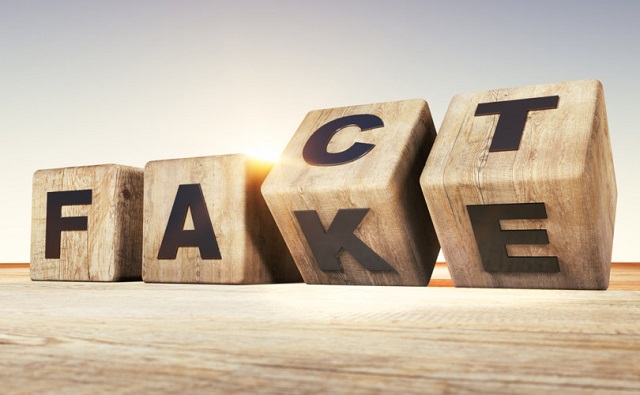
Canadians distrust federal ‘fact checkers,’ say they can identify truth without government help

From LifeSiteNews
The in-house research by the Communications Security Establishment found that Canadians distrusted federal ‘fact checkers’ and that they feel they can spot fake news online without being told what it true by the government.
Canadians believe they can identify “fake news” online without help from federally employed “fact checkers.”
According to in-house research by the Communications Security Establishment obtained March 19 by Blacklock’s Reporter, most Canadians distrust federal “fact checkers,” explaining that they can spot fake news online without being told what it true by the government.
“Everyone said they regularly see examples of disinformation online and felt it has escalated considerably in the last few years,” the report found. “Some spoke of social media as a place where they most often find disinformation.”
The participants in federal focus groups also revealed that they feel apprehensive with the government “declaring what is true or not.”
“Most participants said they feel confident they can tell the difference between real and false information you see on the internet, at least most of the time,” the report said.
“A number of participants expressed reservations about the government presenting itself as an ‘authority’ on disinformation,” it continued. “These participants perceived the Government of Canada would be declaring what is true or not.”
Recently, Canadians have increasingly expressed distrust in both the federal government and mainstream media.
Distrust in Prime Minister Justin Trudeau’s government comes as the scandal-plagued government has sent the Liberals into a nosedive in popularity with no end in sight.
Per a recent LifeSiteNews report, according to polls, were a Canadian federal election held today, Conservatives under Pierre Poilievre would win a majority in the House of Commons over Trudeau’s Liberals.
Similarly, many have accused the mainstream media of becoming nothing more than a propaganda mouthpiece for the Liberal government as their financial futures are seen as dependent upon continued public funding.
Recent polling found that only one-third of Canadians consider mainstream media trustworthy and balanced.
Similarly, a recent study by Canada’s Public Health Agency revealed that less than a third of Canadians displayed “high trust” in the federal government, with “large media organizations” as well as celebrities getting even lower scores.
Large mainstream media outlets and “journalists” working for them scored a “high trust” rating of only 18 percent. That was followed by only 12 percent of people saying they trusted “ordinary people,” with celebrities receiving only an 8 percent “trust” rating.

Censorship Industrial Complex
Australian politicians attack Elon Musk for refusing to remove video of Orthodox bishop’s stabbing
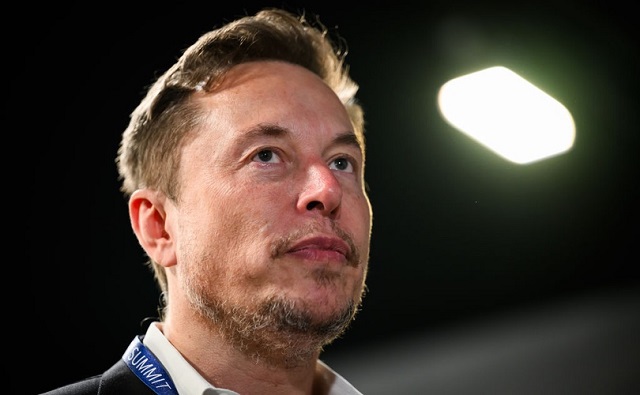
Photo by Leon Neal/Getty Images
From LifeSiteNews
By David James
The video is available on YouTube but Australia’s political class is singling out and waging war on X owner Elon Musk for his refusal to delete footage of the stabbing of Orthodox Bishop Mar Mari Emmanuel.
In a demonstration of governmental overreach the Australian prime minister, Anthony Albanese, has attacked Elon Musk, the owner of X (formerly Twitter) for not acceding to demands to put a worldwide ban on video footage of an attempted stabbing of a bishop in a Sydney church.
Albanese is not alone; virtually the entire Australian political class has joined in the attack. Tanya Plibersek, minister for Environment and Water called Musk an “egotistical billionaire.” Greens senator Sarah Hanson-Young described him as a “narcissistic cowboy.” Albanese chimed in by describing him as an “arrogant billionaire who thinks he’s above the law.”
Senator Jacqui Lambie went as far as suggesting that Musk be “jailed” for his refusal to bend to the demands of the Australian government.
In response to Lambie’s comments, Musk declared her to be an “enemy of the people of Australia,” agreeing with another social media user who suggested it should be Lambie, not Musk, who belongs in jail.
This Australian Senator should be in jail for censoring free speech on X. https://t.co/vnYvBjpXav
— Rothmus 🏴 (@Rothmus) April 23, 2024
The right wing Liberal-National coalition was only slightly less aggressive saying Musk was offering an “insulting and offensive argument” in his refusal to remove graphic footage of the stabbing. How Musk saying that posts should not be taken down is “insulting and offensive” was not explained.
The victim of the attack, Bishop Mar Mari Emmanuel, an Iraqi-born Assyrian Australian prelate who is head of the Eastern Christ the Good Shepherd Church, has displayed a maturity and moral virtue conspicuously lacking in the political arena. Emmanuel recorded a message saying that he loved his assailant, and that he wanted the video to stay online, urging people not to respond to violence with violence.
After the incident there were riots outside the church, resulting in 51 officers sustaining injuries. A 16-year-old boy has been arrested and charged with a religiously motivated terrorist attack.
The court battle between the Australian government and Musk is being characterised as a contest between free speech and the government’s role in protecting people. Certainly for Musk it is very much about protecting free speech.
That formulation is inaccurate. There is no effective protection of free speech in Australia, unlike the US, which has the First Amendment of the Constitution. The Federal government is currently preparing a misinformation and disinformation bill to force social media companies only to allow content of which the government approves.
As Senator Ralph Babet of the United Australia Party observes it is a “censorship agenda” that will be pushed no matter which party is in power. “The office of the eSafety commissioner was created under the Liberal Party and is now being emboldened by the Labor Party,” he writes.
The public battle with Musk is better seen as an attempt by the Australian government to control what is on the internet. The newly appointed eSafety commissioner, Julie Inman-Grant directed X to remove the posts, but X had only blocked them from access in Australia pending a legal challenge. The government then demanded that the posts be removed world-wide.
That the Australian political class thinks it has the right to issue edicts in countries where it has no legal jurisdiction is a demonstration of the lack of clarity in their thinking, and the intensity of their obsession with censoring.
Musk accurately characterised the situation in a post: “Should the eSafety Commissar (an unelected official) in Australia have authority over all countries on Earth?” It seems that many Australian politicians think the answer to that question is “Yes.”
The childish personal attacks on Musk, typical ad hominem attacks (going at the person rather than the argument) are revealing. What does the fact that Musk is a billionaire have to do with the legal status of the posts? Does having a lot of money somehow disqualify him from having a position?
If he is “egotistical” or “arrogant” what does that have to do with his logical or legal claims? How does exposing Musk as a narcissistic cowboy” have any relevance to him allowing content on the platform? Wouldn’t a narcissist be more likely to restrict content? The suspicion is that the politicians are resorting to such abuse because they have no argument.
The Australian government’s attack on Musk, which borders on the absurd, is just one of many being directed at X. An especially dangerous initiative is coming from the European Union’s Digital Services Act, which can apply fines of up to 6 per cent of the worldwide annual turnover, a ridiculously punitive amount. The United Kingdom’s communications regulator, Ofcom is even worse. It will have powers to fine companies up to 10 per cent of their global turnover.
Western governments are mounting an all out push to censor the internet, and Australia’s aggressive move is just part of that. What is never considered by governments and bureaucrats is the cost of such censorship.
The benefits of “protecting” people are always overstated and inevitably infantilize the population. The price is a degradation of social institutions and a legal system that does not apply equally to the citizenry and to the government. It is a step towards tyranny: rule by law rather than rule of law.
From the Brownstone Institute

The powers that be are leading us from the Declaration of Internet Freedom from simpler times (2012), to the Declaration on the Future of the Internet. Do we need to say more than the word “freedom” has been left out of the future?
They are wearing us down with shocking headlines and opinions. They come daily these days, with increasingly implausible claims that leave your jaw on the floor. The rest of the text is perfunctory. The headline is the takeaway, and the part designed to demoralize, deconstruct, and disorient.
A few weeks ago, the New York Times told us that “As It Turns Out, the Deep State Is Pretty Awesome.” These are the same people who claim that Trump is trying to get rid of democracy. The Deep State is the opposite of democracy, unelected and unaccountable in every way, impervious to elections and the will of the people. Now we have the NYT celebrating this.
And the latest bears notice too: “Government Surveillance Keeps Us Safe.” The authors are classic Deep Staters associated with Hillary Clinton and George W. Bush. They assure us that having an Orwellian state is good for us. You can trust them, promise. The rest of the content of the article doesn’t matter much. The message is in the headline.
Amazing isn’t it? You have to check your memory and your sanity. These are the people who have rightly warned about government infringements on privacy and free speech for many decades dating way back.
And now we have aggressive and open advocacy of exactly that, mainly because the Biden administration is in charge and has only months to put the final touches on the revolution in law and liberty that has come to America. They want to make it all permanent and are working furiously to make it so.
Along with routine warrantless surveillance, not only of possible bad guys but everyone, comes of course censorship. A few years ago, this seemed to be intermittent, like the biased and arbitrary actions of rogue executives. We objected and denounced but generally assumed that it was aberrant and going away over time.
Back then, we had no idea of the scale and the ambition of the censors. The more information that is coming out, the more the full goal is coming into view. The power elite want the Internet to operate like the controlled media of the 1970s. Any opinion that runs contrary to regime priorities will be blocked. Websites that distribute alternative outlooks will be lucky to survive at all.
To understand what’s going on, see the White House document called Declaration on the Future of the Internet. Freedom is barely a footnote, and free speech is not part of it. Instead it is to be a “rules-based digital economy” governed “through the multistakeholder approach, whereby governments and relevant authorities partner with academics, civil society, the private sector, technical community and others.”
This whole document is an Orwellian replacement of the Declaration of Internet Freedom from 2012, which was signed by Amnesty International, the ACLU, and major corporations and banks. The first principle of this Declaration was free speech: don’t censor the Internet. That was 12 years ago and the principle is long forgotten. Even the original website has been dead since 2018. It is now replaced with one word: “Forbidden.”
Yes, that’s chilling but it is also perfectly descriptive. In all mainline Internet venues, from search to shopping to social, freedom is no longer the practice. Censorship has been normalized. And it is taking place with the direct involvement of the federal government and third-party organizations and research centers paid for by tax dollars. This is very clearly a violation of the First Amendment but the new orthodoxy in elite circles is that the First Amendment simply does not apply to the Internet.
This issue is making its way through litigation. There was a time when the decision would not be in question. No more. Several or more Supreme Court Justices do not seem to understand even the meaning of free speech.
The Prime Minister of Australia made the new view clear in his statement in defense of fining Elon Musk. He said that social media has a “social responsibility.” In today’s parlance, this means they must obey the government, which is the only proper interpreter of the public interest. In this view, you simply cannot allow people to post and say things that are contrary to regime priorities.
If the regime cannot manage public culture, and manipulate the public mind, what’s it there for? If it cannot control the Internet, its managers believe, it will lose control of the whole of society.
The crackdown is intensifying by the day. Representative Thomas Massie shot a video after the Ukraine vote for a total foreign aid package of an astonishing $95 billion. Vast numbers of Democrats on the House floor waved Ukrainian flags, which you might suppose smacks of treason. The Sergeant-at-Arms wrote Massey directly to tell him to take down the video or get a $500 fine.
Instead of fining democrats for waving flags, the House Sergeant at Arms just called and said I will be fined $500 if I don’t delete this video post.
Mike Johnson really wants to memory hole this betrayal of America. https://t.co/5DPWoo4cLw
— Thomas Massie (@RepThomasMassie) April 23, 2024
True, the rules say you cannot film in a way that “impairs decorum,” but he simply took out his phone. The decorum was disturbed by masses of lawmakers waving a foreign flag. So Massie refused. After all, the entire disgraceful scene was on C-SPAN but the presumption is that no one watches that but everyone reads X, which is probably true.
Clearly, GOP speaker Mike Johnson doesn’t want his perfidy this well-advertised. After all, it was he who shepherded the authorization of spying on the American people using Section 702 of FISA, which 99 percent of GOP voters opposed. Just who do these people think they are there to represent?
It’s actually astonishing to do a conjectural history in which Elon did not buy Twitter. The regime monopoly on social media today would be 99.5 percent. Then the handful of alternative venues could be shut down one by one, just as with Parler a few years ago. Under this scenario, closing the social end of the Internet would not be that difficult. The domains are another matter but those could be banned gradually over time.
But with X rising in a meteoric way since Elon’s takeover, that is now far more difficult. He has made it his mission to remind the world of core principles. This is why he told the boycotting advertisers to jump in a lake and why he refused to comply with every dictate by the despotic head of the Brazilian Supreme Court. Daily he is showing what it means to stand up for principle in extremely hard times.
Glenn Beck puts it well: “What Elon Musk is doing in both Brazil and Australia is this: He is simply standing where the Free world used to stand. They have moved, not him. They are the radicals not him. HAVE THE COURAGE to remain standing, unmovable in the truth that can never change and you will be targeted and eventually change the world.”
Censorship is not an end unto itself. The purpose is control of the people. That is also the purpose of surveillance. It is not, rather obviously, to protect the public. It is to protect the state and its industrial partners against the people. Of course, just as in every dystopian film, they always pretend otherwise.
Somehow – call me naive – I just didn’t expect the New York Times to be all-in on the immediate establishment of the surveillance state and universal censorship by the “awesome” Deep State. But think of this. If the NYT can be fully captured by this ideology, and probably captured by the money that goes with it, so can any other institution. You have probably noticed a similar editorial line being pushed by Wired, Mother Jones, Rolling Stone, Salon, Slate, and other venues, including the entire suite of publications owned by Conde Nast including Vogue and GQ magazine.
“Don’t bother me with your crazed conspiracy theory, Tucker.”
I get the point. What is your explanation?
Author


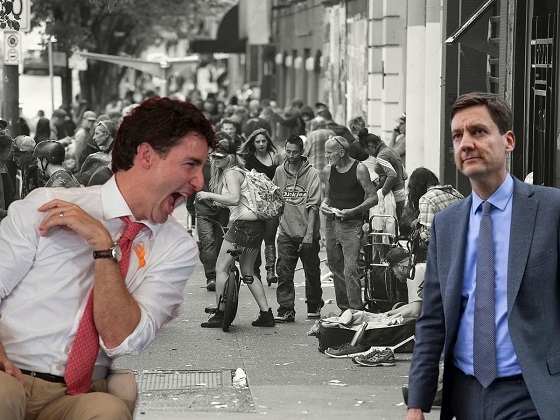
Fentanyl Fiasco: The Tragic Missteps of BC’s Drug Policy
German parliament passes law allowing minors to change their legal gender once a year
Maxime Bernier says it’s ‘astounding’ Alberta is ‘pushing’ COVID boosters, tells Danielle Smith to stop it
Transgender ideology has enabled people to ‘identify’ as amputees

Canadian receives one-year jail sentence, lifetime firearms ban for setting church on fire
Peckford: The legality and morality of our country are no longer aligned

Canada’s advantage as the world’s demand for plastic continues to grow

-
 Alberta1 day ago
Red Deer Doctor critical of Alberta’s COVID response to submit report to Danielle Smith this May
-
 conflict1 day ago
Col. Douglas Macgregor torches Trump over support for bill funding wars in Ukraine and Israel
-
 Business8 hours ago
Don’t be fooled by high-speed rail
-
 COVID-192 days ago
Inquiry shows Canadian gov’t agencies have spent $10 million on social media ads for COVID jabs
-
 Alberta7 hours ago
Activity-Based Hospital Funding in Alberta: Insights from Quebec and Australia
-
 Business2 days ago
Federal government’s ‘fudget budget’ relies on fanciful assumptions of productivity growth
-
 Health1 day ago
Transgender activists are threatening the author of scathing UK report on child ‘sex changes’
-
 Business5 hours ago
UN plastics plans are unscientific and unrealistic