
Addictions
Canada’s ‘safer supply’ patients are receiving staggering amounts of narcotics

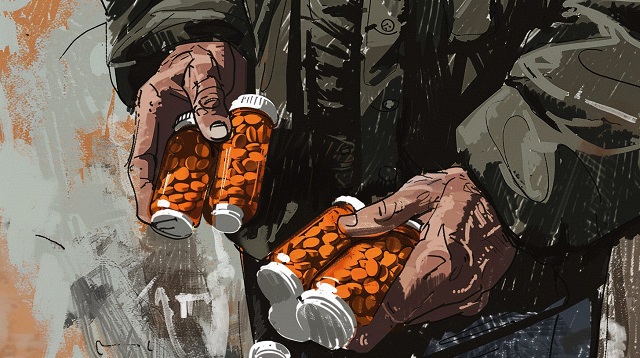
Image courtesy of Midjourney.
|
|

How a Small Population Fuels a Black Market Epidemic, Echoing Troubling Parallels in Sweden
A significant amount of safer supply opioids are obviously being diverted to the black market, but some influential voices are vehemently downplaying this problem. They often claim that there are simply too few safer supply clients for diversion to be a real issue – but this argument is misleading because it glosses over the fact that these clients receive truly staggering amounts of narcotics relative to everyone else.
“Safer supply” refers to the practice of prescribing free recreational drugs as an alternative to potentially-tainted street substances. In Canada, that typically means distributing eight-mg tablets of hydromorphone, an opioid as potent as heroin, to mitigate the use of illicit fentanyl.
There is clear evidence that most safer supply clients regularly sell or trade almost all of their hydromorphone tablets for stronger illicit substances, and that this is flooding communities with the drug and fuelling new addictions and relapses. Just five years ago, the street price of an eight-mg hydromorphone tablet was around $20 in major Canadian cities – now they often go for as little as $1.
But advocates repeatedly emphasize that, even if such diversion is occurring, it must be a minor issue because there are only a few thousand safer supply clients in Canada. They believe that it is simply impossible for such a small population to have a meaningful impact on the overall black market for diverted pharmaceuticals, and that the sudden collapse of hydromorphone prices must have been caused by other factors.
This is an earnest belief – but an extremely ill-informed one.
It is difficult to analyze safer supply at the national level, as each province publishes different drug statistics that make interprovincial comparisons near-impossible. So, for the sake of clarity, let’s focus primarily on B.C., where the debate over safer supply has raged hottest.
According to a dashboard published by the British Columbia Centre for Disease Control, there were only 4,450 safer supply clients in the province in December 2023, of which 4,250 received opioids. In contrast, the 2018/19 British Columbia Controlled Prescription Drug Atlas (more recent data is unavailable) states that there were approximately 80,000 hydromorphone patients in the province that year – a number that is unlikely to have decreased significantly since then.
We can thus reasonably assume that safer supply clients represent around 5 per cent of the province’s total hydromorphone patients – but if so few people are on safer supply, how could they have a profound impact on the black market? The answer is simple: these clients receive astonishing sums of the drug, and divert at an unparalleled level, compared to everyone else.
Safer supply clients generally receive 4-8 eight-mg tablets per day at first, but almost all of them are quickly moved up to higher doses. In B.C., most patients are kept at 14 tablets (112-mg in total) per day, which is the maximum allowed by the province’s guidelines. For comparison, patients in Ontario can receive as many as 30 tablets a day (240-mg in total).
These are huge amounts.
The typical hydromorphone dose used to treat post-surgery pain in hospital settings is two-mg every 4-6 hours – or roughly 12-mg per day. So that means that safer supply clients can receive roughly 10-20 times the daily dose given to acute pain patients, depending on which province they’re located in. And while acute pain patients are tapered off hydromorphone after a few weeks, safer supply clients receive their tablets indefinitely.
Some chronic pain patients (i.e. people struggling with severe arthritis) are also prescribed hydromorphone – but, in most cases, their daily dose is 12-mg or less. The exception here is terminally ill cancer patients, who may receive up to around 100-mg of hydromorphone per day. However, this population is relatively small, so we once again have a situation where safer supply patients are, for the most part, receiving much more hydromorphone than their peers.
Not only do safer supply patients receive incredible amounts of the drug, they also seem to divert it at much higher rates – which is a frequently overlooked factor.
The clandestine nature of prescription drug diversion makes it near-impossible to measure, but a 2017 peer-reviewed study estimated that, in the United States, up to 3 per cent of all prescription opioids end up on the black market.
In contrast, it appears that safer supply patients divert 80-90 per cent of their hydromorphone.
These numbers should be taken with a grain of salt, as there have been no attempts to measure safer supply diversion – harm reduction researchers tend to simply ignore the problem, which means that we must rely on journalistic evidence that is necessarily anecdotal in nature. While this evidence has its limits, it can, at the very least, illustrate the rough scale of the problem.
For example, in London, Ontario, I interviewed six former drug users last summer who said that, of the safer supply clients they knew, 80 per cent sold almost all of their hydromorphone – just one interviewee placed the number closer to 50 per cent. More recently, I interviewed an addiction outreach worker in Ottawa who estimated that 90 per cent of safer supply clients diverted their drugs. These numbers are consistent with the testimony of dozens of addiction physicians who have said that safer supply diversion is ubiquitous.
Let us take a conservative estimate and imagine that only 30 per cent of safer supply hydromorphone is diverted – even this would be potentially catastrophic.
So we can see why any serious attempt to discuss safer supply diversion cannot narrowly focus on patient numbers – to ignore differences in doses and diversion rates is inexcusably misleading.
But we don’t need to rely on theory to make this point, because the recent parliamentary testimony of Fiona Wilson, who is deputy chief of the Vancouver Police Department and president of the B.C. Association of Chiefs of Police (BCACP), illustrates the situation quite neatly.
Wilson testified to the House of Commons health committee earlier this month that half of the hydromorphone recently seized in B.C. can be attributed to safer supply. As she did not specify whether the other half was attributed to other sources, or simply of indeterminate origin, the actual rate of safer supply hydromorphone seizures may actually be even higher.
As, once again, safer supply clients constitute roughly 5 per cent of the total hydromorphone patient population, Wilson’s testimony suggests that, on a per capita basis, safer supply patients divert at least 18 times more of the drug than everyone else.
This is exactly what one would expect to find given our earlier analysis, and these facts, by themselves, repudiate the argument that safer supply diversion is insignificant. When a small population is at least doubling the street supply of a dangerous pharmaceutical opioid, this is a problem.
The fact that so few people can cause substantial, system-wide harm is not unprecedented. In fact, this exact same problem was observed in Sweden, which, from 1965-1967, experimented with a model of safer supply that closely resembled what is being done in Canada today. A small number of patients – barely more than a hundred – were given near-unlimited access to free recreational drugs under the assumption that this would keep them “safe.”
But these patients simply sold the bulk of their drugs, which caused addiction and crime rates to skyrocket across Stockholm. Commentators at the time referred to safer supply as “the worst scandal in Swedish medical history,” and, even today, the experiment remains a cautionary tale among the country’s drug researchers.
It is simply wrong to say that there are too few safer supply clients to cause a diversion crisis. People who make this claim are ignorant of contemporary and historical facts, and those who wish to position themselves as drug experts should be mindful of this, lest they mislead the public about a destructive drug crisis.
 |
This article was originally published in The Bureau, a Canadian publication devoted to using investigative journalism to tackle corruption and foreign influence campaigns. You can find this article on their website here.

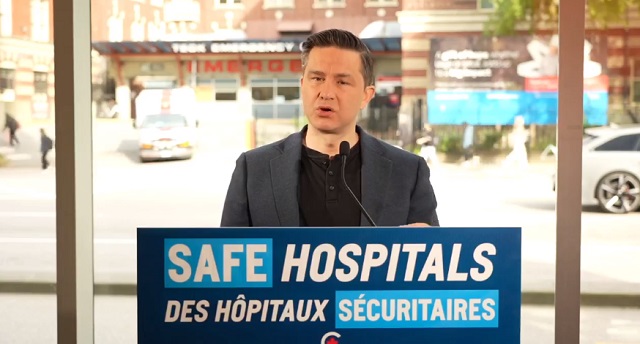
New release from the Conservative Party
The Hon. Pierre Poilievre, Leader of Canada’s Common Sense Conservatives, announced his plan today to ban dangerous weapons and drugs and punish those who harm doctors and nurses.
The Problem:
After nine years, Justin Trudeau’s radical experiment of decriminalizing hard drugs has failed. Since Trudeau formed government, over 42,000 Canadians have died from drug overdoses. Nanaimo, for example, has seen a nearly 400 percent increase in drug overdose deaths in the last four years alone, yet Trudeau decided to allow opioids, cocaine, heroin, and methamphetamine to be used in public places like hospitals and parks anyway.
The results of this experiment have been catastrophic. Chaos and disorder have reigned free in public spaces across British Columbia. Our once-safe hospitals are being destroyed by criminals and hard drugs, with the B.C. Nurses Union ringing the alarm bell, saying that patients and staff have been exposed to harmful, illegal drugs. The BC Nurses Union also reported that meth was being smoked in a unit just hours after the birth of a newborn baby. In northern British Columbia, the public health agency put out a memo telling hospital staff to allow patients to bring knives and other weapons into hospitals.
Life became so miserable that BC’s radical NDP Premier asked Justin Trudeau to walk back parts of his wacko decriminalization policy. But the Liberals haven’t learnt from their mistakes.
The Cause:
Two years ago, the Liberal Government granted the BC NDP Government’s request to allow hard drugs across the province, including in public spaces. In the first year of this reckless experiment, 2,500 Canadians died from drug overdoses. Meanwhile, community spaces like soccer fields, hospitals and city squares have been devastated by crime and disorder.
But Justin Trudeau refuses to rule out the requests from Toronto Public Health and the City of Montreal to allow hard drugs in Canada’s two largest cities. He also won’t say whether hard drugs should be allowed in children’s parks, hospitals and public transit. On top of this, the Liberal Minister of Mental Health refuses to acknowledge that their dangerous experiment was a failure.
The Solution:
Common Sense Conservatives will not allow this devastating experiment to play out in other Canadian communities. Canadians deserve a government that will keep hard drugs out of hospitals and will protect staff and patients. We will:
- Create an aggravating factor for the purposes of sentencing if a criminal has a weapon in a hospital.
- End the Health Minister’s power to grant exemptions under s.56 of the Controlled Drug and Substances Act if the exemption would allow people to use dangerous illicit drugs like fentanyl and meth in hospitals. This means that even if Trudeau grants Toronto and Montreal’s request to decriminalize hard drugs, our hospitals will be protected.
- Immediately pass Common Sense Conservative MP Todd Doherty’s Bill C-321, which will create an aggravating factor for assault committed against healthcare workers or first responders.
To be clear, the ban would not apply to any drugs prescribed by medical practitioners like doctors and nurses.
The Safe Hospitals Act will stop some of the insanity that Justin Trudeau and the NDP have unleashed on Canadians with their plan to decriminalize the public use of hard drugs everywhere in Canada. A Poilievre government will ban hard drugs, stop giving out taxpayer-funded opioids, and reinvest that money in treatment and recovery so we can bring home our loved ones drug-free.
Poilievre said:
“Justin Trudeau’s decriminalization experiment has failed. It has resulted in death, misery and destruction across British Columbia, while our hard-working nurses live in fear of inhaling dangerous drugs or being attacked by criminals.
“Instead of learning from this catastrophic mistake, Trudeau has doubled down. He’s refusing to reject Toronto and Montreal’s request to allow hard drugs like fentanyl and heroin to be used in Canada’s two biggest cities.
“Common Sense Conservatives will keep doctors, nurses and patients safe, even if Justin Trudeau won’t. The Liberals and NDP must vote for this common sense Bill until we can form a government that ends this deadly hard drug decriminalization experiment for good.”
Addictions
City of Toronto asks Trudeau gov’t to decriminalize hard drugs despite policy’s failure in BC

From LifeSiteNews
“Criminalizing the possession of drugs for personal use leads to discrimination and stigma, and contributes to people hiding their drug use from their physicians, friends, family, colleagues, and community”
The City of Toronto is asking Prime Minister Justin Trudeau’s government to decriminalize hard drugs.
In a March letter, Toronto city officials appealed to the Trudeau government to legalize all quantities of crack, cocaine, heroin, meth, and other hard drugs, despite warnings that it will bring increased chaos and violence to the city. Its reasoning is that people look askance at drug abuse and drug abusers, who then attempt to hide their habit.
“The evidence demonstrates that criminalizing the possession of drugs for personal use leads to discrimination and stigma, and contributes to people hiding their drug use from their physicians, friends, family, colleagues, and community,” the document claimed.
The letter, penned by Medical Officer of Health Dr. Eileen de Villa, City Manager Paul Johnson, and Chief of Police Myron Demkiw requested that the Trudeau government decriminalize hard drugs for young people as well as adults. The application places no limit on the quantity of drugs which would be legally obtained.
Toronto is already seeing a rise in crime since the election of Toronto mayor Olivia Chow. Canadians have pointed out that Toronto is dealing with several issues, without adding the decriminalization of hard drugs,
“Trudeau must reject Toronto’s application to allow public use of crack, cocaine, heroin, & other hard drugs,” Conservative Party leader Pierre Poilievre wrote on X, formerly known as Twitter.
“His dangerous policy cannot bring the same chaos, death & destruction to more Canadian cities,” he added.
Trudeau must reject Toronto's application to allow public use of crack, cocaine, heroin, & other hard drugs.
His dangerous policy cannot bring the same chaos, death & destruction to more Canadian cities. pic.twitter.com/hG5h9lsWPq
— Pierre Poilievre (@PierrePoilievre) May 1, 2024
Poilievre’s condemnation was echoed by Ontario Premier Doug Ford who promised, “I will fight this tooth and nail. This is the wrong way to go.”
Poilievre further explained that Canadians have already seen the dystopian effects of the decriminalization of hard drugs in British Columbia, which “has caused chaos in hospitals, playgrounds, parks, and public transport.”
READ: British Columbia should allow addicts to possess even more drugs, federal report suggests
Beginning in early 2023, Trudeau’s federal policy, in effect, decriminalized hard drugs on a trial-run basis in British Columbia.
Under the policy, the federal government began allowing people within the province to possess up to 2.5 grams of hard drugs without criminal penalty, but selling drugs remained a crime.
The province’s drug policy has been widely criticized, especially after it was found that the province broke three different drug-related overdose records in the first month the new law was in effect.
Last week, BC Premier David Eby finally admitted that the province’s ‘safe supply’ program was a failure and called on the Trudeau government to reverse the program. However, Trudeau has yet to respond to the province’s appeal for help.
“Safe supply“ is the term used to refer to government-prescribed drugs that are given to addicts under the assumption that a more controlled batch of narcotics reduces the risk of overdose. Critics of the policy argue that giving addicts drugs only enables their behavior, puts the public at risk, and disincentivizes recovery from addiction. Where “safe supply” has been implemented, it has not reduced the number of overdose deaths. It has sometimes even increased it.
The effects of decriminalizing hard drugs in parts of Canada have been exposed in Aaron Gunn’s recent documentary Canada is Dying, and in the British Telegraph journalist Steven Edginton’s mini-documentary, Canada’s Woke Nightmare: A Warning to the West.
Gunn says he documents the “general societal chaos and explosion of drug use in every major Canadian city.”
“Overdose deaths are up 1,000 percent in the last 10 years,” he said in his film, adding that “[e]very day in Vancouver four people are randomly attacked.”
Even Liberals have begun admitting that Trudeau’s drug program has not helped addicts but only added to their problems.
In April, Liberal MP Dr. Marcus Powlowski testified that violence from drug users has become a problem in Ottawa, especially in areas near the so-called “safe supply” centres which operate within blocks of Parliament Hill.
“A few months ago I was downtown in a bar here in Ottawa, not that I do that very often, but a couple of colleagues I met up with, one was assaulted as he was going to the bar, [and] another one was threatened,” said Powlowski.
“Within a month of that, I was returning down Wellington Street from downtown, the Rideau Centre, and my son who is 15 was coming after me,” he continued. “It was nighttime, and there was someone out in the middle of the street, yelling and screaming, accosting cars.”
RELATED: Liberal MP blasts Trudeau-backed ‘safe supply’ drug programs, linking them to ‘chaos’ in cities

Medical Elites’ Disgrace Over Ivermectin

Does Scottish gov’t turmoil signal the end of the ‘green’ agenda’s stranglehold on Europe?
Getting Real About Justin’s Real Estate Economy. It Won’t Last
Parent and gender dysphoria groups granted intervenor status in New Brunswick school policy case

Farming group accuses Canadian gov’t of trying to blame agriculture for ‘climate change’

Why Do The Same Few Always Get The Best Sports Scoops?

Proposed changes to Canada’s Competition Act could kneecap our already faltering economy

-
 Alberta1 day ago
30 million contraband cigarettes valued at $25 million dollars seized in Alberta
-
 COVID-196 hours ago
COVID Lab Leak: Over four later, EcoHealth Alliance funding is finally suspended
-
 Alberta2 days ago
Province announces next step to revamped health care system
-
 Alberta1 day ago
Pharmacist-led clinics improve access to health care: Lessons from Alberta
-
 Automotive1 day ago
Governments in Canada accelerate EV ‘investments’ as automakers reverse course
-
 Canadian Energy Centre1 day ago
Trans Mountain completion shows victory of good faith Indigenous consultation
-
 COVID-191 day ago
Healthcare workers obtain partial win against Bonnie Henry in BC Supreme Court
-
 COVID-1923 hours ago
Elon Musk-backed doctor critical of COVID response vows appeal after court sides with medical board