
Economy
A Fair Deal Includes Energy Security

This article contributed by Josh Andrus, Executive Director of Project Confederation
Energy security.
It’s a concept that has been ignored by many – including our federal government in Ottawa – for far too long.
Russia’s invasion of Ukraine has suddenly helped the world realize what’s been obvious to many Albertans for a long time – we still need oil and gas!
The same parade of politicians who crusaded to save the world from the threat of “catastrophic” climate change are now coming to the realization that there is a fundamental flaw in the Green New Deal / Leave It In The Ground / Build Back Better strategy.
Energy is the industry that powers every other industry – and as such, a safe supply of affordable, reliable energy is not only good for the domestic economy but also a crucial tool in an increasingly volatile international geopolitical landscape.
Earlier this week, after a big push by our friends at the Alberta Institute, and many other political and non-profit groups, the federal government finally announced that they would ban the importation of Russian oil.
Russia’s aggressive actions, and the related uncertainty, have now driven the price of crude oil over the $115/bbl benchmark.
[Editor’s note: we had to increase that price four times while writing this piece!]
Thankfully, Alberta has a large supply of energy resources, resources that could displace the loss of Russian imports and help keep energy affordable for Canadians.
Of course, it would have been better if our calls had been listened to years ago, and we had the infrastructure in place already!
But, as the saying goes:
The best time to build a pipeline was 20 years ago.
The second-best time is now!
If our politicians had any sense, Keystone XL and Energy East would have been given emergency approval the moment war broke out.
Yet, here we are, a week into a European war, and there’s been nary a whisper from the White House or Rideau Cottage.
If Alberta can’t convince Canada to build a pipeline in the middle of a war in Europe, we’ll surely never get one.
To make matters worse, the pipeline issues aren’t even the only possible problem on the horizon.
In past years, $100+ oil was good for Alberta.
Economic growth explodes, jobs are plentiful, and the pay is phenomenal.
Some of that will surely happen in the coming months, but with this current boom coinciding with major inflationary pressures, there are risks for Alberta too.
High energy prices and the ensuing increase in the cost of living will hurt the rest of the country.
The Rest of Canada will complain that Alberta has it so good, while they struggle to pay their hydro bills.
Will the Rest of Canada decide to start extracting their own plentiful natural resources, currently kept in the ground for nonsensical environmental concerns?
Of course not.
Ottawa will, undoubtedly, devise yet another means of wealth redistribution instead.
Once again, they’ll figure out a way to make Alberta pay for their poor policy choices.
They probably won’t have the gall to call it a “National Energy Program”.
But they might.
Remember, the major issues driving Western alienation are structural deficiencies in Confederation, deficiencies that have only gotten worse in recent decades, not better.
The West is underrepresented in Parliament, the Senate is unelected and ineffective at protecting Provincial rights, the very concept of fairness is undermined in our Constitution via equalization, and the Supreme Court screws the West and protects the rest.
At Project Confederation, our mission is clear:
To build a movement that will reform Confederation and achieve a fairer deal, in whatever legal configuration that may require.
I suspect we’re going to have a lot of work to do in the coming months!
If you’d like to help us with that work, please reach out to us to get involved, or consider making a donation to help fund our efforts.
Regards,
Josh Andrus
Executive Director
Project Confederation


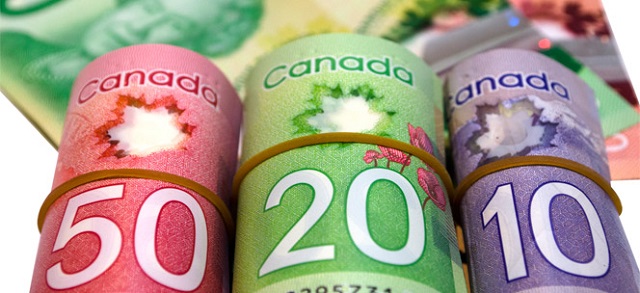
From the Canadian Taxpayers Federation
Author: Jay Goldberg
The Canadian Taxpayers Federation is criticizing the Trudeau and Ford governments to for giving $5 billion to the Honda Motor Company.
“The Trudeau and Ford governments are giving billions to yet another multinational corporation and leaving middle-class Canadians to pay for it,” said Jay Goldberg, CTF Ontario Director. “Prime Minister Justin Trudeau is sending small businesses bigger a bill with his capital gains tax hike and now he’s handing out billions more in corporate welfare to a huge multinational.
“This announcement is fundamentally unfair to taxpayers.”
The Trudeau government is giving Honda $2.5 billion. The Ford government announced an additional $2.5 billion subsidies for Honda.
The federal and provincial governments claim this new deal will create 1,000 new jobs, according to media reports. Even if that’s true, the handout will cost taxpayers $5 million per job. And according to Globe and Mail investigation, the government doesn’t even have a proper process in place to track whether promised jobs are actually created.
The Parliamentary Budget Officer has also called into question the government’s claims when it made similar multi-billion-dollar handouts to other multinational corporations.
“The break-even timeline for the $28.2 billion in production subsidies announced for Stellantis-LGES and Volkswagen is estimated to be 20 years, significantly longer than the government’s estimate of a payback within five years for Volkswagen,” wrote the Parliamentary Budget Officer said.
“If politicians want to grow the economy, they should cut taxes and red tape and cancel the corporate welfare,” said Franco Terrazzano, CTF Federal Director. “Just days ago, Trudeau said he wants the rich to pay more, so he should make rich multinational corporations pay for their own factories.”
From LifeSiteNews
If ‘the idea of a global corporate tax becomes normalized, we may eventually see other agreements to impose other taxes, on carbon, airfare, or who knows what.’
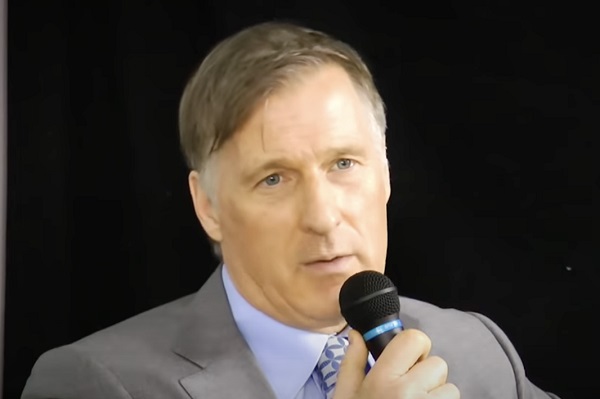
People’s Party of Canada leader Maxime Bernier has warned that the Liberal government’s push for World Economic Forum (WEF) “Global Tax” scheme should concern Canadians.
According to Canada’s 2024 Budget, Prime Minister Justin Trudeau is working to pass the WEF’s Global Minimum Tax Act which will mandate that multinational companies pay a minimum tax rate of 15 percent.
“Canadians should be very concerned, for several reasons,” People’s Party leader Maxime Bernier told LifeSiteNews, in response to the proposal.
“First, the WEF is a globalist institution that actively campaigns for the establishment of a world government and for the adoption of socialist, authoritarian, and reactionary anti-growth policies across the world,” he explained. “Any proposal they make is very likely not in the interest of Canadians.”
“Second, this minimum tax on multinationals is a way to insidiously build support for a global harmonized tax regime that will lower tax competition between countries, and therefore ensure that taxes can stay higher everywhere,” he continued.
“Canada reaffirms its commitment to Pillar One and will continue to work diligently to finalize a multilateral treaty and bring the new system into effect as soon as a critical mass of countries is willing,” the budget stated.
“However, in view of consecutive delays internationally in implementing the multilateral treaty, Canada cannot continue to wait before taking action,” it continued.
The Trudeau government also announced it would be implementing “Pillar Two,” which aims to establish a global minimum corporate tax rate.
“Pillar Two of the plan is a global minimum tax regime to ensure that large multinational corporations are subject to a minimum effective tax rate of 15 per cent on their profits wherever they do business,” the Liberals explained.
“The federal government is moving ahead with legislation to implement the regime in Canada, following consultations last summer on draft legislative proposals for the new Global Minimum Tax Act,” it continued.
According to the budget, Trudeau promised to introduce the new legislation in Parliament soon.
The global tax was first proposed by Secretary-General of Amnesty International at the WEF meeting in Davos this January.
“Let’s start taxing carbon…[but] not just carbon tax,” the head of Amnesty International, Agnes Callamard, said during a panel discussion.
According to the WEF, the tax, proposed by the Organization for Economic Co-operation and Development (OECD), “imposes a minimum effective rate of 15% on corporate profits.”
Following the meeting, 140 countries, including Canada, pledged to impose the tax.
While a tax on large corporations does not necessarily sound unethical, implementing a global tax appears to be just the first step in the WEF’s globalization plan by undermining the sovereignty of nations.
While Bernier explained that multinationals should pay taxes, he argued it is the role of each country to determine what those taxes are.
“The logic of pressuring countries with low taxes to raise them is that it lessens fiscal competition and makes it then less costly and easier for countries with higher taxes to keep them high,” he said.
Bernier pointed out that competition is good since it “forces everyone to get better and more efficient.”
“In the end, we all end up paying for taxes, even those paid by multinationals, as it causes them to raise prices and transfer the cost of taxes to consumers,” he warned.
Bernier further explained that the new tax could be a first step “toward the implementation of global taxes by the United Nations or some of its agencies, with the cooperation of globalist governments like Trudeau’s willing to cede our sovereignty to these international organizations.”
“Just like ‘temporary taxes’ (like the income tax adopted during WWI) tend to become permanent, ‘minimum taxes’ tend to be raised,” he warned. “And if the idea of a global corporate tax becomes normalized, we may eventually see other agreements to impose other taxes, on carbon, airfare, or who knows what.”
Trudeau’s involvement in the WEF’s plan should not be surprising considering his current environmental goals – which are in lockstep with the United Nations’ 2030 Agenda for Sustainable Development – which include the phasing out coal-fired power plants, reducing fertilizer usage, and curbing natural gas use over the coming decades.
The reduction and eventual elimination of so-called “fossil fuels” and a transition to unreliable “green” energy has also been pushed by the World Economic Forum – the aforementioned group famous for its socialist “Great Reset” agenda – in which Trudeau and some of his cabinet are involved.

Fentanyl Fiasco: The Tragic Missteps of BC’s Drug Policy
German parliament passes law allowing minors to change their legal gender once a year
Peckford: The legality and morality of our country are no longer aligned
Canada’s advantage as the world’s demand for plastic continues to grow
Maxime Bernier says it’s ‘astounding’ Alberta is ‘pushing’ COVID boosters, tells Danielle Smith to stop it

Canadian receives one-year jail sentence, lifetime firearms ban for setting church on fire
Trudeau’s 2024 budget includes $150 million to promote ‘2SLGBTQI+’ ideology at home and abroad


-
 Alberta1 day ago
Red Deer Doctor critical of Alberta’s COVID response to submit report to Danielle Smith this May
-
 COVID-192 days ago
Inquiry shows Canadian gov’t agencies have spent $10 million on social media ads for COVID jabs
-
 conflict1 day ago
Col. Douglas Macgregor torches Trump over support for bill funding wars in Ukraine and Israel
-
 Censorship Industrial Complex1 day ago
Now We Are Supposed to Cheer Government Surveillance?
-
 Business12 hours ago
Don’t be fooled by high-speed rail
-
 Alberta11 hours ago
Activity-Based Hospital Funding in Alberta: Insights from Quebec and Australia
-
 Business2 days ago
Federal government’s ‘fudget budget’ relies on fanciful assumptions of productivity growth
-
 Health2 days ago
Transgender activists are threatening the author of scathing UK report on child ‘sex changes’