Calgary
Why Not Me? – Conclusion


Conclusion
The concept of choosing positive over negative applies to all of the keys. Each key has the opposite choice available. You can choose to be positive or negative, constructive or destructive. Your life is yours to build, and it is yours to destroy. Taking charge of “how you think” is taking charge of your life.
“The happiness of your life depends on the quality of your thoughts; therefore, guard accordingly and take care that you entertain no notions unsuitable to virtue and reasonable nature.”
Marcus Antonius
Be responsible and accountable for your thoughts and your actions, as every action starts out as a thought.
None of us lives in a bubble. Our thoughts are a form of energy, and they have an effect on those around us. Remember that any temper tantrum, gossip session, or pity party will do harm to anyone whom you touch with that negative energy. By being aware of how your actions affect others, you will have more control over your choice of actions. You can yell at the girl in the drive-through window and wreck her day, or you can smile and pay her a nice compliment. Which choice do you think will make her feel better? Which choice do you think will make you feel better? Which will make the world better?
Of course, if the girl in the drive through window was a master of all of the keys, she would not be offended by a buffoon who needs to yell at her. Unfortunately, very few people are practitioners of higher thought. The chances are that the girl in the window is a regular human being with a regular skill set. How you choose to treat her will almost certainly have an effect on her. Even if by chance your actions do not affect her, your actions will still affect you. Choosing to be positive is choosing to be good to yourself. If you have learned to love and accept yourself, you will then have the strength to treat yourself well.
Instead of only walking the paths that will bring more toys into your garage, spend some time on the paths that will bring more joy into your life. It’s not the toys; it’s the joy that we are really striving for.
Think positive, think free;
Live positive, Live free.
– Mark Edward Meincke
More inspiration
“Courage is realizing you’re afraid and still acting.”
Rudi Guiliani
“A bit of advice given to a young Native American at the time of his initiation: ‘As you go the way of life, you will see a great chasm. Jump. It is not as wide as you think.’”
Joseph Campbell
“There came a time when the risk to remain tight in the bud was more painful than the risk it took to blossom.”
Anais Nin
“If we didn’t live venturously, plucking the wild goat by the beard, and trembling over precipices, we should never be depressed, I’ve no doubt, but already should be faded, fatalistic and aged.”
Virginia Woolf
“The meaning I picked, the one that changed my life: Overcome fear, behold wonder.”
Richard Bach
“Have courage for the great sorrows of life and patience for the small ones, and when you have laboriously accomplished your daily task, go to sleep in peace. God is awake.”
Victor Hugo
“It takes a lot of courage to release the familiar and seemingly secure, to embrace the new. There is more security in the adventurous and exciting, for in movement there is life, and in change there is power.”
Alan Cohen
“This is courage in a man: to bear unflinchingly what heaven sends.”
Euripedes
“The man who makes no mistakes does not usually make anything.”
Bishop W.C. Magee
“Every time you meet a situation, though you think at the time it is an impossibility and you go through the tortures of the damned, once you have met it and lived through it, you find that forever after you are freer than you were before.”
Eleanor Roosevelt
“Cowards die many times before their deaths; the valiant never taste of death but once.”
William Shakespeare
“One’s real life is often the life that one does not lead.”
Oscar Wilde
“Obstacles are those frightful things you see when you take your eyes off your goal.”
Henry Ford
“Twenty years from now you will be more disappointed by the things you didn’t do than by the ones you did do. So throw off the bowlines. Sail away from the safe harbor. Catch the trade winds in your sails. Explore. Dream. Discover.”
Mark Twain
“We never know how high we are Till we are called to rise;
And then, if we are true to plan, Our statures touch the skies.”
Emily Dickinson
“To dare is to lose one’s footing momentarily. Not to dare is to lose oneself.”
Soren Kierkegaard
“What would you attempt to do if you knew you could not fail?”
Marianne Williamson
“One doesn’t discover new lands without consenting to lose sight of the shore for a very long time.”
Andre Gide
“Ultimately we know deeply that the other side of every fear is a freedom.”
Marilyn Ferguson
“Plunge boldly into the thick of life!”
Goethe
“Confidence, like art, never comes from having all the answers; it comes from being open to all the questions.”
Earl Gray Stevens
“What worries you, masters you.”
Haddon W. Robinson
“One must think like a hero merely to behave like a decent human being.”
May Barton
About the Author
Mark Meincke is known as a profoundly insightful problem solver with an almost childlike curiosity about how things work & why they are how they are.
His natural talents enable him to reverse engineer results in order to indentify the key factors that caused them.
Mr. Meincke is highly regarded as an authority on achievement psychology, and is widely recognized as a dynamic, engaging speaker.
He currently lives on a picturesque acreage near Edmonton Alberta Canada with his wife and two young sons.


From the Fraser Institute
By Tegan Hill and Austin Thompson
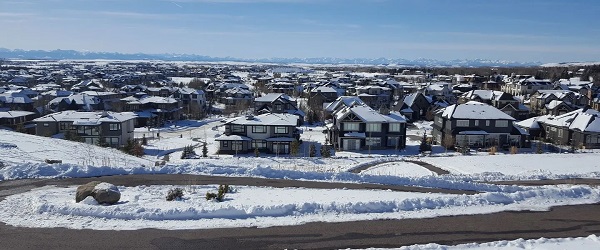
Calgary’s new mayor, Jeromy Farkas, has promised to scrap “blanket rezoning”—a policy enacted by the city in 2024 that allows homebuilders to construct duplexes, townhomes and fourplexes in most neighbourhoods without first seeking the blessing of city hall. In other words, amid an affordability crunch, Mayor Farkas plans to eliminate a policy that made homebuilding easier and cheaper—which risks reducing housing choices and increasing housing costs for Calgarian families.
Blanket rezoning was always contentious. Debate over the policy back in spring 2024 sparked the longest public hearing in Calgary’s history, with many Calgarians airing concerns about potential impacts on local infrastructure, parking availability and park space—all important issues.
Farkas argues that blanket rezoning amounts to “ignoring the community” and that Calgarians should not be forced to choose between a “City Hall that either stops building, or stops listening.” But in reality, it’s virtually impossible to promise more community input on housing decisions and build more homes faster.
If Farkas is serious about giving residents a “real say” in shaping their neighbourhood’s future, that means empowering them to alter—or even block—housing proposals that would otherwise be allowed under blanket rezoning. Greater public consultation tends to give an outsized voice to development opponents including individuals and groups that oppose higher density and social housing projects.
Alternatively, if the mayor and council reform the process to invite more public feedback, but still ultimately approve most higher-density projects (as was the case before blanket rezoning), the consultation process would be largely symbolic.
Either way, homebuilders would face longer costlier approval processes—and pass those costs on to Calgarian renters and homebuyers.
It’s not only the number of homes that matters, but also where they’re allowed to be built. Under blanket rezoning, builders can respond directly to the preferences of Calgarians. When buyers want duplexes in established neighbourhoods or renters want townhomes closer to work, homebuilders can respond without having to ask city hall for permission.
According to Mayor Farkas, higher-density housing should instead be concentrated near transit, schools and job centres, with the aim of “reducing pressure on established neighbourhoods.” At first glance, that may sound like a sensible compromise. But it rests on the flawed assumption that politicians and planners should decide where Calgarians are allowed to live, rather than letting Calgarians make those choices for themselves. With blanket rezoning, new homes are being built in areas in response to buyer and renter demand, rather than the dictates of city hall. The mayor also seems to suggest that city hall should thwart some redevelopment in established neighbourhoods, limiting housing options in places many Calgarians want to live.
The stakes are high. Calgary is not immune to Canada’s housing crisis, though it has so far weathered it better than most other major cities. That success partly reflects municipal policies—including blanket rezoning—that make homebuilding relatively quick and inexpensive.
A motion to repeal blanket rezoning is expected to be presented to Calgary’s municipal executive committee on Nov. 17. If it passes, which is likely, the policy will be put to a vote during a council meeting on Dec. 15. As the new mayor and council weigh changes to zoning rules, they should recognize the trade-offs. Empowering “the community” may sound appealing, but it may limit the housing choices available to families in those communities. Any reforms should preserve the best elements of blanket rezoning—its consistency, predictability and responsiveness to the housing preferences of Calgarians—and avoid erecting zoning barriers that have exacerbated the housing crisis in other cities.

Tegan Hill
Director, Alberta Policy, Fraser Institute

Austin Thompson

This article supplied by Troy Media.

The mayor’s controversial term is over, but a divided conservative base may struggle to take the city in a new direction
Calgary’s mayoral election went to a recount. Independent candidate Jeromy Farkas won with 91,112 votes (26.1 per cent). Communities First candidate Sonya Sharp was a very close second with 90,496 votes (26 per cent) and controversial incumbent mayor Jyoti Gondek finished third with 71,502 votes (20.5 per cent).
Gondek’s embarrassing tenure as mayor is finally over.
Gondek’s list of political and economic failures in just a single four-year term could easily fill a few book chapters—and most likely will at some point. She declared a climate emergency on her first day as Calgary’s mayor that virtually no one in the city asked for. She supported a four per cent tax increase during the COVID-19 pandemic, when many individuals and families were struggling to make ends meet. She snubbed the Dec. 2023 menorah lighting during Hanukkah because speakers were going to voice support for Israel a mere two months after the country was attacked by the bloodthirsty terrorist organization Hamas. The
Calgary Party even accused her last month of spending over $112,000 in taxpayers’ money for an “image makeover and brand redevelopment” that could have benefited her re-election campaign.
How did Gondek get elected mayor of Calgary with 176,344 votes in 2021, which is over 45 per cent of the electorate?
“Calgary may be a historically right-of-centre city,” I wrote in a recent National Post column, “but it’s experienced some unusual voting behaviour when it comes to mayoral elections. Its last three mayors, Dave Bronconnier, Naheed Nenshi and Gondek, have all been Liberal or left-leaning. There have also been an assortment of other Liberal mayors in recent decades like Al Duerr and, before he had a political epiphany, Ralph Klein.”
In fairness, many Canadians used to support the concept of balancing their votes in federal, provincial and municipal politics. I knew of some colleagues, friends and family members, including my father, who used to vote for the federal Liberals and Ontario PCs. There were a couple who supported the federal PCs and Ontario Liberals in several instances. In the case of one of my late
grandfathers, he gave a stray vote for Brian Mulroney’s federal PCs, the NDP and even its predecessor, the Co-operative Commonwealth Federation.
That’s not the case any longer. The more typical voting pattern in modern Canada is one of ideological consistency. Conservatives vote for Conservative candidates, Liberals vote for Liberal candidates, and so forth. There are some rare exceptions in municipal politics, such as the late Toronto mayor Rob Ford’s populistconservative agenda winning over a very Liberal city in 2010. It doesn’t happen very often these days, however.
I’ve always been a proponent of ideological consistency. It’s a more logical way of voting instead of throwing away one vote (so to speak) for some perceived model of political balance. There will always be people who straddle the political fence and vote for different parties and candidates during an election. That’s their right in a democratic society, but it often creates a type of ideological inconsistency that doesn’t benefit voters, parties or the political process in general.
Calgary goes against the grain in municipal politics. The city’s political dynamics are very different today due to migration, immigration and the like. Support for fiscal and social conservatism may still exist in Alberta, but the urban-rural split has become more profound and meaningful than the historic left-right divide. This makes the task of winning Calgary in elections more difficult for today’s provincial and federal Conservatives, as well as right-leaning mayoral candidates.
That’s what we witnessed during the Oct. 20 municipal election. Some Calgary Conservatives believed that Farkas was a more progressive-oriented conservative or centrist with a less fiscally conservative plan and outlook for the city. They viewed Sharp, the leader of a right-leaning municipal party founded last December, as a small “c” conservative and much closer to their ideology. Conversely, some Calgary Conservatives felt that Farkas, and not Sharp, would be a better Conservative option for mayor because he seemed less ideological in his outlook.
When you put it all together, Conservatives in what used to be one of the most right-leaning cities in a historically right-leaning province couldn’t decide who was the best political option available to replace the left-wing incumbent mayor. Time will tell if they chose wisely.
Fortunately, the razor-thin vote split didn’t save Gondek’s political hide. Maybe ideological consistency will finally win the day in Calgary municipal politics once the recount has ended and the city’s next mayor has been certified.
Michael Taube is a political commentator, Troy Media syndicated columnist and former speechwriter for Prime Minister Stephen Harper. He holds a master’s degree in comparative politics from the London School of Economics, lending academic rigour to his political insights.
Troy Media empowers Canadian community news outlets by providing independent, insightful analysis and commentary. Our mission is to support local media in helping Canadians stay informed and engaged by delivering reliable content that strengthens community connections and deepens understanding across the country


Wisdom of Our Elders: The Contempt for Memory in Canadian Indigenous Policy
Liberal bill “targets Christians” by removing religious exemption in hate-speech law

Egypt, Iran ‘completely reject’ World Cup ‘Pride Match’ plan

Canada’s free speech record is cracking under pressure
-
 Energy2 days ago
Tanker ban politics leading to a reckoning for B.C.
-
 Energy2 days ago
Meet REEF — the massive new export engine Canadians have never heard of
-
 Energy21 hours ago
Canada’s future prosperity runs through the northwest coast
-
 Fraser Institute2 days ago
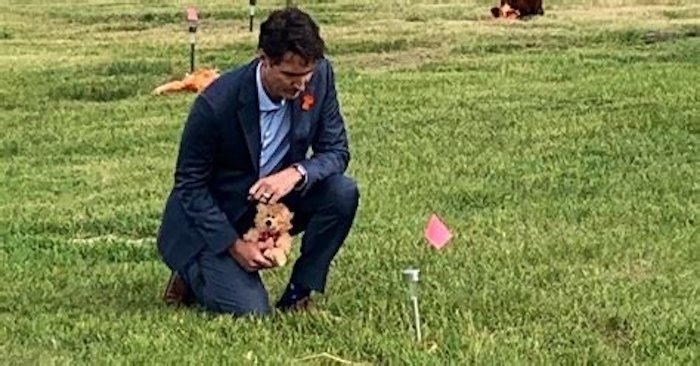
Claims about ‘unmarked graves’ don’t withstand scrutiny
-
 Alberta2 days ago
Here’s why city hall should save ‘blanket rezoning’ in Calgary
-
 Business2 days ago
Too nice to fight, Canada’s vulnerability in the age of authoritarian coercion
-
 Business2 days ago
UNDRIP now guides all B.C. laws. BC Courts set off an avalanche of investment risk
-
 Fly Straight - John Ivison2 days ago
MPs who cross the floor are dishonourable members