Connect with us
[the_ad id="89560"]

Agriculture

Why are farmer protests sparking up around the world?

Published

11 minute read

—————

From Michael Shellenberger on Substack

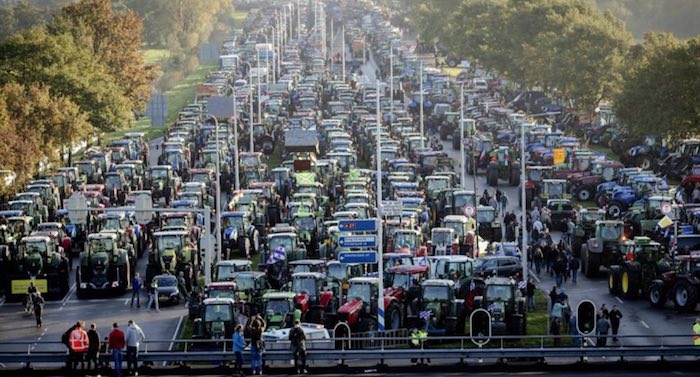
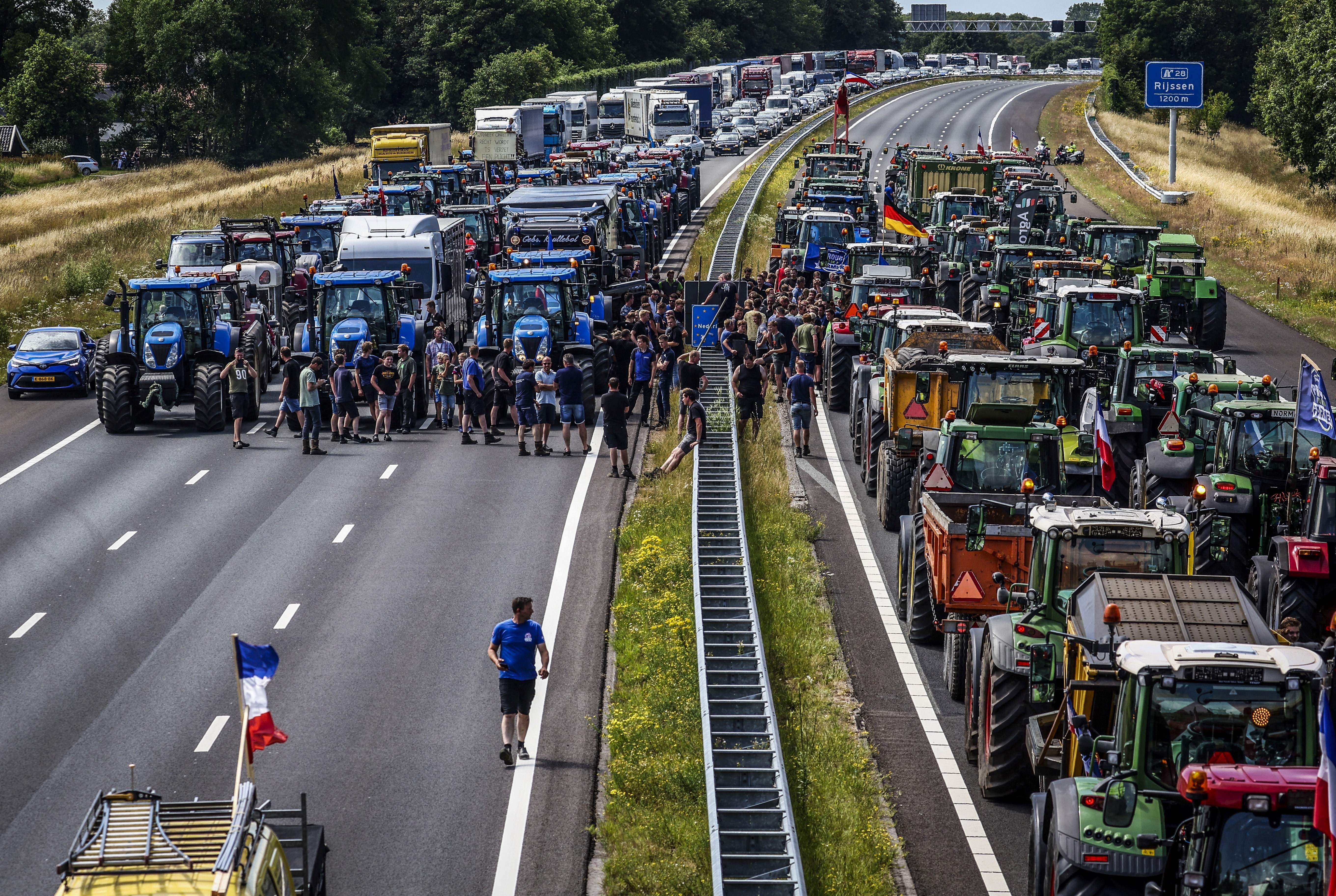
Dutch Farmers Revolt Against Green Elites

Even Mick Jagger is sympathetic

Zijn er ook boeren?” shouted Mick Jagger, in Dutch, into the microphone at a Rolling Stones concert in the Netherlands last week. “Are there any farmers in the house?”

Dutch farmers make for an unlikely cause célèbre. For starters, most are conservative, not liberal. And they are fighting against stricter environmental regulations, not for them.

Yet they are winning over liberal-minded people like me who sympathize with the family farmers who provide us with our daily bread and yet receive so little respect from society’s ruling elites.

And now they’re inspiring protests by other farmers across Europe, including in Germany, Poland and Italy. Along with the protests that brought down the government of Sri Lanka, they constitute a growing global revolt against green elites.

I have praised the current Dutch government for being sensible on matters like climate change. Last year it embraced nuclear energy, one of the first Western nations to do so since the 2011 Fukushima accident spooked the world.

But the government’s poor treatment of its farmers has shocked me. The prime minister recently called the protesting farmers “a – – holes,” and sniffed, “It is not acceptable to create dangerous situations.” And yet it was a Dutch police officer, not a farmer, who inexplicably fired on a 16-year-old boy driving a tractor. Luckily, he wasn’t injured.

Share

While nitrogen pollution worsens climate change, the government says its main motivation for reducing it is about protecting its nature areas. Scientists say that in 118 of 162 of the Netherlands’ nature preserves nitrogen deposits are 50% higher than they should be.

Without a doubt the Dutch should do more to protect their nature areas. The country produces four times more nitrogen pollution than the European average, due to its intensive animal agriculture.

The Netherlands is the largest exporter of meat in Europe and the second largest exporter of food overall after the United States, a remarkable feat for a nation half the size of Indiana. Food exports generate more than $100 billion a year in revenue. Experts attribute the nation’s success to its farmers’ embrace of technological innovation.

But even many on the political left say the government demands are too extreme, based on radical green fantasies and dodgy science. “It seems to be very fast,” saidWim de Vries, a professor at Wageningen University and Research who 10 years ago made alarmist claims about “planetary boundaries.”

What, exactly, is going on?

Michael Shellenberger is the author of “Apocalypse Never” and a Time Magazine “Hero of the Environment.”

——————-

The situation in Sri Lanka is even more volatile where food shortages are already affecting 1 in 5 people and threatening the majority of the remaining population. The situation this week turned extremely dangerous as massive crowds forced the President to resign.  More on that below.

——————-       

This news article from The New Indian Express was published back on June 18.

Sri Lanka’s agriculture minister forced to flee premises after being jeered by farmers: Report

COLOMBO: Sri Lanka’s Agriculture Minister Mahinda Amaraweera on Saturday was jeered by a group of farmers who protested his visit to an agriculture-related programme in Tissamaharama, a town situated in the country’s southern province in Hambantota district, forcing him to flee the premises.

Amaraweera visited the Tissamaharama Divisional Secretariat on Saturday to attend an agriculture-related programme.

Upon his arrival, a group of angry locals, consisting mostly of farmers, gathered opposite the local government body and staged a protest, according to web portal newsfirst.lk.

When the minister attempted to inquire, chaos broke out forcing the minister to flee the premises, the report added.

Sri Lanka’s economic meltdown has taken a severe toll on the agricultural sector.

A blanket ban on the use of chemical fertilisers imposed by President Gotabaya Rajapaksa in April 2021 has caused a crippling blow to rice production in the country.

Prime Minister Ranil Wickremesinghe has predicted that by September this year, around four to five million out of the country’s 22 million population could be directly affected by food shortage.

In such a grim scenario, farmers across the island nation have been forced to abandon their fields.

Earlier this week, the Cabinet also approved a move to grant government officials one leave per week for the next three months to engage in agriculture to mitigate the approaching food crisis.

The Sri Lanka Army will also take part in a farming drive aimed at cultivating over 1,500 acres of barren or abandoned state land to multiply food production and avert any shortage in the future, newsfirst.lk reported.

Sri Lanka which is facing its worst economic crisis since independence from Britain in 1948.

The economic crisis has led to an acute shortage of essential items like food, medicine, cooking gas, fuel and toilet paper, with Sri Lankans being forced to wait in lines for hours outside stores to buy fuel and cooking gas.

The nearly bankrupt country, with an acute foreign currency crisis that resulted in foreign debt default, announced in April that it is suspending nearly USD 7 billion foreign debt repayment due for this year out of about USD 25 billion due through 2026.

Sri Lanka’s total foreign debt stands at USD 51 billion.

———-

This report from Aljazeera dated March 30, 2022 shows how this hunger crisis has been brewing for months.

———-

This week massive crowds stormed the Presidential Secretariat and then the Presidential House resulting in the President leaving the country and stepping down.

Here’s a report on the fall of the government from Sky News


Before Post

After 15 years as a TV reporter with Global and CBC and as news director of RDTV in Red Deer, Duane set out on his own 2008 as a visual storyteller. During this period, he became fascinated with a burgeoning online world and how it could better serve local communities. This fascination led to Todayville, launched in 2016.

Follow Author

Agriculture

Health Canada indefinitely pauses plan to sell unlabeled cloned meat after massive public backlash

Published on

From LifeSiteNews

By Clare Marie Merkowsky

Health Canada has indefinitely paused its plan to allow unlabeled cloned meat in grocery stores after thousands of Canadians, prominent figures, and industry leaders condemned the move.

Health Canada is pausing its plan to put unlabeled cloned meat in Canadian grocery stores, following public outcry.

In a November 19 update on its website, Health Canada announced an indefinite suspension of the decision to remove labels from cloned meat products after thousands of Canadians condemned the plan online.

“The Government of Canada has received significant input from both consumers and industry about the implications of this potential policy update,” the publication read. “The Department has therefore indefinitely paused the policy update to provide time for further discussions and consideration,” it continued, adding, “Until the policy is updated, foods made from cloned cattle and swine will remain subject to the novel food assessment.”

In late October, Health Canada quietly approved removing labels from foods derived from somatic cell nuclear transfer (SCNT) clones and their offspring. As a result, Canadians buying meat from the grocery store would have had no way of knowing if the product was cloned meat.

Many researchers have documented high rates of cloning failure, large offspring syndrome (LOS), placental abnormalities, early death, and organ defects in cloned animals. The animals are also administered heavy doses of antibiotics due to infections and immune issues.

Typically, the offspring of cloned animals, rather than the cloned animals themselves, are processed for human consumption. As a result, researchers allege that the health defects and high drug use does not affect the final product.

However, there are no comprehensive human studies on the effects of eating cloned meat, meaning that the side-effects for humans are unknown.

News of the plan spread quickly on social media, with thousands of Canadians condemning the plan and promising to switch to local meat providers.

“By authorizing the sale of meat from cloned animals without mandatory labeling or a formal public announcement, Health Canada risks repeating a familiar and costly failure in risk communication. Deeply disappointing,” food policy expert and professor at Dalhousie University Sylvain Charlebois wrote on X.

Likewise, Conservative MP Leslyn Lewis warned, “Health Canada recently decided that meat from cloned animals and their offspring no longer needs a special review or any form of disclosure.”

“That means, soon you could buy beef or pork and have no idea how it was bred,” she continued. “Other countries debate this openly: the EU has considered strict labelling, and even the U.S. has admitted that cloned-offspring meat is circulating.”

“But here in Canada, the public wasn’t even told. This is about informed choice,” Lewis declared. “If government and industry don’t have to tell us when meat comes from cloned animals, then Canadians need to ask a simple, honest question: What else are we not being told?”

Likewise, duBreton, a leading North American supplier of organic pork based out of Quebec, denounced the move, saying, “Canadians expect clarity, transparency, and meaningful consultation on issues that directly touch their food supply. As producers, we consider it our responsibility and believe our governing food authorities should too.”

According to a survey conducted by duBreton, 74 percent of Canadians believe that “cloned meat and genetic editing practices have no place in farm and food systems.”

Continue Reading

Agriculture

Federal cabinet calls for Canadian bank used primarily by white farmers to be more diverse

Published on

From LifeSiteNews

By Anthony Murdoch

A finance department review suggested women, youth, Indigenous, LGBTQ, Black and racialized entrepreneurs are underserved by Farm Credit Canada.

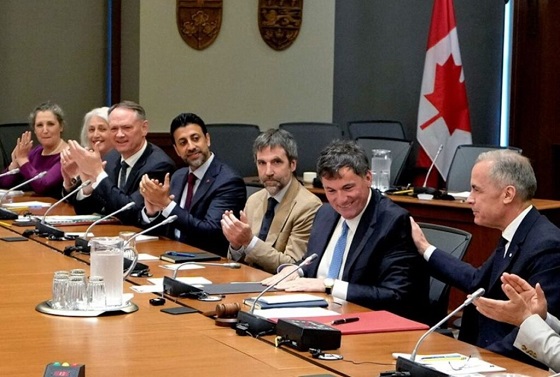
The Cabinet of Prime Minister Mark Carney said in a note that a Canadian Crown bank mostly used by farmers is too “white” and not diverse enough in its lending to “traditionally underrepresented groups” such as LGBT minorities.

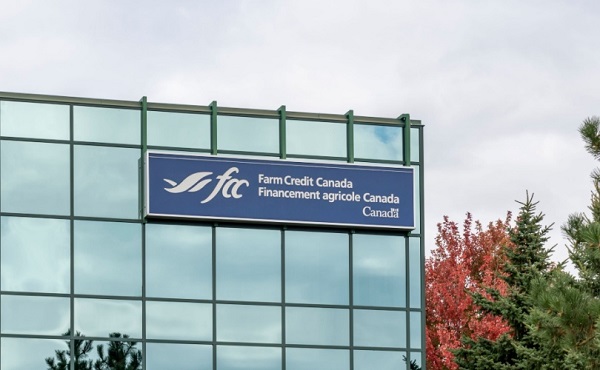
Farm Credit Canada Regina, in Saskatchewan, is used by thousands of farmers, yet federal cabinet overseers claim its loan portfolio needs greater diversity.

The finance department note, which aims to make amendments to the Farm Credit Canada Act, claims that agriculture is “predominantly older white men.”

Proposed changes to the Act mean the government will mandate “regular legislative reviews to ensure alignment with the needs of the agriculture and agri-food sector.”

“Farm operators are predominantly older white men and farm families tend to have higher average incomes compared to all Canadians,” the note reads.

“Traditionally underrepresented groups such as women, youth, Indigenous, LGBTQ, and Black and racialized entrepreneurs may particularly benefit from regular legislative reviews to better enable Farm Credit Canada to align its activities with their specific needs.”

The text includes no legal amendment, and the finance department did not say why it was brought forward or who asked for the changes.

Canadian census data shows that there are only 590,710 farmers and their families, a number that keeps going down. The average farmer is a 55-year-old male and predominantly Christian, either Catholic or from the United Church.

Data shows that 6.9 percent of farmers are immigrants, with about 3.7 percent being “from racialized groups.”

Historically, most farmers in Canada are multi-generational descendants of Christian/Catholic Europeans who came to Canada in the mid to late 1800s, mainly from the United Kingdom, Ireland, Ukraine, Russia, Italy, Poland, the Netherlands, Germany, and France.

Continue Reading

Trending

X