
Uncategorized
UCP MLA says Albertans do not want Kenney 2.0

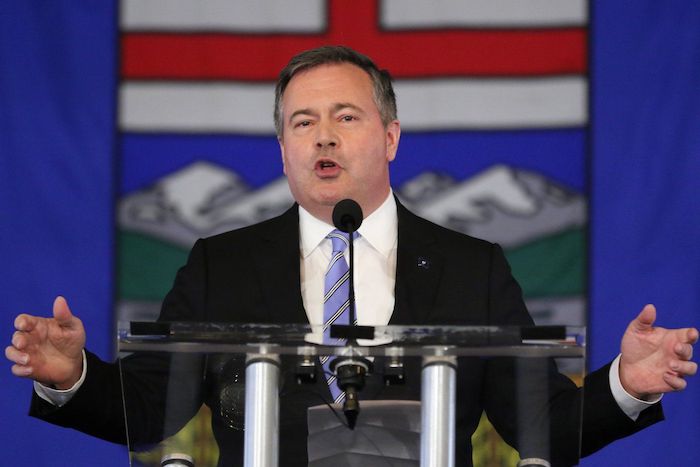

Article submitted by Red Deer South MLA Jason Stephan
Time for Kenney to Put His Straw Men Away
Kenney wanted a new base. The base wanted a new leader. Despite Kenney’s political games seeking to manipulate his own democratic check and balance, he lost, and popular sovereignty won.

Popular sovereignty is the principle that the authority of government is created and sustained by the consent of its people. Benjamin Franklin expressed this principle as follows “free governments, the rulers are the servants and the people their superiors and sovereigns”.
Alberta needs more popular sovereignty, more checks and balances on the use and abuse of power. Kenney gave a “grassroots guarantee”. The grassroots said stand up to Ottawa. Kenney said “yes” and did “no”.
Kenney is a career politician. Soon he will be able to start receiving his Ottawa gold-plated pension at 55, much more than a hundred thousand each year, for the rest of his life. Kenney has a vested interest in the status quo.
What about Salma Lakhani, Alberta’s lieutenant governor? Prior to her appointment by Trudeau in 2020, she donated over $25,000 to the corrupt Trudeau Liberal party. Was she appointed because she was one of the largest, and only donors in Alberta, to Trudeau’s party? Is her obvious support for Trudeau, the worst prime minister in Canadian history, representative of Albertans? Like Kenney, she also chose to cast aspersions on a Sovereignty Act for Alberta, but she is a figurehead enjoying privilege of a political elite, also having a vested interest in the status quo.
Great leaders lead in love and inspire the best in those they serve. They remember the principles of popular sovereignty, that their position is only “of the people, by the people, for the people.”
In his leadership review, Kenney called the people of Alberta who disagreed with him “kooks”, “lunatics” and “bugs”. How did that work out for him?
Kenney is now calling the Sovereignty Act “nuts”, “cockamamie” and “catastrophically stupid”. Is that going to produce unity? No.
Kenney says he is “not endorsing or opposing a particular candidate”. We all know that is not true.
Kenney not only engages in patterns of name calling, but also patterns of saying one thing and doing something else. Many no longer trust Kenney.
Is Kenney thinking that if he cannot win, or his intended Kenney 2.0, then he will sabotage to try to make sure no one can?
Kenney is calling the Free Alberta Strategy, the organization who formulated the original version of an Alberta Sovereignty Act, a “far right extremist group”. I participated in some of their townhalls. So did Danielle Smith and Todd Loewen. So did some of my MLA colleagues seeking to protect Alberta businesses and families from Ottawa. Kenney sounds like Trudeau. Are we now part of a “fringe minority” with “unacceptable views”?
Kenney knows it is inappropriate to intermeddle in the leadership race to replace him, so Kenney is trying to be sneaky, doing indirectly what he knows he should not do directly.
Isn’t Kenney acting like Trudeau? Doesn’t Ottawa seek to do indirectly, what constitutionally it is not allowed to do directly, such as with Alberta’s constitutional authority over its oil and gas resources? Didn’t Alberta’s Court of Appeal describe Trudeau’s carbon tax as a sneaky “constitutional trojan
horse”?
Isn’t Trudeau proposing a new carbon tax or cap and trade that singles out and disproportionately punishes Alberta? Wouldn’t that inflict more economic “chaos”, chasing out additional billions in investment and Alberta jobs with it? What is Kenney doing about it? Drafting a sternly worded letter?
Isn’t the purpose of the Sovereignty Act, to assert and defend constitutional parameters that Ottawa habitually ignores and attacks?
I know and respect each of the UCP leadership candidates. But Albertans do not want Kenney or a Kenney 2.0 and some of them need to take care to not act like Kenney, put the straw men away, and stop misrepresenting the Sovereignty Act and then attacking the worst version of it manufactured out of their misrepresentations, only existing in their minds. If Sovereignty Act is so bad, instead of fear mongering with straw men, let’s hear your ideas and solutions.
If candidates want to walk the talk on unity, stop looking the other way, and ask Kenney to do what he said he would do and be quiet. That will produce more unity and that is what Albertans want.

Uncategorized
Mortgaging Canada’s energy future — the hidden costs of the Carney-Smith pipeline deal


Much of the commentary on the Carney-Smith pipeline Memorandum of Understanding (MOU) has focused on the question of whether or not the proposed pipeline will ever get built.
That’s an important topic, and one that deserves to be examined — whether, as John Robson, of the indispensable Climate Discussion Nexus, predicted, “opposition from the government of British Columbia and aboriginal groups, and the skittishness of the oil industry about investing in a major project in Canada, will kill [the pipeline] dead.”
But I’m going to ask a different question: Would it even be worth building this pipeline on the terms Ottawa is forcing on Alberta? If you squint, the MOU might look like a victory on paper. Ottawa suspends the oil and gas emissions cap, proposes an exemption from the West Coast tanker ban, and lays the groundwork for the construction of one (though only one) million barrels per day pipeline to tidewater.
But in return, Alberta must agree to jack its industrial carbon tax up from $95 to $130 per tonne at a minimum, while committing to tens of billions in carbon capture, utilization, and storage (CCUS) spending, including the $16.5 billion Pathways Alliance megaproject.
Here’s the part none of the project’s boosters seem to want to mention: those concessions will make the production of Canadian hydrocarbon energy significantly more expensive.
As economist Jack Mintz has explained, the industrial carbon tax hike alone adds more than $5 USD per barrel of Canadian crude to marginal production costs — the costs that matter when companies decide whether to invest in new production. Layer on the CCUS requirements and you get another $1.20–$3 per barrel for mining projects and $3.60–$4.80 for steam-assisted operations.
While roughly 62% of the capital cost of carbon capture is to be covered by taxpayers — another problem with the agreement, I might add — the remainder is covered by the industry, and thus, eventually, consumers.
Total damage: somewhere between $6.40 and $10 US per barrel. Perhaps more.
“Ultimately,” the Fraser Institute explains, “this will widen the competitiveness gap between Alberta and many other jurisdictions, such as the United States,” that don’t hamstring their energy producers in this way. Producers in Texas and Oklahoma, not to mention Saudi Arabia, Venezuela, or Russia, aren’t paying a dime in equivalent carbon taxes or mandatory CCUS bills. They’re not so masochistic.
American refiners won’t pay a “low-carbon premium” for Canadian crude. They’ll just buy cheaper oil or ramp up their own production.
In short, a shiny new pipe is worthless if the extra cost makes barrels of our oil so expensive that no one will want them.
And that doesn’t even touch on the problem for the domestic market, where the higher production cost will be passed onto Canadian consumers in the form of higher gas and diesel prices, home heating costs, and an elevated cost of everyday goods, like groceries.
Either way, Canadians lose.
So, concludes Mintz, “The big problem for a new oil pipeline isn’t getting BC or First Nation acceptance. Rather, it’s smothering the industry’s competitiveness by layering on carbon pricing and decarbonization costs that most competing countries don’t charge.” Meanwhile, lurking underneath this whole discussion is the MOU’s ultimate Achilles’ heel: net-zero.
The MOU proudly declares that “Canada and Alberta remain committed to achieving Net-Zero greenhouse gas emissions by 2050.” As Vaclav Smil documented in a recent study of Net-Zero, global fossil-fuel use has risen 55% since the 1997 Kyoto agreement, despite trillions spent on subsidies and regulations. Fossil fuels still supply 82% of the world’s energy.
With these numbers in mind, the idea that Canada can unilaterally decarbonize its largest export industry in 25 years is delusional.
This deal doesn’t secure Canada’s energy future. It mortgages it. We are trading market access for self-inflicted costs that will shrink production, scare off capital, and cut into the profitability of any potential pipeline. Affordable energy, good jobs, and national prosperity shouldn’t require surrendering to net-zero fantasy.If Ottawa were serious about making Canada an energy superpower, it would scrap the anti-resource laws outright, kill the carbon taxes, and let our world-class oil and gas compete on merit. Instead, we’ve been handed a backroom MOU which, for the cost of one pipeline — if that! — guarantees higher costs today and smothers the industry that is the backbone of the Canadian economy.
This MOU isn’t salvation. It’s a prescription for Canadian decline.
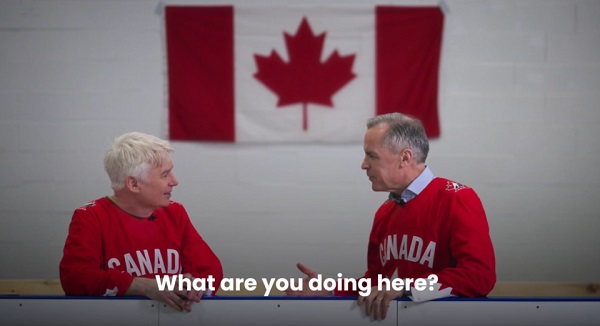

The cost of the bureaucracy increased by $6 billion last year, according to newly released numbers in Public Accounts disclosures. The Canadian Taxpayers Federation is calling on Prime Minister Mark Carney to immediately shrink the bureaucracy.
“The Public Accounts show the cost of the federal bureaucracy is out of control,” said Franco Terrazzano, CTF Federal Director. “Tinkering around the edges won’t cut it, Carney needs to take urgent action to shrink the bloated federal bureaucracy.”
The federal bureaucracy cost taxpayers $71.4 billion in 2024-25, according to the Public Accounts. The cost of the federal bureaucracy increased by $6 billion, or more than nine per cent, over the last year.
The federal bureaucracy cost taxpayers $39.6 billion in 2015-16, according to the Public Accounts. That means the cost of the federal bureaucracy increased 80 per cent over the last 10 years. The government added 99,000 extra bureaucrats between 2015-16 and 2024-25.
Half of Canadians say federal services have gotten worse since 2016, despite the massive increase in the federal bureaucracy, according to a Leger poll.
Not only has the size of the bureaucracy increased, the cost of consultants, contractors and outsourcing has increased as well. The government spent $23.1 billion on “professional and special services” last year, according to the Public Accounts. That’s an 11 per cent increase over the previous year. The government’s spending on professional and special services more than doubled since 2015-16.
“Taxpayers should not be paying way more for in-house government bureaucrats and way more for outside help,” Terrazzano said. “Mere promises to find minor savings in the federal bureaucracy won’t fix Canada’s finances.
“Taxpayers need Carney to take urgent action and significantly cut the number of bureaucrats now.”
Table: Cost of bureaucracy and professional and special services, Public Accounts
| Year | Bureaucracy | Professional and special services |
|
$71,369,677,000 |
$23,145,218,000 |
|
|
$65,326,643,000 |
$20,771,477,000 |
|
|
$56,467,851,000 |
$18,591,373,000 |
|
|
$60,676,243,000 |
$17,511,078,000 |
|
|
$52,984,272,000 |
$14,720,455,000 |
|
|
$46,349,166,000 |
$13,334,341,000 |
|
|
$46,131,628,000 |
$12,940,395,000 |
|
|
$45,262,821,000 |
$12,950,619,000 |
|
|
$38,909,594,000 |
$11,910,257,000 |
|
|
$39,616,656,000 |
$11,082,974,000 |


Rulings could affect energy prices everywhere: Climate activists v. the energy industry in 2026

China Stages Massive Live-Fire Encirclement Drill Around Taiwan as Washington and Japan Fortify
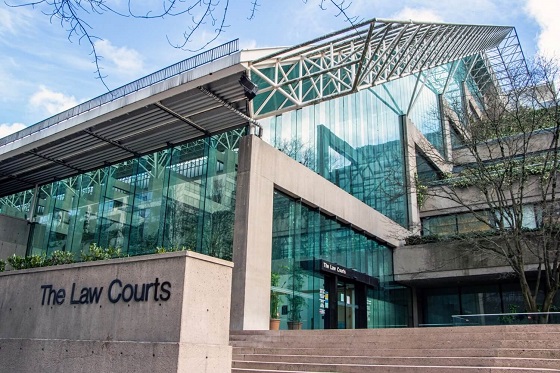
Land use will be British Columbia’s biggest issue in 2026

Why Japan wants Western Canadian LNG

Mainstream media missing in action as YouTuber blows lid off massive taxpayer fraud
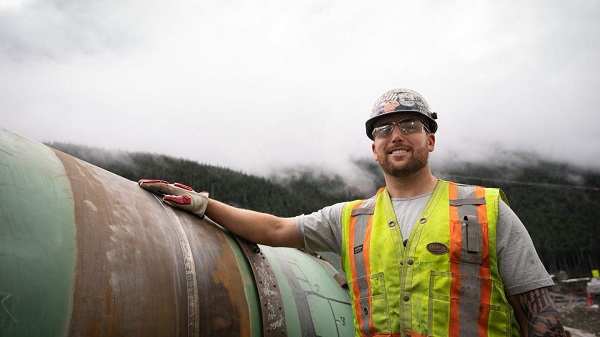
The Canadian Energy Centre’s biggest stories of 2025

The Global Push for Government Mandated Digital IDs And Why You Should Worry
-
 Business1 day ago
Vacant Somali Daycares In Viral Videos Are Also Linked To $300 Million ‘Feeding Our Future’ Fraud
-
 Energy1 day ago
The U.S. Just Removed a Dictator and Canada is Collateral Damage
-
 Haultain Research23 hours ago
Trying to Defend Maduro’s Legitimacy
-
International1 day ago
Trump Says U.S. Strike Captured Nicolás Maduro and Wife Cilia Flores; Bondi Says Couple Possessed Machine Guns
-
 International1 day ago
U.S. Claims Western Hemispheric Domination, Denies Russia Security Interests On Its Own Border
-
 International1 day ago
“Captured and flown out”: Trump announces dramatic capture of Maduro
-
International1 day ago
US Justice Department Accusing Maduro’s Inner Circle of a Narco-State Conspiracy
-
International23 hours ago
“It’s Not Freedom — It’s the First Step Toward Freedom”