
Uncategorized
Trump says he supports ‘comprehensive’ FBI Kavanaugh probe


WASHINGTON — President Donald Trump said Monday he wants the FBI to do a “comprehensive” investigation into allegations of sexual misconduct by Brett Kavanaugh. But he also said he stands by his Supreme Court nominee “all the way.”

Trump said during a Rose Garden press conference that he wants the probe to wrap up quickly because the accusations have been “so unfair” to Kavanaugh and his family. But he said it’s fine with him if the FBI wants to pursue accusations made by three women who have publicly come forward even as he has left the scope of the investigation to Senate Republicans.
“My White House will do whatever the senators want,” Trump said. “The one thing I want is speed.”
The president added, “We don’t want to go on a witch hunt, do we?”
Trump also said he was surprised Kavanaugh has been so open about his beer drinking, one area Democrats are planning to focus on as they question whether the nominee was fully truthful in his testimony before the Senate.
Senate Majority Leader Mitch McConnell, R-Ky., mocked the questions about Kavanaugh’s drinking in high school and college and accused Democrats of “moving the goalpost” in a bid to stop the nomination. He pledged that the Senate will be voting on Kavanaugh this week.
“The time for endless delay and obstruction has come to a close,” he said.
The White House insisted it was not “micromanaging” the review of Kavanaugh’s background, but some Democratic lawmakers claimed the White House was keeping investigators from interviewing certain witnesses. Trump tweeted that no matter how much time and discretion the FBI was given, “it will never be enough” for Democrats trying to keep Kavanaugh off the bench.
The Democratic leader, Sen. Chuck Schumer of New York, stressed the importance of conducting a “serious, impartial and thorough” FBI investigation into the allegations against Kavanaugh. He praised Trump for saying there will be no limits on the investigation, but said the order to the FBI needs to be made public “so the whole country” can see it.
FBI agents have interviewed one of the three women who have accused Kavanaugh of sexual misconduct. Senators have asked that the background investigation be completed by Friday.
Even as the FBI explored the past allegations that have surfaced against Kavanaugh, another Yale University classmate came forward to accuse the federal appellate judge of being untruthful in his testimony to the Senate Judiciary Committee about the extent of his drinking in college.
As the fresh review unfolded, the prosecutor who was brought in by Republicans to handle questioning at last week’s hearing outlined in a new memo why she did not believe criminal charges would be brought against Kavanaugh if it were a criminal case rather than a Supreme Court confirmation process. Rachel Mitchell wrote that she did not believe a “reasonable prosecutor would bring this case based on the evidence before the Committee.”
Mitchell argued that that there were inconsistencies in accuser Christine Blasey Ford’s narrative and said no one has corroborated Ford’s account. Ford, a California college professor, was not questioned as part of a criminal proceeding but in the confirmation process.
In speaking to FBI agents, Deborah Ramirez detailed her allegation that Kavanaugh exposed himself to her at a party in the early 1980s when they were students at Yale University, according to a person familiar with the matter who was not authorized to publicly discuss details of a confidential investigation.
Kavanaugh has denied Ramirez’s allegation.
The person familiar with Ramirez’s questioning, who spoke to The Associated Press on condition of anonymity, said she also provided investigators with the names of others who she said could corroborate her account.
But Ford, who says Kavanaugh sexually assaulted her when they were teenagers, has not been contacted by the FBI since Trump on Friday ordered the agency to take another look at the nominee’s background, according to a member of Ford’s team.
Kavanaugh has denied assaulting Ford.
In a statement released Sunday, a Yale classmate of Kavanaugh’s said he is “deeply troubled by what has been a blatant mischaracterization by Brett himself of his drinking at Yale.” Charles “Chad” Ludington, who now teaches at North Carolina State University, said he was a friend of Kavanaugh’s at Yale and that Kavanaugh was “a frequent drinker, and a heavy drinker.”
“On many occasions I heard Brett slur his words and saw him staggering from alcohol consumption, not all of which was beer. When Brett got drunk, he was often belligerent and aggressive,” Ludington said. While saying that youthful drinking should not condemn a person for life, Ludington said he was concerned about Kavanaugh’s statements under oath before the Senate Judiciary Committee.
Speaking to the issue of the scope of the FBI’s investigation, White House press secretary Sarah Huckabee Sanders said White House counsel Don McGahn, who is managing Kavanaugh’s nomination, “has allowed the Senate to dictate what these terms look like, and what the scope of the investigation is.”
Senate Judiciary Committee member Jeff Flake, R-Ariz., requested an investigation last Friday — after he and other Republicans on the panel voted along strict party lines in
Another committee member, Sen. Lindsey Graham, R-S.C., said Sunday that testimony would be taken from Ramirez and Kavanaugh’s high school friend Mark Judge, who has been named by two of three women accusing Kavanaugh of sexual misconduct.
“I think that will be the scope of it. And that should be the scope of it,” Graham said on ABC’s “This Week.”
Sen. Susan Collins said Sunday she is confident in the investigation and “that the FBI will follow up on any leads that result from the interviews.” The Maine Republican is among a few Republican and Democratic senators who have not announced a position on Kavanaugh.
Republicans have 51 seats in the closely divided 100-member Senate and cannot afford to lose more than one vote on confirmation.
At least three women have accused Kavanaugh of years-ago misconduct. He denies all the claims.
The third woman, Julie Swetnick, accused Kavanaugh and Judge of excessive drinking and inappropriate treatment of women in the early 1980s, among other accusations. Kavanaugh has called her accusations a “joke.” Judge has said he “categorically” denies the allegations.
Swetnick’s attorney, Michael Avenatti, said Saturday that his client had not been contacted by the FBI but was willing to
Ford also has said Judge was in the room when a drunken Kavanaugh sexually assaulted her. Judge has said he will
___
For more coverage of Brett Kavanaugh’s Supreme Court nomination, visit https://apnews.com/tag/Kavanaughnomination
___
Associated Press writers Eric Tucker, Lisa Mascaro and Mary Clare Jalonick in Washington and Jonathan Lemire in New York contributed to this report.
Darlene Superville And Michael Balsamo, The Associated Press

Uncategorized
Mortgaging Canada’s energy future — the hidden costs of the Carney-Smith pipeline deal


Much of the commentary on the Carney-Smith pipeline Memorandum of Understanding (MOU) has focused on the question of whether or not the proposed pipeline will ever get built.
That’s an important topic, and one that deserves to be examined — whether, as John Robson, of the indispensable Climate Discussion Nexus, predicted, “opposition from the government of British Columbia and aboriginal groups, and the skittishness of the oil industry about investing in a major project in Canada, will kill [the pipeline] dead.”
But I’m going to ask a different question: Would it even be worth building this pipeline on the terms Ottawa is forcing on Alberta? If you squint, the MOU might look like a victory on paper. Ottawa suspends the oil and gas emissions cap, proposes an exemption from the West Coast tanker ban, and lays the groundwork for the construction of one (though only one) million barrels per day pipeline to tidewater.
But in return, Alberta must agree to jack its industrial carbon tax up from $95 to $130 per tonne at a minimum, while committing to tens of billions in carbon capture, utilization, and storage (CCUS) spending, including the $16.5 billion Pathways Alliance megaproject.
Here’s the part none of the project’s boosters seem to want to mention: those concessions will make the production of Canadian hydrocarbon energy significantly more expensive.
As economist Jack Mintz has explained, the industrial carbon tax hike alone adds more than $5 USD per barrel of Canadian crude to marginal production costs — the costs that matter when companies decide whether to invest in new production. Layer on the CCUS requirements and you get another $1.20–$3 per barrel for mining projects and $3.60–$4.80 for steam-assisted operations.
While roughly 62% of the capital cost of carbon capture is to be covered by taxpayers — another problem with the agreement, I might add — the remainder is covered by the industry, and thus, eventually, consumers.
Total damage: somewhere between $6.40 and $10 US per barrel. Perhaps more.
“Ultimately,” the Fraser Institute explains, “this will widen the competitiveness gap between Alberta and many other jurisdictions, such as the United States,” that don’t hamstring their energy producers in this way. Producers in Texas and Oklahoma, not to mention Saudi Arabia, Venezuela, or Russia, aren’t paying a dime in equivalent carbon taxes or mandatory CCUS bills. They’re not so masochistic.
American refiners won’t pay a “low-carbon premium” for Canadian crude. They’ll just buy cheaper oil or ramp up their own production.
In short, a shiny new pipe is worthless if the extra cost makes barrels of our oil so expensive that no one will want them.
And that doesn’t even touch on the problem for the domestic market, where the higher production cost will be passed onto Canadian consumers in the form of higher gas and diesel prices, home heating costs, and an elevated cost of everyday goods, like groceries.
Either way, Canadians lose.
So, concludes Mintz, “The big problem for a new oil pipeline isn’t getting BC or First Nation acceptance. Rather, it’s smothering the industry’s competitiveness by layering on carbon pricing and decarbonization costs that most competing countries don’t charge.” Meanwhile, lurking underneath this whole discussion is the MOU’s ultimate Achilles’ heel: net-zero.
The MOU proudly declares that “Canada and Alberta remain committed to achieving Net-Zero greenhouse gas emissions by 2050.” As Vaclav Smil documented in a recent study of Net-Zero, global fossil-fuel use has risen 55% since the 1997 Kyoto agreement, despite trillions spent on subsidies and regulations. Fossil fuels still supply 82% of the world’s energy.
With these numbers in mind, the idea that Canada can unilaterally decarbonize its largest export industry in 25 years is delusional.
This deal doesn’t secure Canada’s energy future. It mortgages it. We are trading market access for self-inflicted costs that will shrink production, scare off capital, and cut into the profitability of any potential pipeline. Affordable energy, good jobs, and national prosperity shouldn’t require surrendering to net-zero fantasy.If Ottawa were serious about making Canada an energy superpower, it would scrap the anti-resource laws outright, kill the carbon taxes, and let our world-class oil and gas compete on merit. Instead, we’ve been handed a backroom MOU which, for the cost of one pipeline — if that! — guarantees higher costs today and smothers the industry that is the backbone of the Canadian economy.
This MOU isn’t salvation. It’s a prescription for Canadian decline.

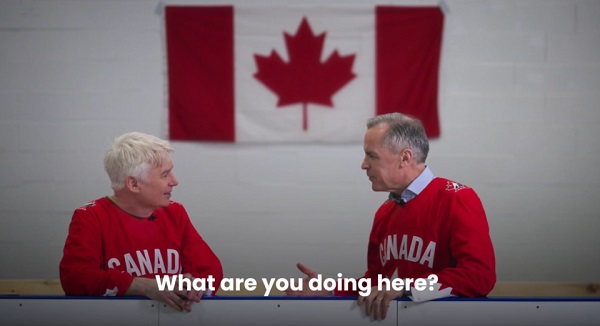

The cost of the bureaucracy increased by $6 billion last year, according to newly released numbers in Public Accounts disclosures. The Canadian Taxpayers Federation is calling on Prime Minister Mark Carney to immediately shrink the bureaucracy.
“The Public Accounts show the cost of the federal bureaucracy is out of control,” said Franco Terrazzano, CTF Federal Director. “Tinkering around the edges won’t cut it, Carney needs to take urgent action to shrink the bloated federal bureaucracy.”
The federal bureaucracy cost taxpayers $71.4 billion in 2024-25, according to the Public Accounts. The cost of the federal bureaucracy increased by $6 billion, or more than nine per cent, over the last year.
The federal bureaucracy cost taxpayers $39.6 billion in 2015-16, according to the Public Accounts. That means the cost of the federal bureaucracy increased 80 per cent over the last 10 years. The government added 99,000 extra bureaucrats between 2015-16 and 2024-25.
Half of Canadians say federal services have gotten worse since 2016, despite the massive increase in the federal bureaucracy, according to a Leger poll.
Not only has the size of the bureaucracy increased, the cost of consultants, contractors and outsourcing has increased as well. The government spent $23.1 billion on “professional and special services” last year, according to the Public Accounts. That’s an 11 per cent increase over the previous year. The government’s spending on professional and special services more than doubled since 2015-16.
“Taxpayers should not be paying way more for in-house government bureaucrats and way more for outside help,” Terrazzano said. “Mere promises to find minor savings in the federal bureaucracy won’t fix Canada’s finances.
“Taxpayers need Carney to take urgent action and significantly cut the number of bureaucrats now.”
Table: Cost of bureaucracy and professional and special services, Public Accounts
| Year | Bureaucracy | Professional and special services |
|
$71,369,677,000 |
$23,145,218,000 |
|
|
$65,326,643,000 |
$20,771,477,000 |
|
|
$56,467,851,000 |
$18,591,373,000 |
|
|
$60,676,243,000 |
$17,511,078,000 |
|
|
$52,984,272,000 |
$14,720,455,000 |
|
|
$46,349,166,000 |
$13,334,341,000 |
|
|
$46,131,628,000 |
$12,940,395,000 |
|
|
$45,262,821,000 |
$12,950,619,000 |
|
|
$38,909,594,000 |
$11,910,257,000 |
|
|
$39,616,656,000 |
$11,082,974,000 |


Alberta Next Panel calls for less Ottawa—and it could pay off

“Magnitude cannot be overstated”: Minnesota aid scam may reach $9 billion

Largest fraud in US history? Independent Journalist visits numerous daycare centres with no children, revealing massive scam

US Under Secretary of State Slams UK and EU Over Online Speech Regulation, Announces Release of Files on Past Censorship Efforts
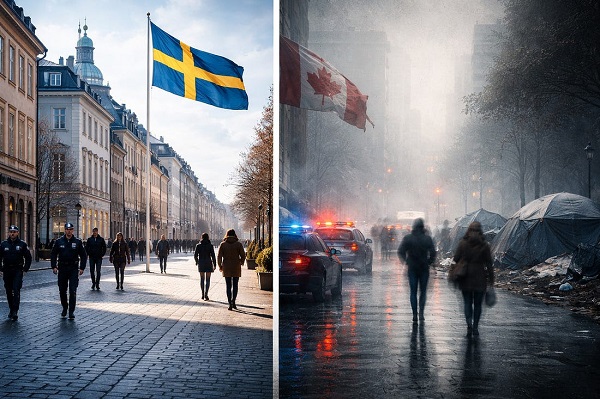
Sweden Fixed What Canada Won’t Even Name
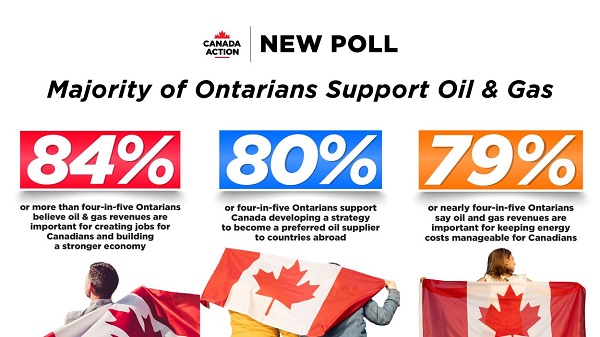
New Poll Shows Ontarians See Oil & Gas as Key to Jobs, Economy, and Trade
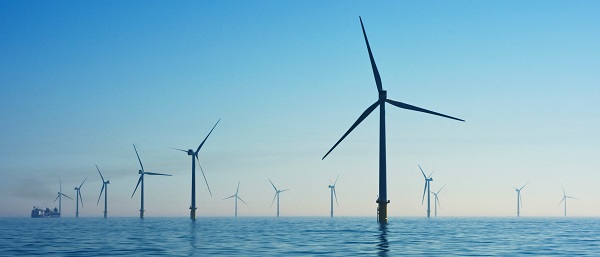
US Halts Construction of Five Offshore Wind Projects Due To National Security
-
 Alberta2 days ago
The Canadian Energy Centre’s biggest stories of 2025
-
 Business2 days ago
Resurfaced Video Shows How Somali Scammers Used Day Care Centers To Scam State
-
 Business1 day ago
Dark clouds loom over Canada’s economy in 2026
-
 Business24 hours ago
The Real Reason Canada’s Health Care System Is Failing
-
 Business2 days ago
Ottawa Is Still Dodging The China Interference Threat
-
 Business2 days ago
Minneapolis day care filmed empty suddenly fills with kids
-
 Business2 days ago
Disclosures reveal Minnesota politician’s husband’s companies surged thousands-fold amid Somali fraud crisis
-
 Addictions21 hours ago
Coffee, Nicotine, and the Politics of Acceptable Addiction