
Dan McTeague
Trudeau is destroying the Canadian economy one regulation at a time

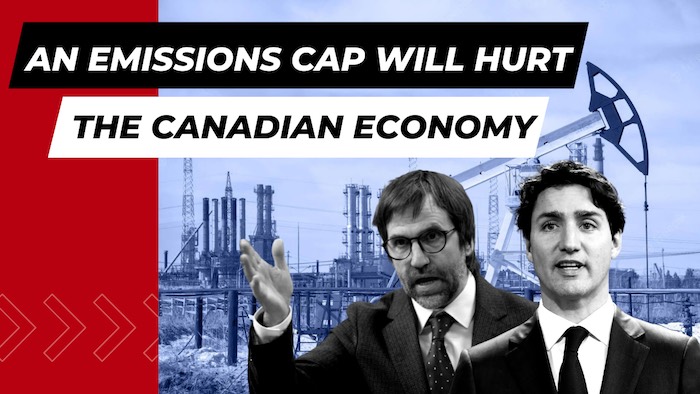

It is amazing, with ever increasing energy costs in Canada and throughout the world, that Canadian Prime Minister Justin Trudeau continues to promote the extreme Green Agenda that will destroy Canada’s energy industry.

The latest example? Just the other week, the Montreal Economic Institute (MEI) released a study that describes how the Trudeau government’s proposed Emissions Cap for the energy sector would “cost the Canadian economy between $44.8 billion and $79.3 billion a year” and would “cause substantial losses, without achieving any net reduction in global emission.” You can read the study here.
In case you’ve not heard about Trudeau’s new way to destroy our economy, let me take a step back and explain.
The Trudeau government is proposing an Emissions Cap to reduce greenhouse gas (GHG) emissions in the oil and gas sector by 42 percent by 2030. This policy is another piece in their larger, foolish plan to try to achieve “Net Zero” GHG emissions by 2050. Keep in mind Canada contributes only 1.5% of global emissions, so this plan, if even achievable, would reduce only 0.45% of global emissions.
One of the options proposed to achieve this “Net Zero” craziness is a cap-and-trade system. According to Canadian Minister of Environment and Climate Change Steven Guilbeault “one of the advantages of a cap is emissions reduction certainty.”
Another certainty that Guilbeault failed to mention is that companies will think twice about investing their money in Canada.
Canadians need to consider that. The oil and gas sector is the single largest revenue provider for the Canadian government, generating $45 billion a year in annual economic activity, and contributes $170 billion a year to the GDP. The economic consequences of this plan are significant, and they will mean a dramatic drawback in social programs in this country. How are we going to pay for our hospitals, our education system? How are we going to pay for our roads and our infrastructure?
As the MEI study found, this emissions cap will result in “substantial losses without achieving any net reduction in global emissions.” Why? Because whether this government likes to admit it or not, there is an increasing global demand for oil and gas. We can either produce those resources here or get them from another country that has no environmental, much less labour standards, such as Russia, Venezuela, and Iran.
And here’s the rub. This cap on emissions would apply only to the oil and gas sector. This emissions cap would not apply to the concrete industry, the automotive industry, or the mining industry. And it certainly won’t apply to the jet building industry in Montreal. These must have better lobbyists than the oil and gas industry.
For that reason, an emissions cap, layered on top of carbon taxes, layered on top of a Clean Fuel Standard, layered on top of pipeline blockages, layered on top of Bills C-48, C-69, preventing oil from being shipped from other parts of the world — is clearly a vendetta against the sector that provides over 500,000 jobs to Canadians and contributes billions to our economy. And it is ultimately a vendetta against our pocketbooks, the interests of our society, and the Canadian way of life.

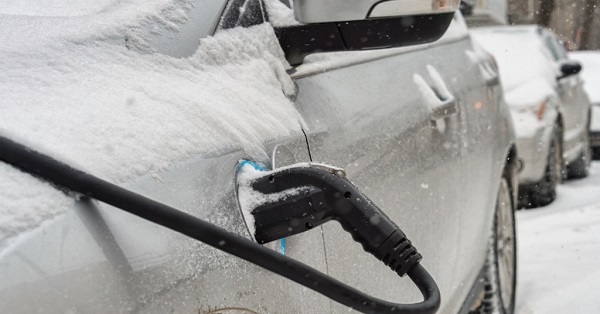

Things have only gone from bad to worse for the global Electric Vehicle industry. And that’s a problem for Canada, because successive Liberal governments have done everything in their power to hitch our cart to that horse.
Earlier this month, the Trump Administration rolled back more Biden-era regulations that effectively served as a back-door EV mandate in the United States. These rules mandated that all passenger cars be able to travel at least 65.1 miles (and for light trucks, 45.2 miles) per gallon of gasoline or diesel, by the year 2031. Since no Internal Combustion Engine (ICE) vehicle could realistically conform to those standards, that would have essentially boxed them out of the market.
Trump’s rolling them back was a fulfillment of his campaign promise to end the Biden Administration’s stealth EV mandates. But it was also a simple recognition of the reality that EVs can’t compete on their own merits.
For proof of that, look no further than our second bit of bad news for EVs: Ford Motor Company has just announced a massive $19.5 billion write-down, almost entirely linked to its aggressive push into EVs. They’ve lost $13 billion on EVs in the past two years alone.
The company invested tens of billions on these go-carts, and lost their shirt when it turned out the market for them was miniscule.
Ford’s EV division president Andrew Frick explained, “Ford is following the customer. We are looking at the market as it is today, not just as everyone predicted it to be five years ago.”
Of course, five years ago, the market was assuming that government subsidies-plus-mandates would create a market for EVs at scale, which hasn’t happened.
As to what this portends for the market, the Wall Street Journal argued, “The company’s pivot from all-electric vehicles is a fresh sign that America’s roadways – after a push to remake them – will continue to look in the near future much like they do today, with a large number of gas-powered cars and trucks and growing use of hybrids.”
And that’s not just true in the U.S. Across the Atlantic, reports suggest the European Union is preparing to delay their own EV mandates to 2040. And the U.K.’s Labour government is considering postponing their own 2030 ICE vehicle ban to align with any EU change in policy.
It’s looking like fewer people around the world will be forced by their governments to buy EVs. Which means that fewer people will be buying EVs.
Now, that is a headache for Canada. Our leaders, at both the federal and provincial levels, have bet big on the success of EVs, investing billions in taxpayer dollars in the hopes of making Canada a major player in the global EV supply chain.
To bolster those investments, Ottawa introduced its Electric Vehicle mandate, requiring 100 per cent of new light-duty vehicle sales to be electric by 2035. This, despite the fact that EVs remain significantly more expensive than gas-and-diesel driven vehicles, they’re poorly suited to Canada’s vast distances and cold climate, and our charging infrastructure is wholly inadequate for a total transition to EVs.
But even if these things weren’t true, there still aren’t enough of us to make the government’s investment make sense. Their entire strategy depends on exporting to foreign markets that are rapidly cooling on EVs.
Collapsing demand south of the border – where the vast majority of the autos we build are sent – means that Canadian EVs will be left without buyers. And postponed (perhaps eventually canceled) mandates in Europe mean that we will be left without a fallback market.
Canadian industry voices are growing louder in their concern. Meanwhile, plants are already idling, scaling back production, or even closing, leaving workers out in the cold.
As GM Canada’s president, Kristian Aquilina, said when announcing her company’s cancellation of the BrightDrop Electric delivery van, “Quite simply, we just have not seen demand for these vehicles climb to the levels that we initially anticipated…. It’s simply a demand and a market-driven response.”
Prime Minister Mark Carney, while sharing much of the same environmental outlook as his predecessor, has already been compelled by economic realities to make a small adjustment – delaying the enforcement of the 2026 EV sales quotas by one year.
But a one-year pause doesn’t solve the problem. It kicks the can down the road.
Mr. Carney must now make a choice. He can double down on this troubled policy, continuing to throw good money after bad, endangering a lot of jobs in our automotive sector, while making transportation more expensive and less reliable for Canadians. Or he can change course: scrap the mandates, end the subsidies, and start putting people and prosperity ahead of ideology.
Here’s hoping he chooses the latter.
The writing is on the wall. Around the world, the forced transition to EVs is crashing into economic reality. If Canada doesn’t wake up soon, we’ll be left holding the bag.


By Dan McTeague
Will Carney’s new pipeline deal actually help get a pipeline built in Canada? As we said before, the devil is in the details.
While the establishment and mainstream media cheer on the new pipeline agreement, there are specific details you need to be aware of.
Dan McTeague explains in his latest video.


Residential school burials controversy continues to fuel wave of church arsons, new data suggests

Canada Hits the Brakes on Population

Canadian gov’t considers sharing census data on gender-confused children

Brown University shooter dead of apparent self-inflicted gunshot wound

Paris Climate Deal Now Decade-Old Disaster

Alberta’s new diagnostic policy appears to meet standard for Canada Health Act compliance
RFK Jr reversing Biden-era policies on gender transition care for minors
-
 Uncategorized2 days ago
Mortgaging Canada’s energy future — the hidden costs of the Carney-Smith pipeline deal
-
 International2 days ago
Australian PM booed at Bondi vigil as crowd screams “shame!”
-
 Opinion2 days ago
Religion on trial: what could happen if Canada passes its new hate speech legislation
-
Automotive1 day ago
Canada’s EV gamble is starting to backfire
-
 Agriculture23 hours ago
End Supply Management—For the Sake of Canadian Consumers
-
 Alberta22 hours ago
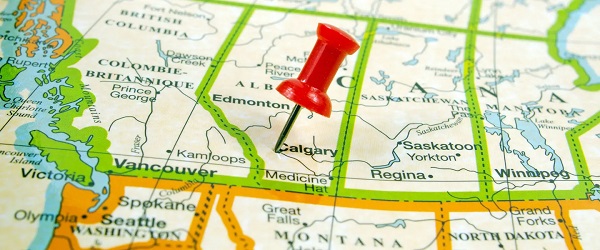
Alberta Next Panel calls to reform how Canada works
-
 Environment20 hours ago
Canada’s river water quality strong overall although some localized issues persist
-
 Digital ID12 hours ago
Canadian government launches trial version of digital ID for certain licenses, permits