
Community
Listen: Ryan Jespersen, Lynda Steele, J’Lyn Nye are joined by writer Ilan Cooley: The Untold Toll of Online Trolls


Here is a link to the Ryan Jespersen show where he, along with J’Lyn Nye, Lynda Steele and Todayville contributor Ilan Cooley discuss this topic, the impact it has on them, but more importantly, the impact it has on society as a whole.
Click here to listen to their discussion.


Ilan Cooley is an Edmonton based entrepreneur and writer. She is a an avid traveller, rescue dog mama and advocate of kindness and community.

The Untold Toll of Online Trolls
By Ilan Cooley
(Warning- language)
The concept of mean tweets has become a late-night talk show punchline that comes with a built-in laugh track, but for some Canadian media celebrities, being on the receiving end of social media bullying is no laughing matter.

J’lyn Nye
“It is always a shock to be called a cunt and a big pig,” says award-winning broadcaster J’lyn Nye. As the co-host of a talk show on Edmonton’s 630 CHED radio, her career spans two decades. “I believe whole heartedly that we, as a society, have devolved. We don’t know how to have a respectful debate.”

Lynda Steele
Like Nye, Lynda Steele is a veteran broadcaster. She works as a talk show host at CKNW radio in Vancouver. Both women previously worked in television, and both say they have endured vicious criticism throughout their careers. They believe gender impacts the kinds of attacks they receive from the public. Comments range from criticism about hairstyle, makeup, or clothing choices, to remarks about weight.
“The hateful comments were never directed at the male on air staff, only the women,” says Steele. “We all got our share of the nastiness. The attacks were almost exclusively from other women. I can only assume they have low self-esteem and feel the need to tear other women down to feel better about themselves. Or maybe they’re mentally ill.
In talk radio, it’s the opposite. The haters are older men. I suspect they are misogynists who are incensed that a woman has a platform to offer her opinion for four hours straight every day. It makes them crazy. You try to develop a thick skin about it,” she says. “But sometimes it’s exhausting, frankly.”
Dr. Tami Bereska, a sociology professor at MacEwan University, says celebrities are often in a difficult position because they need to immerse themselves in the social media environment in order to remain popular and maintain a fan base.
“They are especially at risk,” she says. “The anonymity enabled on some social media platforms gives people the courage to say things to others that they would never say in a face-to-face interaction.”
“The worst go right to the lowest hanging fruit,” says Nye. “The cunt comments. I have male co-workers who are called “asshole,” but they don’t get the viscous vitriol the women I know get. I believe they simply can’t handle a strong, successful, opinionated woman.”

Ryan Jespersen
630 CHED host Ryan Jespersen says he is often verbally attacked by listeners, mostly online. Like Nye and Steele, it is Jespersen’s job to voice his opinion live on the air, and to discuss current affairs, and news headlines. He says he is more susceptible to negative comments working in radio than when he worked in television. He believes the catalyst is the explosion of social media. “There’s also the anonymity factor.”
Bereska says anonymity can cause people lose sight of their fundamental beliefs and values, and instead act in the same ways they see others acting in that environment. “As more people begin commenting on the same story, post, or tweet, group polarization occurs, wherein comments become more and more extreme; hateful comments become even more hateful, and critics of those comments become even more critical.”
On Twitter, user @JohnnyJesus took aim at Jespersen, saying, “You’re a no name AM radio shit for brains standing up for the most disgusting anti-Alberta government one could ever imagine. Fuck off.”
“I see moronic stuff thrown at me every single day,” says Jespersen. Without accountability for their comments, some people have turned social media platforms into the new bathroom stall smear campaigns.”
Unfortunately, some people go further than name calling. “We called the police and they took it from there,” says Jespersen. “It’s happened on two occasions. You’ve got to take that stuff seriously.”
Nye believes the people who feel the need to attack others on social media are in effect poisoning the well of society. “It’s become a cesspool for trolls and anonymous keyboard jockeys.” She says since being in radio it is the worst she’s ever seen it. “I used to get upset and react, now I realize the person sending the comment has an issue.”
Facebook user Shawn Lipon does not shy away from expressing his opinions on social media, and does not conceal his identity there. He is vocal about his disdain for Prime Minister Justin Trudeau, and hurls insults at anyone he perceives to be liberal. Lipon says his motives range from a desire to bring about change, to seeking attention, or just being bored. He finds entertainment in triggering people into a debate that “keeps them up all night.”
Lipon says he wants to put his voice into the discussion with the hopes it will bring other people around to his way of thinking. “I want to have my opinion heard publicly,” he says. “To expose incompetence in hopes of changing opinion to that of my own. I think posting is great to voice opinion and have a say. Sometimes there is nowhere else to express opinions.”
Bereska likens the social media landscape to a battlefield, and says since deviance and normality are socially constructed, what we perceive as being acceptable or unacceptable evolves and changes over time, and is affected by larger sociocultural forces.
Nye feels we need to change the way we communicate with each other, but fears we are too far gone. She believes her bosses and managers need to stand up for employees more and adhere to the “no abuse” policy that already exists where she works. She also thinks social media outlets need to take a stronger stance enforcing their codes of conduct. “They aren’t doing a good job right now.”
Steele says the solution starts with parents. “Teach your children to be nice and respectful. Teach them about consequences.”
Jespersen encourages people to speak out. “Hold people accountable.”
Bereska suggests a solution may be possible with the efforts of both individuals and institutions. “The question is whether individuals, groups, and agents of power, such as social media companies themselves, will take a stand against trolling behaviours. Not just in words, but in actions.”
Read more on Todayville Edmonton.

Ilan Cooley is an Edmonton based entrepreneur and writer. She is a an avid traveller, rescue dog mama and advocate of kindness and community. 


From the Fraser Institute
By Jake Fuss and Grady Munro
There would have been 1.5 million more Canadians who donated to charity in 2023—and $755.5 million more in donations—had Canadians given to the same extent they did 10 years prior
According to recent polling, approximately one in five Canadians have skipped paying a bill over the past year so they can buy groceries. As families are increasingly hard-pressed to make ends meet, this undoubtedly means more and more people must seek out food banks, shelters and other charitable organizations to meet their basic necessities.
And each year, Canadians across the country donate their time and money to charities to help those in need—particularly around the holiday season. Yet at a time when the relatively high cost of living means these organizations need more resources, new data published by the Fraser Institute shows that the level of charitable giving in Canada is actually falling.
Specifically, over the last 10 years (2013 to 2023, the latest year of available data) the share of tax-filers who reported donating to charity fell from 21.9 per cent to 16.8 per cent. And while fewer Canadians are donating to charity, they’re also donating a smaller share of their income—during the same 10-year period, the share of aggregate income donated to charity fell from 0.55 per cent to 0.52 per cent.
To put this decline into perspective, consider this: there would have been 1.5 million more Canadians who donated to charity in 2023—and $755.5 million more in donations—had Canadians given to the same extent they did 10 years prior. Simply put, this long-standing decline in charitable giving in Canada ultimately limits the resources available for charities to help those in need.
On the bright side, despite the worrying long-term trends, the share of aggregate income donated to charity recently increased from 0.50 per cent in 2022 to 0.52 per cent in 2023. While this may seem like a marginal improvement, 0.02 per cent of aggregate income for all Canadians in 2023 was $255.7 million.
The provinces also reflect the national trends. From 2013 to 2023, every province saw a decline in the share of tax-filers donating to charity. These declines ranged from 15.4 per cent in Quebec to 31.4 per cent in Prince Edward Island.
Similarly, almost every province recorded a drop in the share of aggregate income donated to charity, with the largest being the 24.7 per cent decline seen in P.E.I. The only province to buck this trend was Alberta, which saw a 3.9 per cent increase in the share of aggregate income donated over the decade.
Just as Canada as a whole saw a recent improvement in the share of aggregate income donated, so too did many of the provinces. Indeed, seven provinces (except Manitoba, Nova Scotia and Newfoundland and Labrador) saw an increase in the share of aggregate income donated to charity from 2022 to 2023, with the largest increases occurring in Saskatchewan (7.9 per cent) and Alberta (6.7 per cent).
Canadians also volunteer their time to help those in need, yet the latest data show that volunteerism is also on the wane. According to Statistics Canada, the share of Canadians who volunteered (both formally and informally) fell by 8 per cent from 2018 to 2023. And the total numbers of hours volunteered (again, both formal and informal) fell by 18 per cent over that same period.
With many Canadians struggling to make ends meet, food banks, shelters and other charitable organizations play a critical role in providing basic necessities to those in need. Yet charitable giving—which provides resources for these charities—has long been on the decline. Hopefully, we’ll see this trend turn around swiftly.


|

|
|

|
|
|



Canadian gov’t considers sharing census data on gender-confused children

Residential school burials controversy continues to fuel wave of church arsons, new data suggests

Canada’s sudden rediscovery of energy ambition has been greeted with a familiar charge: hypocrisy

Alberta’s new diagnostic policy appears to meet standard for Canada Health Act compliance
RFK Jr reversing Biden-era policies on gender transition care for minors

Canada Hits the Brakes on Population
Why is Canada paying for dairy ‘losses’ during a boom?
-
 Health2 days ago
FDA warns ‘breast binder’ manufacturers to stop marketing to gender-confused girls
-
 Uncategorized18 hours ago
Mortgaging Canada’s energy future — the hidden costs of the Carney-Smith pipeline deal
-
 International2 days ago
2025: The Year The Narrative Changed
-
 Business1 day ago
There’s No Bias at CBC News, You Say? Well, OK…
-
 Health2 days ago
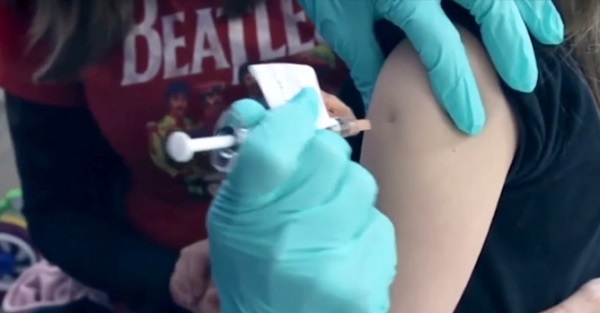
All 12 Vaccinated vs. Unvaccinated Studies Found the Same Thing: Unvaccinated Children Are Far Healthier
-
 Agriculture2 days ago
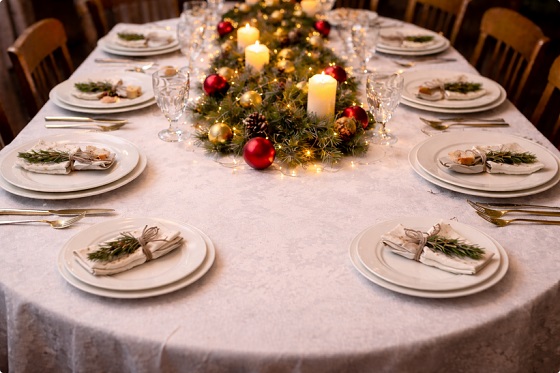
Supply Management Is Making Your Christmas Dinner More Expensive
-
 Daily Caller2 days ago
Trump Reportedly Escalates Pressure On Venezuela With Another Oil Tanker Seizure
-
 International19 hours ago
Australian PM booed at Bondi vigil as crowd screams “shame!”