
Community
Remembering our Parents-Pandemic Assisted Loneliness Death and Life


Someday, we will all lose our parents, grand parents, and friends.

If we are parents, our children will ‘lose’ us when we are called Home.
The great senses of loss we expererience are as different as colours in the world of nature, or our unique set of characteristics. How we grieve is directly related to our relationships with our family, to the recently deceased and also intimately telling of how we ourselves view the afterlife. Also, in our present state of (what is deemed to be) pandemic, how often we spent time with and what kind of quality time we spent with our loved one.
It has been said that time heals all wounds, but that adage is only as accurate as our internal grieving. My father died 7 years ago, and while our family has grieved, we have moved forward to live our lives.
It is interesting what can trigger us to revisit our mourning and cast our minds back to those in our past. For me, it was Facebook, and a notice that August 25 would have been his 80th birthday. It just so happens that I had driven by the graveyard he is interred at the same day and while I wanted to stop, I did not.
Later that night when I turned on Facebook, that dreaded notice came up, and the whole experience became more odd.
If he had been alive, there would have been a birthday party, and his great grandchildren would have played around his feet. His grand children would have sat beside him and talked about their weeks and days, and he would have smiled and listened as he was more wont to in his later years. His children would have probably popped by for a visit a couple of times this week and as was his custom, sipped coffee from Darth Vader.
But, despite his absence, we still have customs that help us remember.
If there are family pictures on our walls, we look and recall the good times.
If there are family movies, we turn them on and watch/listen to moments captured in time.
Or we call our mom and share a memory and talk about her day, week, and events.
During the course of any family funeral, you get the opportunity to open the book of the life of your loved one and see what they really left behind. Bills, bank accounts, letters, cards, computer files and email are all laid bare for someone to see. Boxes that sat in the attic or garage are now opened and sorted and appreciated.
That is when you really get to know your father/mother/grand parents.
But if there are any questions after seeing their stuff and making hard decisions, you cannot ask but relatives become a resource.
My family has been blessed with a wealth of life material from parents and grand parents, so when we sorted and separated, we saw my father as a young boy, from his baby clothes to his glasses and wallet contents.
It was a great experience to be able to share my father’s life with his friends and mothers relatives. His funeral drew people we had not seen for many years, and it was a time that we did not appreciate until later.
My mothers last memories of my father are sweet. He had gone outside onto the garden swing and told my mom that he could hardly wait for spring so he could go outside.. By morning he had passed into eternity.
Experiences like that have been verboten since March, and thousands of seniors have died lonely, isolated, and abandoned by family members, all encouraged by public health policy and abusive facility regulations deemed to protect.
There was an experiment I saw recently that had a child under 1 year old interact with his mother actively, then being told to ignore the child. That child reacted negatively with anger, frustration and screaming until the mother re-engaged with the child. It only took 2 minutes for decreased contact and lack of encouragement to recoil and act out. Imagine months of toddlers and pre-schoolers being told that they cannot play with their friends, or socially active individuals to be allowed interaction?
This video was very enlightening, and gave this treatment a name….Child abuse….Elder abuse….
Since Covid19 was deemed a pandemic, citizens of the world have been shut out, shut up and shut down world-wide. What was once normal is no longer so, and instead of a desire to be social beings we are told to be fearful of everyone because they may carry the virus that might kill Aunt Sadie. The truly sad comment is that this campaign of callousness has been so severe that some people will never recover and re-engage public lives again.
It seems that intelligence, logic, and good statistics are now also forbidden when discussing Covid numbers and penetration. Passion and fear have overwhelmed facts, and in the process, people lose and policy is imposed with questionable ethics.
Lonely is safer (and recommended) than social gatherings with positive relationship outcomes.
In fact, as some have pointed out, Nazi Germany under Hitler practised the same tactics to near global domination. In some ways, I do not think that comparison is not far off.
Back to my point, by trying to protect the vulnerable among us we have sentenced them to death by isolation. Our medical officials and government officials are guilty of something so dreadful it should not be said.
My father, like so many who died before this disease hit us, would not recognize our world of fear and paranoia. In some ways, neither do I.
May God have mercy on our souls.
Tim Lasiuta
Originally published August 29, 2020


From the Fraser Institute
By Jake Fuss and Grady Munro
There would have been 1.5 million more Canadians who donated to charity in 2023—and $755.5 million more in donations—had Canadians given to the same extent they did 10 years prior
According to recent polling, approximately one in five Canadians have skipped paying a bill over the past year so they can buy groceries. As families are increasingly hard-pressed to make ends meet, this undoubtedly means more and more people must seek out food banks, shelters and other charitable organizations to meet their basic necessities.
And each year, Canadians across the country donate their time and money to charities to help those in need—particularly around the holiday season. Yet at a time when the relatively high cost of living means these organizations need more resources, new data published by the Fraser Institute shows that the level of charitable giving in Canada is actually falling.
Specifically, over the last 10 years (2013 to 2023, the latest year of available data) the share of tax-filers who reported donating to charity fell from 21.9 per cent to 16.8 per cent. And while fewer Canadians are donating to charity, they’re also donating a smaller share of their income—during the same 10-year period, the share of aggregate income donated to charity fell from 0.55 per cent to 0.52 per cent.
To put this decline into perspective, consider this: there would have been 1.5 million more Canadians who donated to charity in 2023—and $755.5 million more in donations—had Canadians given to the same extent they did 10 years prior. Simply put, this long-standing decline in charitable giving in Canada ultimately limits the resources available for charities to help those in need.
On the bright side, despite the worrying long-term trends, the share of aggregate income donated to charity recently increased from 0.50 per cent in 2022 to 0.52 per cent in 2023. While this may seem like a marginal improvement, 0.02 per cent of aggregate income for all Canadians in 2023 was $255.7 million.
The provinces also reflect the national trends. From 2013 to 2023, every province saw a decline in the share of tax-filers donating to charity. These declines ranged from 15.4 per cent in Quebec to 31.4 per cent in Prince Edward Island.
Similarly, almost every province recorded a drop in the share of aggregate income donated to charity, with the largest being the 24.7 per cent decline seen in P.E.I. The only province to buck this trend was Alberta, which saw a 3.9 per cent increase in the share of aggregate income donated over the decade.
Just as Canada as a whole saw a recent improvement in the share of aggregate income donated, so too did many of the provinces. Indeed, seven provinces (except Manitoba, Nova Scotia and Newfoundland and Labrador) saw an increase in the share of aggregate income donated to charity from 2022 to 2023, with the largest increases occurring in Saskatchewan (7.9 per cent) and Alberta (6.7 per cent).
Canadians also volunteer their time to help those in need, yet the latest data show that volunteerism is also on the wane. According to Statistics Canada, the share of Canadians who volunteered (both formally and informally) fell by 8 per cent from 2018 to 2023. And the total numbers of hours volunteered (again, both formal and informal) fell by 18 per cent over that same period.
With many Canadians struggling to make ends meet, food banks, shelters and other charitable organizations play a critical role in providing basic necessities to those in need. Yet charitable giving—which provides resources for these charities—has long been on the decline. Hopefully, we’ll see this trend turn around swiftly.


|

|
|

|
|
|



There’s No Bias at CBC News, You Say? Well, OK…
Religion on trial: what could happen if Canada passes its new hate speech legislation

Australian PM booed at Bondi vigil as crowd screams “shame!”

The “Disruptor-in-Chief” places Canada in the crosshairs

Mortgaging Canada’s energy future — the hidden costs of the Carney-Smith pipeline deal
Canada’s EV gamble is starting to backfire
End Supply Management—For the Sake of Canadian Consumers
-
 Censorship Industrial Complex19 hours ago
US Under Secretary of State Slams UK and EU Over Online Speech Regulation, Announces Release of Files on Past Censorship Efforts
-
 Business22 hours ago
“Magnitude cannot be overstated”: Minnesota aid scam may reach $9 billion
-
 Alberta2 days ago
Alberta project would be “the biggest carbon capture and storage project in the world”
-
 Energy2 days ago
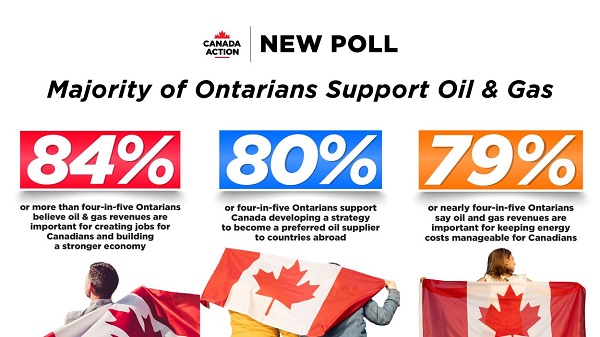
New Poll Shows Ontarians See Oil & Gas as Key to Jobs, Economy, and Trade
-
 Business2 days ago
Socialism vs. Capitalism
-
 Energy2 days ago
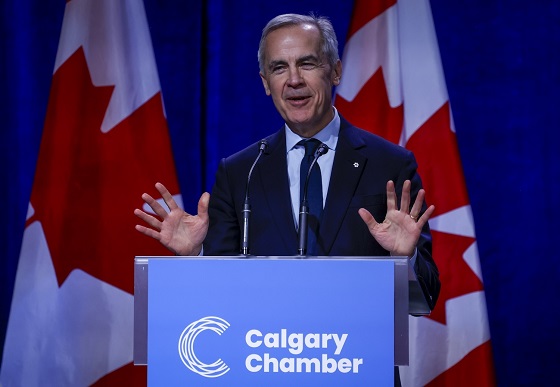
Canada’s debate on energy levelled up in 2025
-
 Daily Caller1 day ago
Is Ukraine Peace Deal Doomed Before Zelenskyy And Trump Even Meet At Mar-A-Lago?
-
 Business21 hours ago
Largest fraud in US history? Independent Journalist visits numerous daycare centres with no children, revealing massive scam