
Frontier Centre for Public Policy
Public opposition in Regina halts Dewdney Avenue renaming as Kamloops mass grave allegations unravel


From the Frontier Centre for Public Policy
By Lee Harding

Three years after taking down a statue of Canada’s first Prime Minister, Regina decides not to change street named after a far more controversial historical figure.
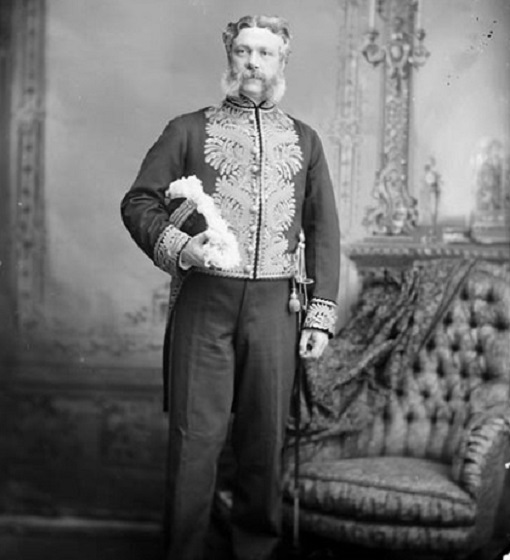
In a sign of the times, the same City of Regina that removed a statue of John A. MacDonald has just preserved the name of former Indian Commissioner Edgar Dewdney.
Dewdney, a Conservative MP under MacDonald, became Indian Commissioner of the North-West Territories in 1879 and was named Lieutenant Governor of the territory in 1881. He served in both positions until 1888. He was, briefly, the Minister of Indian Affairs before being appointed Lieutenant- Governor of British Columbia.
It was Dewdney who decided to move the territorial capital from Battleford to Wascana in 1882, later renamed Regina. He also moved the North-West Mounted Police headquarters to Regina from Fort Walsh: the fact that Dewdney had land nearby was likely not coincidental.
In 1883, Dewdney wrote to MacDonald to back the 1879 Davin Report in support of residential industrial schools, saying they “might be carried on with great advantage to the Indians.” The Davin Report, written by Nicholas Flood Davin, a journalist and politician, was commissioned by the Canadian government to provide recommendations on the establishment of residential schools for Indigenous children.
Despite this enormous contribution to Regina and Canadian history, Regina city councillors Andrew Stevens and Dan LeBlanc made a motion last May to remove Dewdney’s name from a street, park, and public pool.
The prospects seemed good. After all, the city of Regina decided to remove the statue of Sir John A. Macdonald from Victoria Park in 2021, primarily due to his role in the creation of Canada’s residential school system.
Dewdney was neither a father of Confederation nor a prime minister but is often viewed as a more controversial figure in Canadian history. He actively supported the residential school system, believing it to be more effective than day schools in breaking the influence of Indigenous families and communities. His policies were designed to assimilate Indigenous children by separating them from their cultural roots.
He refused to allocate certain lands promised to Indigenous communities under treaty agreements. He also withheld food rations, which were crucial during times of famine, using them as leverage to force Indigenous bands to relocate further north, where the government wanted them to settle. These actions contributed to widespread suffering and are part of his contentious legacy.
Yet on August 21, by a vote of seven to three, Regina city council refused to rename the 12-km Dewdney Avenue. Ward 10 councillor Jason Mancinelli said the change would cause too much hassle for businesses and people on the street.
Mayor Sandra Masters, who is seeking re-election, estimated that renaming Dewdney Avenue could cost around $350,000. She argued that this amount could be better spent on other priorities in the city.
“There are other things we could invest in that wouldn’t be as divisive,” she said.
So, what changed between 2021 and now?
In 2021, the city removed Macdonald’s statue following a brief, one-sided consultation shortly after the Kamloops Residential School mass grave allegations. At the time, ground-penetrating radar suggested potential burial sites, prompting widespread reactions across Canada.
Three years later, the investigation into the allegations, at a cost of $8 million, has yet to uncover any bodies. Some experts suggest that soil disturbances detected by the scans might have been caused by shallow trenches dug for a septic field back in 1924 rather than unmarked graves as initially alleged.
In contrast, Regina introduced the issue of renaming Dewdney Avenue in May and held presentations in June of this year, long after the Kamloops allegations started to unravel. The decision on the name change was delayed long enough for those opposed to speak up. Apparently, the suggested replacement name Tatanka – the Cree word for bison – did not seem to resonate with many of those opposed to the renaming.
The takeaway from these two outcomes is clear: rushed decisions can lead to unintended consequences, while a more thoughtful, measured approach ensures that choices are better informed and more beneficial to the community.
Lee Harding is a Research Fellow at the Frontier Centre for Public Policy


From the Frontier Centre for Public Policy
By Lee Harding
Alarming claims out of P.E.I. point to deep foreign interference, and the federal government keeps stalling. Why?
Explosive new allegations of Chinese interference in Prince Edward Island show Canada’s institutions may already be compromised and Ottawa has been slow to respond.
The revelations came out in August in a book entitled “Canada Under Siege: How PEI Became a Forward Operating Base for the Chinese Communist Party.” It was co-authored by former national director of the RCMP’s proceeds of crime program Garry Clement, who conducted an investigation with CSIS intelligence officer Michel Juneau-Katsuya.
In a press conference in Ottawa on Oct. 8, Clement referred to millions of dollars in cash transactions, suspicious land transfers and a network of corporations that resembled organized crime structures. Taken together, these details point to a vulnerability in Canada’s immigration and financial systems that appears far deeper than most Canadians have been told.
P.E.I.’s Provincial Nominee Program allows provinces to recommend immigrants for permanent residence based on local economic needs. It seems the program was exploited by wealthy applicants linked to Beijing to gain permanent residence in exchange for investments that often never materialized. It was all part of “money laundering, corruption, and elite capture at the highest levels.”
Hundreds of thousands of dollars came in crisp hundred-dollar bills on given weekends, amounting to millions over time. A monastery called Blessed Wisdom had set up a network of “corporations, land transfers, land flips, and citizens being paid under the table, cash for residences and property,” as was often done by organized crime.
Clement even called the Chinese government “the largest transnational organized crime group in the history of the world.” If true, the allegation raises an obvious question: how much of this activity has gone unnoticed or unchallenged by Canadian authorities, and why?
Dean Baxendale, CEO of the China Democracy Fund and Optimum Publishing International, published the book after five years of investigations.
“We followed the money, we followed the networks, and we followed the silence,” Baxendale said. “What we found were clear signs of elite capture, failed oversight and infiltration of Canadian institutions and political parties at the municipal, provincial and federal levels by actors aligned with the Chinese Communist Party’s United Front Work Department, the Ministry of State Security. In some cases, political donations have come from members of organized crime groups in our country and have certainly influenced political decision making over the years.”
For readers unfamiliar with them, the United Front Work Department is a Chinese Communist Party organization responsible for influence operations abroad, while the Ministry of State Security is China’s main civilian intelligence agency. Their involvement underscores the gravity of the allegations.
It is a troubling picture. Perhaps the reason Canada seems less and less like a democracy is that it has been compromised by foreign actors. And that same compromise appears to be hindering concrete actions in response.
One example Baxendale highlighted involved a PEI hotel. “We explore how a PEI hotel housed over 500 Chinese nationals, all allegedly trying to reclaim their $25,000 residency deposits, but who used a single hotel as their home address. The owner was charged by the CBSA, only to have the trial shut down by the federal government itself,” he said. The case became a key test of whether Canadian authorities were willing to pursue foreign interference through the courts.
The press conference came 476 days after Bill C-70 was passed to address foreign interference. The bill included the creation of Canada’s first foreign agent registry. Former MP Kevin Vuong rightly asked why the registry had not been authorized by cabinet. The delay raises doubts about Ottawa’s willingness to confront the problem directly.
“Why? What’s the reason for the delay?” Vuong asked.
Macdonald-Laurier Institute foreign policy director Christopher Coates called the revelations “beyond concerning” and warned, “The failures to adequately address our national security challenges threaten Canada’s relations with allies, impacting economic security and national prosperity.”
Former solicitor general of Canada and Prince Edward Island MP Wayne Easter called for a national inquiry into Beijing’s interference operations.
“There’s only one real way to get to the bottom of what is happening, and that would be a federal public inquiry,” Easter said. “We need a federal public inquiry that can subpoena witnesses, can trace bank accounts, can bring in people internationally, to get to the bottom of this issue.”
Baxendale called for “transparency, national scrutiny, and most of all for Canadians to wake up to the subtle siege under way.” This includes implementing a foreign influence transparency commissioner and a federal registry of beneficial owners.
If corruption runs as deeply as alleged, who will have the political will to properly respond? It will take more whistleblowers, changes in government and an insistent public to bring accountability. Without sustained pressure, the system that allowed these failures may also prevent their correction.
Lee Harding is a research fellow for the Frontier Centre for Public Policy.

From the Frontier Centre for Public Policy
Canada’s homelessness crisis has intensified dramatically, with about 60,000 people homeless this Christmas and chronic homelessness becoming entrenched as shelters overflow and encampments spread. Policy failures in immigration, housing, monetary policy, shelters, harm reduction, and Indigenous governance have driven the crisis. Only reversing these policies can meaningfully address it.
Encampments that were meant to be temporary have become a permanent feature in our communities
As Canadians settle in for the holiday season, 60,000 people across this country will spend Christmas night in a tent, a doorway, or a shelter bed intended to be temporary. Some will have been there for months, perhaps years. The number has quadrupled in six years.
In October 2024, enumerators in 74 Canadian communities conducted the most comprehensive count of homelessness this country has attempted. They found 17,088 people sleeping without shelter on a single autumn night, and 4,982 of them living in encampments. The count excluded Quebec entirely. The real number is certainly higher.
In Ontario alone, homelessness increased 51 per cent between 2016 and 2024. Chronic homelessness has tripled. For the first time, more than half of all homelessness in that province is chronic. People are no longer moving through the system. They are becoming permanent fixtures within it.
Toronto’s homeless population more than doubled between April 2021 and October 2024, from 7,300 to 15,418. Tents now appear in places that were never seen a decade ago. The city has 9,594 people using its shelter system on any given night, yet 158 are turned away each evening because no beds are available.
Calgary recorded 436 homeless deaths in 2023, nearly double the previous year. The Ontario report projects that without significant policy changes, between 165,000 and 294,000 people could experience homelessness annually in that province alone by 2035.
The federal government announced in September 2024 that it would allocate $250 million over two years to address encampments. Ontario received $88 million for ten municipalities. The Association of Municipalities of Ontario calculated that ending chronic homelessness in their province would require $11 billion over ten years. The federal contribution represents less than one per cent of what is needed.
Yet the same federal government found $50 billion for automotive subsidies and battery plants. They borrow tonnes of money to help foreign car manufacturers with EVs, while tens of thousands are homeless. But money alone does not solve problems. Pouring billions into a bureaucratic system that has failed spectacularly without addressing the policies that created the crisis would be useless.
Five years ago, tent cities were virtually unknown in most Canadian communities. Recent policy choices fuelled it, and different choices can help unmake it.
Start with immigration policy. The federal government increased annual targets to over 500,000 without ensuring housing capacity existed. Between 2021 and 2024, refugees and asylum seekers experiencing chronic homelessness increased by 475 per cent. These are people invited to Canada under federal policy, then abandoned to municipal shelter systems already at capacity.
Then there is monetary policy. Pandemic spending drove inflation, which made housing unaffordable. Housing supply remains constrained by policy. Development charges, zoning restrictions, and approval processes spanning years prevent construction at the required scale. Municipal governments layer fees onto new developments, making projects uneconomical.
Shelter policy itself has become counterproductive. The average shelter stay increased from 39 days in 2015 to 56 days in 2022. There are no time limits, no requirements, no expectations. Meanwhile, restrictive rules around curfews, visitors, and pets drive 85 per cent of homeless people to avoid shelters entirely, preferring tents to institutional control.
The expansion of harm reduction programs has substituted enabling for treatment. Safe supply initiatives provide drugs to addicts without requiring participation in recovery programs. Sixty-one per cent cite substance use issues, yet the policy response is to make drug use safer rather than to make sobriety achievable. Treatment programs with accountability would serve dignity far better than an endless supply of free drugs.
Indigenous people account for 44.6 per cent of those experiencing chronic homelessness in Northern Ontario despite comprising less than three per cent of the general population. This overrepresentation is exacerbated by policies that fail to recognize Indigenous governance and self-determination as essential. Billions allocated to Indigenous communities are never scrutinized.
The question Canadians might ask this winter is whether charity can substitute for competent policy. The answer is empirically clear: it cannot. What is required before any meaningful solutions is a reversal of the policies that broke it.
Marco Navarro-Genie is vice-president of research at the Frontier Centre for Public Policy and co-author with Barry Cooper of Canada’s COVID: The Story of a Pandemic Moral Panic (2023).


Ottawa-Alberta agreement may produce oligopoly in the oilsands

‘The electric story is over’
The Top News Stories That Shaped Canadian Energy in 2025 and Will Continue to Shape Canadian Energy in 2026

Some Of The Wackiest Things Featured In Rand Paul’s New Report Alleging $1,639,135,969,608 In Gov’t Waste

Western Canada’s supply chain for Santa Claus

$2.6 million raised for man who wrestled shotgun from Bondi Beach terrorist

Remembering Afghanistan and the sacrifices of our military families
-
 Business2 days ago
Land use will be British Columbia’s biggest issue in 2026
-
 Business19 hours ago
Canada needs serious tax cuts in 2026
-
 Energy2 days ago
Why Japan wants Western Canadian LNG
-
Business8 hours ago
Ottawa Is Still Dodging The China Interference Threat
-
 Business8 hours ago
Minneapolis day care filmed empty suddenly fills with kids
-
 Business2 days ago
Mainstream media missing in action as YouTuber blows lid off massive taxpayer fraud
-
 Business2 days ago
Stripped and shipped: Patel pushes denaturalization, deportation in Minnesota fraud
-
 Business7 hours ago
Disclosures reveal Minnesota politician’s husband’s companies surged thousands-fold amid Somali fraud crisis