
Fraser Institute
Powerful players count on corruption of ideal carbon tax

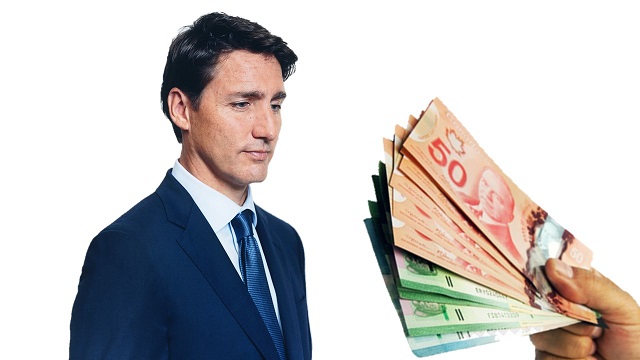
From the Fraser Institute
Prime Minister Trudeau recently whipped out the big guns of rhetoric and said the premiers of Alberta, Nova Scotia, New Brunswick, Newfoundland and Labrador, Ontario, Prince Edward Island and Saskatchewan are “misleading” Canadians and “not telling the truth” about the carbon tax. Also recently, a group of economists circulated a one-sided open letter extolling the virtues of carbon pricing.
Not to be left out, a few of us at the Fraser Institute recently debated whether the carbon tax should or could be reformed. Ross McKitrick and Elmira Aliakbari argued that while the existing carbon tax regime is badly marred by numerous greenhouse gas (GHG) regulations and mandates, is incompletely revenue-neutral, lacks uniformity across the economy and society, is set at an arbitrary price and so on, it remains repairable. “Of all the options,” they write, “it is widely acknowledged that a carbon tax allows the most flexibility and cost-effectiveness in the pursuit of society’s climate goals. The federal government has an opportunity to fix the shortcomings of its carbon tax plan and mitigate some of its associated economic costs.”
I argued, by contrast, that due to various incentives, Canada’s relevant decision-makers (politicians, regulators and big business) would all resist any reforms to the carbon tax that might bring it into the “ideal form” taught in schools of economics. To these groups, corruption of the “ideal carbon tax” is not a bug, it’s a feature.
Thus, governments face the constant allure of diverting tax revenues to favour one constituency over another. In the case of the carbon tax, Quebec is the big winner here. Atlantic Canada was also recently won by having its home heating oil exempted from carbon pricing (while out in the frosty plains, those using natural gas heating will feel the tax’s pinch).
Regulators, well, they live or die by the maintenance and growth of regulation. And when it comes to climate change, as McKitrick recently observed in a separate commentary, we’re not talking about only a few regulations. Canada has “clean fuel regulations, the oil-and-gas-sector emissions cap, the electricity sector coal phase-out, strict energy efficiency rules for new and existing buildings, new performance mandates for natural gas-fired generation plants, the regulatory blockade against liquified natural gas export facilities” and many more. All of these, he noted, are “boulders” blocking the implementation of an ideal carbon tax.
Finally, big business (such as Stellantis-LG, Volkswagen, Ford, Northvolt and others), which have been the recipients of subsidies for GHG-reducing activities, don’t want to see the driver of those subsidies (GHG regulations) repealed. And that’s only in the electric vehicle space. Governments also heavily subsidize wind and solar power businesses who get a 30 per cent investment tax credit though 2034. They also don’t want to see the underlying regulatory structures that justify the tax credit go away.
Clearly, all governments that tax GHG emissions divert some or all of the revenues raised into their general budgets, and none have removed regulations (or even reduced the rate of regulation) after implementing carbon-pricing. Yet many economists cling to the idea that carbon taxes are either fine as they are or can be reformed with modest tweaks. This is the great carbon-pricing will o’ the wisp, leading Canadian climate policy into a perilous swamp.
Author:



From the Fraser Institute
By Tegan Hill and Jake Fuss
From 2014 to 2022, inflation-adjusted total business investment (in plants, machinery, equipment and new technologies but excluding residential construction) in Canada declined by C$34 billion. During the same period, after adjusting for inflation, business investment declined by a total of $3,748 per worker
According to the recent federal budget, the Trudeau government plans to increase the inclusion rate from 50 per cent to 66.7 per cent on capital gains over $250,000 for individuals and on all capital gains realized by corporations and trusts. Unfortunately, this tax hike will be the final nail in the coffin for business investment in Canada, which likely means even harder economic times ahead.
Canada already faces a business investment crisis. From 2014 to 2022, inflation-adjusted total business investment (in plants, machinery, equipment and new technologies but excluding residential construction) in Canada declined by C$34 billion. During the same period, after adjusting for inflation, business investment declined by a total of $3,748 per worker—from $20,264 per worker in 2014 to $16,515 per worker in 2022.
While business investment has declined in Canada since 2014, in other countries, including the United States, it’s continued to grow. This isn’t a post-COVID problem—this is a Canada problem.
And Canadians should be worried. Businesses investment is key for strong economic growth and higher living standards because when businesses invest in physical and intellectual capital they equip workers with the tools and technology (e.g. machinery, computer programs, artificial intelligence) to produce more and provide higher quality goods and services, which fuels innovation and higher productivity. And as firms become more efficient and increase profits, they’re able to pay higher wages, which is why business investment remains a key factor for higher incomes and living standards.
The Trudeau government’s policies—increased regulation, particularly in the energy and mining sectors (which makes Canada a relatively unattractive place to do business), higher and uncompetitive taxes, and massive federal deficits (which imply future tax increases)—have damaged business investment.
Unsurprisingly, weak business investment has correlated with a weak economy. In the fourth quarter of 2023, real economic growth per person ($58,111) officially fell below 2014 levels ($58,162). In other words, Canadian living standards have completely stagnated. In fact, over the last decade economic growth per person has been the weakest on record since the 1930s.
Instead of helping fix the problem, the Trudeau government’s capital gains tax hike will further damage Canada’s economy by reducing the return on investment and encouraging an exodus of capital from the country. Indeed, capital gains taxes are among the most economically-damaging forms of taxation because they reduce the incentive to invest.
Once again, the Trudeau government has enacted a policy that will deter business investment, which Canada desperately needs for strong economic growth. The key takeaway for Canadians? Barring a change in policy, you can expect harder times ahead.
Authors:


From the Fraser Institute
By Jake Fuss and Grady Munro
Per-person federal spending is expected to equal $11,901 this year. To put this into perspective, this is significantly more than Ottawa spent during the global financial crisis in 2008 or either world war.
The Trudeau government tabled its 2024 budget earlier this month and the contents of the fiscal plan laid bare the alarming state of federal finances. Both spending and debt per person are at or near record highs and prospects for the future don’t appear any brighter.
In the budget, the Trudeau government outlined plans for federal finances over the next five years. Annual program spending (total spending minus debt interest costs) will reach a projected $483. billion in 2024/25, $498.7 billion in 2025/26, and continue growing in the years following. By 2028/29 the government plans to spend $542.0 billion on programs—an 18.4 per cent increase from current levels.
This is not a new or surprising development for federal finances. Since taking office in 2015, the Trudeau government has shown a proclivity to spend at nearly every turn. Prime Minister Trudeau has already recorded the five highest levels of federal program spending per person (adjusted for inflation) in Canadian history from 2018 to 2022. Projections for spending in the 2024 budget assert the prime minister is now on track to have the eight highest years of per-person spending on record by the end of the 2025/26 fiscal year.
Per-person federal spending is expected to equal $11,901 this year. To put this into perspective, this is significantly more than Ottawa spent during the global financial crisis in 2008 or either world war. It’s also about 28.0 per cent higher than the full final year of Stephen Harper’s time as prime minister, meaning the size of the federal government has expanded by more than one quarter in a decade.
The government has chosen to borrow substantial sums of money to fund a lot of this marked growth in spending. Federal debt under the Trudeau government has risen before, during and after COVID regardless of whether the economy is performing relatively well or comparatively poor. Between 2015 and 2024, Ottawa is expected to run 10 consecutive deficits, with total gross debt set to reach $2.1 trillion within the next 12 months.
The scale of recent debt accumulation is eye-popping even after accounting for a growing population and the relatively high inflation of the past two years. By the end of the current fiscal year, each Canadian will be burdened with $12,769 more in total federal debt (adjusted for inflation) than they were in 2014/15.
You can attribute some of this increase in borrowing to the effects of COVID, but debt had already grown by $2,954 per person from 2014 to 2019—before the pandemic. Moreover, budget estimates show gross debt per person (adjusted for inflation) is expected to rise by more than $2,500 by 2028/29.
As with spending, the Trudeau government is on track to record the six highest years of federal debt per-person (adjusted for inflation) in Canadian history between 2020/21 and the end of its term next autumn. Why should Canadians care about this record debt?
Simply put, rising debt leads to higher interest payments that current and future generations of taxpayers must pay—leaving less money for important priorities such as health care and social services. Moreover, all this spending and debt hasn’t helped improve living standards for Canadians. Canada’s GDP per person—a broad measure of incomes—was lower at the end of 2023 than it was nearly a decade ago in 2014.
The Trudeau government’s track record with federal finances is one for the history books. Ottawa’s spending continues to be at near-record levels and Canadians have never been burdened with more debt. Those aren’t the type of records we should strive to achieve.
Authors:


Inquiry shows Canadian gov’t agencies have spent $10 million on social media ads for COVID jabs

Don’t be fooled by high-speed rail
Federal government’s ‘fudget budget’ relies on fanciful assumptions of productivity growth

UN plastics plans are unscientific and unrealistic
Col. Douglas Macgregor torches Trump over support for bill funding wars in Ukraine and Israel

Alberta’s baby name superstar steals the show again
Red Deer Doctor critical of Alberta’s COVID response to submit report to Danielle Smith this May
-
Business1 day ago
Ottawa’s capital gains tax hike—final nail in ‘business investment’ coffin
-
 Automotive1 day ago
Canadian interest in electric vehicles falls for second year in a row: survey
-
 Alberta10 hours ago
Alberta’s vision for passenger rail
-
 Alberta1 day ago
Alberta threatens to fight Trudeau government restrictions on Canada’s plastics industry
-
 COVID-1922 hours ago
Former Canadian lawmaker has no regrets about refusing COVID shot despite losing his job
-
 Alberta22 hours ago
Canada’s postal service refuses to help with Trudeau’s gun ban buyback program: report
-
 COVID-1922 hours ago
Peckford: Hallelujah! Supreme Court of Canada to hear Newfoundland and Labrador charter case
-
 John Stossel12 hours ago
Why Biden’s Just Wrong: NO ONE “Knows How to Make Government Work.”