
Opinion
PBO Report Reveals Trudeau’s Carbon Tax Crushes Middle-Class Canadians

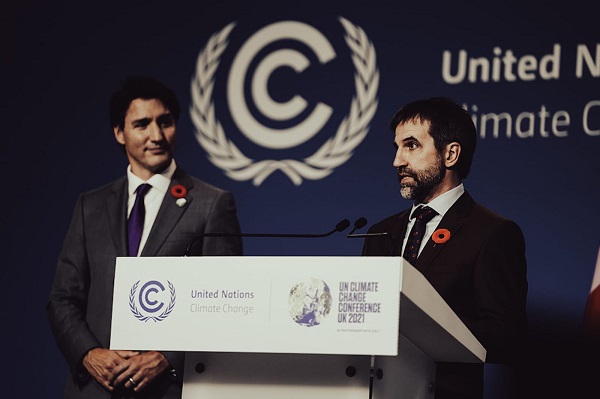


PBO Report Exposes Trudeau’s Carbon Tax as a Middle-Class Burden, With Net Economic Losses, Crushed Job Prospects, and Hollow Rebates
In a bombshell report dated October 10, 2024, the Parliamentary Budget Officer (PBO) exposes the cold reality of Trudeau’s carbon tax policy: it’s making life harder for middle-class Canadians. While the Prime Minister continues to tout the virtues of his climate plan, the PBO’s findings show that far from protecting the environment, the federal fuel charge is crippling Canadian families—especially those in the middle income brackets.
Let’s be clear: Trudeau’s carbon tax isn’t just a simple “polluter pays” system. According to the PBO’s distributional analysis of the federal fuel charge, average Canadian households will face substantial net economic costs by 2030, despite government-issued rebates. Trudeau loves to parade the fact that Canadians get rebates through the Canada Carbon Rebate (CCR), but the numbers tell a different story when you dig into the real economic impact.
The Middle-Class Burden
For middle-class Canadians, the so-called “climate action” of the Trudeau government comes with serious consequences. By 2030-31, the carbon price will hit $170 per tonne, with devastating effects on household incomes. Even though rebates are supposed to offset the pain, the PBO’s analysis shows that once you factor in the economic fallout—job losses, reduced wages, and weaker investments—middle-class families end up worse off.
For example, in Ontario, a province Trudeau regularly visits to promote his policies, middle-income households will face steep costs. According to the PBO, households in the third quintile (middle income) will see $588 in net costs—and that’s just after factoring in rebates. When you look at the combined hit from job losses and reduced income, the overall financial burden for middle-class families grows even larger.
In Saskatchewan, things are even more dire. The average household in the third income quintile will suffer from a $1,205 net loss by 2030-31. For working families who depend on stable employment in energy, agriculture, and manufacturing, this tax punishes them more than it rewards them.
Trudeau’s Rebate Shell Game
Trudeau’s government spins the carbon rebate as some kind of economic miracle, suggesting families get back more than they pay. But as the PBO’s report shows, this claim is little more than political smoke and mirrors. The rebates might look good on paper for the lowest-income Canadians, but for everyone else—especially middle-income earners—it’s a losing game.
Even with rebates factored in, the economic damage of Trudeau’s carbon tax results in net losses for most families. By 2030, the federal fuel charge will contribute to an overall reduction of 0.6% in real GDP across the backstop provinces, which excludes Quebec and British Columbia. Middle-class families are stuck dealing with reduced employment opportunities, lower investment incomes, and weaker wage growth—all while Trudeau’s elite friends and the liberal establishment pat themselves on the back for “going green”.
Crushing Investments and Jobs
What Trudeau doesn’t want you to know is that this tax doesn’t just hurt family finances. It’s killing jobs. The PBO report shows that by 2030, the carbon tax will reduce capital income—that’s the money people earn from investments—by as much as 2.4% in provinces like Alberta. Worse, it will slash labor income—the wages people depend on—by over 1.4% in places like Saskatchewan. That’s devastating for middle-income earners whose livelihoods depend on industries targeted by the Liberals’ climate agenda.
While low-income Canadians might see minimal gains from Trudeau’s rebates, middle-class families face the harsh reality of stagnant wages, diminished savings, and a lack of economic opportunity. Trudeau’s tax isn’t just a burden on polluters, it’s a punishment for working Canadians trying to get by.
A Failed Experiment – Just Look at British Columbia
If you want to see where Trudeau’s carbon tax will lead, just look at British Columbia. They’ve had a carbon tax since 2008, and it hasn’t stopped a single wildfire, flood, or heat dome. Did that carbon tax prevent the devastating atmospheric river? Not a chance. This so-called climate solution has done nothing to shield British Columbians from environmental disasters.
Even worse, while the federal government has been collecting billions in carbon tax revenue, they’ve neglected to address the fuel buildup in forests around places like Jasper. For years, experts have warned about the dangers, and yet not a dime of that tax money was spent on controlled burns or preventive measures. The result? Our beautiful Jasper National Park was left to burn. Trudeau and his government couldn’t save our park, they couldn’t save our forests, and they certainly couldn’t save Jasper.
A Sacrifice for Nothing
My fellow Canadians, governments have been trying to control the weather since the dawn of time. Ancient civilizations sacrificed animals to the gods, hoping for good weather. Today, the sacrifice is your money. Yesterday, it was a goat to Zeus; today, it’s a carbon tax to Trudeau. In the end, it’s just another way for the government to take from you, promising it will fix things it simply cannot control.
But here’s the truth: this tax won’t change the climate, won’t stop the floods, and certainly won’t bring back our forests. The only thing it’s doing is draining your household to feed a bloated government. The PBO report is clear: Trudeau’s carbon tax is hurting middle-class families while delivering nothing in return.
Subscribe to The Opposition with Dan Knight . For the full experience, upgrade your subscription.

Alberta
‘Far too serious for such uninformed, careless journalism’: Complaint filed against Globe and Mail article challenging Alberta’s gender surgery law


Macdonald Laurier Institute challenges Globe article on gender medicine
The complaint, now endorsed by 41 physicians, was filed in response to an article about Alberta’s law restricting gender surgery and hormones for minors.
On June 9, the Macdonald-Laurier Institute submitted a formal complaint to The Globe and Mail regarding its May 29 Morning Update by Danielle Groen, which reported on the Canadian Medical Association’s legal challenge to Alberta’s Bill 26.
Written by MLI Senior Fellow Mia Hughes and signed by 34 Canadian medical professionals at the time of submission to the Globe, the complaint stated that the Morning Update was misleading, ideologically slanted, and in violation the Globe’s own editorial standards of accuracy, fairness, and balance. It objected to the article’s repetition of discredited claims—that puberty blockers are reversible, that they “buy time to think,” and that denying access could lead to suicide—all assertions that have been thoroughly debunked in recent years.
Given the article’s reliance on the World Professional Association for Transgender Health (WPATH), the complaint detailed the collapse of WPATH’s credibility, citing unsealed discovery documents from an Alabama court case and the Cass Review’s conclusion that WPATH’s guidelines—and those based on them—lack developmental rigour. It also noted the newsletter’s failure to mention the growing international shift away from paediatric medical transition in countries such as the UK, Sweden, and Finland. MLI called for the article to be corrected and urged the Globe to uphold its commitment to balanced, evidence-based journalism on this critical issue.
On June 18, Globe and Mail Standards Editor Sandra Martin responded, defending the article as a brief summary that provided a variety of links to offer further context. However, the three Globe and Mail news stories linked to in the article likewise lacked the necessary balance and context. Martin also pointed to a Canadian Paediatric Society (CPS) statement linked to in the newsletter. She argued it provided “sufficient context and qualification”—despite the fact that the CPS itself relies on WPATH’s discredited guidelines. Notwithstanding, Martin claimed the article met editorial standards and that brevity justified the lack of balance.
MLI responded that brevity does not excuse misinformation, particularly on a matter as serious as paediatric medical care, and reiterated the need for the Globe to address the scientific inaccuracies directly. MLI again called for the article to be corrected and for the unsupported suicide claim to be removed. As of this writing, the Globe has not responded.
Letter of complaint
June 9, 2025
To: The Globe and Mail
Attn: Sandra Martin, standards editor
CC: Caroline Alphonso, health editor; Mark Iype, deputy national editor and Alberta bureau chief
To the editors;
Your May 29 Morning Update: The Politics of Care by Danielle Groen, covering the Canadian Medical Association’s legal challenge to Alberta’s Bill 26, was misleading and ideologically slanted. It is journalistically irresponsible to report on contested medical claims as undisputed fact.
This issue is far too serious for such uninformed, careless journalism lacking vital perspectives and scientific context. At stake is the health and future of vulnerable children, and your reporting risks misleading parents into consenting to irreversible interventions based on misinformation.
According to The Globe and Mail’s own Journalistic Principles outlined in its Editorial Code of Conduct, the credibility of your reporting rests on “solid research, clear, intelligent writing, and maintaining a reputation for honesty, accuracy, fairness, balance and transparency.” Moreover, your principles go on to state that The Globe will “seek to provide reasonable accounts of competing views in any controversy.” The May 29 update violated these principles. There is, as I will show, a widely available body of scientific information that directly contests the claims and perspectives presented in your article. Yet this information is completely absent from your reporting.
The collapse of WPATH’s credibility
The article’s claim that Alberta’s law “falls well outside established medical practice” and could pose the “greatest threat” to transgender youth is both false and inflammatory. There is no global medical consensus on how to treat gender-distressed young people. In fact, in North America, guidelines are based on the Standards of Care developed by the World Professional Association for Transgender Health (WPATH)—an organization now indisputably shown to place ideology above evidence.

For example, in a U.S. legal case over Alabama’s youth transition ban, WPATH was forced to disclose over two million internal emails. These revealed the organization commissioned independent evidence reviews for its latest Standards of Care (SOC8)—then suppressed those reviews when they found overwhelmingly low-quality evidence. Yet WPATH proceeded to publish the SOC8 as if it were evidence-based. This is not science. It is fraudulent and unethical conduct.
These emails also showed Admiral Rachel Levine—then-assistant secretary for Health in the Biden administration—pressured WPATH to remove all lower age recommendations from the guidelines—not on scientific grounds, but to avoid undermining ongoing legal cases at the state level. This is politics, not sound medical practice.
The U.K.’s Cass Review, a major multi-year investigation, included a systematic review of the guidelines in gender medicine. A systematic review is considered the gold standard because it assesses and synthesizes all the available research in a field, thereby reducing bias and providing a large comprehensive set of data upon which to reach findings. The systematic review of gender medicine guidelines concluded that WPATH’s standards of care “lack developmental rigour” and should not be used as a basis for clinical practice. The Cass Review also exposed citation laundering where medical associations endlessly recycled weak evidence across interlocking guidelines to fabricate a false consensus. This led Cass to suggest that “the circularity of this approach may explain why there has been an apparent consensus on key areas of practice despite the evidence being poor.”
Countries like Sweden, Finland, and the U.K. have now abandoned WPATH and limited or halted medicalized youth transitions in favour of a therapy-first approach. In Norway, UKOM, an independent government health agency, has made similar recommendations. This shows the direction of global practice is moving away from WPATH’s medicalized approach—not toward it. As part of any serious effort to “provide reasonable accounts of competing views,” your reporting should acknowledge these developments.
Any journalist who cites WPATH as a credible authority on paediatric gender medicine—especially in the absence of contextualizing or competing views—signals a lack of due diligence and a fundamental misunderstanding of the field. It demonstrates that either no independent research was undertaken, or it was ignored despite your editorial standards.
Puberty blockers don’t ‘buy time’ and are not reversible
Your article repeats a widely debunked claim: that puberty blockers are a harmless pause to allow young people time to explore their identity. In fact, studies have consistently shown that between 98 per cent and 100 per cent of children placed on puberty blockers go on to take cross-sex hormones. Before puberty blockers, most children desisted and reconciled with their birth sex during or after puberty. Now, virtually none do.
This strongly suggests that blocking puberty in fact prevents the natural resolution of gender distress. Therefore, the most accurate and up-to-date understanding is that puberty blockers function not as a pause, but as the first step in a treatment continuum involving irreversible cross-sex hormones. Indeed, a 2022 paper found that while puberty suppression had been “justified by claims that it was reversible … these claims are increasingly implausible.” Again, adherence to the Globe’s own editorial guidelines would require, at minimum, the acknowledgement of the above findings alongside the claims your May 29 article makes.
Moreover, it is categorically false to describe puberty blockers as “completely reversible.” Besides locking youth into a pathway of further medicalization, puberty blockers pose serious physical risks: loss of bone density, impaired sexual development, stunted fertility, and psychosocial harm from being developmentally out of sync with peers. There are no long-term safety studies. These drugs are being prescribed to children despite glaring gaps in our understanding of their long-term effects.
Given the Globe’s stated editorial commitment to principles such as “accuracy,” the crucial information from the studies linked above should be provided in any article discussing puberty blockers. At a bare minimum, in adherence to the Globe’s commitment to “balance,” this information should be included alongside the contentious and disputed claims the article makes that these treatments are reversible.
No proof of suicide prevention
The most irresponsible and dangerous claim in your article is that denying access to puberty blockers could lead to “depression, self-harm and suicide.” There is no robust evidence supporting this transition-or-suicide narrative, and in fact, the findings of the highest-quality study conducted to date found no evidence that puberty suppression reduces suicide risk.
Suicide is complex and attributing it to a single cause is not only false—it violates all established suicide reporting guidelines. Sensationalized claims like this risk creating contagion effects and fuelling panic. In the public interest, reporting on the topic of suicide must be held to the most rigorous standards, and provide the most high-quality and accurate information.
Euphemism hides medical harm
Your use of euphemistic language obscures the extreme nature of the medical interventions being performed in gender clinics. Calling double mastectomies for teenage girls “paediatric breast surgeries for gender-affirming reasons” sanitizes the medically unnecessary removal of a child’s healthy organs. Referring to phalloplasty and vaginoplasty as “gender-affirming surgeries on lower body parts” conceals the fact that these are extreme operations involving permanent disfigurement, high complication rates, and often requiring multiple revisions.
Honest journalism should not hide these facts behind comforting language. Your reporting denies youth, their parents, and the general public the necessary information to understand the nature of these interventions. Members of the general public rely greatly on the news media to equip them with such information, and your own editorial standards claim you will fulfill this core responsibility.
Your responsibility to the public
As a flagship Canadian news outlet, your responsibility is not to amplify activist messaging, but to report the truth with integrity. On a subject as medically and ethically fraught as paediatric gender medicine, accuracy is not optional. The public depends on you to scrutinize claims, not echo ideology. Parents may make irreversible decisions on behalf of their children based on the narratives you promote. When reporting is false or ideologically distorted, the cost is measured in real-world harm to some of our society’s most vulnerable young people.
I encourage the Globe and Mail to publish an updated version on this article in order to correct the public record with the relevant information discussed above, and to modify your reporting practices on this matter going forward—by meeting your own journalistic standards—so that the public receives balanced, correct, and reliable information on this vital topic.
Trustworthy journalism is a cornerstone of public health—and on the issue of paediatric gender medicine, the stakes could not be higher.
Sincerely,
Mia Hughes
Senior Fellow, Macdonald-Laurier Institute
Author of The WPATH Files
The following 41 physicians have signed to endorse this letter:
Dr. Mike Ackermann, MD
Dr. Duncan Veasey, Psy MD
Dr. Rick Gibson, MD
Dr. Benjamin Turner, MD, FRCSC
Dr. J.N. Mahy, MD, FRCSC, FACS
Dr. Khai T. Phan, MD, CCFP
Dr. Martha Fulford, MD
Dr. J. Edward Les, MD, FRCPC
Dr. Darrell Palmer, MD, FRCPC
Dr. Jane Cassie, MD, FRCPC
Dr. David Lowen, MD, FCFP
Dr. Shawn Whatley, MD, FCFP (EM)
Dr. David Zitner, MD
Dr. Leonora Regenstreif, MD, CCFP(AM), FCFP
Dr. Gregory Chan, MD
Dr. Alanna Fitzpatrick, MD, FRCSC
Dr. Chris Millburn, MD, CCFP
Dr. Julie Curwin, MD, FRCPC
Dr. Roy Eappen, MD, MDCM, FRCP (c)
Dr. York N. Hsiang, MD, FRCSC
Dr. Dion Davidson, MD, FRCSC, FACS
Dr. Kevin Sclater, MD, CCFP (PC)
Dr. Theresa Szezepaniak, MB, ChB, DRCOG
Dr. Sofia Bayfield, MD, CCFP
Dr. Elizabeth Henry, MD, CCFP
Dr. Stephen Malthouse, MD
Dr. Darrell Hamm, MD, CCFP
Dr. Dale Classen, MD, FRCSC
Dr. Adam T. Gorner, MD, CCFP
Dr. Wesley B. Steed, MD
Dr. Timothy Ehmann, MD, FRCPC
Dr. Ryan Torrie, MD
Dr. Zachary Heinricks, MD, CCFP
Dr. Jessica Shintani, MD, CCFP
Dr. Mark D’Souza, MD, CCFP(EM), FCFP*
Dr. Joanne Sinai, MD, FRCPC*
Dr. Jane Batt, MD*
Dr. Brent McGrath, MD, FRCPC*
Dr. Leslie MacMillan MD FRCPC (emeritus)*
Dr. Ian Mitchell, MD, FRCPC*
Dr. John Cunnington, MD
*Indicates physician who signed following the letter’s June 9 submission to the Globe and Mail, but in advance of this letter being published on the MLI website.

From the Fraser Institute
Two recent events exemplify the fundamental irrationality that is Canada’s electric vehicle (EV) policy.
First, the Carney government re-committed to Justin Trudeau’s EV transition mandate that by 2035 all (that’s 100 per cent) of new car sales in Canada consist of “zero emission vehicles” including battery EVs, plug-in hybrid EVs and fuel-cell powered vehicles (which are virtually non-existent in today’s market). This policy has been a foolish idea since inception. The mass of car-buyers in Canada showed little desire to buy them in 2022, when the government announced the plan, and they still don’t want them.
Second, President Trump’s “Big Beautiful” budget bill has slashed taxpayer subsidies for buying new and used EVs, ended federal support for EV charging stations, and limited the ability of states to use fuel standards to force EVs onto the sales lot. Of course, Canada should not craft policy to simply match U.S. policy, but in light of policy changes south of the border Canadian policymakers would be wise to give their own EV policies a rethink.
And in this case, a rethink—that is, scrapping Ottawa’s mandate—would only benefit most Canadians. Indeed, most Canadians disapprove of the mandate; most do not want to buy EVs; most can’t afford to buy EVs (which are more expensive than traditional internal combustion vehicles and more expensive to insure and repair); and if they do manage to swing the cost of an EV, most will likely find it difficult to find public charging stations.
Also, consider this. Globally, the mining sector likely lacks the ability to keep up with the supply of metals needed to produce EVs and satisfy government mandates like we have in Canada, potentially further driving up production costs and ultimately sticker prices.
Finally, if you’re worried about losing the climate and environmental benefits of an EV transition, you should, well, not worry that much. The benefits of vehicle electrification for climate/environmental risk reduction have been oversold. In some circumstances EVs can help reduce GHG emissions—in others, they can make them worse. It depends on the fuel used to generate electricity used to charge them. And EVs have environmental negatives of their own—their fancy tires cause a lot of fine particulate pollution, one of the more harmful types of air pollution that can affect our health. And when they burst into flames (which they do with disturbing regularity) they spew toxic metals and plastics into the air with abandon.
So, to sum up in point form. Prime Minister Carney’s government has re-upped its commitment to the Trudeau-era 2035 EV mandate even while Canadians have shown for years that most don’t want to buy them. EVs don’t provide meaningful environmental benefits. They represent the worst of public policy (picking winning or losing technologies in mass markets). They are unjust (tax-robbing people who can’t afford them to subsidize those who can). And taxpayer-funded “investments” in EVs and EV-battery technology will likely be wasted in light of the diminishing U.S. market for Canadian EV tech.
If ever there was a policy so justifiably axed on its failed merits, it’s Ottawa’s EV mandate. Hopefully, the pragmatists we’ve heard much about since Carney’s election victory will acknowledge EV reality.

Kenneth P. Green
Senior Fellow, Fraser Institute

COVID mandates protester in Canada released on bail after over 2 years in jail

Canada’s loyalty to globalism is bleeding our economy dry

Alberta government records $8.3 billion surplus—but the good times may soon end

Canada’s Military Can’t Be Fixed With Cash Alone

Canada Day 2025: It’s Time For Boomers To Let The Kids Lead

Top COVID doctor given one of Canada’s highest honors
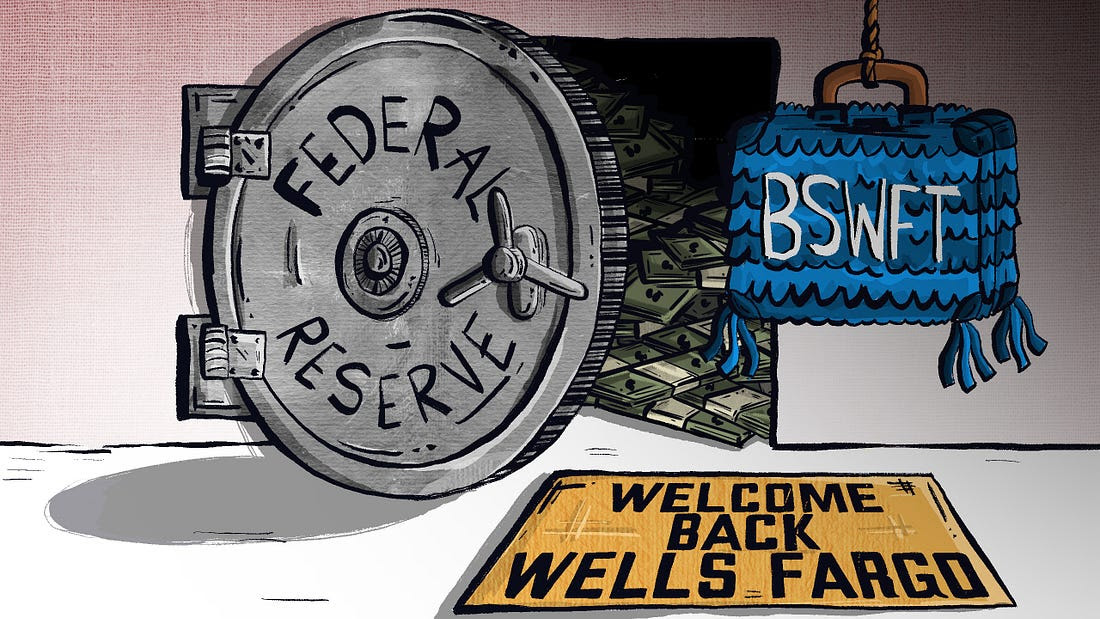
Welcome Back, Wells Fargo!
-
 Daily Caller2 days ago
‘I Know How These People Operate’: Fmr CIA Officer Calls BS On FBI’s New Epstein Intel
-
 Alberta2 days ago
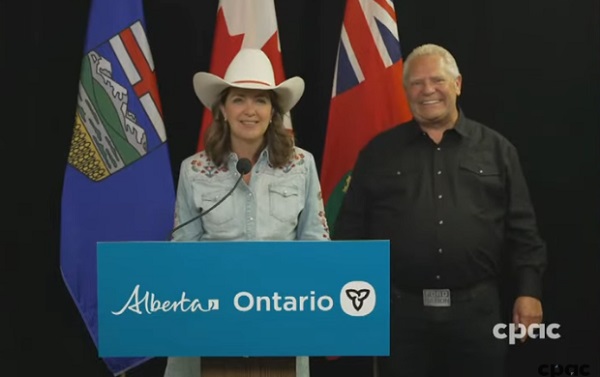
Alberta and Ontario sign agreements to drive oil and gas pipelines, energy corridors, and repeal investment blocking federal policies
-
 Alberta2 days ago
COWBOY UP! Pierre Poilievre Promises to Fight for Oil and Gas, a Stronger Military and the Interests of Western Canada
-
 International2 days ago
Chicago suburb purchases childhood home of Pope Leo XIV
-
 Daily Caller2 days ago
Blackouts Coming If America Continues With Biden-Era Green Frenzy, Trump Admin Warns
-
 Crime1 day ago
“This is a total fucking disaster”
-
 Business1 day ago
Prime minister can make good on campaign promise by reforming Canada Health Act
-
 Fraser Institute1 day ago
Before Trudeau average annual immigration was 617,800. Under Trudeau number skyrocketted to 1.4 million from 2016 to 2024