
Alberta
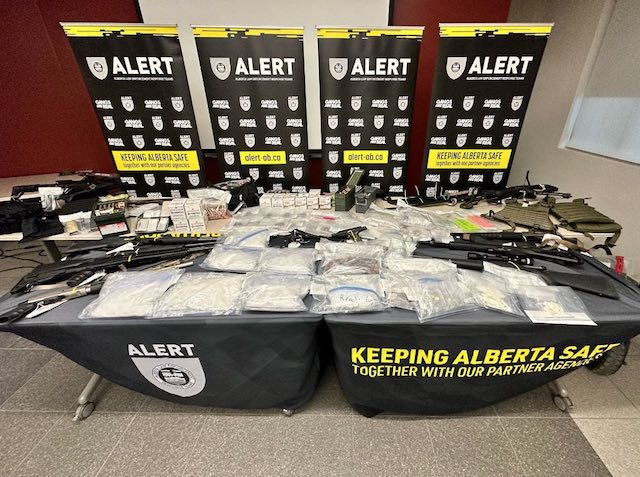
Over $2 million worth of drugs and cash seized in largest bust ever in Red Deer


From the Alberta Law Enforcement Response Team (ALERT)
City’s largest drug seizure realized in Red Deer
More than $2 million worth of drugs and cash has been seized in Red Deer. The seizure is believed to be the city’s largest with large amounts of fentanyl and methamphetamine seized along with nine firearms.

ALERT Red Deer’s organized crime team made the seizure on October 19, 2023 after a home on the city’s north side was searched. Red Deer RCMP helped with the execution of the search warrant.
The drugs seized have an estimated street value of $2.2 million and included:
- 6.8 kilograms of fentanyl;
- 6.5 kilograms of methamphetamine;
- 0.4 kilograms of cocaine;
- 1.9 litres of GHB;
- $17,286 cash.
ALERT also seized nine firearms, including two handguns, four rifles, and three shotguns. Eight of the firearms were found loaded with ammunition and several others were sawed-off, had their serial numbers defaced, or were previously reported as stolen. ALERT also seized more than 20,000 rounds of ammunition and body armour.
ALERT will also be pursuing civil forfeiture against seized cash, silver bars, collectable coins, and three high-end electric scooters. The scooters were allegedly being used to facilitate the accused’s drug trafficking operations.
One person has been charged; Delmond Kroetsch was arrested shortly after investigators witnessed a suspected drug deal that took place in the downtown area. The 43-year-old man’s home in the Fairview neighbourhood was searched following the arrest.
Kroetsch has been charged with possession of drugs for the purpose of trafficking, possession of property obtained by crime, and 28 firearms-related offences. He remains in custody and is scheduled to appear in court on December 4, 2023.
Kroetsch was not in lawful possession of the firearms and has a firearms prohibition stemming from a Fort McMurray investigation in 2002.
Red Deer’s largest known drug seizure previously occurred in March 2019. The RCMP-led investigation resulted in the seizure of 1.6 kilograms of cocaine, 1.2 kilograms of fentanyl, and 2.6 kilograms of methamphetamine, amongst other drugs.
Members of the public who suspect drug or gang activity in their community can call local police, or contact Crime Stoppers at 1-800-222-TIPS (8477). Crime Stoppers is always anonymous.
ALERT was established and is funded by the Alberta Government and is a compilation of the province’s most sophisticated law enforcement resources committed to tackling serious and organized crime.

From the Fraser Institute
By Nadeem Esmail and Mackenzie Moir
It’s an exciting time in Canadian health-care policy. But even the slew of new reforms in Alberta only go part of the way to using all the policy tools employed by high performing universal health-care systems.
For 2026, for the sake of Canadian patients, let’s hope Alberta stays the path on changes to how hospitals are paid and allowing some private purchases of health care, and that other provinces start to catch up.
While Alberta’s new reforms were welcome news this year, it’s clear Canada’s health-care system continued to struggle. Canadians were reminded by our annual comparison of health care systems that they pay for one of the developed world’s most expensive universal health-care systems, yet have some of the fewest physicians and hospital beds, while waiting in some of the longest queues.
And speaking of queues, wait times across Canada for non-emergency care reached the second-highest level ever measured at 28.6 weeks from general practitioner referral to actual treatment. That’s more than triple the wait of the early 1990s despite decades of government promises and spending commitments. Other work found that at least 23,746 patients died while waiting for care, and nearly 1.3 million Canadians left our overcrowded emergency rooms without being treated.
At least one province has shown a genuine willingness to do something about these problems.
The Smith government in Alberta announced early in the year that it would move towards paying hospitals per-patient treated as opposed to a fixed annual budget, a policy approach that Quebec has been working on for years. Albertans will also soon be able purchase, at least in a limited way, some diagnostic and surgical services for themselves, which is again already possible in Quebec. Alberta has also gone a step further by allowing physicians to work in both public and private settings.
While controversial in Canada, these approaches simply mirror what is being done in all of the developed world’s top-performing universal health-care systems. Australia, the Netherlands, Germany and Switzerland all pay their hospitals per patient treated, and allow patients the opportunity to purchase care privately if they wish. They all also have better and faster universally accessible health care than Canada’s provinces provide, while spending a little more (Switzerland) or less (Australia, Germany, the Netherlands) than we do.
While these reforms are clearly a step in the right direction, there’s more to be done.
Even if we include Alberta’s reforms, these countries still do some very important things differently.
Critically, all of these countries expect patients to pay a small amount for their universally accessible services. The reasoning is straightforward: we all spend our own money more carefully than we spend someone else’s, and patients will make more informed decisions about when and where it’s best to access the health-care system when they have to pay a little out of pocket.
The evidence around this policy is clear—with appropriate safeguards to protect the very ill and exemptions for lower-income and other vulnerable populations, the demand for outpatient healthcare services falls, reducing delays and freeing up resources for others.
Charging patients even small amounts for care would of course violate the Canada Health Act, but it would also emulate the approach of 100 per cent of the developed world’s top-performing health-care systems. In this case, violating outdated federal policy means better universal health care for Canadians.
These top-performing countries also see the private sector and innovative entrepreneurs as partners in delivering universal health care. A relationship that is far different from the limited individual contracts some provinces have with private clinics and surgical centres to provide care in Canada. In these other countries, even full-service hospitals are operated by private providers. Importantly, partnering with innovative private providers, even hospitals, to deliver universal health care does not violate the Canada Health Act.
So, while Alberta has made strides this past year moving towards the well-established higher performance policy approach followed elsewhere, the Smith government remains at least a couple steps short of truly adopting a more Australian or European approach for health care. And other provinces have yet to even get to where Alberta will soon be.
Let’s hope in 2026 that Alberta keeps moving towards a truly world class universal health-care experience for patients, and that the other provinces catch up.

From LifeSiteNews
It is not yet clear if the flag motion applies to other flags, such as LGBT ones.
Western Canada’s largest city has put in place what amounts to a ban on politically charged flags from flying at city-owned buildings.
“Calgary’s Flag Policy means any country recognized by Canada may have their flag flown at City Hall on their national day,” said Calgary’s new mayor Jeromy Farkas on X last month.
“But national flag-raisings are now creating division. Next week, we’ll move to end national flag-raisings at City Hall to keep this a safe, welcoming space for all.”
The motion to ban foreign flags from flying at government buildings was introduced on December 15 by Calgary councilor Dan McLean and passed by a vote of 8 to 7. He had said the previous policy to allow non-Canadian flags to fly, under former woke mayor Jyoti Gondek, was “source of division within our community.”
“In recent months, this practice has been in use in ways that I’ve seen have inflamed tensions, including instances where flag raisings have been associated with anti-Semitic behavior and messaging,” McLean said during a recent council meeting.
The ban on flag raising came after the Palestinian flag was allowed to be raised at City Hall for the first time.
Farkas, shortly after being elected mayor in the fall of 2025, had promised that he wanted a new flag policy introduced in the city.
It is not yet clear if the flag motion applies to other flags, such as LGBT ones.
Despite Farkas putting forth the motion, as reported by LifeSiteNews he is very much in the pro-LGBT camp. However, he has promised to focus only on non-ideological issues during his term.
McLean urged that City Hall must be a place of “neutrality, unity, and respect” for everyone.
“When City Hall becomes a venue for geopolitical expressions, it places the city in the middle of conflicts that are well beyond our municipal mandates,” he said.
As reported by LifeSiteNews, other jurisdictions in Canada are considering banning non-Canadian flags from flying over public buildings.
Recently a political party in British Columbia, OneBC, introduced legislation to ban non-domestic government flags at public buildings in British Columbia.
Across Canada there has also been an ongoing issue with so-called “Pride” flags being raised at schools and city buildings.

Canada Hits the Brakes on Population
Brown University shooter dead of apparent self-inflicted gunshot wound

Alberta’s new diagnostic policy appears to meet standard for Canada Health Act compliance
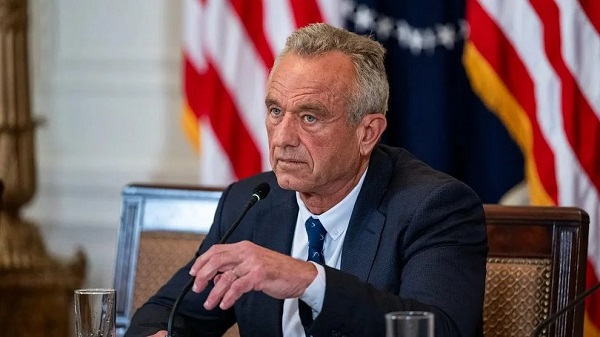
RFK Jr reversing Biden-era policies on gender transition care for minors

Why is Canada paying for dairy ‘losses’ during a boom?
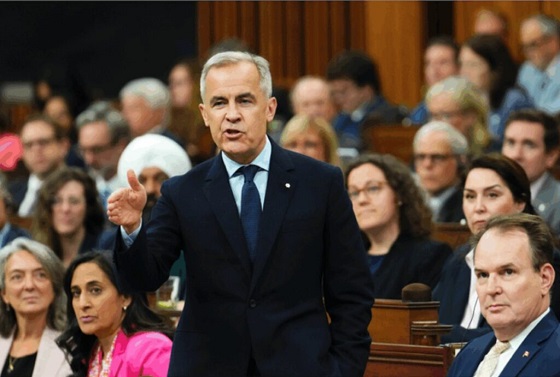
Liberals Twisted Themselves Into Pretzels Over Their Own Pipeline MOU

White House declares inflation era OVER after shock report
-
 Agriculture2 days ago
End Supply Management—For the Sake of Canadian Consumers
-
 Automotive2 days ago
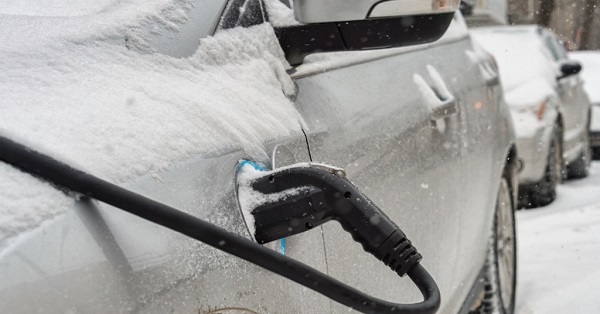
Canada’s EV gamble is starting to backfire
-
 Alberta2 days ago
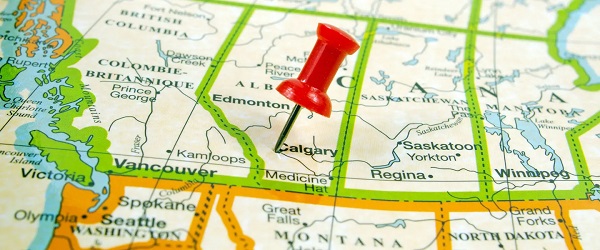
Alberta Next Panel calls to reform how Canada works
-
 International15 hours ago
Georgia county admits illegally certifying 315k ballots in 2020 presidential election
-
 Alberta18 hours ago
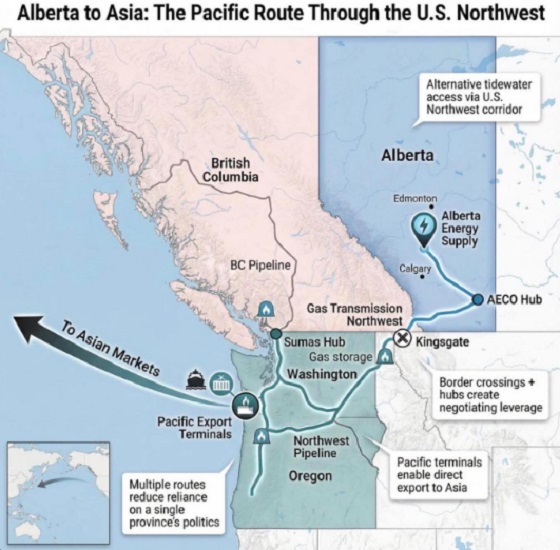
What are the odds of a pipeline through the American Pacific Northwest
-
 International15 hours ago
Communist China arrests hundreds of Christians just days before Christmas
-
 Environment2 days ago
Canada’s river water quality strong overall although some localized issues persist
-
Alberta15 hours ago
Calgary’s new city council votes to ban foreign flags at government buildings