
Agriculture
No farmers, no freedom: Why globalists want to control the world’s food supply


From LifeSiteNews
Ultimately, the war against farmers is a war on the whole of humanity, one that threatens what it means to be free
STORY AT-A-GLANCE
- A war against farmers has emerged, threatening to push them off the land they’ve farmed for generations.
- As small and mid-sized farms close their doors, governments and corporate entities can scoop up the land.
- Those in control of the land control the food supply and, along with it, the people.
- Much of this threat is cloaked under Agenda 2030, which includes 17 sustainable development goals with 169 specific targets to be imposed across the globe, in every country, by 2030.
- The push to eat insects is part of this plan; in 2021, the European Commission authorized mealworms as food, releasing a news release touting “the growing role that insects will play as part of a healthier, more sustainable diet”
Are green policies around the world, targeting everything from too much nitrogen to protection of endangered species, all part of a plan to get small farmers off the land, paving the way for totalitarian control of the food supply – and insects as part of your daily diet?
[Find the full documentary here.]
These and other tough questions are posed by Roman Balmakov, Epoch Times reporter and host of Facts Matter, in “No Farmers, No Food: Will You Eat the Bugs?” Balmakov says:
The people in charge of some of the most powerful organizations on the planet have determined that agriculture, specifically animal agriculture, is to blame for global warming, and global warming is to blame for the high prices of food as well as food shortages.
And so by switching our diets from beef, chicken and pork, to crickets and mealworms, we’ll be able to stop temperatures from rising, lower the price of food and possibly to even save the planet.
But in interviews with farmers around the world, including in Holland and Sri Lanka, a very different story is told, one that began with a decades-old environmental policy.
Agenda 2030 threatens farmers
In 1972, a United Nations meeting about climate change was held to come up with a plan to manage the planet in a sustainable manner. This led to the creation of Agenda 21 (Agenda for the 21st Century) – the inventory and control plan for all land, water, minerals, plants, animals, construction, means of production, food, energy, information, education, and all human beings in the world.
Agenda 21 is now more commonly referred to as Agenda 2030, the year the plan’s goals are slated to be met. In 2019, the World Economic Forum (WEF) entered into a strategic alliance with the United Nations, which called for the U.N. to “use public-private partnerships as the model for nearly all policies that it implements, most specifically the implementation of the 17 sustainable development goals.”
Agenda 2030 is composed of these 17 sustainable development goals with 169 specific targets, including ending poverty and achieving gender equality, to be imposed across the globe, in every country, by 2030.
“Very comprehensive document if you read it,” says international journalist Alex Newman. “We’re talking hundreds of pages governing really every facet of life, everything from education to land use policy to economics to law. Every area of life was found there.” But hidden underneath these green-sounding initiatives, Newman says, may be a more sinister motive:
There is absolutely no way for the sustainable development goals to be implemented, to be tracked, to be monitored, without the total obliteration of individual freedom. Some of the goals sound nice – ending hunger, who could possibly be against ending hunger? The problem is, when you set a nebulous goal like that, it requires total power from the state to be able to accomplish that.
And of course, they will never accomplish that, right? There is no way to literally eradicate all poverty from the face of the Earth, but it gives government and global institutions, like the U.N., an easy excuse to basically do whatever they want under the guise of meeting these goals.
Is the nitrogen crisis real?
Dutch farmers are in crisis as their government has stepped up plans to move them off the land. You can hear about this in-depth via Dutch investigative journalist Elze van Hamelen’s report and podcast for The Solari Report– Dutch Farmers and Fishermen: The People Who Feed Us.
“In 2021, the European Union’s Natura 2000 network released a map of areas in the Netherlands that are now protected against nitrogen emissions. Any Dutch farmer who operates their farm within 5 kilometers of a Natura 2000 protected area would now need to severely curtail their nitrogen output, which in turn would limit their production,” Balmakov explains.
Dutch dairy farmer Nynke Koopmans with the Forum for Democracy believes the nitrogen problem is made up. “It’s one big lie,” she says. “The nitrogen has nothing to do with environmental. It’s just getting rid of farmers.” Another farmer said if new nitrogen rules go into effect, he’d have to reduce his herd of 58 milking cows down to six.
Nitrogen scientist Jaap C. Hanekamp was working for a government committee to study nitrogen, tasked with analyzing the government’s nitrogen model. He told Balmakov:
The whole policy is based on the deposition model about how to deal with nitrogen emissions on nature areas. And I looked at the validation studies and show that the model is actually crap. It doesn’t work. And doesn’t matter. They still continue using it, which is, in a sense, unsettling. I mean, really, can we do such a thing in terms of policy? Use a model which doesn’t work? It’s never about innovation, it’s always about getting rid of farmers.
The ultimate agenda: no land ownership for the people
As farmers shut down, the government can swoop in and take the land, which may be what the agenda is really about. According to Eva Vlaardingerbroek, former member of Forum for Democracy and a political commentator:
I’ve always said that the nitrogen crisis is, first of all, a made-up crisis. It’s manufactured, and the only solution that has ever been proposed is forced expropriation. So, it is the government that will take hold of their land… We have a housing crisis in the Netherlands, as you know, this is a very tiny country. We have a lot of people, and we have a growing population because of immigration. And we need places to house those immigrants.
And I think that that’s partly why the government wants that land. They need houses, and they need to build houses, which is funny, because apparently building houses is also what emits nitrogen. But that’s not the people they’re coming after. They’re coming, specifically, after the farmers because they want the land. So that is the ultimate goal.
But it’s not only farmers in the Netherlands who are being affected. In 2020, California became the first U.S. state to commit to a 30 by 30 goal, pledging to put 30 percent of its land and water under government control by 2030. But as Margaret Byfield, executive director of American Stewards of Liberty, says, this paves the way for private land ownership to disappear:
The concept in America is self-rule. We the People will rule our government and our Founding Fathers understood that the small landholder is the most important part of the state. The idea was that the land would be distributed among the people so they could always control their government. California has developed a 30 by 30 plan. They’re pushing 30 by 30 in the state…
The ultimate agenda is that there is no ownership of land so that we don’t own anything. We either own property, or we are property. That’s really what we’re fighting from the global governance perspective. They have to eliminate our ability to control our government, which means they have to take our land.
Other seemingly sustainable government regulations may also be wrapped up in this plan. Rep. Doug LaMalfa, farmer and California representative, explains:
A lot of this came about in the early ‘70s Clean Water Act, Clean Air Act, which were good things, you know, the Endangered Species Act, but it’s been abused from what the original intent was. Congress did not intend for it to be abused the way it is and manipulated. The way it is these days, when they wrote those bills, they would have never passed them.
The globalists have it all planned out
Much of the new world order’s plans are based on crisis management, and the idea that a great crisis will occur that will lead to the great transition, where globalists will swoop in to save the day, transforming society into the promised paradise. “At some point down the line, the narrative changed to be around climate,” Balmakov says.
Prior to this, it was the Cold War, but this changed after a 1991 Club of Rome meeting. Both the Rockefellers and early WEF affiliations can be tied back to the Club of Rome, a think tank that aligned with neo-Malthusianism – the idea that an overly large population would decimate resources – and was intending to implement a global depopulation agenda.
“They came up with this incredible document where they actually said, We need a new justification for this all-powerful state,” Newman says. “So, the new excuse is going to be because the environment is going to be harmed and because climate is going to hurt us.” Balmakov continues:
I could not believe what I just heard, that world leaders really laid out this globalist plan in plain English in a physical book, way back in 1991.
I went on Amazon. And there it was. ‘The First Global Revolution,’ which states, and I quote, ‘In searching for a common enemy to unite us, we came up with the idea that pollution, the threat of global warming, water shortages, famine, and the like, would fit the bill. And therefore, the real enemy is humanity itself.’
Reading between the lines, the key players in this globalist agenda become clear. Newman says:
The World Economic Forum was actually a critical part of implementing this U.N. agenda. Some years ago, they became a strategic partner of the U.N. in the implementation of agenda 2030. And then you start looking at the connections between the World Economic Forum and China. Klaus Schwab and Xi Jinping, they’re like old buddies.
They put out press releases about how much they love each other. So, you’ve got the super capitalists, represented by the World Economic Forum, and then on the government side, you have communists. after Agenda 2030 was adopted, become the Party of China, put out through all their propaganda organs.
… you had Javier Solana, the head of NATO, saying this was going to be the next great leap forward, right? The last great leap forward in China killed millions of people. Why would we want another one of those? That’s crazy.
So, you have communists and super capitalists all coming together and working on this one, sustainable development agenda. And that should make us all pause and say, ‘Wait a minute, that doesn’t make sense on the surface. What’s going on here?’
Bring on the bugs
Globalists suggest eating bugs will protect the planet by eliminating the need for livestock, cutting down on agricultural land use and protecting the environment. The U.N.’s Food and Agriculture Organization also encourages the consumption of insects and insect-based foods.
In June 2021, WEF also published an article, categorized under “food security,” in which they promote the use of insects, writing we “need to give insects the role they deserve in our food systems.” They justify this proposal by saying it will address an impending food crisis.
In 2021, the European Commission authorized mealworms as food, releasing a news release touting “the growing role that insects will play as part of a healthier, more sustainable diet, as well as the benefits for the environment for years to come.” Victor Davis Hanson, a military historian and almond farmer, notes:
There’s this top-down globalist idea that certain Western countries have diets that they do not approve of. In other words, they’re more meat-based. And they feel that humans don’t need meat-based protein. And they want to either force people to follow their paradigms, or they want to buy or accumulate farmland. And that’s how they’re going to farm it. It’s sort of like the Soviet Union or Mao’s Cultural Revolution. It’s top down. And it results in disasters.
Without farmers, there’s no food
If government and corporate entities are able to take control of the land, they can control the food supply and, with it, the people.
“Everywhere you look small and medium sized farms being gobbled up by these corporate mega farms, because they can’t keep up anymore. They can’t comply with these endless streams of regulations that are coming down,” Newman says.
“We’re seeing that in China now where these giant mechanized corporate, big government-controlled mega farms are displacing all these little small family farms that families have been farming for hundreds of years – in some cases longer.” Without land, people lose their autonomy, freedom and independence. Hanson says:
When the American nation was founded, 95% of the people were homestead citizens. They had their own land, and they were completely independent, autonomous. They raised their own food. They were outspoken, they were economically viable. Farming serves two purposes. It doesn’t just produce food, but it produces citizens.
Ultimately, the war against farmers is a war on the whole of humanity, one that threatens what it means to be free. “We are headed into, I think, a time of very significant food shortages. Can we expect to see massive increases in food prices next year? Oh, no question about it,” Newman says, adding:
I think the end goal of the war on farmers that we’re seeing, which is guided at every step by the sustainable development goals and Agenda 2030, is going to be a total consolidation of agriculture, a total consolidation of the food supply. And as every communist tyrant of the last 100 years understood, if you control the food, you control the people. That’s ultimately the end goal.
Reprinted with permission from Mercola.

Agriculture
Health Canada indefinitely pauses plan to sell unlabeled cloned meat after massive public backlash

From LifeSiteNews

Health Canada has indefinitely paused its plan to allow unlabeled cloned meat in grocery stores after thousands of Canadians, prominent figures, and industry leaders condemned the move.
Health Canada is pausing its plan to put unlabeled cloned meat in Canadian grocery stores, following public outcry.
In a November 19 update on its website, Health Canada announced an indefinite suspension of the decision to remove labels from cloned meat products after thousands of Canadians condemned the plan online.
“The Government of Canada has received significant input from both consumers and industry about the implications of this potential policy update,” the publication read. “The Department has therefore indefinitely paused the policy update to provide time for further discussions and consideration,” it continued, adding, “Until the policy is updated, foods made from cloned cattle and swine will remain subject to the novel food assessment.”
In late October, Health Canada quietly approved removing labels from foods derived from somatic cell nuclear transfer (SCNT) clones and their offspring. As a result, Canadians buying meat from the grocery store would have had no way of knowing if the product was cloned meat.
Many researchers have documented high rates of cloning failure, large offspring syndrome (LOS), placental abnormalities, early death, and organ defects in cloned animals. The animals are also administered heavy doses of antibiotics due to infections and immune issues.
Typically, the offspring of cloned animals, rather than the cloned animals themselves, are processed for human consumption. As a result, researchers allege that the health defects and high drug use does not affect the final product.
However, there are no comprehensive human studies on the effects of eating cloned meat, meaning that the side-effects for humans are unknown.
News of the plan spread quickly on social media, with thousands of Canadians condemning the plan and promising to switch to local meat providers.
“By authorizing the sale of meat from cloned animals without mandatory labeling or a formal public announcement, Health Canada risks repeating a familiar and costly failure in risk communication. Deeply disappointing,” food policy expert and professor at Dalhousie University Sylvain Charlebois wrote on X.
"By authorizing the sale of meat from cloned animals without mandatory labeling or a formal public announcement, Health Canada risks repeating a familiar and costly failure in risk communication. Deeply disappointing."
More on this week's Food Professor Podcast! https://t.co/UZTIcQzUN3
— The Food Professor (@FoodProfessor) October 30, 2025
Likewise, Conservative MP Leslyn Lewis warned, “Health Canada recently decided that meat from cloned animals and their offspring no longer needs a special review or any form of disclosure.”
“That means, soon you could buy beef or pork and have no idea how it was bred,” she continued. “Other countries debate this openly: the EU has considered strict labelling, and even the U.S. has admitted that cloned-offspring meat is circulating.”
“But here in Canada, the public wasn’t even told. This is about informed choice,” Lewis declared. “If government and industry don’t have to tell us when meat comes from cloned animals, then Canadians need to ask a simple, honest question: What else are we not being told?”
Health Canada recently decided that meat from cloned animals and their offspring no longer needs a special review or any form of disclosure. That means, soon you could buy beef or pork and have no idea how it was bred.
Other countries debate this openly: the EU has considered… pic.twitter.com/zCnqJOpvf3
— Dr. Leslyn Lewis (@LeslynLewis) November 14, 2025
Likewise, duBreton, a leading North American supplier of organic pork based out of Quebec, denounced the move, saying, “Canadians expect clarity, transparency, and meaningful consultation on issues that directly touch their food supply. As producers, we consider it our responsibility and believe our governing food authorities should too.”
According to a survey conducted by duBreton, 74 percent of Canadians believe that “cloned meat and genetic editing practices have no place in farm and food systems.”
Agriculture
Federal cabinet calls for Canadian bank used primarily by white farmers to be more diverse
From LifeSiteNews
A finance department review suggested women, youth, Indigenous, LGBTQ, Black and racialized entrepreneurs are underserved by Farm Credit Canada.
The Cabinet of Prime Minister Mark Carney said in a note that a Canadian Crown bank mostly used by farmers is too “white” and not diverse enough in its lending to “traditionally underrepresented groups” such as LGBT minorities.
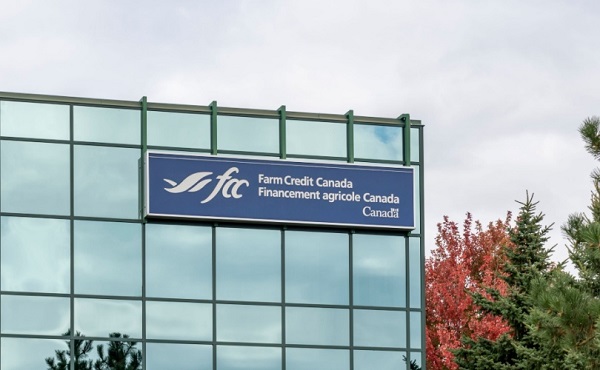
Farm Credit Canada Regina, in Saskatchewan, is used by thousands of farmers, yet federal cabinet overseers claim its loan portfolio needs greater diversity.
The finance department note, which aims to make amendments to the Farm Credit Canada Act, claims that agriculture is “predominantly older white men.”
Proposed changes to the Act mean the government will mandate “regular legislative reviews to ensure alignment with the needs of the agriculture and agri-food sector.”
“Farm operators are predominantly older white men and farm families tend to have higher average incomes compared to all Canadians,” the note reads.
“Traditionally underrepresented groups such as women, youth, Indigenous, LGBTQ, and Black and racialized entrepreneurs may particularly benefit from regular legislative reviews to better enable Farm Credit Canada to align its activities with their specific needs.”
The text includes no legal amendment, and the finance department did not say why it was brought forward or who asked for the changes.
Canadian census data shows that there are only 590,710 farmers and their families, a number that keeps going down. The average farmer is a 55-year-old male and predominantly Christian, either Catholic or from the United Church.
Data shows that 6.9 percent of farmers are immigrants, with about 3.7 percent being “from racialized groups.”
National census data from 2021 indicates that about four percent of Canadians say they are LGBT; however, those who are farmers is not stated.
Historically, most farmers in Canada are multi-generational descendants of Christian/Catholic Europeans who came to Canada in the mid to late 1800s, mainly from the United Kingdom, Ireland, Ukraine, Russia, Italy, Poland, the Netherlands, Germany, and France.

From Underdog to Top Broodmare

Poilievre says West Coast Pipeline MOU is no guarantee

Man overboard as HMCS Carney lists to the right
Alberta and Ottawa ink landmark energy agreement

Afghan Ex–CIA Partner Accused in D.C. National Guard Ambush
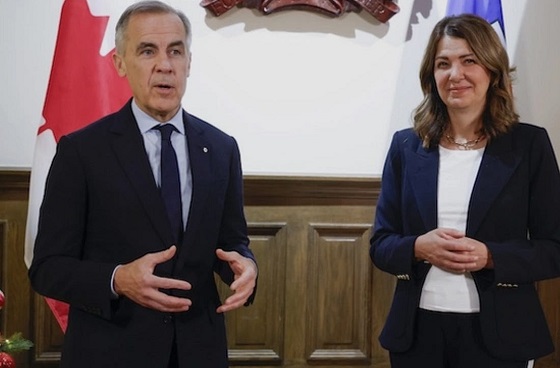
READ IT HERE – Canada-Alberta Memorandum of Understanding – From the Prime Minister’s Office
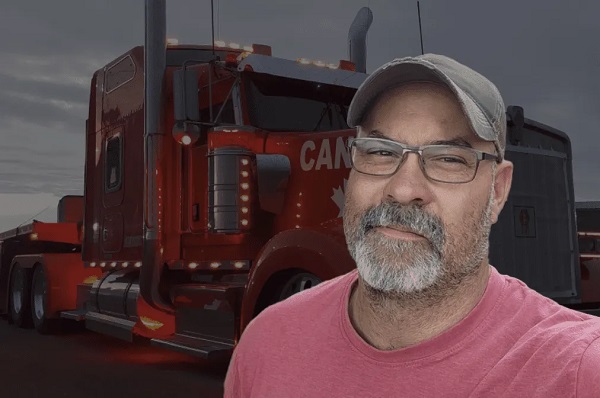
Canadian government seeking to destroy Freedom Convoy leader, taking Big Red from Chris Barber
-
 Business2 days ago
Recent price declines don’t solve Toronto’s housing affordability crisis
-
 Censorship Industrial Complex2 days ago
A Democracy That Can’t Take A Joke Won’t Tolerate Dissent
-
 Daily Caller2 days ago
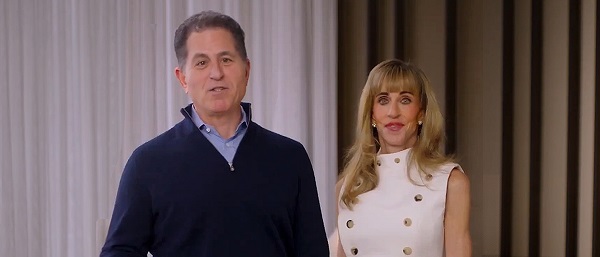
Tech Mogul Gives $6 Billion To 25 Million Kids To Boost Trump Investment Accounts
-
 Business2 days ago
Ottawa’s gun ‘buyback’ program will cost billions—and for no good reason
-
 MAiD21 hours ago
From Exception to Routine. Why Canada’s State-Assisted Suicide Regime Demands a Human-Rights Review
-
 Business2 days ago
Canada’s future prosperity runs through the northwest coast
-
 Alberta2 days ago
Alberta will defend law-abiding gun owners who defend themselves
-
 MAiD2 days ago
Health Canada report finds euthanasia now accounts for over 5% of deaths nationwide