
COVID-19
New data shows most Canadians are shunning COVID booster shots


From LifeSiteNews

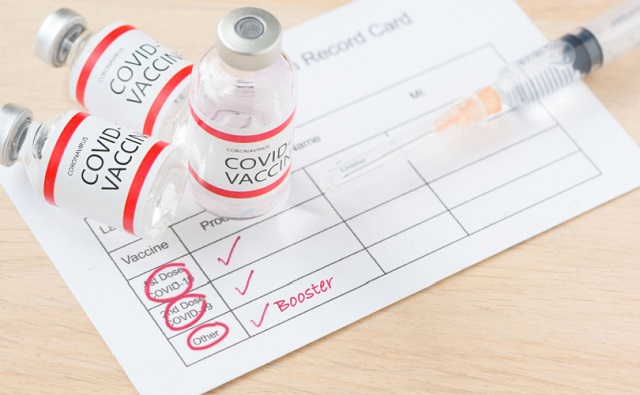
Only 14.6% of Canadians have had an ‘XBB.1.5 vaccine’ COVID booster, according to federal government data.
The majority of Canadians are flat-out refusing a COVID booster injection according to current information from the federal government, which has been heavily promoting the shots.
Data from the federal government’s COVID-19 vaccination: Vaccination coverage dashboard shows that only 14.6% of Canadians, about 5.7 million, have had an “XBB.1.5 vaccine” COVID booster.
For those under age 60, less than one-third have had a COVID booster. For those over 70, 44% have been injected with another COVID shot.
Even when it comes to Canadians over age 80, 52% have shunned a COVID booster.
In the age category of 0-4 years, only 3.5% have had a COVID booster. For Canadians ages 12-17, the take-up rate is 4.6%, with that number falling to 3.7% for ages 18-29.
Canadians from ages 30-39 have a 6.9% booster take rate, with 40- to 49-year-olds at 8.9%. Those ages 50-59 have a 13.5% booster take rate, with that number going up to 28.1% for ages 60-69.
Take-up of the COVID booster is lower in males, 13.3%, than in females at 15.8%.
The data is accurate as of December 8, 2023.
Canada’s low COVID booster take-up rate could be influenced by reports that the federal government under Prime Minister Justin Trudeau knew that the jabs could carry unknown risks when they signed the contract with Pfizer in late 2020.
The Trudeau government, with the help of the Department of Health, heavily promoted the COVID jabs, which were rushed to market. It is still promoting the recently approved booster.
In November, LifeSiteNews reported on how the recently disclosed federal government’s COVID-19 vaccine contract with Pfizer for millions of doses of the mRNA-based experimental shots shows the government agreed to accept the unknown long-term safety and efficacy of the shots.
The government had to acknowledge by signing the contract that the COVID shot and its materials were “rapidly developed due to the emergency circumstances of the COVID-19 pandemic” and would be further studied after their rollout.
LifeSiteNews reported last month how an information request from a federal MP asking Health Canada if it has any clinical data showing whether Pfizer-BioNTech’s latest COVID jab is effective and safe after its recent approval of the shot has revealed the agency has no such data on file.
Health Canada approved a revised Moderna mRNA-based COVID shot in September 2023 and later the Pfizer-BioNTech’s COVID jab despite research showing that 1 in 35 recipients of the booster have myocardial damage.
Of note is that Pfizer-BioNTech’s COVID jab only is said to target the COVID variant, XBB.1.5, which is all but gone in Canada. As of now, the dominant strain is EG.5.
Some provincial leaders refusing to disclose jab status despite media pressure
Some Canadian provincial leaders, such as Alberta’s Danielle Smith who opposed vaccine mandates and passports and ran her party leadership campaign on these issues, have flat-out refused to reveal whether they have had a COVID booster or even the original COVID shot.
Last month, Smith made clear to reporters she will not disclose her personal COVID vaccination status.
“I think that a private medical decision should be kept private, and I think this is the reason why we have doctors giving the advice,” Smith said.
Official data shows that about 15.5% of Albertans have chosen to get the COVID booster jab, which is on par with most provinces in Canada.
By comparison, neighboring British Columbia, which still has in place jab mandates for healthcare workers, has a 23.1% COVID booster uptake rate.
Health Canada ordered 238 million COVID injections from Pfizer Canada, which includes 30 million for 2023 and 2024.
The details of the Pfizer contract do not disclose how much the government spent on the jabs.
There is mounting evidence concerning the adverse effects they cause in many who have taken the COVID shots, including children.
For example, a recent study done by researchers with Canada-based Correlation Research in the Public Interest showed that 17 countries have found a “definite causal link” between peaks in all-cause mortality and the fast rollouts of the COVID shots as well as boosters.
LifeSiteNews recently detailed how a newly released government report shows that deaths from COVID-19 and “unspecified causes” surged after the release of the so-called “safe and effective” vaccines.

From LifeSiteNews
A judge ruled that the Ontario Court of Justice is already ‘satisfied’ with Chris Barber’s sentence and taking away his very livelihood would be ‘disproportionate.’
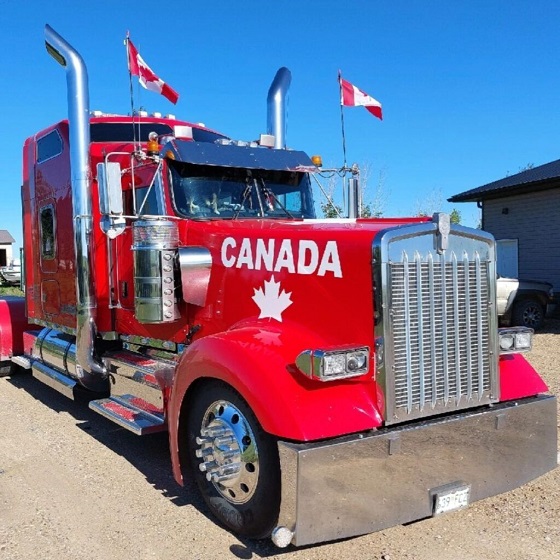
A Canadian judge has dismissed a demand from Canadian government lawyers to seize Freedom Convoy leader Chris Barber’s “Big Red” semi-truck.
On Friday, Ontario Court of Justice Judge Heather Perkins-McVey denied the Crown’s application seeking to forfeit Barber’s truck.
She ruled that the court is already “satisfied” with Barber’s sentence and taking away his very livelihood would be “disproportionate.”
“This truck is my livelihood,” said Barber in a press release sent to LifeSiteNews.
“Trying to permanently seize it for peacefully protesting was wrong, and I’m relieved the court refused to allow that to happen,” he added.
Criminal defense lawyer Marwa Racha Younes was welcoming of the ruling as well, stating, “We find it was the right decision in the circumstances and are happy with the outcome.”
John Carpay, president of the Justice Centre for Constitutional Freedoms (JCCF), said the decision is “good news for all Canadians who cherish their Charter freedom to assemble peacefully.”
READ: Freedom Convoy protester appeals after judge dismissed challenge to frozen bank accounts
“Asset forfeiture is an extraordinary power, and it must not be used to punish Canadians for participating in peaceful protest,” he added in the press release.
As reported recently by LifeSiteNews, the Canadian government claimed that Barber’s truck is an “offence-related property” relating to his involvement in the 2022 protests against Canada’s COVID mandates.
At this time, the court ruling ends any forfeiture proceedings for the time being, however Barber will continue to try and appeal his criminal conviction and house arrest sentence.
Barber’s truck, a 2004 Kenworth long-haul he uses for business, was a focal point in the 2022 protests. He drove it to Ottawa, where it was parked for an extended period of time, but he complied when officials asked him to move it.
On October 7, 2025, after a long trial, Ontario Court Justice Perkins-McVey sentenced Barber and Tamara Lich, the other Freedom Convoy leader, to 18 months’ house arrest. They had been declared guilty of mischief for their roles as leaders of the 2022 protest against COVID mandates, and as social media influencers.
Lich and Barber have filed appeals of their own against their house arrest sentences, arguing that the trial judge did not correctly apply the law on their mischief charges.
Government lawyers for the Crown have filed an appeal of the acquittals of Lich and Barber on intimidation charges.
The pair’s convictions came after a nearly two-year trial despite the nonviolent nature of the popular movement.

From LifeSiteNews
Protestor Evan Blackman’s legal team argues Trudeau’s Emergencies Act-based bank account freezes were punitive state action tied directly to protest participation.
A Freedom Convoy protester whose bank accounts were frozen by the Canadian government says a judge erred after his ruling did not consider the fact that the funds were frozen under the Emergencies Act, as grounds for a stay of proceedings.
In a press release sent out earlier this week, the Justice Centre for Constitutional Freedoms (JCCF) said that Freedom Convoy protestor Evan Blackman will challenge a court ruling in his criminal case via an appeal with the Ontario Superior Court of Justice.
“This case raises serious questions about how peaceful protest is treated in Canada and about the lasting consequences of the federal government’s unlawful use of the Emergencies Act,” noted constitutional lawyer Chris Fleury. “The freezing of protestors’ bank accounts was part of a coordinated effort to suppress dissent, and courts ought to be willing to scrutinize that conduct.”
Blackman was arrested on February 18, 2022, during the police crackdown on Freedom Convoy protests against COVID restrictions, which was authorized by the Emergencies Act (EA). The EA was put in place by former Prime Minister Justin Trudeau’s Liberal government, which claimed the protests were violent, despite no evidence that this was the case.
Blackman’s three bank accounts with TD Bank were frozen due to his participation in the Freedom Convoy, following a directive ordered by Trudeau.
As reported by LifeSiteNews, in November of this year, Blackman was convicted at his retrial even though he had been acquitted at his original trial. In 2023, Blackman’s “mischief” and “obstructing police” charges were dismissed by a judge due to lack of evidence and the “poor memory of a cop regarding key details of the alleged criminal offences.”
His retrial resulted in Blackman getting a conditional discharge along with 12 months’ probation and 122 hours of community service, along with a $200 victim fine surcharge.
After this, Blackman’s application for a stay of proceedings was dismissed by the court. He had hoped to have his stay of proceedings, under section 24(1) of the Charter of Rights and Freedoms, allowed. However, the judge ruled that the freezing of his bank accounts was legally not related to his arrest, and because of this, the stay of proceedings lacked standing.
The JCCF disagreed with this ruling, noting, it “stands in contrast to a Federal Court decision finding that the government’s invocation of the Emergencies Act was unreasonable and violated Canadians’ Charter rights, including those targeted by the financial measures used against Freedom Convoy protestors.”
As of press time, a hearing date has not been scheduled.
In 2024, Federal Court Justice Richard Mosley ruled that Trudeau was “not justified” in invoking the Emergencies Act.
In early 2022, the Freedom Convoy saw thousands of Canadians from coast to coast come to Ottawa to demand an end to COVID mandates in all forms. Despite the peaceful nature of the protest, Trudeau’s federal government enacted the EA in mid-February.
After the protesters were cleared out, which was achieved through the freezing of bank accounts of those involved without a court order as well as the physical removal and arrest of demonstrators, Trudeau revoked the EA on February 23, 2022.

The “Disruptor-in-Chief” places Canada in the crosshairs
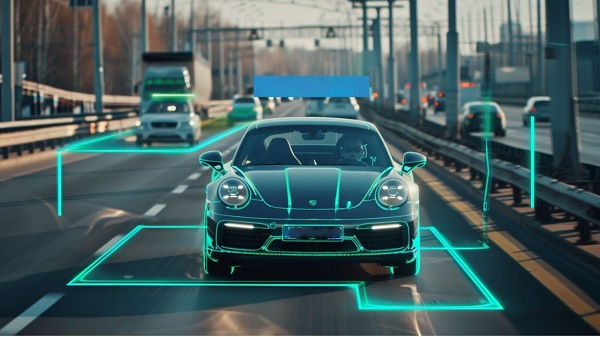
UK Police Pilot AI System to Track “Suspicious” Driver Journeys

Judge Declares Mistrial in Landmark New York PRC Foreign-Agent Case

Canadian government launches trial version of digital ID for certain licenses, permits

World-leading biochemist debunks evolutionary theory

Ottawa-Alberta agreement may produce oligopoly in the oilsands

Warning Canada: China’s Economic Miracle Was Built on Mass Displacement
-
 Haultain Research1 day ago
Sweden Fixed What Canada Won’t Even Name
-
 Business1 day ago
What Do Loyalty Rewards Programs Cost Us?
-
 Business19 hours ago
Land use will be British Columbia’s biggest issue in 2026
-
 Energy19 hours ago
Why Japan wants Western Canadian LNG
-
 Business16 hours ago
Mainstream media missing in action as YouTuber blows lid off massive taxpayer fraud
-
 Business16 hours ago
Stripped and shipped: Patel pushes denaturalization, deportation in Minnesota fraud
-
 Energy7 hours ago
Rulings could affect energy prices everywhere: Climate activists v. the energy industry in 2026
-
 Digital ID6 hours ago
The Global Push for Government Mandated Digital IDs And Why You Should Worry